This content is for informational and educational purposes only and does not constitute financial advice. Always do your own research. Not financial advice (NFA).
👀 Today’s Stories at a Glance
🛢️ Hormuz Crisis Spikes Fuel Prices: Attacks on energy infrastructure drive global crude costs significantly higher.
🏦 Record Oil Release Fails Market: Emergency releases cannot offset supply gaps while the strait stays closed.
🏛️ Regulators Slash Bank Capital Rules: Lowered requirements for major lenders will free billions for share buybacks.
🇯🇵 Trump Gaffe Strains Japan Alliance: The president offended allies by comparing current strikes to Pearl Harbor.
🇮🇱 Netanyahu Claims Victory Amid Backlash: Israel claims crippled Iranian capabilities despite causing major diplomatic outrage.
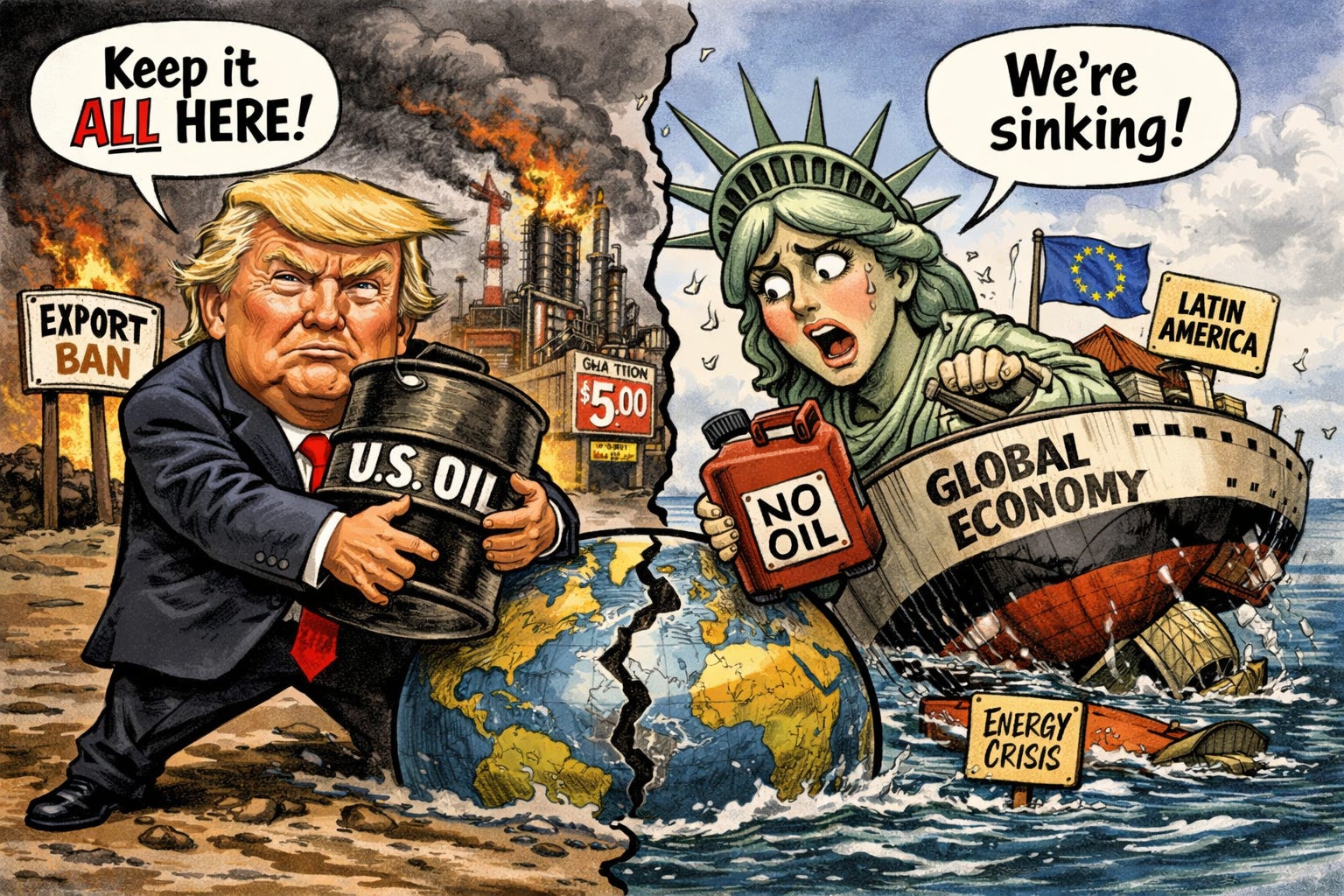
🔍 US Rejects Oil Export Ban: Officials dismissed export restrictions because infrastructure limits would worsen inflation.
🧠 One Big Thing
The blockage of the Strait of Hormuz has transitioned from a temporary shipping disruption into a structural energy deficit. Permanent damage to Qatari facilities ensures that significant liquefied natural gas production stays offline for up to five years. This loss of capacity renders record-breaking emergency oil releases ineffective since they only provide short-term coverage. Investors must now recognize that energy prices may remain high even if the regional conflict ends quickly. This shift suggests a fundamental repricing of global inflation and economic growth. Sustained energy costs increase the probability of tighter monetary policy and widespread demand destruction.
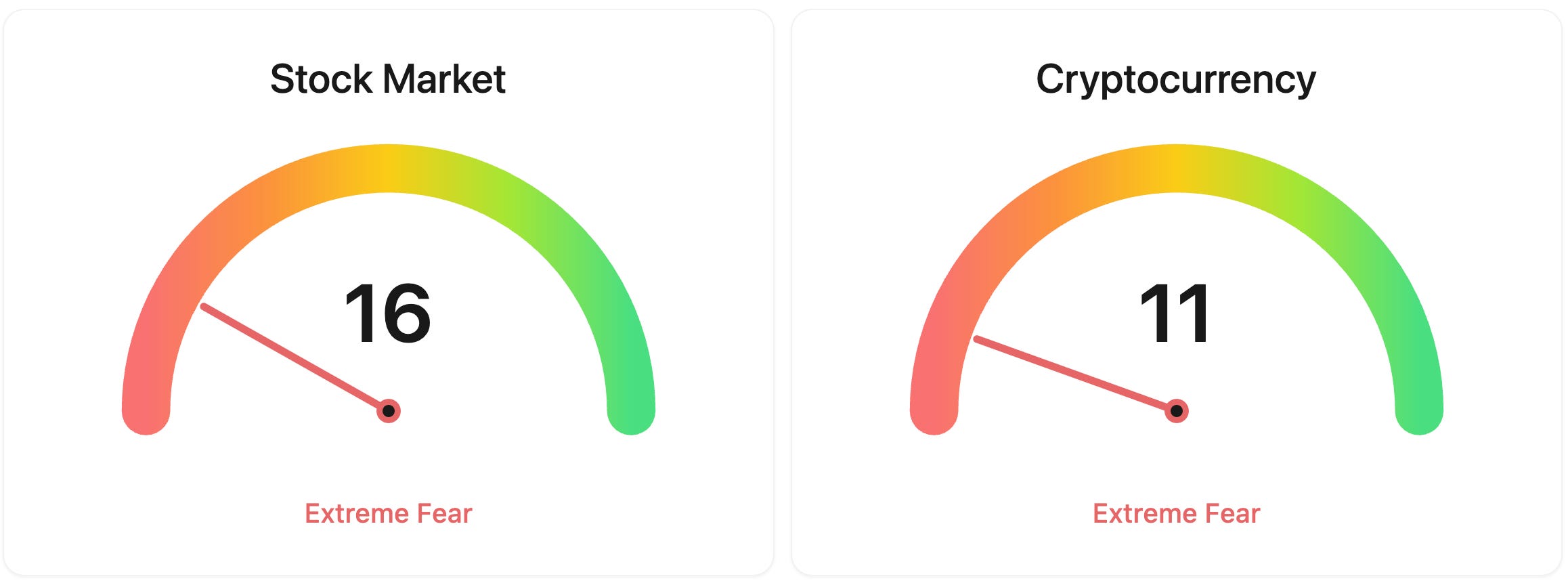
⚖️ Fear & Greed
📉 The Number That Matters
$2.5 BILLION
Super Micro Computer shares plunged after prosecutors alleged co-founders illegally diverted $2.5 billion in Nvidia-powered servers to China. The $2.5 billion conspiracy bypassed U.S. export controls, triggering a federal investigation and significant downward pressure on the stock.
⚔️ Winners vs Losers
Winners
PL 0.00%↑: Planet Labs PBC reported record fiscal Q4 revenue of $86.8 million, up 41% year over year and well above estimates, while achieving its first full year of non-GAAP profitability and growing backlog 79% to $900 million.
IDN 0.00%↑: Intellicheck, Inc. posted record Q4 and full-year 2025 revenue of $22.7 million and reached annual operating profitability for the first time in its history, with full-year net income of $1.3 million.
CURV 0.00%↑: Torrid Holdings Inc. shares jumped after the plus-size retailer reported full-year adjusted EBITDA of $63.6 million that topped the high end of its own guidance and CEO Lisa Harper said early first-quarter trends show the turnaround is taking hold.
FDX 0.00%↑: FedEx Corporation beat fiscal Q3 estimates with adjusted EPS of $5.25 versus the $4.16 consensus and revenue of $24 billion, while raising its full-year adjusted EPS outlook to $19.30 to $20.10 from a prior range topping out at $19.
Losers
SMCI 0.00%↑: Super Micro Computer, Inc. plunged after federal prosecutors charged co-founder and SVP Yih-Shyan Liaw and two other company-affiliated individuals with conspiring to illegally divert at least $2.5 billion worth of Nvidia-powered servers to China in violation of U.S. export controls.
UMAC 0.00%↑: Unusual Machines, Inc. slid after the drone parts manufacturer announced a proposed public offering of common stock, with proceeds earmarked for expanding U.S. drone parts inventory and working capital.
SAP 0.00%↑: SAP SE continued its extended slide near 52-week lows, with shares under pressure following CEO Christian Klein’s disclosure this week that the company plans to shift from subscription pricing to AI consumption-based billing, adding uncertainty to near-term revenue visibility on top of the lingering fallout from January’s cloud backlog miss that triggered SAP’s steepest daily drop since 2020.
📊 Market Snapshot
Cryptocurrencies:
Bitcoin (BTC): $70594 (▲ 0.94%)
Ethereum (ETH): $2149 (▲ 0.48%)
XRP: $1.45 (▲ 0.25%)
Equity Indices (Futures):
S&P 500: $6573 (▼ -0.66%)
NASDAQ 100: $24391 (▲ 0.01%)
FTSE 100: £10040 (▼ -0.25%)
Commodities & Bonds:
10-Year US Treasury Yield: 4.30% (▲ 1.20%)
Oil (WTI): $95 (▲ 0.81%)
Gold: $4642 (▼ -0.27%)
Silver: $71.50 (▼ -1.85%)
Data as of: UK (GMT) 10:57 / US (EST): 06:57 / Asia (Tokyo): 19:57
✅ 5 Things to Know Today
🛢️ Hormuz Standstill Deepens as Allies Issue Joint Warning
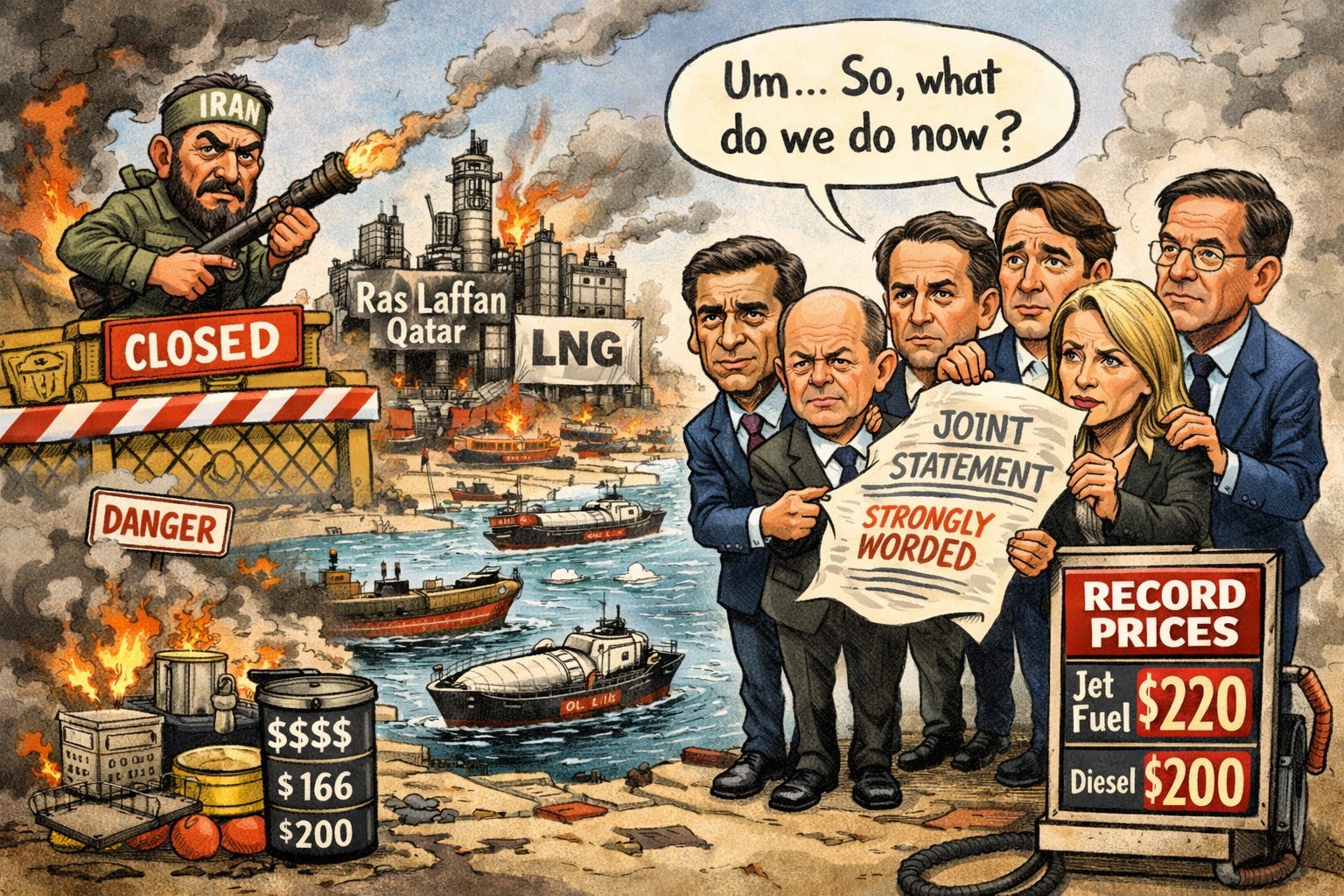
Three weeks into the Iran conflict, the Strait of Hormuz remains effectively closed to commercial shipping and the crisis is widening. Iranian attacks on Qatar’s Ras Laffan liquefied natural gas (LNG) complex have knocked out 17% of Qatar’s LNG export capacity, with two of 14 LNG trains and one gas-to-liquids facility damaged. QatarEnergy’s CEO estimates repairs will take three to five years, with roughly $20 billion in annual revenue lost. Dubai crude hit a record $166.80 per barrel yesterday, jet fuel in northwest Europe reached approximately $220 per barrel, and European diesel crossed $200 for the first time since 2022. Oil prices have gained almost 50% this month. Brent surged to $119 yesterday before settling at $108.65 after Israeli Prime Minister Netanyahu said the war would end “a lot faster than people think,” and West Texas Intermediate (WTI) settled at $94.42. Futures are edging higher again this morning, with Brent approaching $110 on a volatile quadruple witching day. Dow futures are down 280 points, the S&P 500 is off 46 points, and the Nasdaq is down 229 in premarket trading (Reuters).
Yesterday, Britain, France, Germany, Italy, the Netherlands, Japan, and Canada issued a joint statement condemning attacks on commercial vessels and the “de facto closure” of the strait, expressing readiness to “contribute to appropriate efforts” to restore safe passage. The language sounds strong, but there are no specific military commitments or naval deployments attached. The EU summit in Brussels failed to reach agreement on securing the strait, with EU Foreign Policy Chief Kallas saying member states “do not have an appetite to go to this war.” Meanwhile, the conflict keeps spreading: Kuwait’s Mina Al-Ahmadi refinery was hit by drones again overnight, Saudi Arabia intercepted more than a dozen drones, and the UAE’s air defences were active against incoming fire. RBC Capital Markets strategists are now watching for signs that the Houthis may enter the conflict, which would imperil the alternative Red Sea export route. The International Maritime Organization (IMO) estimates around 20,000 seafarers on nearly 2,000 ships are trapped west of the strait, with 17 vessel incidents and at least seven deaths. The US is reportedly considering plans to take over or blockade Iran’s Kharg Island, which processes roughly 90% of Iran’s oil exports, though no decision has been made (Reuters).
Sensei’s Insight: The physical damage to Ras Laffan transforms this from a shipping disruption into a structural LNG shortage. Even if Hormuz reopens tomorrow, 12.8 million metric tons per year of LNG capacity stays offline for years. Watch European and Asian natural gas benchmarks, currently near $21 and $20 per million British thermal units respectively, for signs of demand destruction and forced fuel switching in power generation.
🏦 IEA Unleashes Record 400 Million Barrel Reserve Release, and It’s Not Working
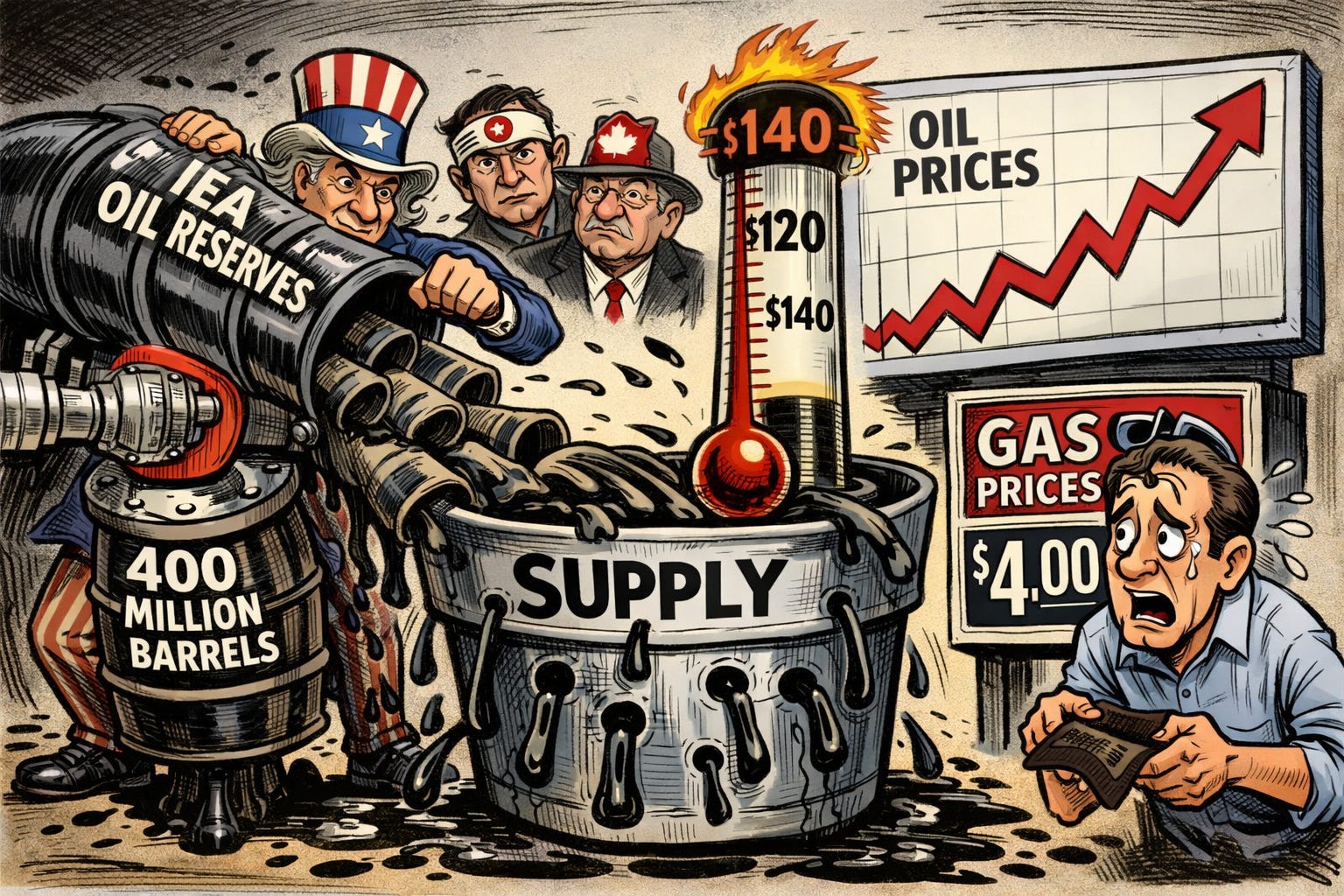
The International Energy Agency (IEA) agreed unanimously to release 400 million barrels from emergency reserves, the largest coordinated stock release in history and more than double the previous record of 182.7 million barrels during the 2022 Russia-Ukraine crisis. The United States is contributing the lion’s share at 172 million barrels, followed by Japan at 80 million, Canada at 23.6 million, South Korea at 22.46 million, and Germany at 19.7 million. Japan moved faster than any other member, beginning physical releases on 16 March, even before the IEA’s formal rollout schedule started. Asia-Oceania stocks are flowing immediately, while US and European releases begin later this month (IEA).
The problem is that the release has not contained prices. Brent crude has not sustained below $100 since 13 March and hit $119 intraday yesterday before settling around $109. At the current shortfall rate of roughly 8 million barrels per day (bpd), the 400 million barrel release covers only about 50 days of lost supply. The IEA itself acknowledged that exports from the Gulf region had fallen to less than 10% of pre-conflict levels. Canada’s contribution highlights the logistical constraints: it has no strategic reserve at all, so its 23.6 million barrels must come from increased production and spare pipeline capacity over a 90 to 180 day window. Barclays raised its 2026 Brent forecast to $85 per barrel but warned that a four to six week disruption could reprice crude to $100, while Goldman Sachs said Brent could surpass its 2008 nominal high of $147.50 if outages persist (Reuters).
Sensei’s Insight: The IEA still has over 1.4 billion barrels in reserve and has signalled willingness to do more, but the model was designed for temporary, partial disruptions. This crisis involves near-total closure of a chokepoint carrying 20% of global seaborne oil with no clear end date. Watch US gasoline prices, which hit $3.88 yesterday and are forecast to cross $4 next week, as the pass-through into consumer spending and inflation expectations could force the Fed’s hand on policy.
🏛️ Wall Street Banks Get a $60 Billion Capital Gift
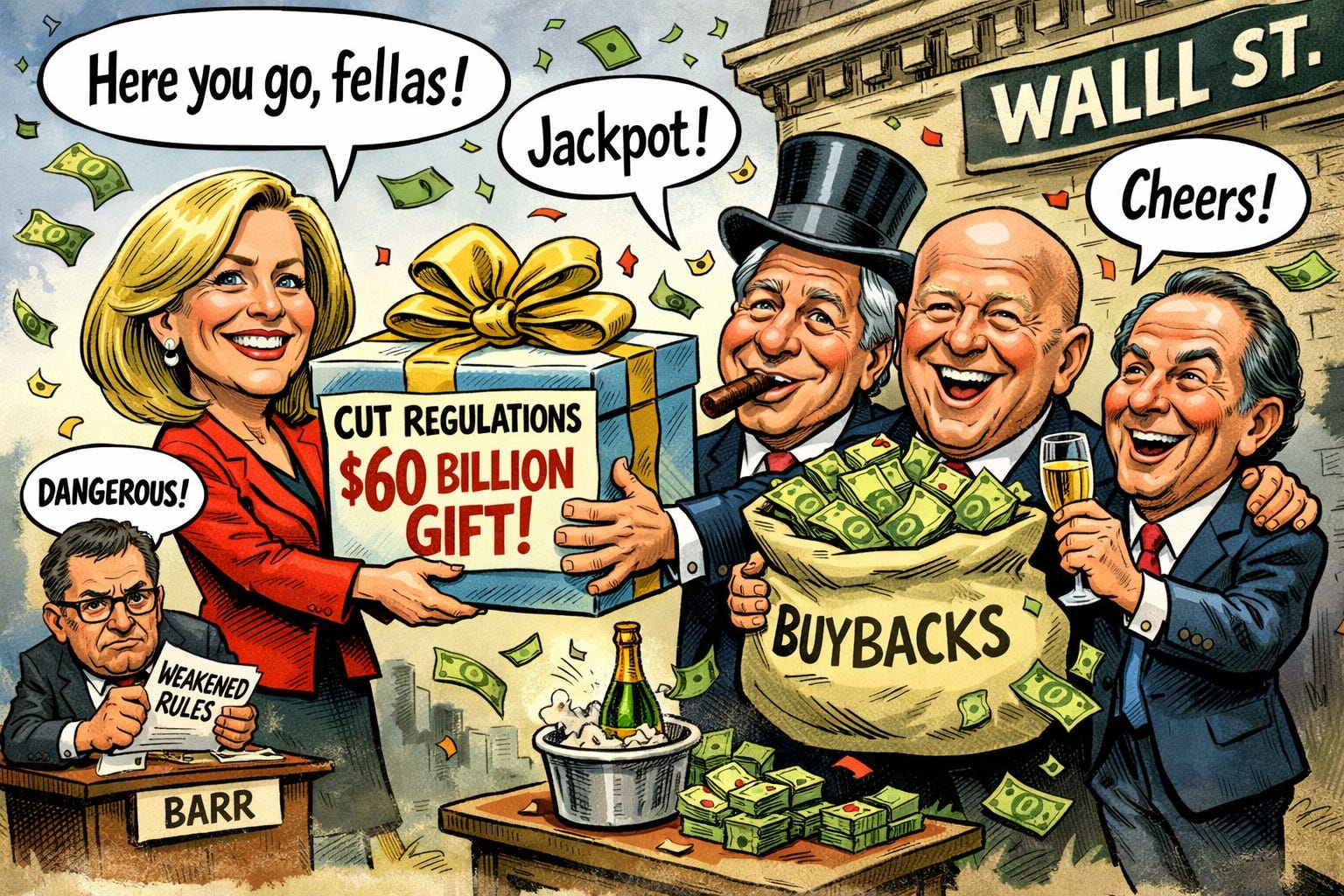
US bank regulators yesterday unveiled a sweeping rewrite of capital rules that flips the Basel III endgame on its head. The original 2023 proposal under then-Vice Chair for Supervision Michael Barr would have raised Common Equity Tier 1 (CET1) requirements for the biggest banks by 19%. After an aggressive industry lobbying campaign that included lawsuit threats and attack ads, and a change in administration, the new rules proposed under Trump appointee Michelle Bowman would instead reduce CET1 requirements by 4.8% for global systemically important banks (GSIBs), 5.2% for large regionals, and 7.8% for smaller banks. The Federal Reserve Board voted 6-1, with Barr the sole dissenter. The Federal Deposit Insurance Corporation (FDIC) voted unanimously 3-0 (CNBC).
The practical effect is significant. The eight largest US banks hold roughly $1 trillion in combined capital, and the 4.8% reduction frees up an estimated $50 to $60 billion. Morgan Stanley estimates large banks currently sit on approximately $175 billion in excess capital accumulated during years of regulatory uncertainty. Moody’s labelled falling capital requirements “credit negative,” while Barr warned the proposals “would harm the resilience of banks and the US financial system.” On the other side, Treasury Secretary Bessent called existing rules “needlessly complex.” The rules now enter a 90-day comment period, with finalisation unlikely before early 2027 (Reuters).
Sensei’s Insight: History suggests freed capital flows to share buybacks before loan growth. The last major capital rollback in 2018 raised the “systemically important” threshold from $50 billion to $250 billion in assets, and that deregulation was partially vindicated in the worst way when Silicon Valley Bank, at $209 billion, collapsed in 2023. Watch Goldman Sachs and Morgan Stanley as the biggest beneficiaries of the trading-capital recalibration, and watch for accelerated buyback announcements once the comment period closes.
🇯🇵 Trump Invokes Pearl Harbor with Japan’s PM, Drawing Gasps
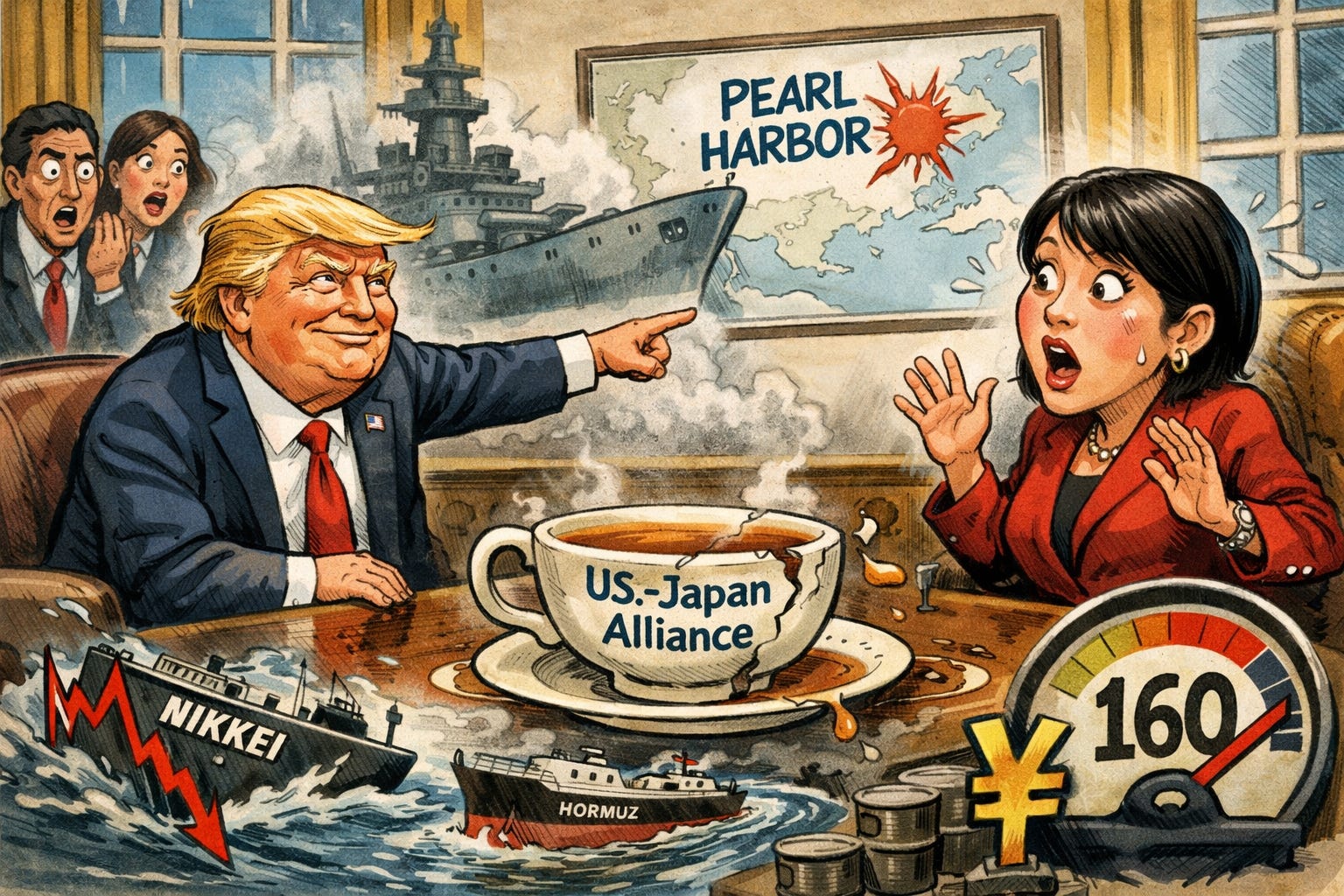
During an Oval Office press appearance yesterday with Japanese Prime Minister Sanae Takaichi, a reporter asked why the US did not inform allies before striking Iran. President Trump responded by drawing a parallel to Imperial Japan’s 1941 attack on Pearl Harbor, the surprise military strike on the US naval base in Hawaii that killed 2,390 Americans and drew the United States into World War II. It remains one of the most devastating attacks on American soil in history, and the memory of it shaped decades of post-war US-Japan diplomacy. Both nations spent years building a reconciliation framework, with former Prime Minister Abe visiting the Pearl Harbor memorial alongside President Obama in 2016 to offer condolences. American presidents have, until now, studiously avoided invoking Pearl Harbor in diplomatic settings with Japanese leaders (Reuters).
The backlash has been swift because the comparison offends on multiple levels simultaneously. Pearl Harbor was a sneak attack by an aggressor nation that killed thousands and triggered America’s entry into a world war. The US strikes on Iran were a military operation initiated by the world’s most powerful country against a regional adversary. By drawing the parallel, Trump did not justify operational secrecy so much as equate America’s own military actions with one of the most condemned strikes of the 20th century, while insulting the allied leader sitting directly across from him. For Japan, the wound runs deeper still: Trump effectively weaponised the single most painful chapter in the US-Japan relationship as a throwaway line, undoing years of careful diplomatic work both nations invested in moving beyond that history. An Asahi Shimbun poll shows 82% of the Japanese public opposes the US war in Iran, and Takaichi was visibly startled. She avoided rejecting Trump’s request for Japanese warships while noting Japan has no plans to dispatch them. The $550 billion Japanese investment package remains on track, but the Nikkei 225 is down over 9% since the war began, Japan imports roughly 70% of its oil through Hormuz, and the Bank of Japan held rates yesterday in what markets read as a dovish pivot driven by demand destruction fears (Al Jazeera).
Sensei’s Insight: The alliance will survive because Japan’s security dependence on the US runs too deep, given the threats from China, North Korea, and Russia. But the gaffe erodes the personal diplomacy Takaichi has been building with Trump, and that matters for everything from trade terms to Japan’s willingness to assist with Gulf maritime security. Watch the yen at 160 to the dollar, a level Japan’s finance minister has called psychologically significant, as a pressure gauge on how much strain this relationship can absorb.
🇮🇱 Netanyahu Declares Victory, Offends Two Religions, and Markets Barely Blink
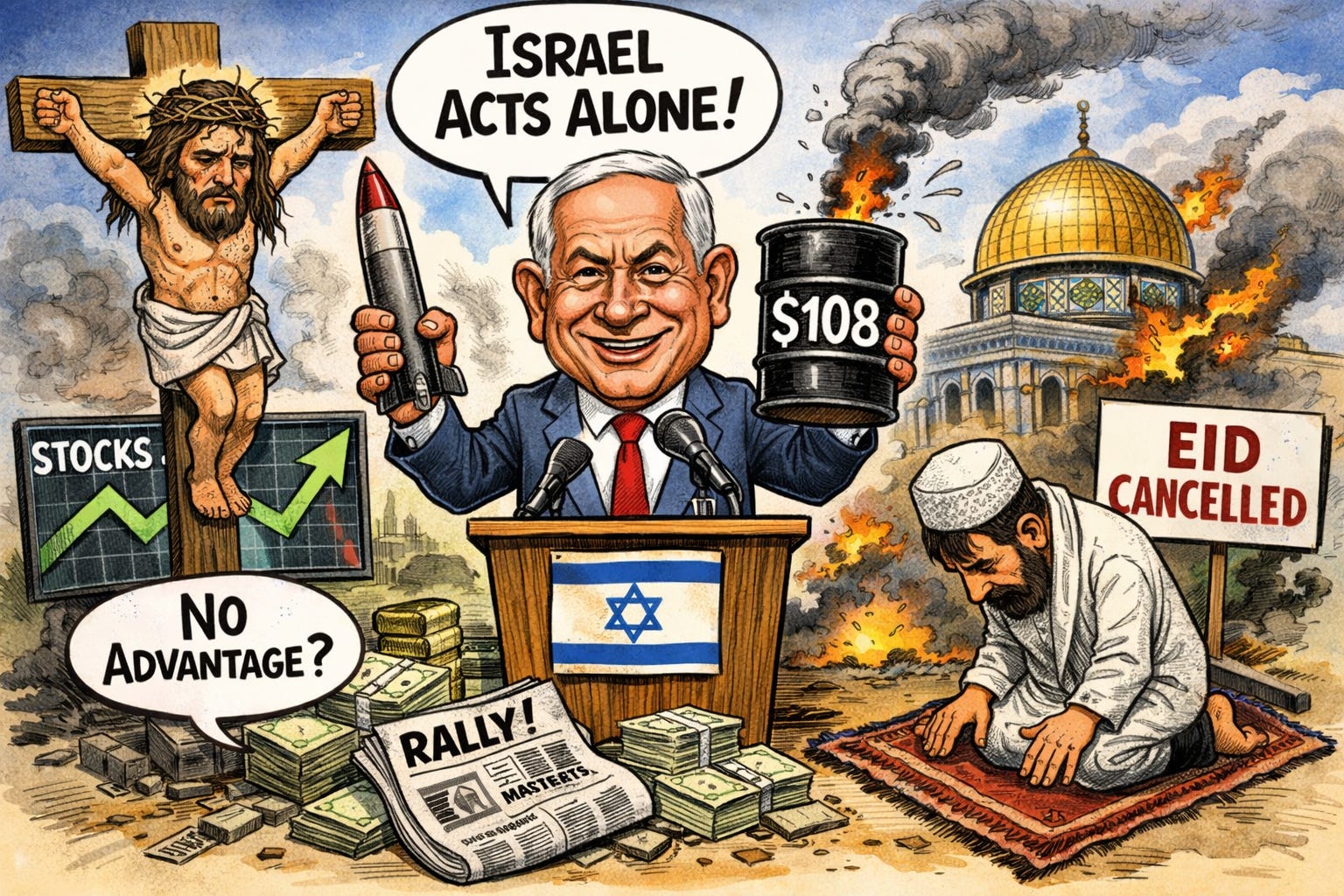
Israeli Prime Minister Benjamin Netanyahu held his first English-language press conference of the war yesterday and managed to move markets, provoke a diplomatic firestorm, and insult billions of people in a single sitting. The headline for traders came first: Netanyahu claimed Israel had destroyed Iran’s ability to enrich uranium and manufacture ballistic missiles, said the war would end “a lot faster than people think,” and confirmed that Israel “acted alone” in striking Iran’s South Pars gas field. He added that Trump had asked Israel to hold off on future energy strikes, and that Israel would comply. Brent crude, which had surged to $119 per barrel earlier in the session on the back of the South Pars and Ras Laffan damage, reversed sharply on the comments and settled around $108.65. US stock indexes staged a late rally. But the optimism lasted about as long as it took to read the transcript (Times of Israel).
Then came the rest of the press conference. Defending the war’s moral logic, Netanyahu quoted historian Will Durant’s The Lessons of History, declaring: “Jesus Christ has no advantage over Genghis Khan. Because if you are strong enough, ruthless enough, powerful enough, evil will overcome good.” The remark went viral within hours. Netanyahu later took to social media calling the backlash “fake news” and insisting he was simply quoting Durant’s argument that moral civilisations still need military strength. But the damage was done. Jesus is not only the central figure of Christianity but is also revered in Islam as the prophet Isa, one of the most important messengers of God in the Quran. Dismissing him as no better than a genocidal conqueror offends both faiths simultaneously. The comparison was delivered on the eve of Eid al-Fitr, the celebration marking the end of Ramadan, while Israel kept the Al-Aqsa Mosque in Jerusalem, one of Islam’s three holiest sites, closed to worshippers for the first time on Eid since 1967. Over 4,200 people across the region have been killed in the three-week conflict. For roughly 2.2 billion Christians and nearly 2 billion Muslims, the optics of a wartime leader reducing the figure sacred to both faiths to a rhetorical device while bombs fell on worshippers during their holiest days could not have been worse (CNN).
Sensei’s Insight: Markets treated Netanyahu’s ceasefire language as a reason to sell oil and buy equities, but the rally unravelled overnight as Kuwait and UAE facilities took fresh strikes during Eid. The pattern has repeated several times this month: optimistic remarks followed by continued escalation. Watch the spread between Brent crude futures and physical spot benchmarks like Dubai at $166.80. When that gap starts narrowing, it signals real de-escalation. Until then, treat verbal ceasefire talk as noise.
🔗 Connect with Us
Stay plugged in across platforms:
Sensei on X: sensei_live_
Martyn Lucas on X: MartynInvestor
Vaz on X: eVTOLHUB
📺 YouTube Channel (Live & Replays): Martyn Lucas Investor

🔍Deep Dive: The Export Ban That Almost Was: Why Keeping American Oil at Home Would Make Everything Worse