

This content is for informational and educational purposes only and does not constitute financial advice. Always do your own research. Not financial advice (NFA).
👀 Today’s Stories at a Glance
🖥️ Intel smashes the bar: Revenue jumped 25% to $16.1 billion, its fastest in fifteen years, sending shares up as much as 12% after hours.
📉 Wall Street’s worst day in a month: The S&P 500 fell 1.2% and the Nasdaq 2.2% as AI spending fears and surging oil hit stocks.
🛢️ Oil breaks $100: Brent topped $100 a barrel for the first time since May as Trump weighed a bigger strike on Iran.
🧱 Trump rebuilds his tariff wall: The US set new 10% to 12.5% duties on 60 economies, covering almost all its imports, effective today.
₿ Bitcoin slips as bill stalls: BTC eased toward $65,500 as CLARITY Act passage odds held near 38% and the recess clock ticked down.
🏦 ECB holds, eyes September: Europe’s central bank kept rates at 2.25% while Lagarde left the door open to a hike in September.
🛡️ Lockheed beats and lifts guidance: The defence giant grew revenue 11% to $20.1 billion, raised its outlook, and posted a record $230 billion backlog.
🥇 Gold slips toward $4,040: Bullion fell for a second day as higher oil and firmer yields outweighed the safe-haven bid from the Middle East.
🇬🇧 UK data lands this morning: June retail sales and fresh flash business surveys give the first read on how the economy fared in July.
📈 Chart of the Day, SpaceX: SPCX bounced off 110.64 support to close at 118.24, still capped by its downtrend line until a break confirms.
🧠 One Big Thing
Strip out the earnings and today is about the cost of money hardening. Oil above $100, a new US tariff wall on 60 economies, an ECB openly weighing a September hike, and firmer bond yields all send the same higher-for-longer message, and that is the exact backdrop that punishes long-duration, capital-hungry growth. It is why Alphabet and Tesla slid on spending, why gold cannot hold its highs, and why Bitcoin eased as risk appetite thinned. The through-line is not the results, it is the discount rate stiffening a week before the Federal Reserve meets. Watch the 10-year Treasury yield and oil into the 28th and 29th.
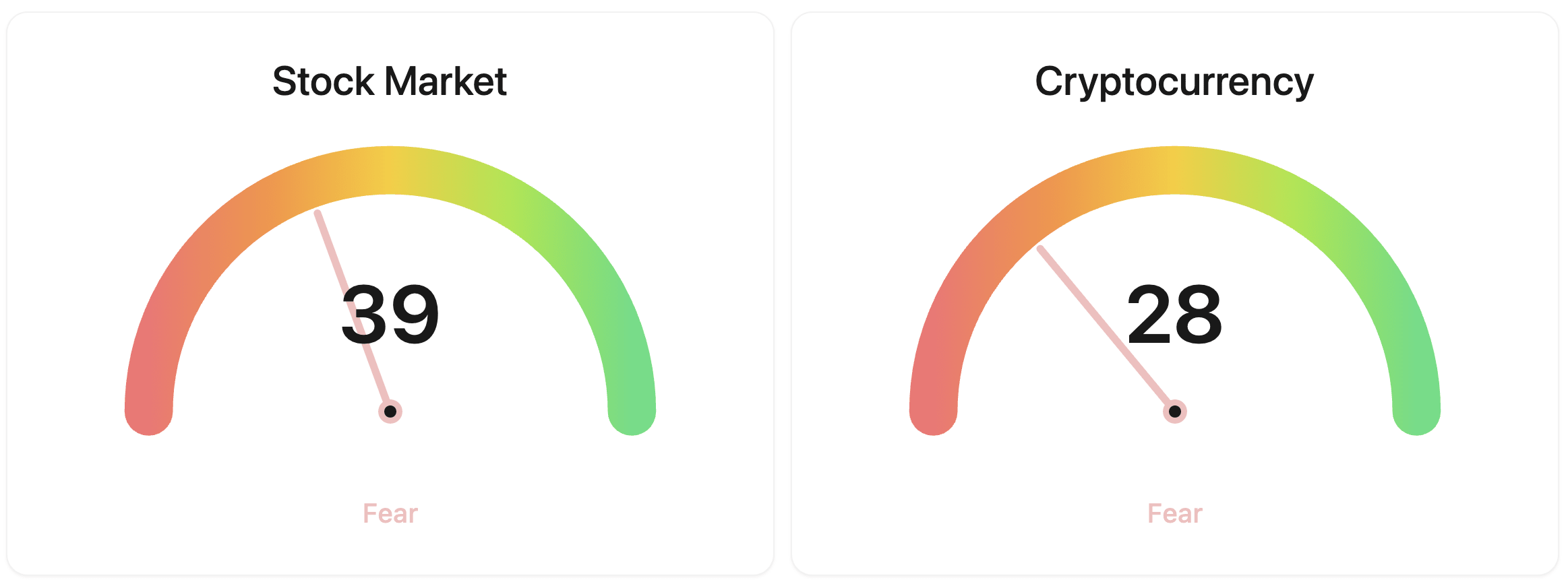
⚖️ Fear & Greed
📉 The Number That Matters
$16.1 billion
Intel’s second-quarter revenue rose 25% on the year to $16.1 billion, its fastest growth in almost fifteen years and well ahead of the $14.4 billion analysts expected, sending the stock up as much as 12% after the close.
⚔️ Winners vs Losers
Winners
LVWR 0.00%↑: +116.88% LiveWire Group more than doubled in pre-market after the Harley-Davidson backed electric motorcycle maker reported second quarter revenue up 55% year over year and a narrowed net loss. The stock had closed down 15.29% at 77 cents near its 52-week low before reversing hard in extended trading on very thin volume.
AMKR 0.00%↑: +9.46% Amkor Technology climbed after the semiconductor packaging firm announced a multi-year, 1.5 billion dollar strategic partnership with Nvidia, under which Nvidia will make a prepayment to fund expansion of Amkor’s advanced packaging and test capacity in Arizona.
SAP 0.00%↑: +5.89% SAP SE rose after the German software group posted second quarter current cloud backlog of 22.9 billion euros, up 27%, with cloud revenue up 22% and IFRS earnings per share up 30% to 1.89 euros. The bounce comes off a 52-week low, and SAP trimmed its full year operating profit outlook slightly to reflect dilution from the Dremio and Prior Labs acquisitions.
INTC 0.00%↑: +4.28% Intel advanced after reporting second quarter revenue up 25% to 16.13 billion dollars and adjusted earnings of 42 cents per share, roughly double consensus, driven by a 59% surge in data center and AI revenue. Current quarter guidance of about 16.3 billion dollars also landed well ahead of Wall Street.
Losers
CDXS 0.00%↑: -22.11% Codexis dropped after the enzyme engineering company priced an underwritten public offering of 16.67 million shares at a roughly 25% discount to Thursday's close, raising about 23 million dollars in net proceeds for working capital and R&D.
📊 Market Snapshot
Cryptocurrencies:
Bitcoin (BTC): $65,365 (▲ 0.46%)
Ethereum (ETH): $1,890 (▲ 0.68%)
XRP: $1.11 (▲ 0.55%)
Equity Indices (Futures):
S&P 500: 7,454 (▲ 0.12%)
NASDAQ 100: 28,600 (▼ 0.07%)
FTSE 100: 10,678 (▲ 0.75%)
Commodities & Bonds:
10-Year US Treasury Yield: 4.70% (▼ 0.09%)
Oil (WTI): $90 (▼ 2.38%)
Gold: $4,051 (▲ 0.04%)
Silver: $58.23 (▲ 1.07%)
Data as of: UK: 9:45am BST / US: 4:45am EDT / Asia (Tokyo): 5:45pm JST
✅ 5 Things to Know
🖥️ Intel roars back with its biggest beat in years
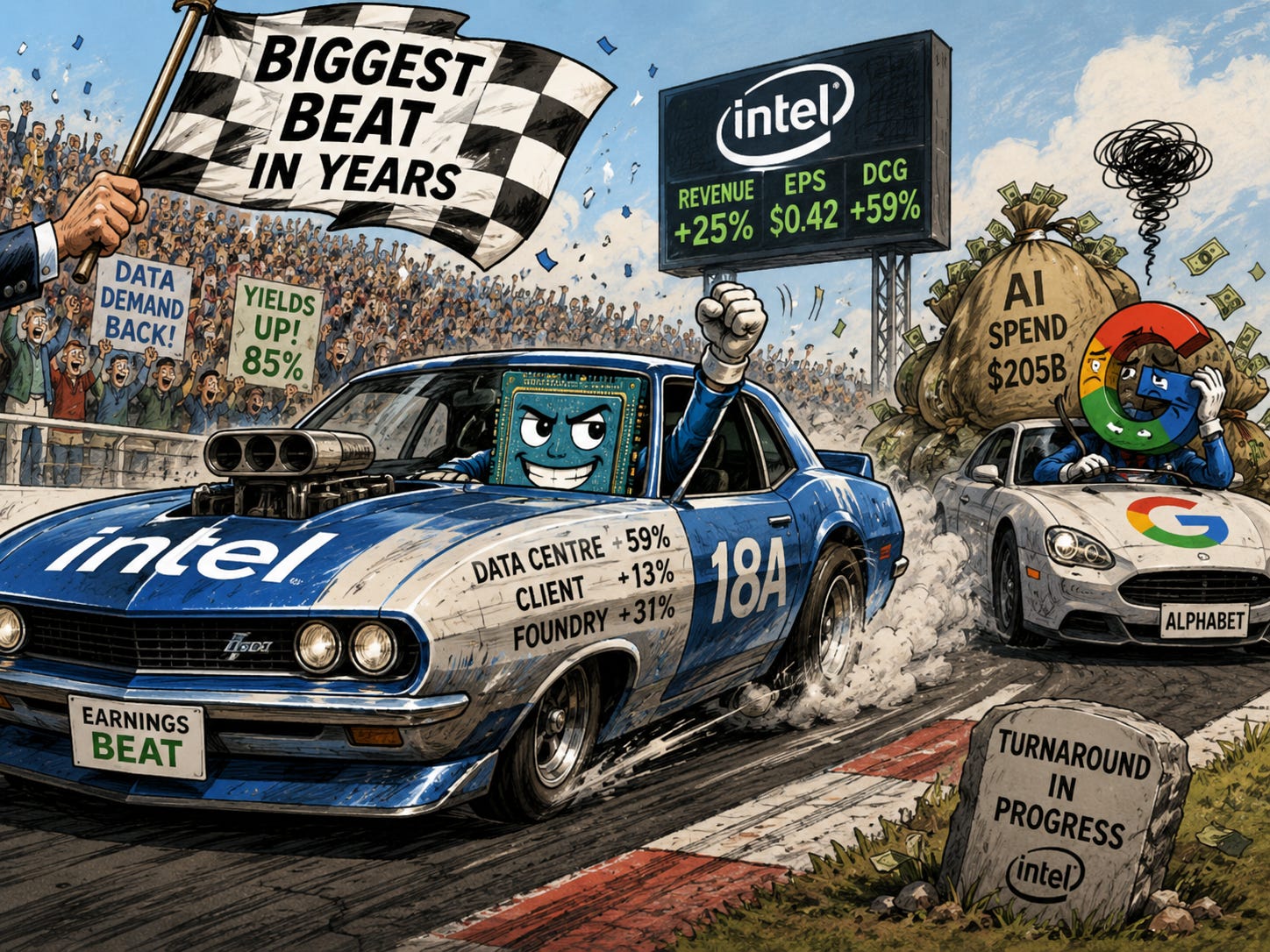
Intel delivered the surprise of the earnings season after the US close yesterday, and the shares jumped as much as 12% in extended trading. Analysts had modelled $14.4 billion in revenue. Intel did $16.1 billion, up 25% on the year and its fastest growth in almost fifteen years. Adjusted earnings came in at $0.42 a share, double the $0.21 expected. The standout was the data-centre and AI unit, where sales climbed 59% to $6.3 billion as demand for server chips returned, while the client-computing business added 13% to $8.9 billion. The foundry arm, the part that makes chips for other firms, grew 31% to $5.8 billion, with yields on its new 18A process reported near 85%, up from around 65% a quarter earlier (CNBC).
The timing could hardly be sharper. Alphabet reported the same evening, beat, and still fell, punished for lifting its AI spending toward $205 billion with the returns unproven. Intel offered the mirror image: a company whose long-doubted turnaround is starting to show up in the actual numbers. The stock had already run about 163% this year on hope, so the bar was high, and it did give back part of the after-hours pop as investors weighed a bottom-line net loss near $11 billion tied to one-off charges. The read-through for the wider chip trade is real. After a brutal fortnight for semiconductors, a genuine beat from the sector’s most troubled name suggests the AI build-out is still pulling hardware through.
Sensei’s Insight: The market rewarded Intel for the same thing it punished Alphabet for the night before: spending on AI. The difference is proof. Intel’s data centre is finally growing again and the foundry yields are climbing. This is the first hard sign the turnaround is real.
📉 Stocks log their worst day in a month
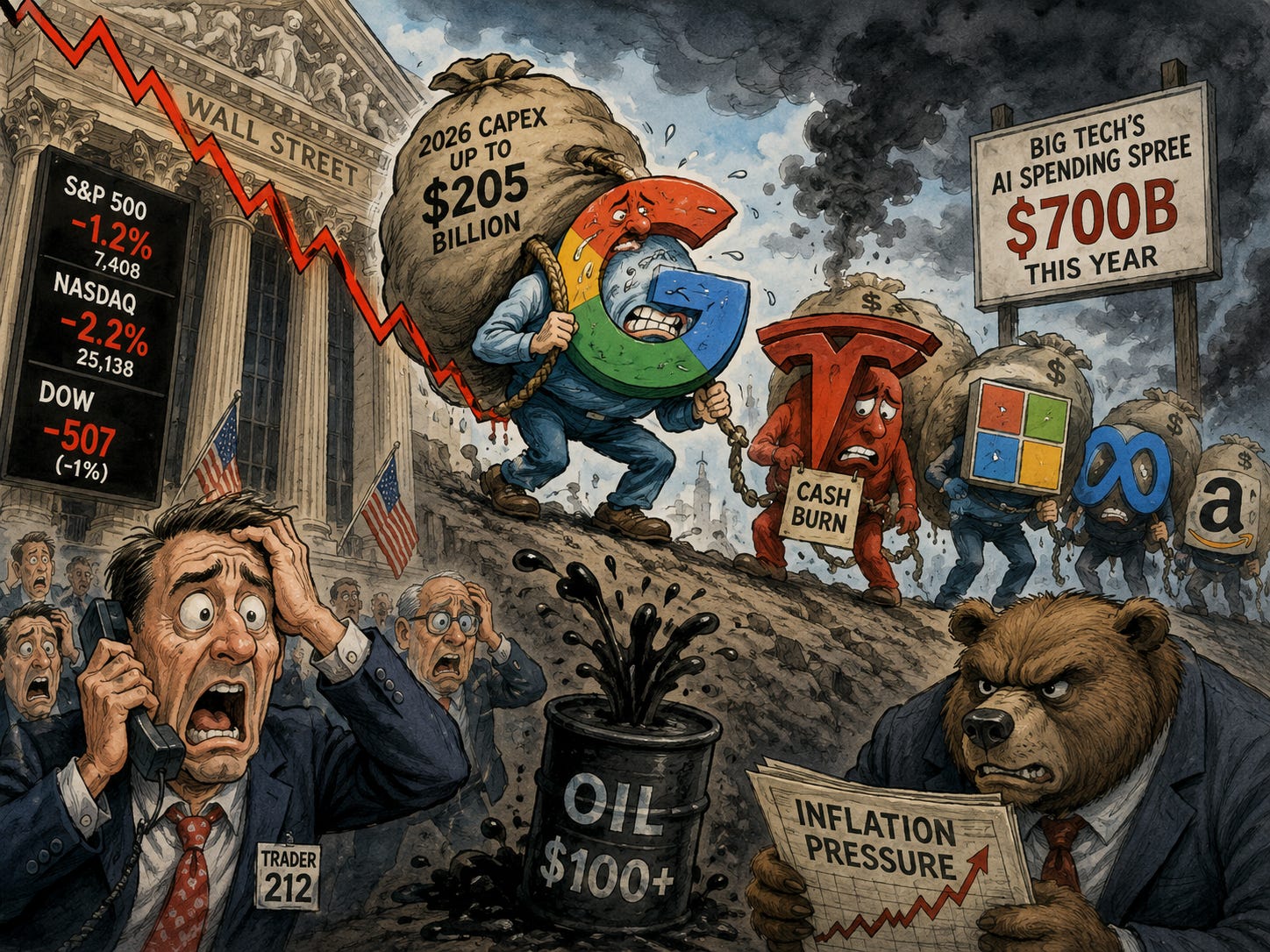
Wall Street had its roughest session in weeks yesterday. The S&P 500 fell 1.2% to 7,408, its biggest one-day drop in a month, the tech-heavy Nasdaq Composite slid 2.2% to 25,138, and the Dow lost 507 points, or about 1%. The selling was led by the very megacaps that were meant to carry the market: Alphabet dropped despite beating on sales, after it raised its 2026 capital-spending plan to as much as $205 billion, and Tesla weakened after swinging to a cash burn. Rising oil, which climbed past $100, added a second weight, hitting sentiment across the growth names most sensitive to inflation and rates (TheStreet).
So why did a clear beat get sold? Because investors have stopped treating AI spending as automatically good. The five largest US cloud builders are on track to spend around $700 billion this year, most of it on AI, and until the revenue shows up to justify it, every raised budget reads as a cost the company has to defend. Microsoft, Meta and Amazon all report over the coming days, and each faces the same test Alphabet just failed: prove the build-out is paying, or watch a strong quarter get sold anyway.
Intel’s beat is the counter-case, and the gap between the two sets the tone into next week.
Sensei’s Insight: For two years, more AI investment meant a higher stock. That reflex has snapped. The megacaps reporting next week will be judged on whether the spending is paying back yet, and Alphabet just showed what happens when the proof runs behind the bill. That is a tougher exam than the one they have been passing.
🛢️ Oil breaks $100 as Trump weighs a bigger strike
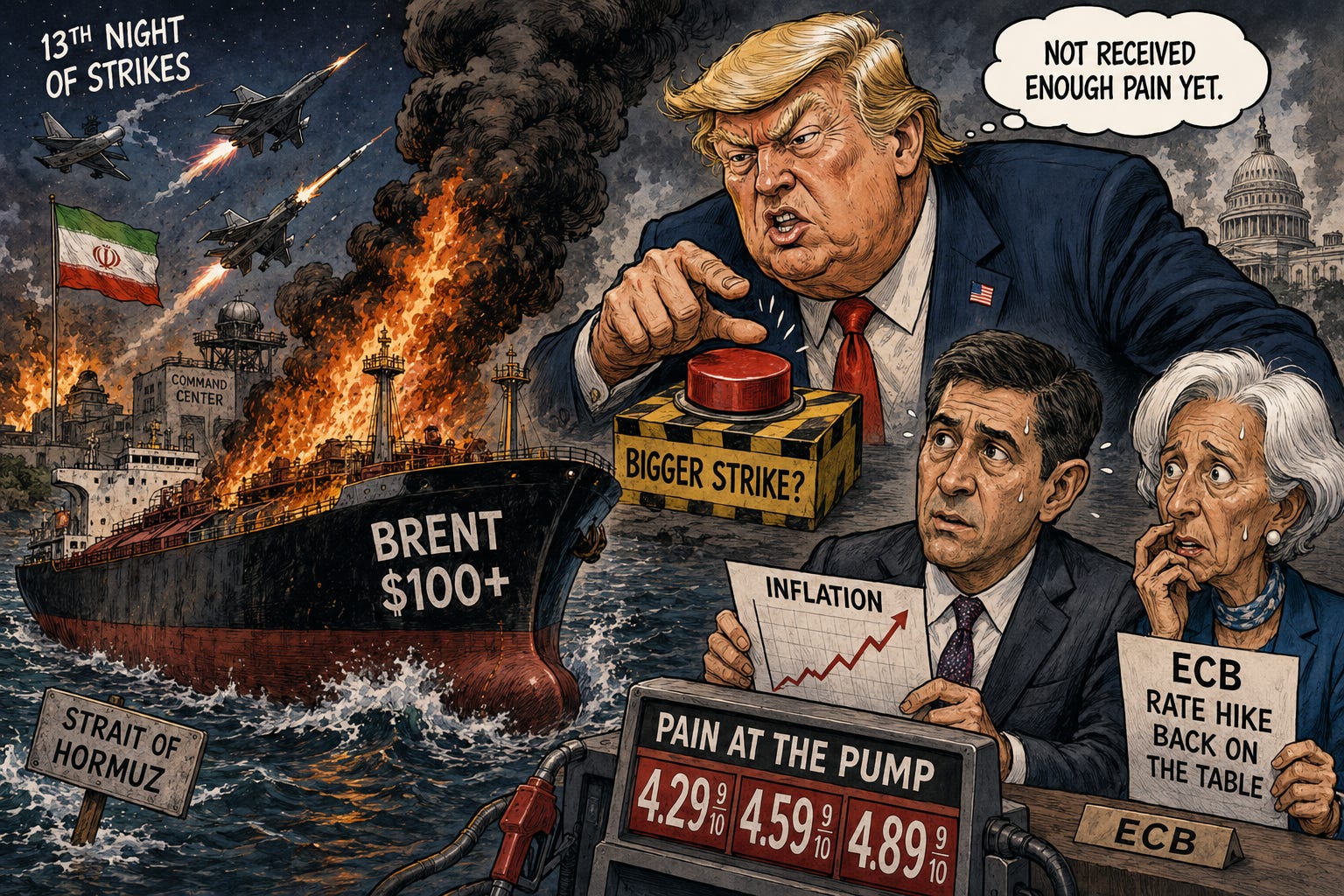
Crude pushed through a level it had not seen since the spring. Brent settled above $100 a barrel yesterday, its highest since May and up more than 13% on the week, while US West Texas Intermediate settled near $92. The climb ran for a fifth straight session, driven by a widening conflict with Iran. US forces struck Iranian targets for a thirteenth consecutive night, hitting command centres and sites tied to the Strait of Hormuz, the channel that carries roughly a fifth of the world’s seaborne oil. President Trump told Axios he is weighing a larger assault, saying Iran had “not received enough pain yet,” and warned of major military punishment for further attacks on shipping (CNBC).
The move reaches well past the petrol pump. The slide in oil earlier this summer, from around $95 to the low $70s after a June ceasefire, was the single biggest reason inflation cooled on both sides of the Atlantic. A sustained return toward and beyond $100 threatens to unwind that relief and stiffen the case for central banks to hold rates high. It lands a week before the Federal Reserve meets on the 28th and 29th, and it has already pulled the European Central Bank back toward a rate hike. For a market that spent June relaxing about prices, triple-digit oil is the fastest way to reverse the mood.
Sensei’s Insight: This is the story working against the good inflation news. Tankers burning and a thirteenth night of strikes, not talk, is what took Brent over $100. If it holds there, the soft inflation prints of this summer may turn out to be the last easy ones before the Fed.
🧱 Trump rebuilds his tariff wall on 60 economies
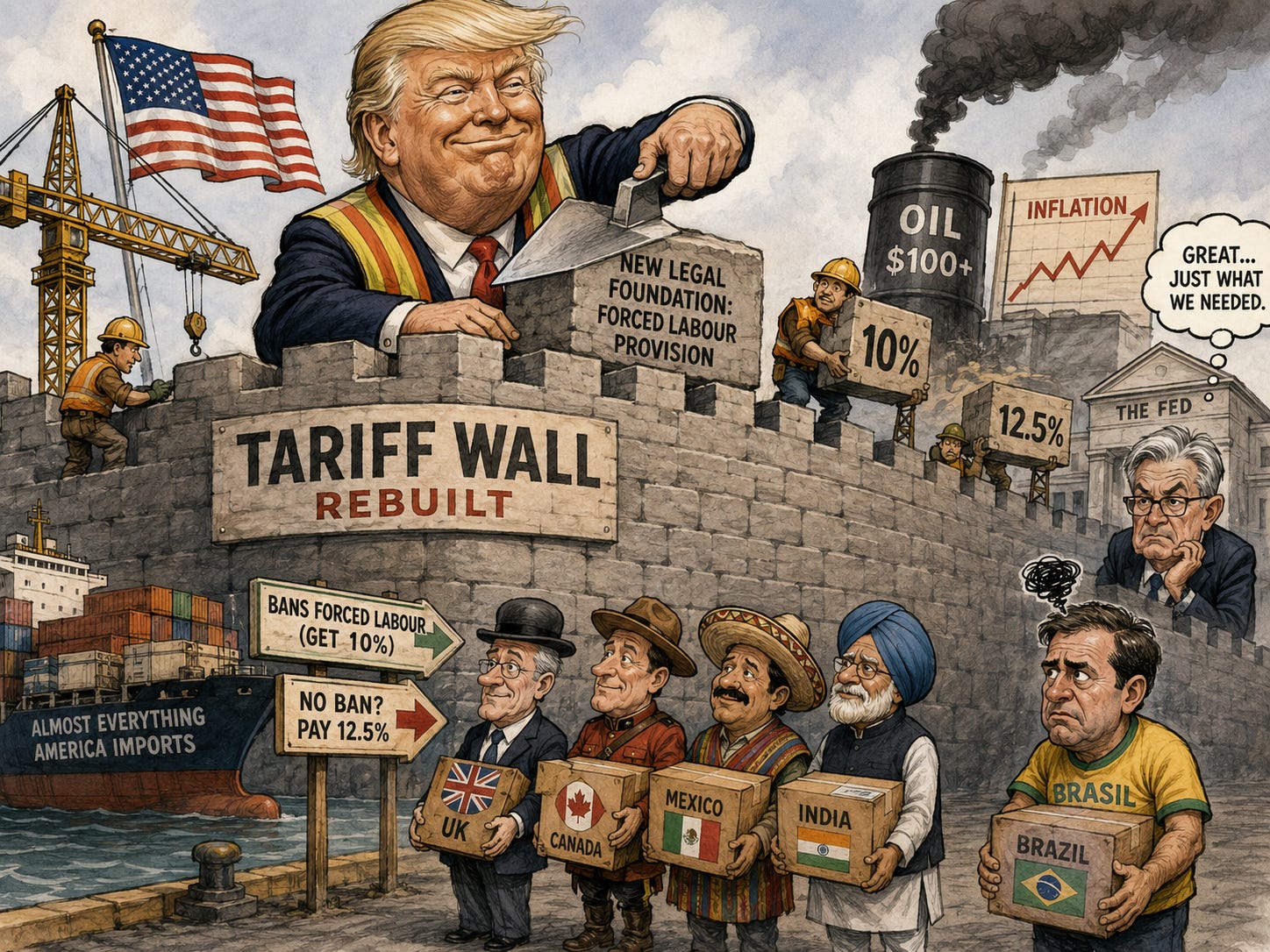
The US moved to reconstruct President Trump’s tariff wall today, setting fresh duties of 10% to 12.5% on imports from around 60 economies, a group that covers the top US trading partners and roughly 99.4% of everything America buys from abroad. The new levies take effect this morning, replacing a temporary 10% global tariff that expires today. They arrive under a new legal banner: the Office of the US Trade Representative acted under a forced-labour provision, penalising countries it says failed to block goods made with forced labour. Partners that have adopted such bans, among them the UK, Canada, Mexico and India, face the 10% rate, while those that have not, such as Brazil, face 12.5% (Bloomberg).
In February the Supreme Court struck down most of Trump’s earlier tariffs, ruling he had overstepped his emergency powers. This is the administration’s way around that defeat, rebuilding the wall on firmer legal ground. For investors the effect is much the same as before: a broad new tax on imported goods that companies tend to pass along, adding to inflation just as oil surges back over $100 and central banks are already on edge. Most trading partners rejected the forced-labour rationale, with Brazil calling the move arbitrary, though most stopped short of retaliating and kept the door open to more talks, which limits the immediate risk of a wider trade war (CNBC).
Sensei’s Insight: This is the tariff wall going back up, now on ground the courts will find harder to knock down. It lands with oil over $100 and inflation already the market’s main worry. A fresh tax on nearly everything America imports is the last thing a boxed-in Fed wanted a week before it meets.
₿ Bitcoin slips as the crypto bill runs out of road
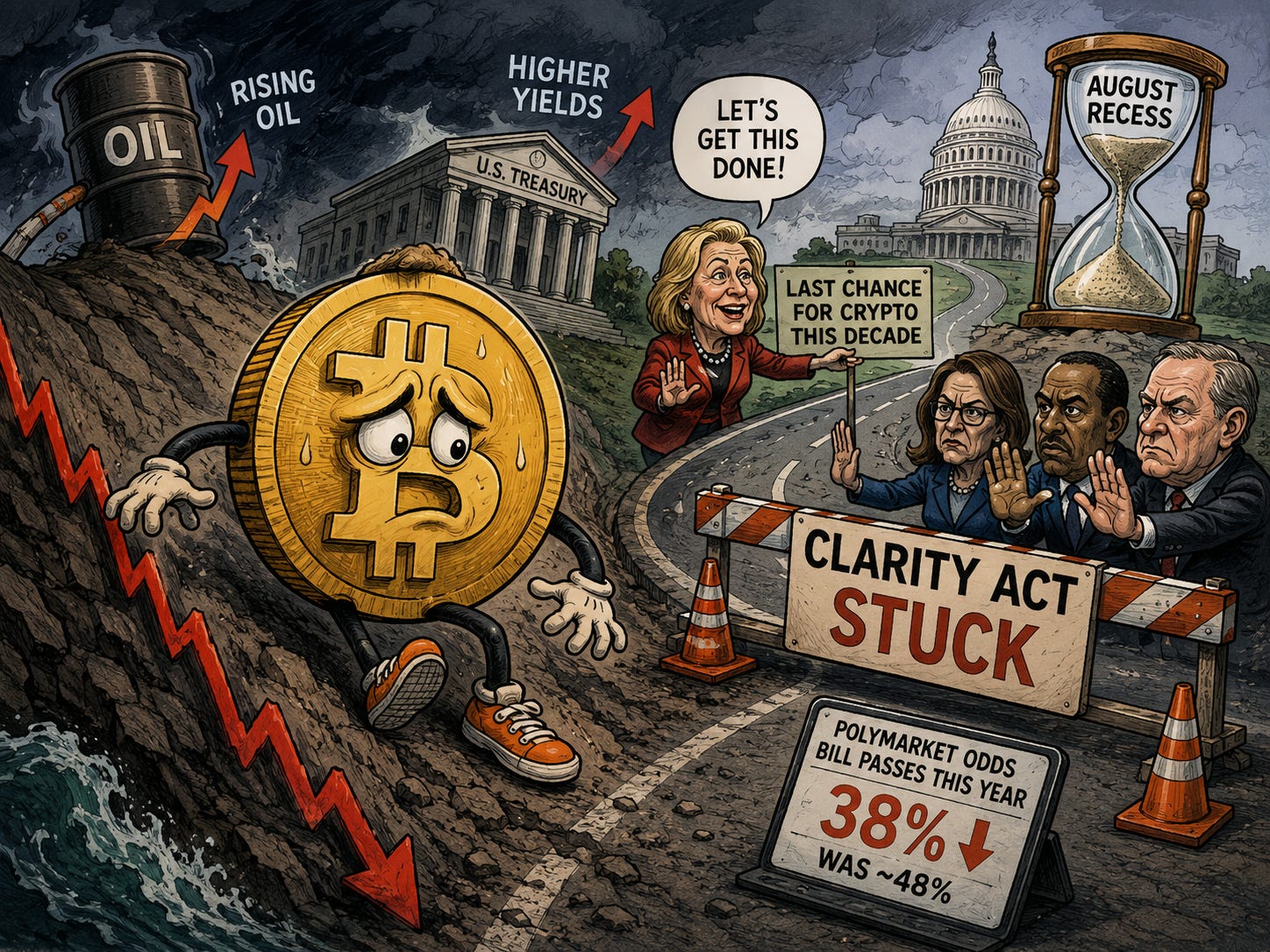
Bitcoin eased back toward $65,500, weighed down by the same rising oil and firmer yields pressuring the rest of the risk market, and by fading hopes for its big legislative prize. The market-structure bill known as the CLARITY Act is stuck. Senate negotiators released an updated draft that softened the disputed ethics provision, letting it sunset in 2029 and giving regulators a year to implement it, but key Democrats are still not satisfied. Prediction market Polymarket puts the odds of the bill becoming law this year near 38%, down from close to 48% earlier in the week. Senator Cynthia Lummis, pushing for a floor vote, called it likely the last chance to pass meaningful crypto rules this decade (CoinDesk).
The maths is unforgiving. The bill needs at least seven Democratic votes to clear the Senate’s cloture hurdle, and it has to do so before lawmakers leave for their August recess, so the window is now a matter of days. Miss it and the effort likely slips toward the year end, deep into the midterm run-up. For a market that rallied through the spring on the prospect of a clear US rulebook, a vote count that keeps drifting lower removes one of its main supports at the same moment the macro backdrop turns less friendly.
Sensei’s Insight: Price chased the politics higher for months, and now it is following them back down. The enforcement fight is genuine and the recess clock is real. With oil and yields also leaning on risk, Bitcoin has lost the easy tailwind it had a week ago and is trading on the odds count.
Stories You Might Have Missed
🏦 The ECB holds but signals a September move
The European Central Bank left its deposit rate at 2.25% yesterday, the hold everyone expected, then leaned hawkish in the message. President Lagarde said some governors had begun to ask whether a further hike was warranted, and warned that the jump in oil poses an upside risk to inflation, which she now sees staying well above target into the first half of 2027. Traders moved to price an increase at the next meeting in September. With the Fed boxed in and unable to cut, the ECB is turning into the major central bank most likely to be raising into the autumn, a divergence that tends to firm the euro and lift European bond yields (Bloomberg).
🛡️ Lockheed Martin beats big and lifts its outlook
Lockheed Martin gave the defence sector a strong quarter and the shares rose more than 5%. The company earned an adjusted $7.94 a share, well ahead of the $7.23 analysts expected, on revenue up 11% to $20.1 billion, beating the $19.4 billion forecast. Growth came across every division, led by a ramp in missiles and munitions as governments restock. Management raised full-year guidance, lifting its sales outlook to roughly $79.75 billion to $81.75 billion and earnings to between $29.95 and $30.65 a share, and pointed to a record order backlog of about $230 billion. With conflict escalating in the Middle East and Europe still rearming, the demand backdrop for defence hardware remains firm, and Lockheed’s raised numbers put a concrete figure on it (Yahoo Finance).
🥇 Gold slips as higher-for-longer bites
Gold fell for a second session, easing toward $4,040 an ounce after dropping close to 2% the day before. The metal is caught in a tug of war. The escalating Middle East conflict and a softer dollar have fuelled safe-haven buying, but the same oil surge that lifts inflation expectations also strengthens the case for keeping interest rates high, and higher rates dull the appeal of an asset that pays no yield. For now the rate side is winning, leaving bullion drifting back from its recent highs even with strikes at sea and a jittery stock market. It is another sign that the cost of money, not the war, is setting the ceiling across assets this week (Yahoo Finance).
🇬🇧 A busy morning for UK data
Britain gets its clearest read of the week this morning. The Office for National Statistics publishes June retail sales, expected to have slipped after a strong May, and a set of flash business surveys for July lands across the euro area, the UK and the US through the day, giving the first hard gauge of how the major economies performed this month. The context is soft: an industry survey from the British Retail Consortium showed total sales up just 1.9% on the year in June, with a record heatwave pulling shoppers away from the high street and online now close to 40% of non-food spending. Coming the day after the ECB’s hawkish turn and days before the Fed, the numbers set the tone for the pound and gilt yields into the weekend (ONS).