This content is for informational and educational purposes only and does not constitute financial advice. Always do your own research. Not financial advice (NFA).
👀 Today’s Stories at a Glance
🦅 Trump picks Warsh for Fed: Former Governor Kevin Warsh is nominated to lead the Fed, signaling potential aggressive rate cuts.
📉 Precious metals market craters: Gold and silver see massive drops as investors bet on Warsh’s hawkish roots and dollar strength.
🤝 Amazon eyes $50 billion AI stake: Amazon negotiates a massive OpenAI investment tied to adopting custom Trainium chips to rival Nvidia.
🏛️ Government shutdown looms: A brief partial shutdown is likely after Senator Graham blocked a tentative funding deal over ICE policies.
🏎️ OpenAI targets 2026 IPO: Sam Altman hunts for $100 billion to fund a public listing while racing rival Anthropic for market dominance.
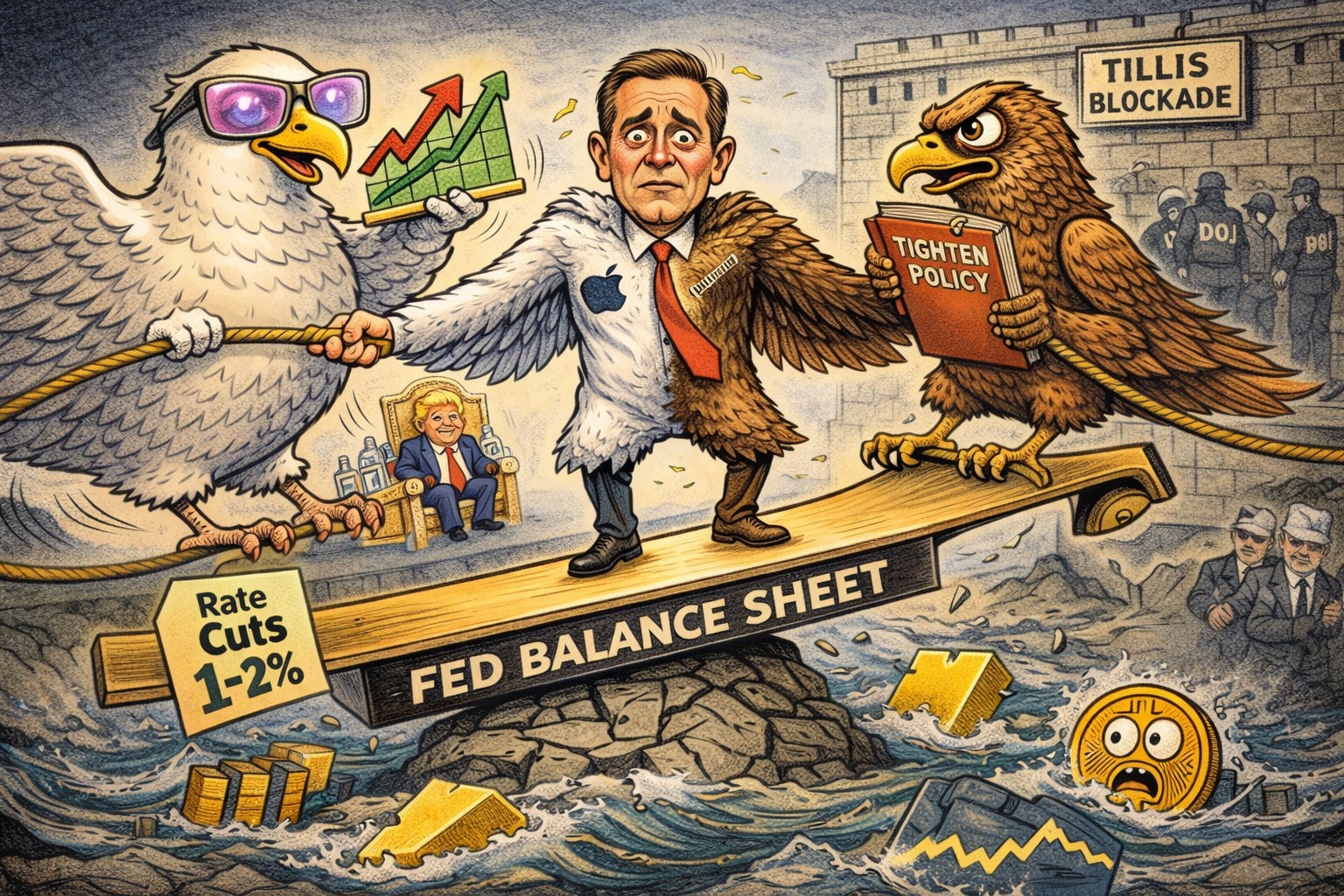
🧠 Warsh nomination triggers regime change: Trump’s Fed pick eyes aggressive rate cuts fueled by AI productivity while slashing the $6.5 trillion balance sheet.
🧠 One Big Thing
President Trump’s expected nomination of Kevin Warsh to lead the Federal Reserve signals a radical shift toward aggressive interest rate cuts paired with rapid balance sheet contraction. While Warsh aims to slash rates to 1% based on an AI-driven productivity theory, markets reacted negatively to the liquidity drain inherent in his plan to shrink the Fed's $6.5 trillion portfolio. This strategy threatens to push long-term bond yields higher even as short-term rates fall, creating a steeper yield curve that pressures equity valuations. Investors face a transition from Jerome Powell’s predictable path to a high-stakes experiment that prioritizes industrial overhaul over traditional inflation targeting. The resulting dollar strength and crypto weakness reflect deep skepticism regarding whether Warsh will remain a dove once in power.
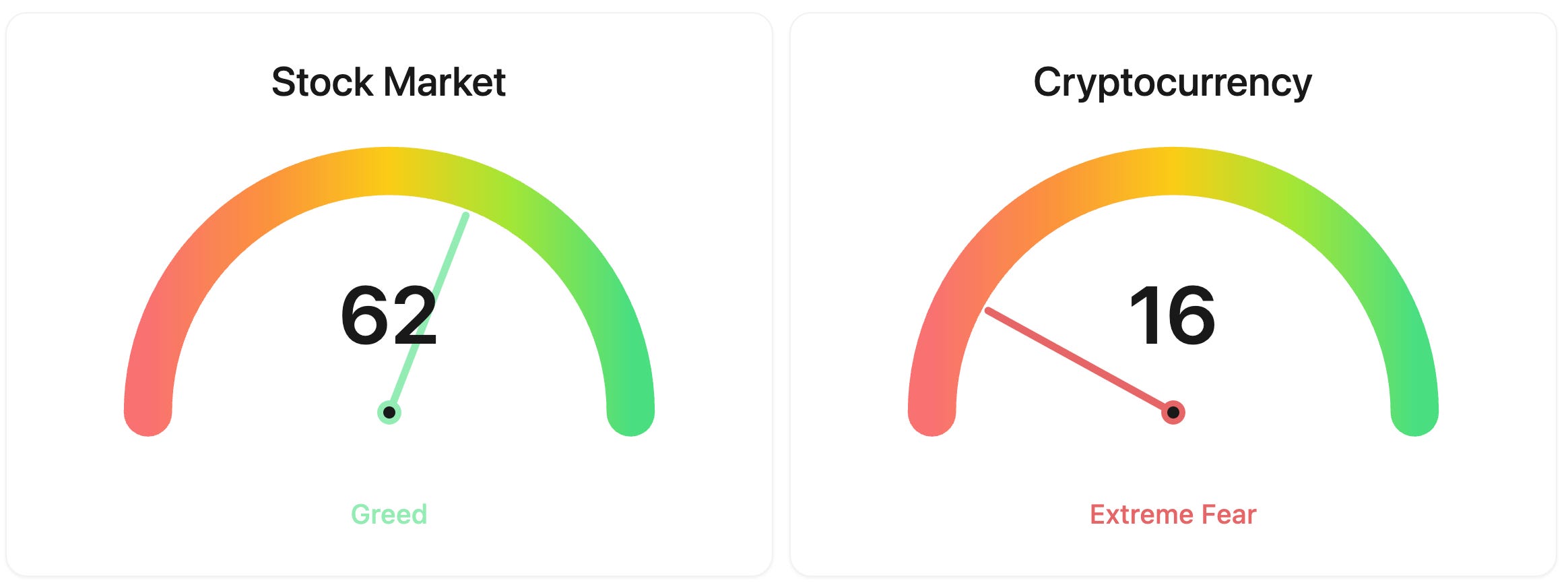
⚖️ Fear & Greed
📉 The Number That Matters
$6.58 TRILLION
Kevin Warsh intends to aggressively slash the Federal Reserve’s $6.58 trillion balance sheet. Investors fear this quantitative tightening will drain market liquidity and drive long-term yields higher, offsetting his promises to cut short-term interest rates to 1-2%.
⚔️ Winners vs Losers
Winners
GCL 0.00%↑: GCL Global Holdings shares soared after ADATA Technology invested $10 million into its 4Divinity subsidiary, valuing the unit at more than double the parent’s market cap.
ANL 0.00%↑: Adlai Nortye Ltd surged as a 57.8% reduction in short interest combined with a positive re-rating of its $230 million licensing deal with ASK Pharm.
SNDK 0.00%↑: Sandisk jumped following a significant Q2 earnings beat and blockbuster Q3 guidance driven by surging AI data center demand for NAND flash storage.
DECK 0.00%↑: Deckers Outdoor Corp. climbed after posting a Q3 beat and raising its full-year outlook, led by 18% growth in its HOKA brand.
VZ 0.00%↑: Verizon Communications Inc. rose as record subscriber additions and a raised 2026 guidance offset industry-wide concerns about mature telecom growth.
Losers
BNAI 0.00%↑: Brand Engagement Network shares plummeted after the company announced a dilutive $1.518 million private placement priced above the current market.
PFSI 0.00%↑: PennyMac Financial Services Inc. dropped after Q4 earnings missed estimates by 39% due to a collapse in mortgage servicing revenue from increased prepayments.
MRNO 0.00%↑: Murano Global Investments Ltd shares fell as short interest spiked 1,717% amid analyst downgrades and concerns over high leverage and poor return on equity.
SNDR 0.00%↑: Schneider National Inc. declined after missing Q4 estimates and issuing 2026 guidance below consensus due to weak freight demand.
MXL 0.00%↑ : MaxLinear Inc. shares pulled back as investors took profits following a year-to-date rally and cautious management commentary regarding seasonal broadband weakness.
CVCO 0.00%↑: Cavco Industries Inc. slid after Q3 results showed margin compression and increased integration costs following the American Homestar acquisition.
AU 0.00%↑: AngloGold Ashanti PLC retreated as gold prices crashed 8% from record highs, triggering a broad liquidation across the precious metals mining sector.
📊 Market Snapshot
Cryptocurrencies:
Bitcoin (BTC): $82,653 (▼ 2.24%)
Ethereum (ETH): $2,735 (▼ 2.97%)
XRP: $1.75 (▼ 3.08%)
Equity Indices (Futures):
S&P 500: $6,931 (▼ 0.43%)
NASDAQ 100: $25,838 (▼ 0.62%)
FTSE 100: £10,210 (▼ 0.00%)
Commodities & Bonds:
10-Year US Treasury Yield: 4.25% (▲ 0.33%)
Oil (WTI): $65 (▼ 1.20%)
Gold: $5,111 (▼ 4.99%)
Silver: $101.85 (▼ 12.06%)
Data as of UK (GMT): 11:46 / US (EST): 06:46 / Asia (Tokyo): 20:46
✅ 5 Things to Know Today
🦅 Trump’s Fed pick: The hawk who learned to fly
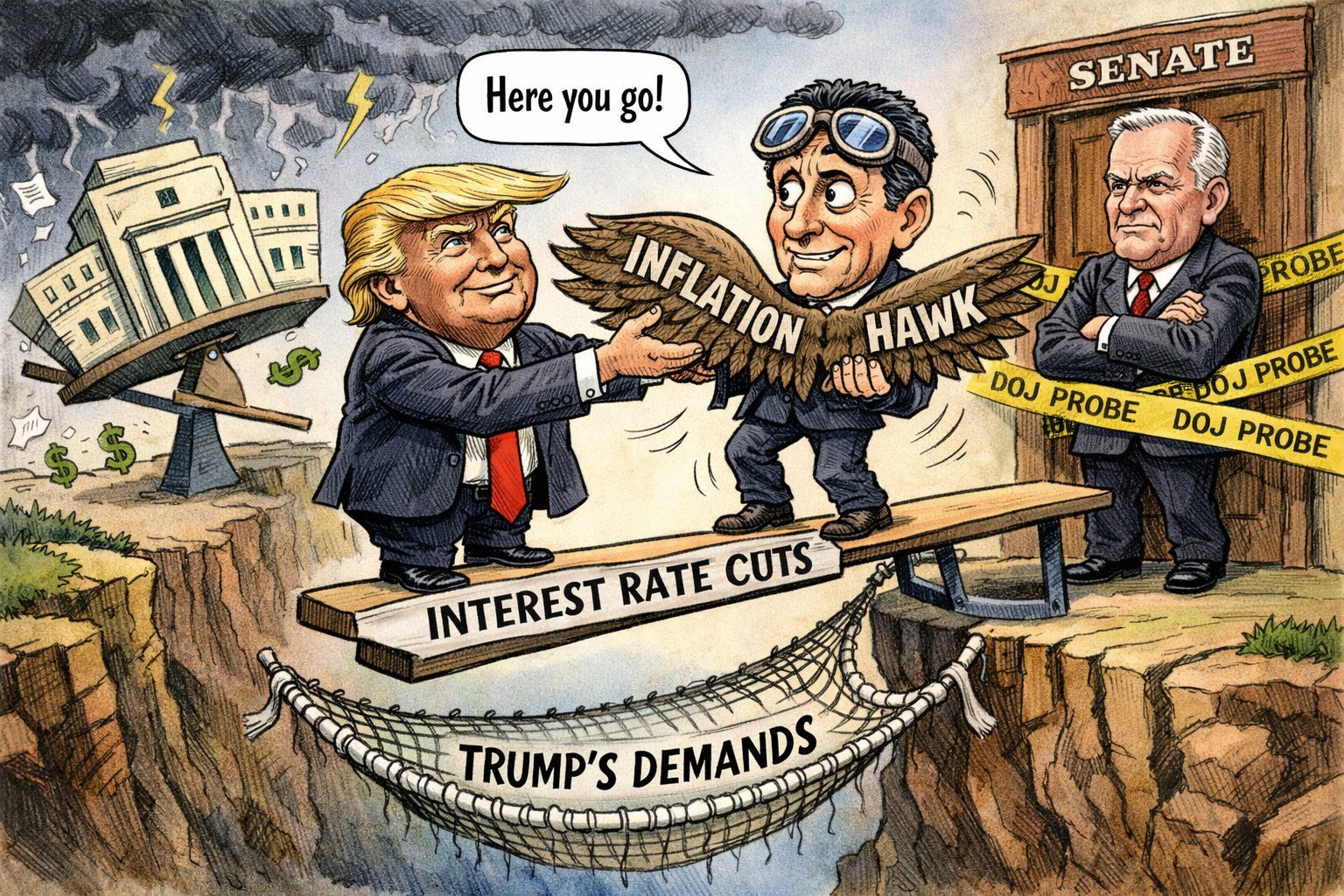
President Trump is expected to nominate former Fed Governor Kevin Warsh as the next Federal Reserve Chair this morning, concluding a chaotic selection process that saw betting markets pivot sharply from BlackRock’s Rick Rieder. Warsh, who served at the Fed from 2006 to 2011, has a reputation as a fierce inflation hawk: he famously criticized quantitative easing as a “reverse Robin Hood” policy that benefits the wealthy. However, his recent public support for the President’s demands for aggressive rate cuts signals a significant shift in his policy stance. Despite his history, markets reacted with a mix of relief and caution: stock futures dipped 0.5% while the dollar gained, suggesting investors view him as a “relatively safe” pick compared to more radical alternatives (The Guardian).
This nomination isn’t just about a change in leadership; it’s a test of the Fed’s structural independence. While Warsh is an insider who understands the central bank’s plumbing, he now advocates for “regime change” and productivity-led rate cuts, aligning him with Trump’s desire to see rates as low as 1%. The path to confirmation is already hitting a wall, though. Senator Thom Tillis has vowed to block all Fed nominees until the DOJ’s criminal investigation into Jerome Powell is resolved. This probe, centered on alleged testimony discrepancies regarding Fed building costs, has created a political stalemate that could leave the world’s most powerful central bank in a leadership vacuum when Powell’s term expires in May (The Business Times).
Sensei’s Insight: Watch the Treasury yields and the “Tillis Hold.” If Warsh can’t clear the Senate Banking Committee, we’re looking at an unprecedented legal and economic standoff that will spike market volatility.
📉 Gold and Silver Crater as Trump Signals Warsh for Fed
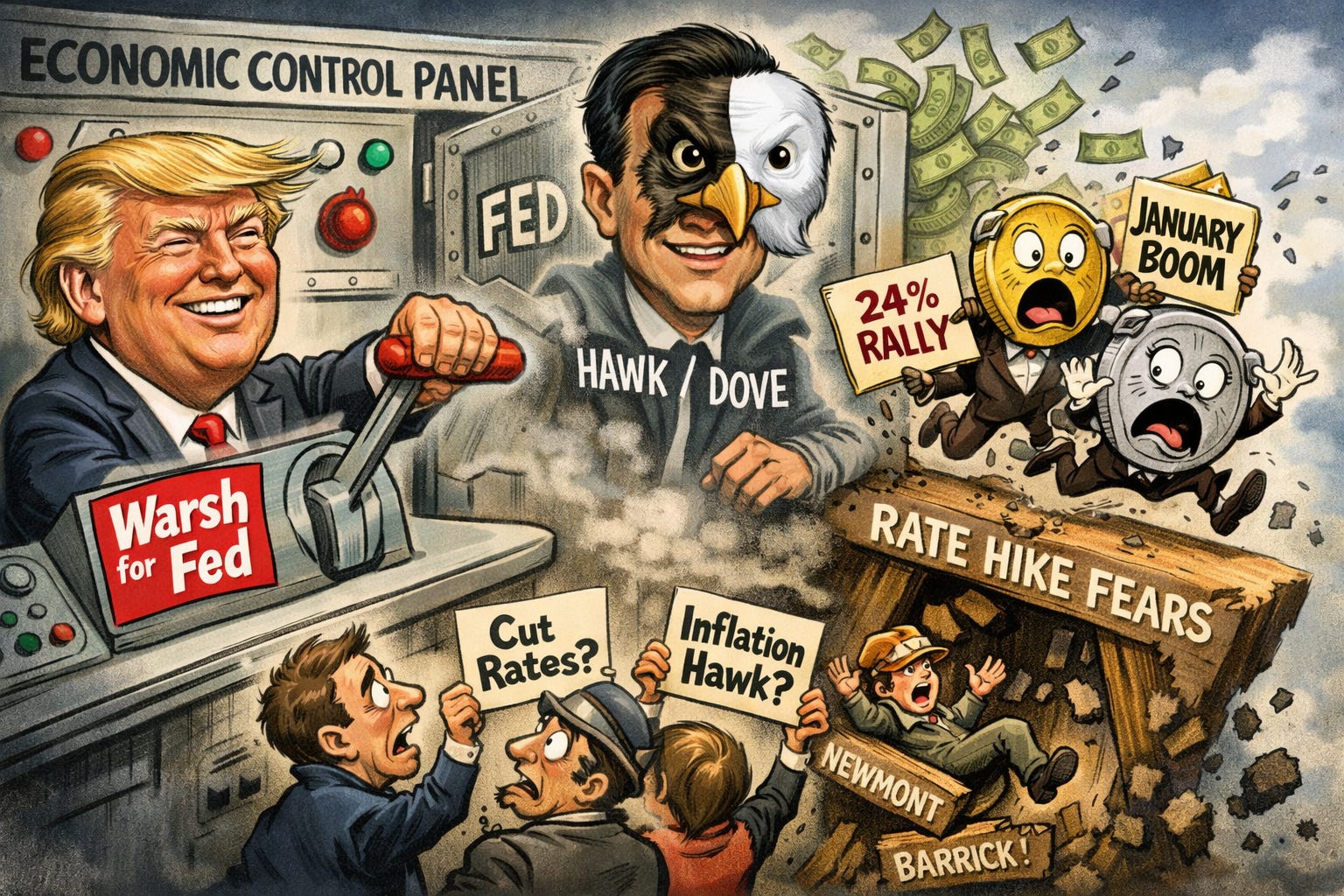
The precious metals market just had its worst day in over a decade. Spot gold plunged 7% to under $5,000/oz, while silver was absolutely devastated, dropping 16% to slip back below the $100 mark. The catalyst? President Trump signaled he’ll nominate Kevin Warsh to replace Jerome Powell as Fed Chair. Warsh, a former Fed governor and Wall Street liaison, is a bit of a wildcard: he’s a historical inflation hawk who has recently made dovish comments supporting rate cuts. The market, however, is betting on his hawkish roots. As the dollar hit its best day since November and Treasury yields climbed, the “opportunity cost” of holding non-yielding gold became too high for traders to ignore (Bloomberg Markets Today).
This move matters because it represents a massive “unwinding” of January’s parabolic rally. Before this morning, gold was up nearly 24% for the month, a pace that left it technically overbought and vulnerable to any shift in the macro narrative. By choosing Warsh over more overtly “dovish” candidates, the administration is signaling a potential Fed that is more disciplined and less likely to slash rates aggressively. For retail investors, the carnage in mining stocks like Newmont (down 10%) and Barrick (down 13%) is a reminder of how much these equities act as a leveraged bet on the underlying metal. When gold stumbles, the miners often fall twice as hard because their fixed operating costs eat into shrinking margins.
Sensei’s Insight: Watch the $4,900 level on gold. This isn’t just a price correction; it’s a regime-change test. If Warsh leans into his hawkish reputation, the “easy money” gold trade is over.
🤝 Amazon’s $50 Billion Bet on OpenAI
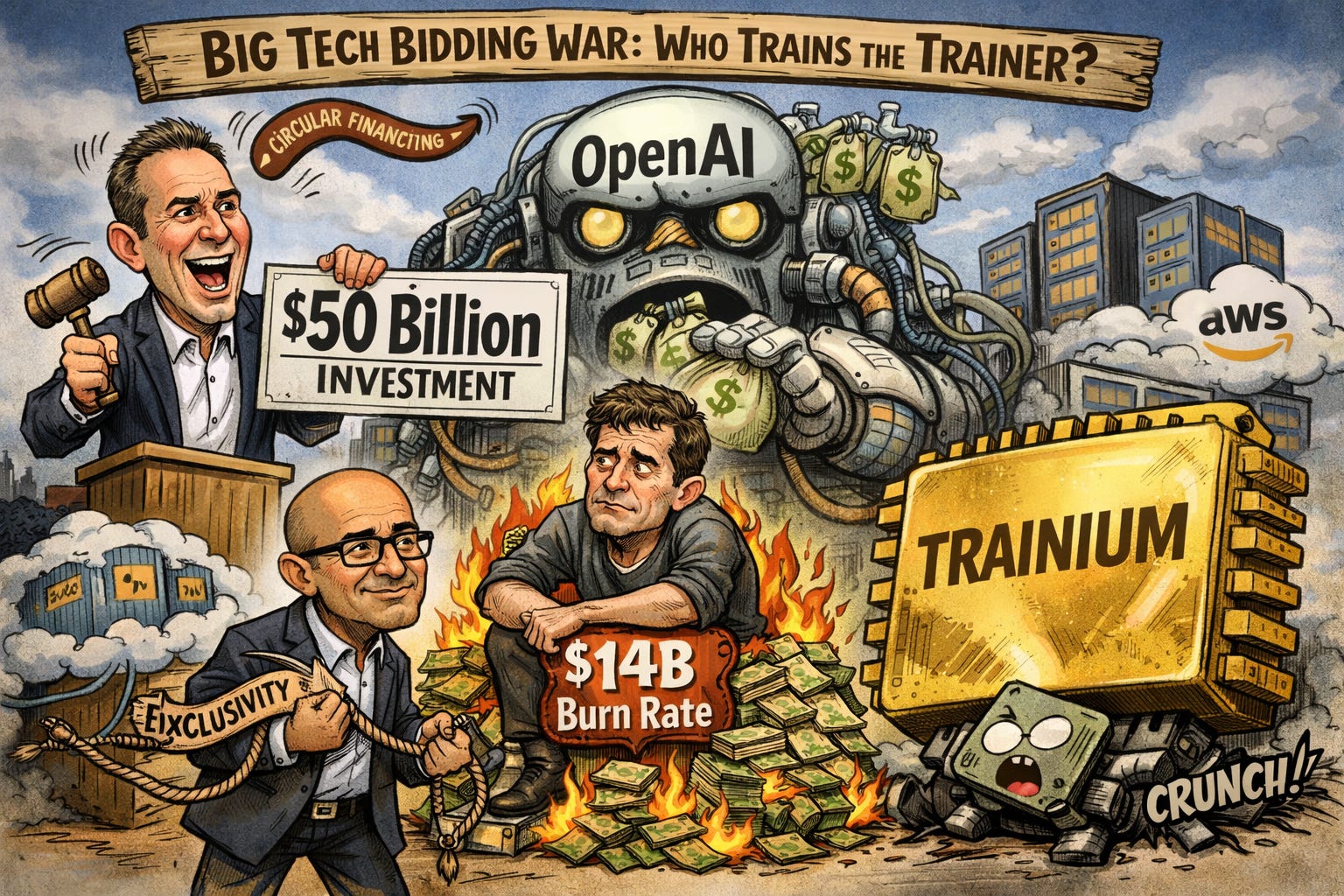
Amazon is in active talks to invest up to $50 billion in OpenAI, a move that would make it the lead investor in a massive $100 billion funding round. Led by CEO Andy Jassy, this deal signals a pivot in the AI power balance, as OpenAI looks to diversify its heavy reliance on Microsoft. While the numbers are staggering, there’s a major technical catch: the investment is reportedly tied to OpenAI adopting Amazon’s custom Trainium chips. This shift aims to break Nvidia’s near-monopoly on the hardware used to train frontier models. The urgency is fueled by OpenAI’s massive burn rate, with projected losses of $14 billion this year alone as it races toward a potential IPO in late 2026 (Wall Street Journal).
This deal highlights the rise of “circular financing” in big tech. Amazon invests billions into OpenAI, which then immediately funnels that cash back to Amazon Web Services to pay for cloud computing. While this boosts Amazon’s revenue metrics, it raises questions about whether the growth is organic or just a capital loop. For investors, the “exclusive” moat Microsoft once enjoyed around OpenAI is clearly evaporating, evidenced by Microsoft’s nearly 10% stock slide following the news. We are seeing a high-stakes transition where the winner isn’t just who has the best model, but who controls the increasingly expensive infrastructure and specialized silicon underneath it.
Sensei’s Insight: Watch the “Trainium” adoption rates. If OpenAI successfully shifts away from Nvidia chips, it doesn’t just save Amazon money, it fundamentally breaks the valuation thesis for the entire semiconductor sector.
🏛️ Midnight Deadline: A “Trump-Blessed” Deal Fractures
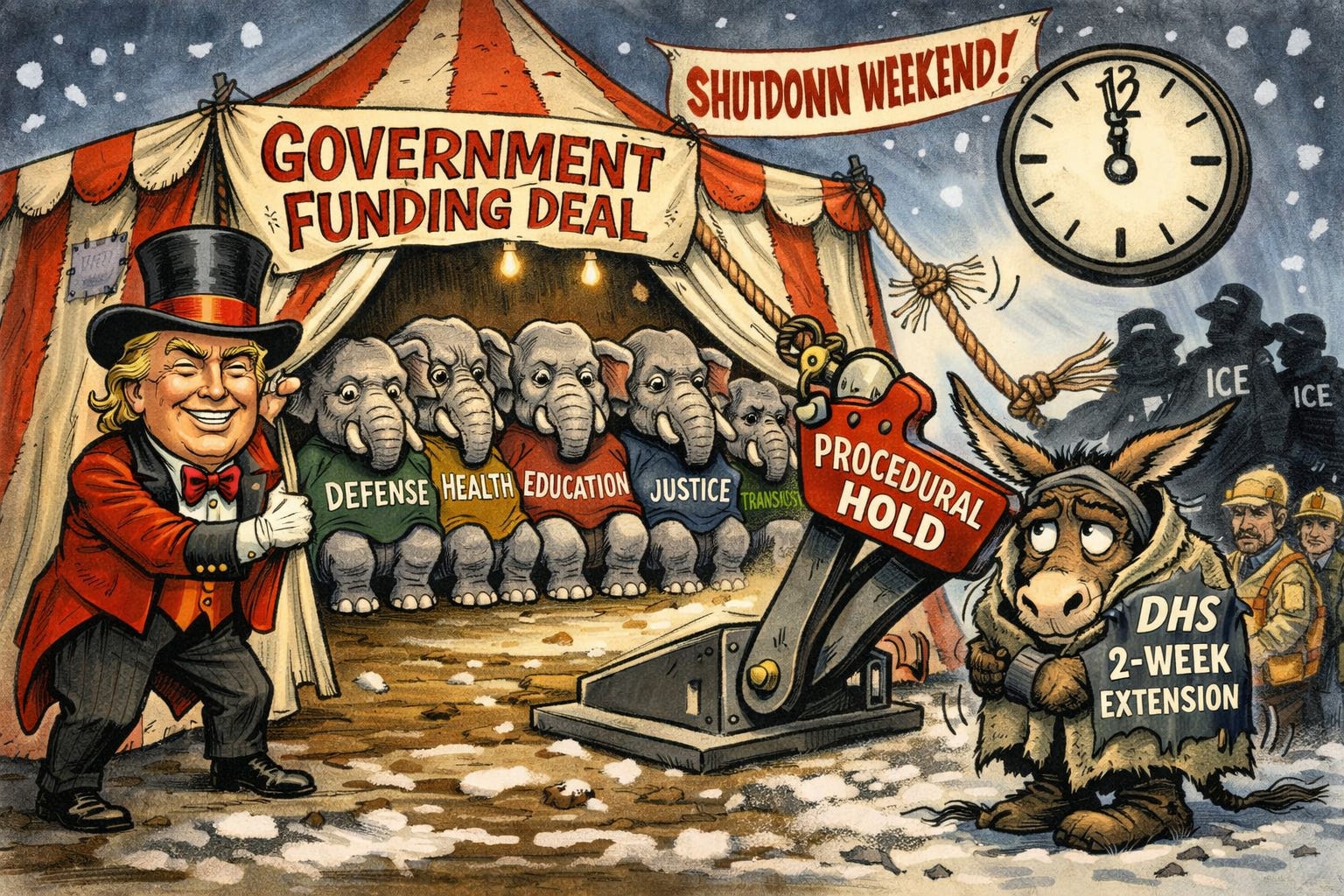
Late Thursday, President Trump and Senate Democrats reached a tentative agreement to avert a midnight government shutdown, but the deal is already hitting procedural walls. The arrangement splits the funding: five major agencies (including Defense and Health) get full-year funding through September, while the Department of Homeland Security (DHS) receives only a two-week extension through February 13. Despite Trump’s public endorsement, Senator Lindsey Graham placed a procedural hold on the package, effectively guaranteeing a brief partial shutdown over the weekend. Since the House isn’t back until Monday, roughly 4% of federal operations will likely lapse at midnight Friday (Bloomberg News).
This isn’t a typical budget brawl. The friction stems from two fatal shootings by federal agents in Minneapolis, which unified Democrats in demanding body cameras and judicial warrants for ICE operations. For investors, the immediate shutdown is largely noise: the S&P 500 historically rises during 57% of these pauses, and markets are currently focused more on tech earnings. However, the February 13 deadline creates a real “labor supply” risk. Industries like construction, agriculture, and hospitality are already flagging worker shortages due to enforcement uncertainty. If the two-week negotiation fails to stabilize ICE policy, expect rising wage pressure to keep the Fed’s finger on the “higher for longer” interest rate trigger.
Sensei’s Insight: Don’t sweat the weekend headlines. Watch the February 13 deadline for actual policy shifts on ICE warrants. If enforcement remains aggressive, labor-intensive sectors like homebuilding (LEN, DHI) could see margin compression.
🏎️ OpenAI and Anthropic: The $1 Trillion IPO Race
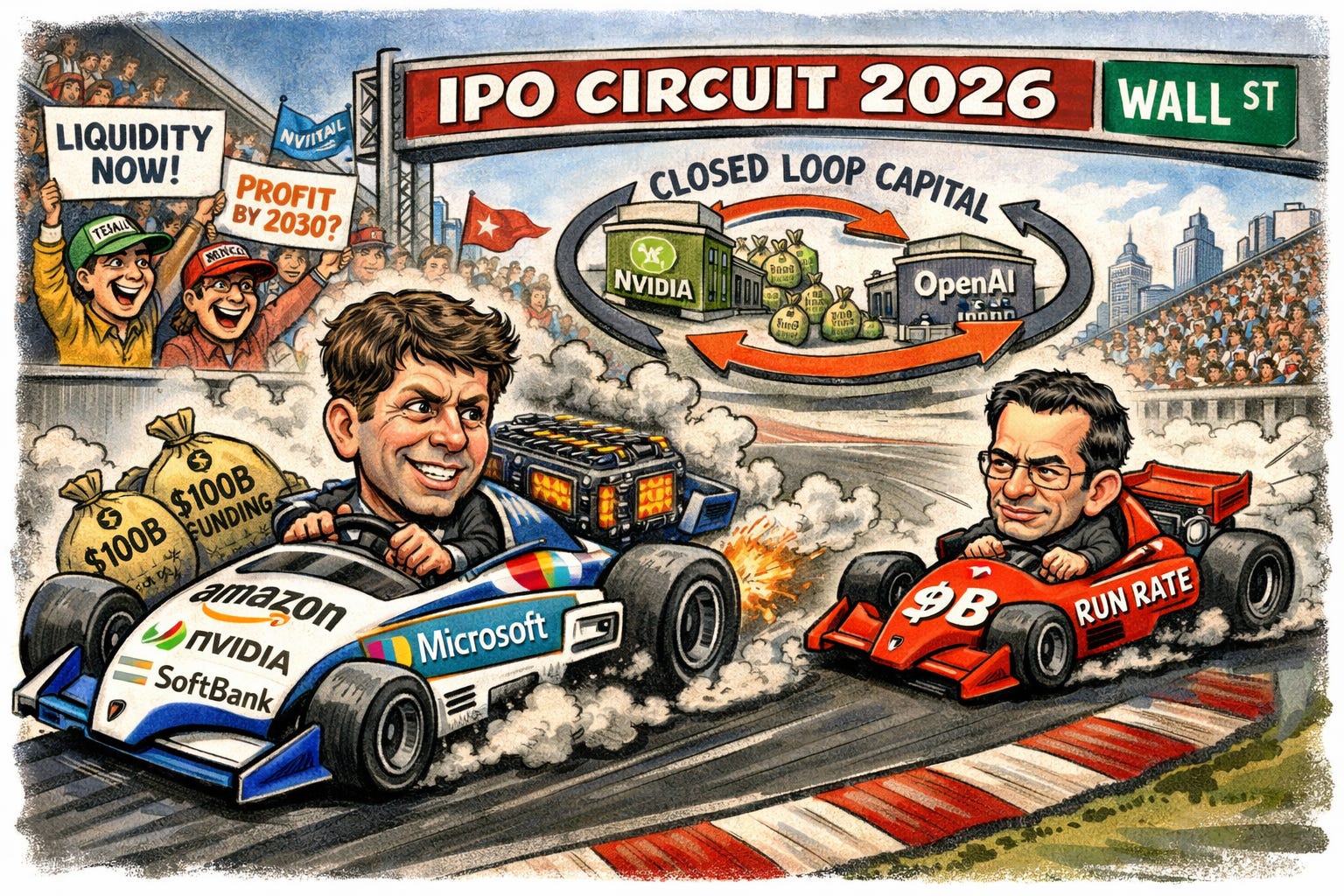
OpenAI is officially laying the groundwork for an IPO in the fourth quarter of 2026, marking a dead sprint to beat rival Anthropic to the public markets. To fuel this, Sam Altman is hunting for a staggering $100 billion in new capital. The heavy hitters are already at the table: Amazon is in talks for a $50 billion stake, while SoftBank and Nvidia are looking at $30 billion apiece. This fundraising blitz could push OpenAI’s valuation toward $830 billion, a 66% jump in less than a year, as it transitions into a for-profit public benefit corporation to clear the path for a listing (Wall Street Journal).
This isn’t just a quest for a ticker symbol; it’s a desperate hunt for liquidity. OpenAI is projected to lose $14 billion in 2026 alone and might not see a profit until 2030. Meanwhile, Anthropic is breathing down their neck with a revenue run rate that hit $9 billion last year, growing significantly faster than ChatGPT did in its early days. For us, the story isn’t just about the AI bots—it’s about the massive “circular financing” happening in the background. Nvidia invests billions into OpenAI, which then spends billions on Nvidia chips and Microsoft’s Azure cloud. We’re watching a closed-loop ecosystem of unprecedented scale where capital is the primary weapon.
Sensei’s Insight: Watch the “first-mover” advantage carefully. If Anthropic lists first or hits breakeven by 2028 as projected, OpenAI’s $1 trillion valuation hopes could face a reality check from public market skeptics.
🚀 Apple Flexes on Records While Facing Memory Headwinds
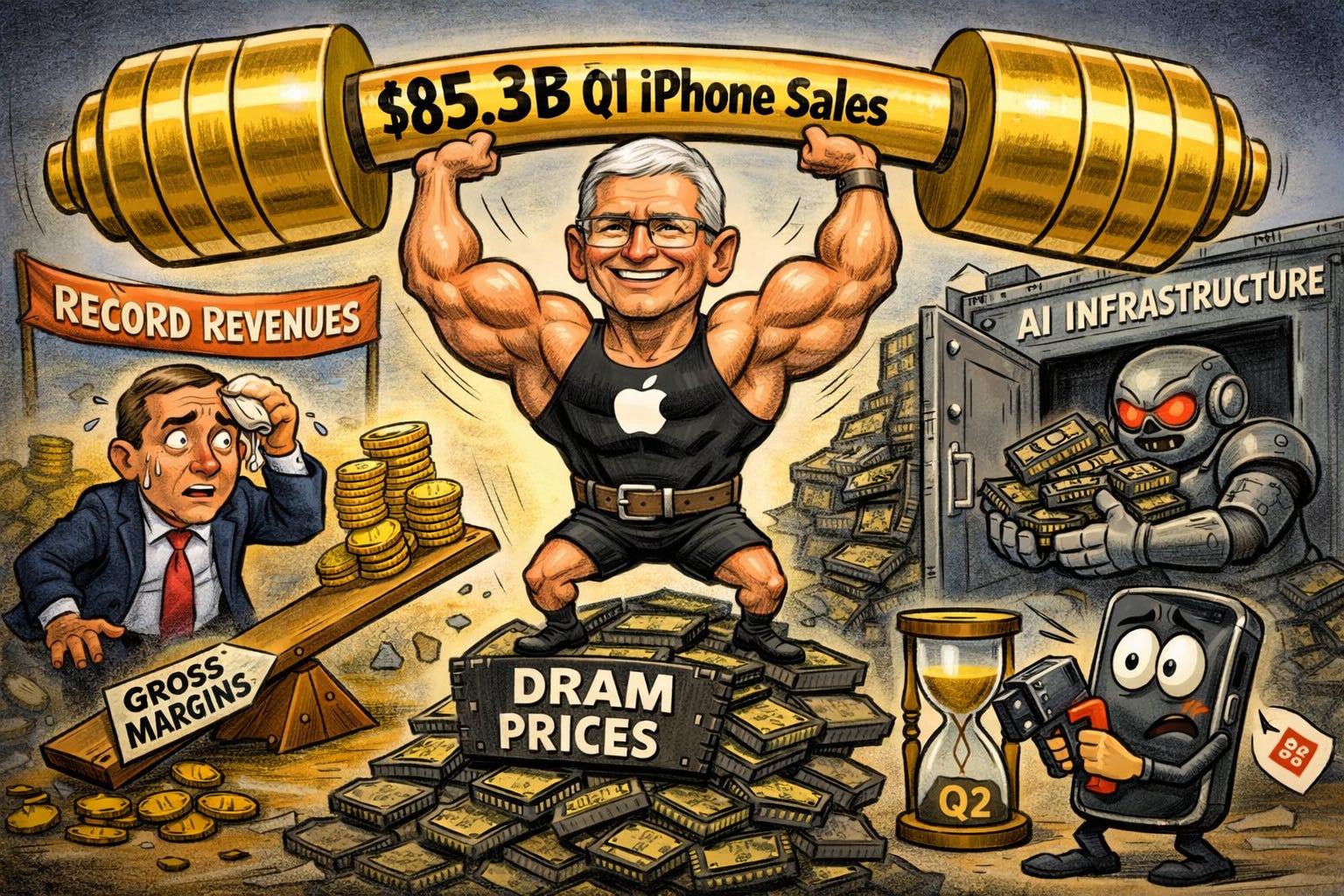
Apple shattered Wall Street expectations for Q1 2026, posting a record $143.8 billion in revenue, a 16% jump that cleared analyst estimates by over $5 billion. The real story is the iPhone, which generated $85.3 billion alone: up 23% year-over-year. This wasn’t just a Western holiday win: sales in Greater China surged 38% to $25.5 billion, effectively killing the narrative that local competition was eating Apple’s lunch. Earnings per share (EPS) hit an all-time high of $2.84, showing that despite its massive scale, the company is still finding ways to squeeze more value out of every dollar (Apple).
While the headline numbers are glowing, the market’s muted reaction reflects a growing concern: the cost of memory. DRAM prices have skyrocketed as AI infrastructure build-outs hog global supply. CEO Tim Cook admitted these costs had a minimal impact this quarter but warned of a bigger hit in Q2. Apple guided gross margins at 48% to 49%, a strong range that already factors in these pressures, but they are playing it close to the vest on whether they’ll raise iPhone prices to compensate. For retail investors, the takeaway is the “Services” engine: it hit $30 billion this quarter. This high-margin, recurring revenue now accounts for roughly half of Apple’s operating profit, providing a massive safety net if hardware costs stay volatile.
Sensei’s Insight: Watch the 48% gross margin floor in the March quarter. If Apple maintains this despite DRAM spikes, their pricing power is untouchable. If it slips, the AI-supply-squeeze is winning.
🔗 Connect with Us
Stay plugged in across platforms:
Sensei on X: sensei_live_
Martyn Lucas on X: MartynInvestor
Vaz on X: eVTOLHUB
📺 YouTube Channel (Live & Replays): Martyn Lucas Investor

🔍Deep Dive: The Fed’s Next Chapter: What Kevin Warsh Means for Your Portfolio