This content is for informational and educational purposes only and does not constitute financial advice. Always do your own research. Not financial advice (NFA).
👀 Today’s Stories at a Glance
🎯 US Submarine Sinks Iranian Frigate: A single torpedo destroyed the IRIS Dena, marking the first such combat strike since 1945.
💸 Gulf Investment Pledge Faces Cracks: Dubai leaders criticize US military interventions as Iranian retaliatory strikes hit key UAE commercial infrastructure.
🏝️ Trump Signals Cuba Regime Change: The administration initiates a fuel squeeze as officials predict the Cuban government will soon fall.
🌏 Asia Markets Hit Six-Year Low: Energy-dependent economies face a dual crisis of surging oil costs and aggressive US trade tariffs.
🤝 Washington Grants India Oil Waiver: The US quietly approved expanded Russian crude purchases to stabilize global energy supply disruptions.
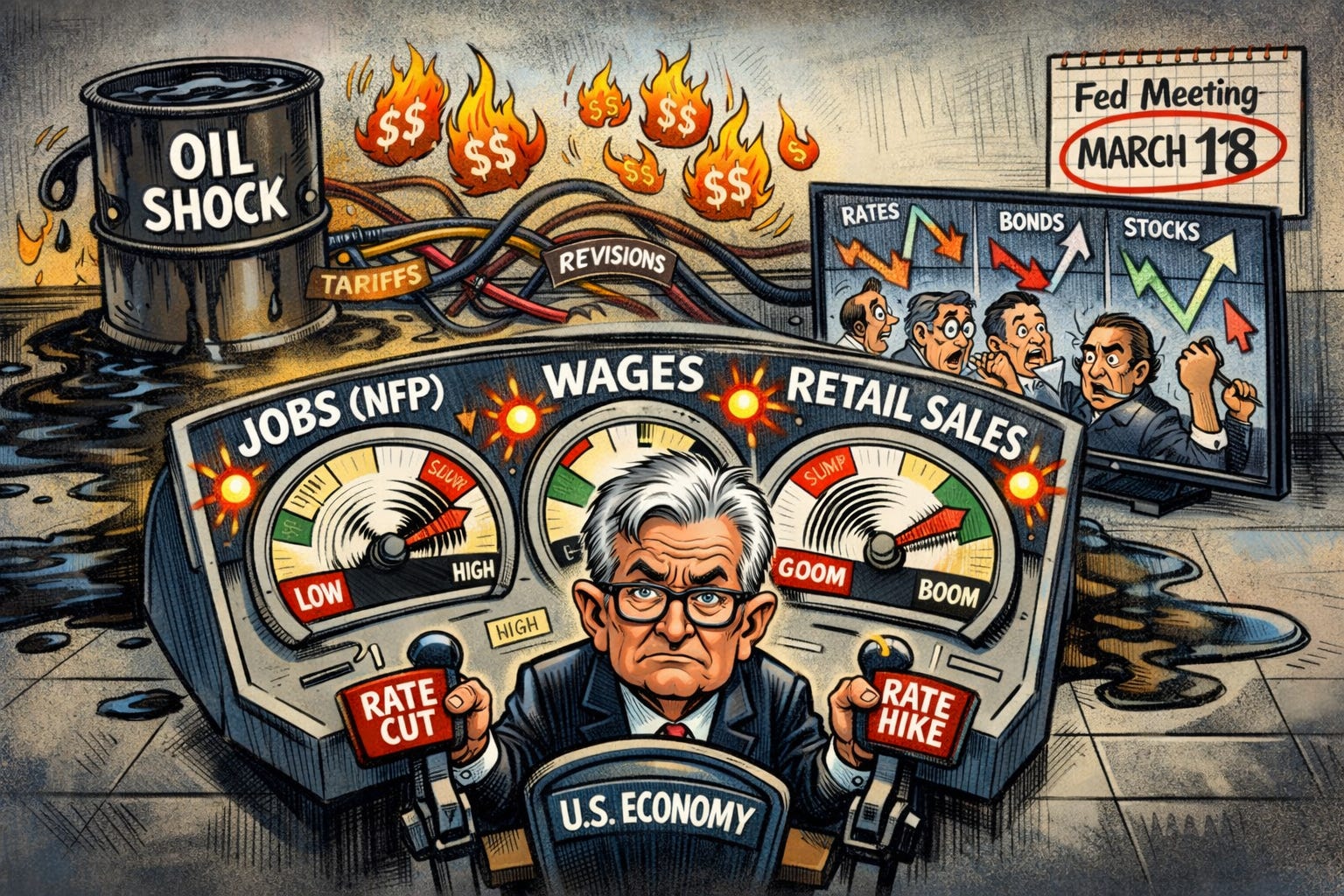
🔍 February Jobs Report Preview: Markets focus on employment data and wage growth today to gauge potential Federal Reserve interest rate hikes.
🧠 One Big Thing
The Energy Trap
The escalation of U.S. military action against Iran has fundamentally altered the global investment landscape by triggering a severe energy-driven inflation shock. While the destruction of the IRIS Dena signals a new era of maritime vulnerability, the primary threat to investors is a trapped Federal Reserve. Surging oil prices, now approaching $87 per barrel, are colliding with a softening U.S. labor market and weak retail demand. This synergy creates a stagflationary environment where the central bank may be forced to consider interest rate hikes to curb energy costs despite evidence of economic cooling. For the first time in this cycle, the Fed’s ability to provide a liquidity safety net is being neutralized by geopolitical volatility.
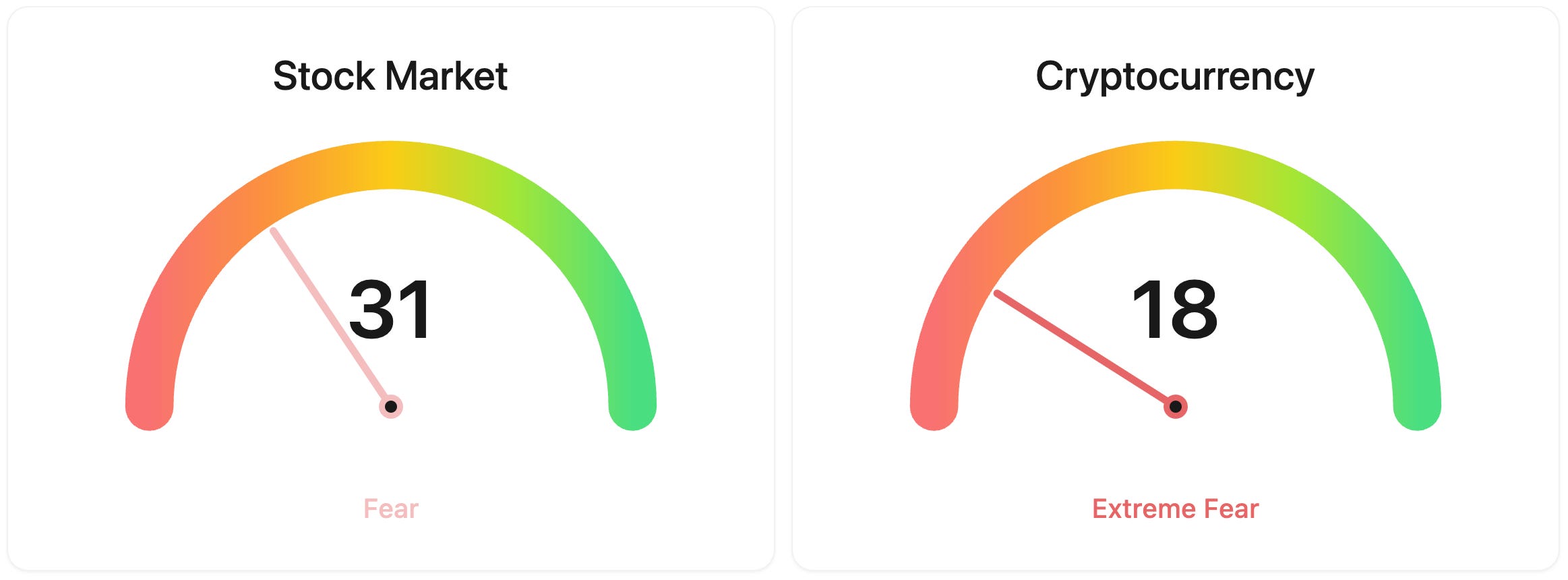
⚖️ Fear & Greed
📉 The Number That Matters
59,000
Wall Street consensus projects only 59,000 new jobs for the February Nonfarm Payrolls report. This figure is heavily impacted by a strike of 31,000 healthcare workers, which will mechanically suppress the final employment count.
⚔️ Winners vs Losers
Winners
OMDA 0.00%↑ +21.76% Omada Health, Inc. surged after reporting Q4 results that included its first-ever GAAP profit of $5M, revenue of $76M beating estimates by a wide margin, and full-year 2025 revenue up 53% year-over-year, with management issuing a 22% revenue growth target for 2026 and announcing new GLP-1 and cholesterol care programs.
SWBI 0.00%↑ +13.32% Smith & Wesson Brands, Inc. climbed after reporting Q3 results that beat on both lines, with net sales of $135.7M topping the $125.6M consensus estimate and EPS of $0.08 coming in ahead of the $0.05 forecast.
MRVL 0.00%↑ +12.76% Marvell Technology, Inc. jumped after posting record Q4 fiscal 2026 revenue of $2.22B, up 22% year-over-year, with non-GAAP EPS of $0.80 and full-year fiscal 2026 revenue of $8.2B growing 42% annually, while guiding fiscal 2027 revenue to grow more than 30% and approach $11B on continued AI data center demand.
IOT 0.00%↑ +11.56% Samsara Inc. rallied after Q4 revenue of $444.3M beat estimates of $422.3M by 5% with 28% year-over-year growth, non-GAAP EPS of $0.18 beat by 38%, and fiscal 2027 revenue guidance of $1.97B-$1.98B came in above the $1.92B consensus.
Losers
NUTX 0.00%↑ -29.76% Nutex Health Inc. fell sharply after Q4 earnings came in at $1.61 per share, missing the $5.56 consensus estimate by 71%, with revenue down roughly $106M from the same period a year earlier.
GPRO 0.00%↑ -11.08% GoPro, Inc. dropped after Q4 results showed a loss with EPS of -$0.02 on revenue of $201.7M, both missing estimates, and Q1 guidance called for EPS of -$0.23 to -$0.17, far below the -$0.06 consensus, signaling a deeper near-term loss than the market had priced in.
📊 Market Snapshot
Cryptocurrencies:
Bitcoin (BTC): $70,552 (▼ -0.49%)
Ethereum (ETH): $2,066 (▼ -0.37%)
XRP: $1.40 (▼ -0.20%)
Equity Indices (Futures):
S&P 500: $6,809 (▼ -0.12%)
NASDAQ 100: $24,929 (▼ -0.48%)
FTSE 100: £10,394 (▲ 0.00%)
Commodities & Bonds:
10-Year US Treasury Yield: 4.17% (▲ 0.75%)
Oil (WTI): $84 (▲ 7.14%)
Gold: $5,094 (▲ 0.19%)
Silver: $83.17 (▲ 1.10%)
Data as of UK (GMT): 11:28 / US (EST): 06:28 / Asia (Tokyo): 20:28
✅ 5 Things to Know Today
🎯 A US Submarine Just Sank a Warship for the First Time Since 1945
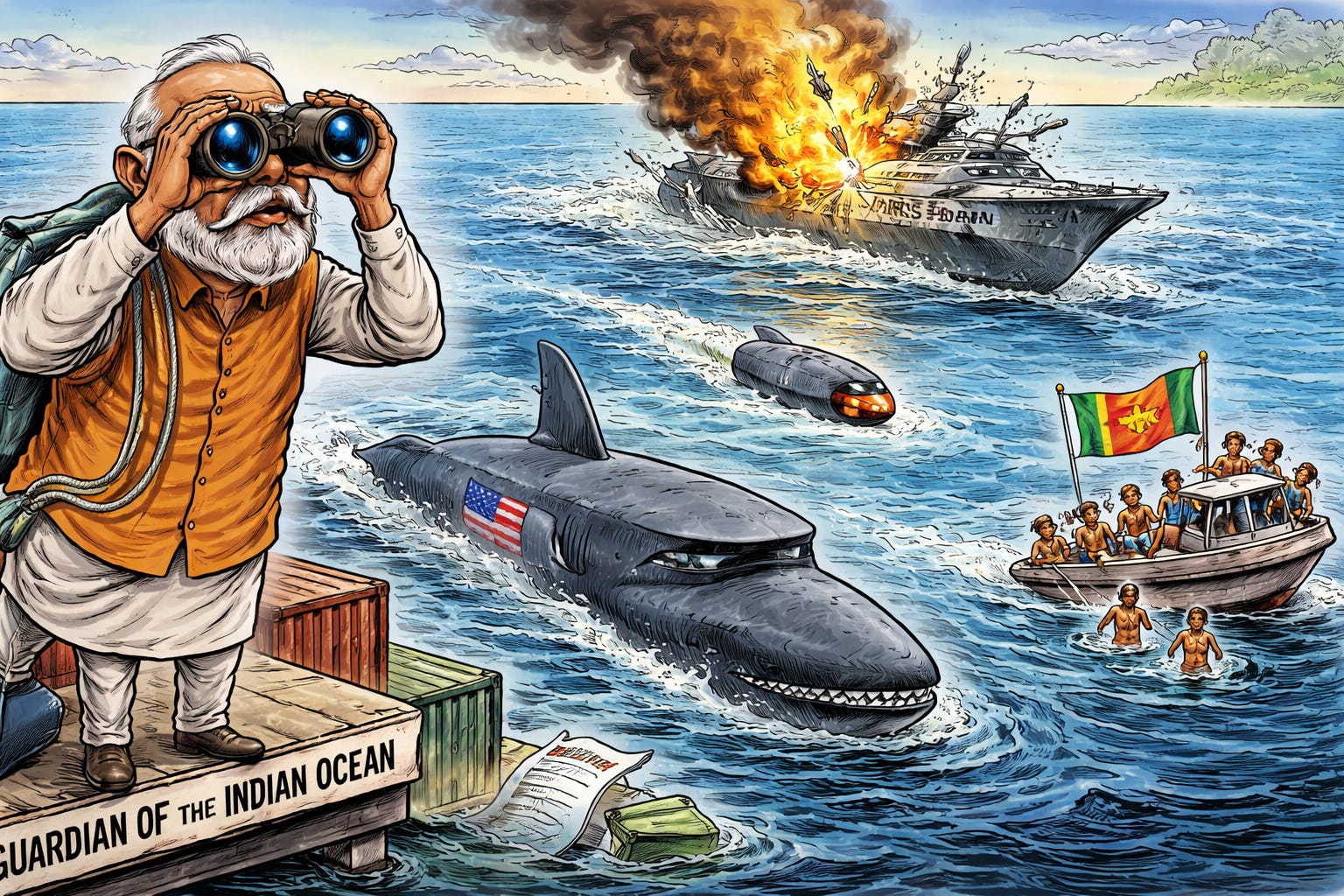
Earlier this week, a US Navy submarine torpedoed and sank the Iranian Navy frigate IRIS Dena approximately 40 nautical miles off the southern coast of Sri Lanka, in international waters roughly 2,000 miles from Iranian shores. The strike used a single Mark 48 heavyweight torpedo and was confirmed at a Pentagon briefing by Defence Secretary Pete Hegseth, who called it a “quiet death.” The IRIS Dena, a 1,500-tonne Moudge-class frigate commissioned in 2021, had spent the previous two weeks as an invited guest at India’s International Fleet Review and the multilateral MILAN 2026 naval exercises, attended by 74 countries, before sailing home to Iran. It is the first time a US submarine has sunk an enemy vessel in combat since August 14, 1945 (USNI News).
The sinking expands the conflict’s geography in a way that changes everything. The Persian Gulf is Iran’s neighbourhood; the Indian Ocean is not. Indian Prime Minister Modi had publicly positioned his navy as the “guardian of the Indian Ocean,” yet a vessel that had been India’s invited guest at a naval parade two weeks earlier was destroyed in those waters without warning or consultation with New Delhi. India stayed silent for more than 24 hours and has not criticised the US decision. Sri Lanka, which rescued 32 survivors from an estimated 180 on board, declared neutrality. US Central Command confirmed the IRIS Dena was among more than 20 Iranian naval vessels and one submarine destroyed since Operation Epic Fury began (CNN).
Sensei’s Insight: The last warship sunk by a submarine in combat was the Falklands in 1982, and it reshaped naval doctrine globally. This one goes further: it tells every navy in the world that the US will pursue Iranian vessels anywhere on the ocean. Shipping insurance across the Indian Ocean may never look the same again.
💸 The Gulf’s $3.4 Trillion US Investment Pledge Just Hit Its First Crack
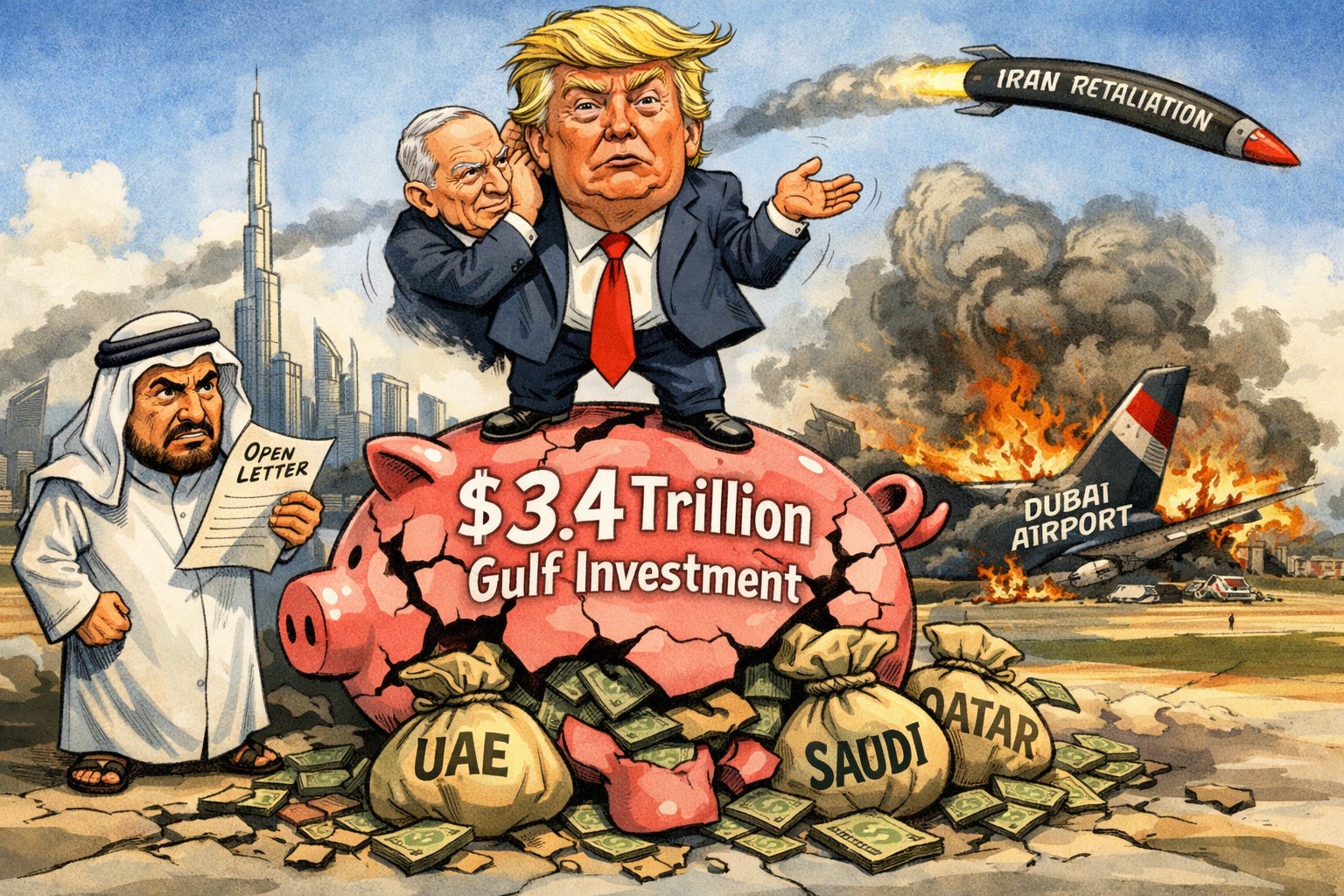
Earlier this week, Khalaf Al Habtoor, one of Dubai’s most prominent business figures, did something that rarely happens in the UAE’s tightly controlled public sphere: he published a direct, 500-word open letter to Trump. Al Habtoor, founder of the Al Habtoor Group, a business empire spanning luxury hotels, real estate, and construction, accused the US president of dragging Gulf allies into a war they did not want. His letter catalogued Trump’s military interventions across seven countries in his second term, questioned whether the decision to go to war was Trump’s alone or driven by Israeli Prime Minister Netanyahu, and described the conflict as a betrayal of both the Gulf’s trust and the American people. Public criticism of Washington at this level, from a figure of this standing in the UAE, is extraordinary (Bloomberg).
The letter is a symptom of something deeper. The UAE had positioned itself as Washington’s most commercially loyal Gulf partner, pledging roughly $1.4 trillion in US investments over ten years. Combined Gulf commitments from the UAE, Qatar, and Saudi Arabia total close to $3.4 trillion. That commercial alignment was supposed to buy influence. Instead, Iran’s retaliatory strikes hit Dubai International Airport, the Jebel Ali port, and an Amazon Web Services data centre in the city, killing three people and injuring 58. Dubai’s benchmark stock index is heading for its worst week since May 2022. Gulf officials are quietly weighing whether to reconsider major foreign investment commitments before any new capital is committed abroad, according to reporting by the Financial Times (Al-Monitor).
Sensei’s Insight: The $3.4 trillion Gulf-to-US investment pledge was supposed to buy influence in Washington. It didn’t buy advance notice, consultation, or protection when Iran hit Dubai’s airport. If Gulf capitals start redirecting those flows, US private equity, real estate, and technology all feel it.
🏝️ Trump Says Cuba Will “Fall.” The Playbook Is Already Running.
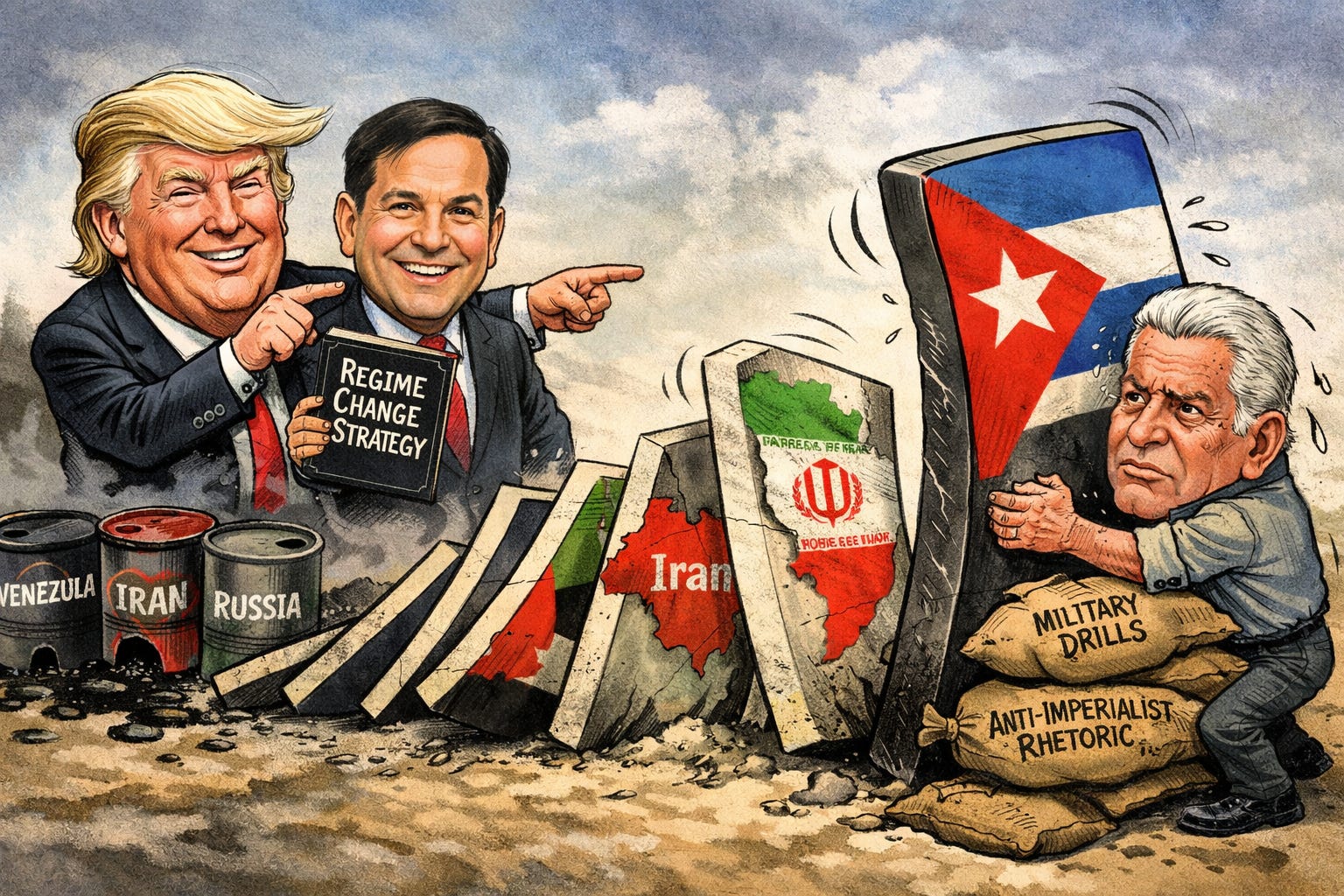
With the Iran conflict barely a week old, Trump used a White House event yesterday to publicly signal his next foreign policy target. “We want to finish this one first,” he told guests at a celebration for Inter Miami CF, the soccer team with deep ties to Miami’s Cuban-American community, “but it will be just a question of time” before Cuba’s government falls. The same day, he told Politico: “Cuba is going to fall.” Earlier in the week, Trump told reporters that Cuba “wants to make a deal so badly” because “they have no money, they have nothing.” Secretary of State Marco Rubio, whose family came from Cuba, has been singled out by Trump for driving the strategy, and Senator Lindsey Graham declared on Sunday: “Cuba’s next. They’re gonna fall” (CNBC).
The pressure campaign is already under way. In January, Trump cut off Venezuelan oil shipments to Cuba, Cuba’s primary energy supplier, and signed an executive order threatening tariffs on any country that tries to fill the gap. The result has been a fuel crisis severe enough to ground airline services to the island. Cuba has simultaneously lost all of its traditional external protectors: Venezuela’s Nicolas Maduro was captured in a US military operation in January, Iran is under sustained bombardment, and Russia remains consumed by the war in Ukraine. Analysts caution that Cuba’s security forces are more loyal to their regime than Venezuela’s were and that, after Maduro, the element of surprise is gone. Cuba’s President has ramped up anti-imperialist rhetoric and intensified military exercises in response (CNBC).
Sensei’s Insight: Cuba has lost all three of its traditional protectors: Venezuela, Iran, and Russia. Trump has a proven playbook, and Cuba knows it. If a third Western Hemisphere regime falls in a single presidential term, the risk premium for Latin American assets could reprice accordingly.
🌏 Asia Is on Course for Its Worst Market Week in Six Years
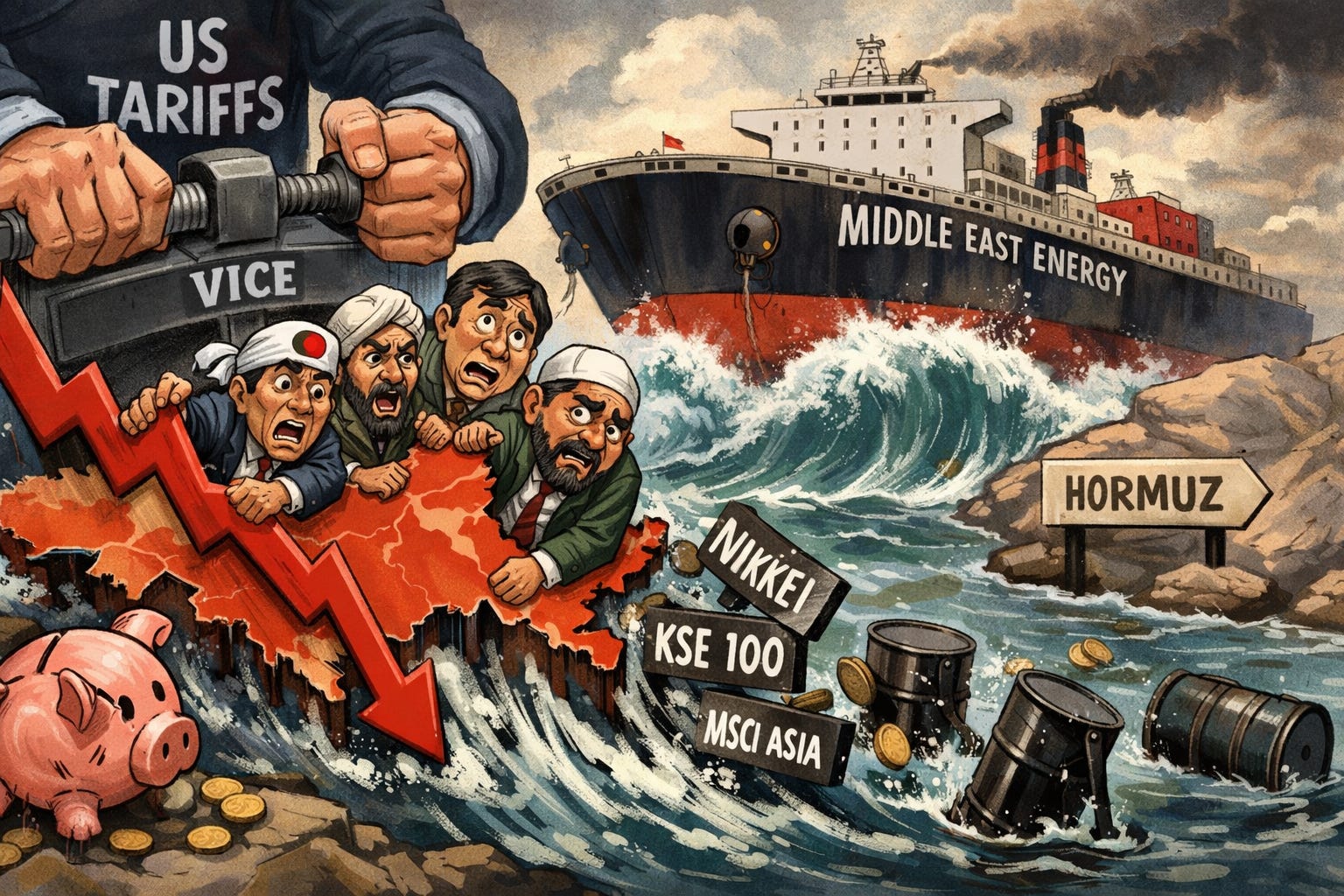
Asian equity markets are heading for their worst collective performance since the pandemic crash of early 2020. Japan’s Nikkei has lost more than 2% over the past five trading sessions. Pakistan’s KSE 100 index, the main benchmark on the Karachi Stock Exchange, recorded a full trading halt after shedding 16,089 points or 9.57% in a single session earlier this week, the largest single-day point collapse in the index’s history. The MSCI Asia Pacific Index, a broad measure covering large and mid-cap stocks across Asia-Pacific markets, has stabilised somewhat today after days of heavy selling, as investors have selectively bought sectors seen as domestically insulated from energy costs.
The common thread is energy vulnerability. Japan and South Korea source the vast majority of their oil and LNG through the Strait of Hormuz. India draws approximately 58% of its LNG imports from the Middle East. That energy shock lands on top of existing pressure from US tariffs, meaning several Asian economies are facing a simultaneous squeeze on both trade and energy costs. Countries with limited fiscal space to absorb the hit, including Turkey, Hungary, and Malaysia alongside the main Asian markets, face the most direct exposure, according to Elias Haddad, global head of markets strategy at Brown Brothers Harriman (BBH) (CNBC).
Sensei’s Insight: The countries hurting most this week are energy importers with limited fiscal firepower. The tariff pressure was already biting. Layering an energy shock on top of the same economies at the same time is compounding risk at its most textbook, and the full inflation pass-through hasn’t even arrived yet.
🤝 Washington Quietly Let India Buy Russian Oil This Week
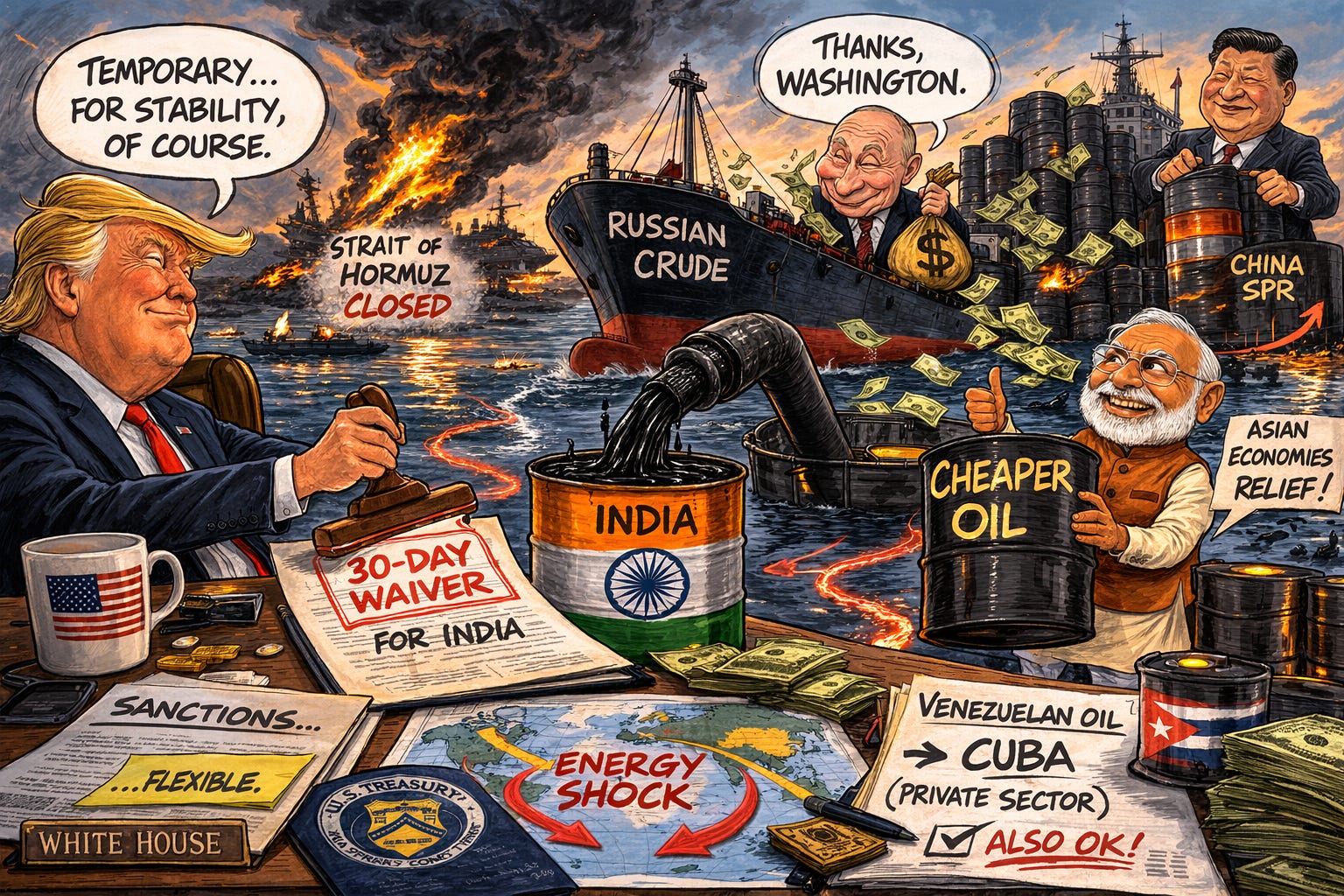
With the Strait of Hormuz shut and Asian economies scrambling for alternative supply, the Trump administration this week quietly cleared the way for India to temporarily expand its purchases of Russian crude oil. The move, a 30-day waiver covering Russian oil sales to India, signals a pragmatic departure from the broader US sanctions framework targeting Russia’s energy revenues. India had been buying Russian crude at a discount since Moscow’s 2022 invasion of Ukraine, but the waiver effectively blesses and formalises a practice that had previously operated in a grey area (Bloomberg).
The move places Washington in a complicated position. It is simultaneously fighting a war partly framed around energy security and regional stability, while facilitating Russian oil sales to a major Indo-Pacific partner. Russia benefits directly, earning elevated oil revenues at a moment when global prices have surged. China has separately been replenishing its strategic petroleum reserves. The US Treasury also made a small but notable accompanying move: it said it would allow the resale of Venezuelan oil to Cuba’s private sector, another carve-out in the same week. The pattern suggests Washington is aware that the energy shock it has created may destabilise allies it cannot afford to lose.
Sensei’s Insight: Russia is the quiet beneficiary of a war the US started: higher oil prices, elevated export revenues, and now a US-blessed deal to sell more crude to India. The sanctions architecture designed to constrain Moscow’s war machine may be the first casualty of the energy shock.
🔗 Connect with Us
Stay plugged in across platforms:
Sensei on X: sensei_live_
Martyn Lucas on X: MartynInvestor
Vaz on X: eVTOLHUB
📺 YouTube Channel (Live & Replays): Martyn Lucas Investor

🔍Deep Dive: FEBRUARY JOBS REPORT CHEAT SHEET
Friday 6 March 2026 | 8:30 AM ET / 1:30 PM GMT