This content is for informational and educational purposes only and does not constitute financial advice. Always do your own research. Not financial advice (NFA).
👀 Today’s Stories at a Glance
🛢️ Hormuz Blockade Spikes Oil: Brent crude surges 10% as shipping titans halt transit through the strait.
🚀 Regional Conflict Ignites: Joint strikes decapitate Iranian leadership, sparking multi-front retaliation across nine nations.
🛩️ Flying Taxis’ Pivot Week: Archer earnings and FAA awards will transform eVTOLs into a measurable roadmap.
🏔️ Pakistan Border War: Combat along the Durand Line causes food prices to skyrocket during energy shocks.
🟡 Gold Hits Record Highs: Prices surge toward $5,400 as investors prioritize safety amid extreme market distress.
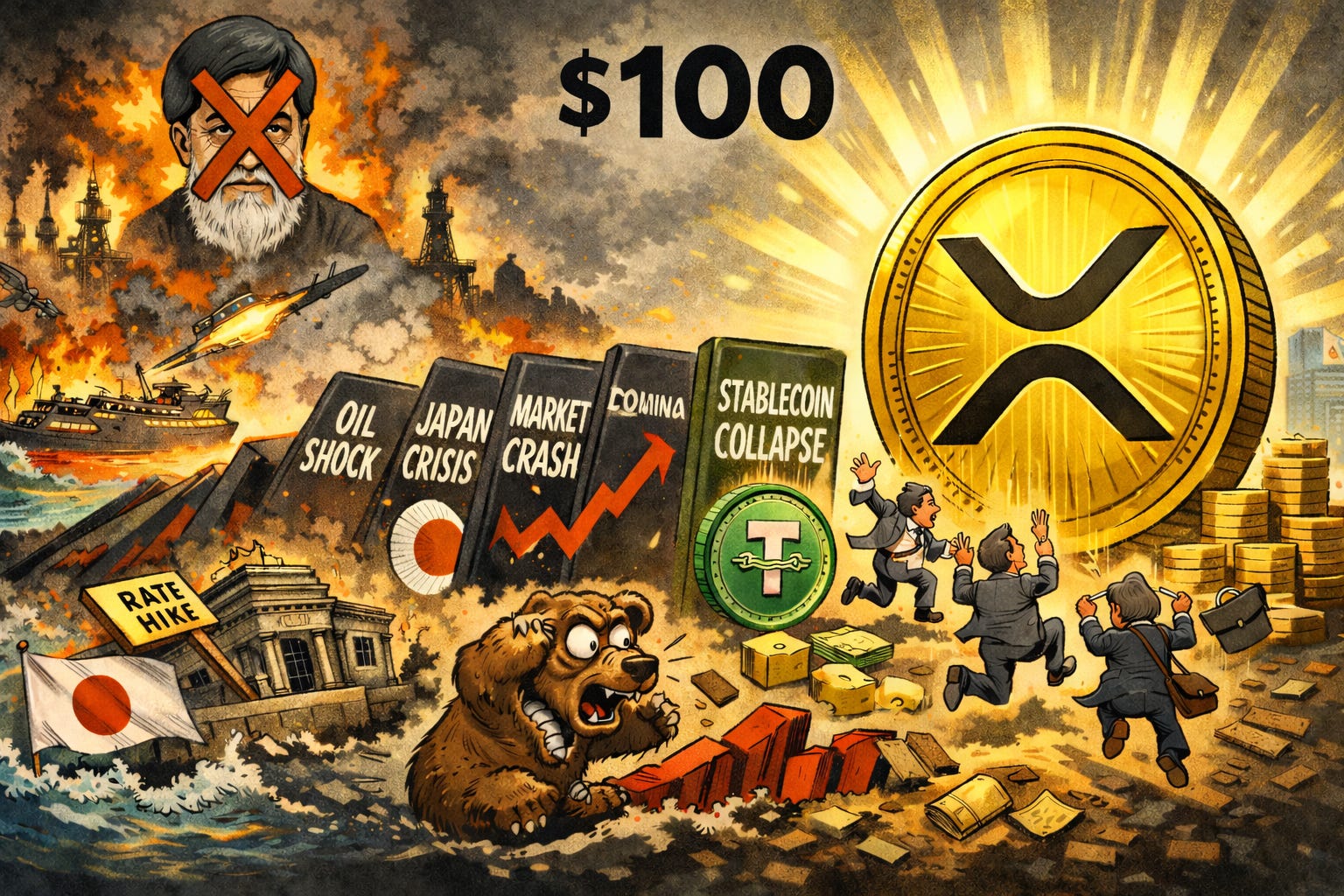
🔍 Domino Theory Debunked: Macro risks are real, but XRP will not hit $1,000 as claimed.
🧠 One Big Thing
The functional closure of the Strait of Hormuz following "Operation Epic Fury" has triggered a systemic energy shock, trapping 20% of global oil consumption behind a de facto blockade. With major shipping firms suspending transit and marine insurers pulling coverage, the market faces a catastrophic potential loss of 10 million barrels per day. This supply vacuum has already driven Brent crude toward $80 and spiked diesel futures by 20%, rendering nominal OPEC+ production increases irrelevant. For investors, this creates a "stagflation trap" where a high energy price floor persists despite slowing growth. This geopolitical floor likely forces the Federal Reserve to keep interest rates elevated, effectively removing the possibility of a "soft landing" or near-term rate cuts.
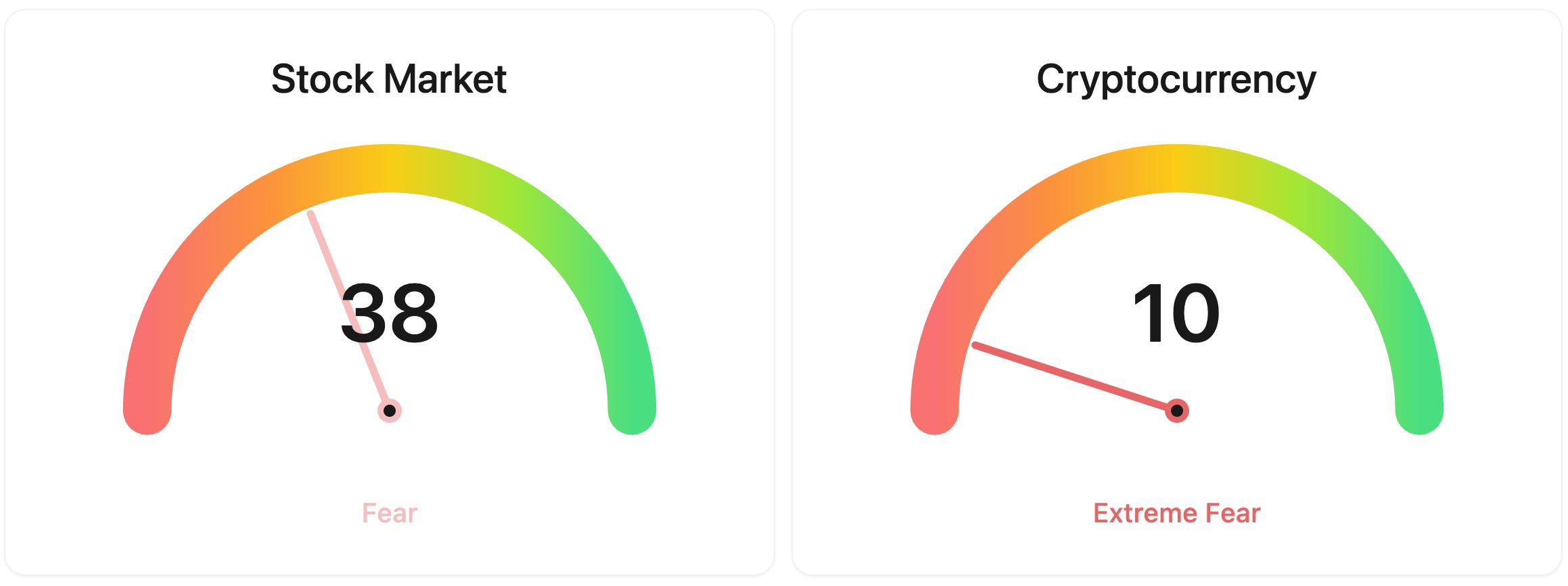
⚖️ Fear & Greed
📉 The Number That Matters
$373.3 BILLION
Berkshire Hathaway’s cash pile has reached $373.3 billion. Despite a 20% adjusted decline in operating earnings, the firm is eschewing share buybacks, signaling that leadership views the current market as too expensive for capital deployment.
📊 Market Snapshot
Cryptocurrencies:
Bitcoin (BTC): $66,227 (▲ 0.69%)
Ethereum (ETH): $1,943 (▲ 0.16%)
XRP: $1.35 (▼ -0.13%)
Equity Indices (Futures):
S&P 500: $6,800 (▼ -0.95%)
NASDAQ 100: $24,651 (▼ -1.41%)
FTSE 100: £10,782 (▼ -0.80%)
Commodities & Bonds:
10-Year US Treasury Yield: 3.98% (▲ 0.81%)
Oil (WTI): $73 (▲ 8.03%)
Gold: $5,388 (▲ 2.08%)
Silver: $94.88 (▲ 1.19%)
Data as of UK (GMT): 12:20 PM / US (EST): 7:20 AM / Asia (Tokyo): 9:20 PM
✅ 5 Things to Know Today
🛢️ Oil’s Nightmare: Hormuz Effectively Closed
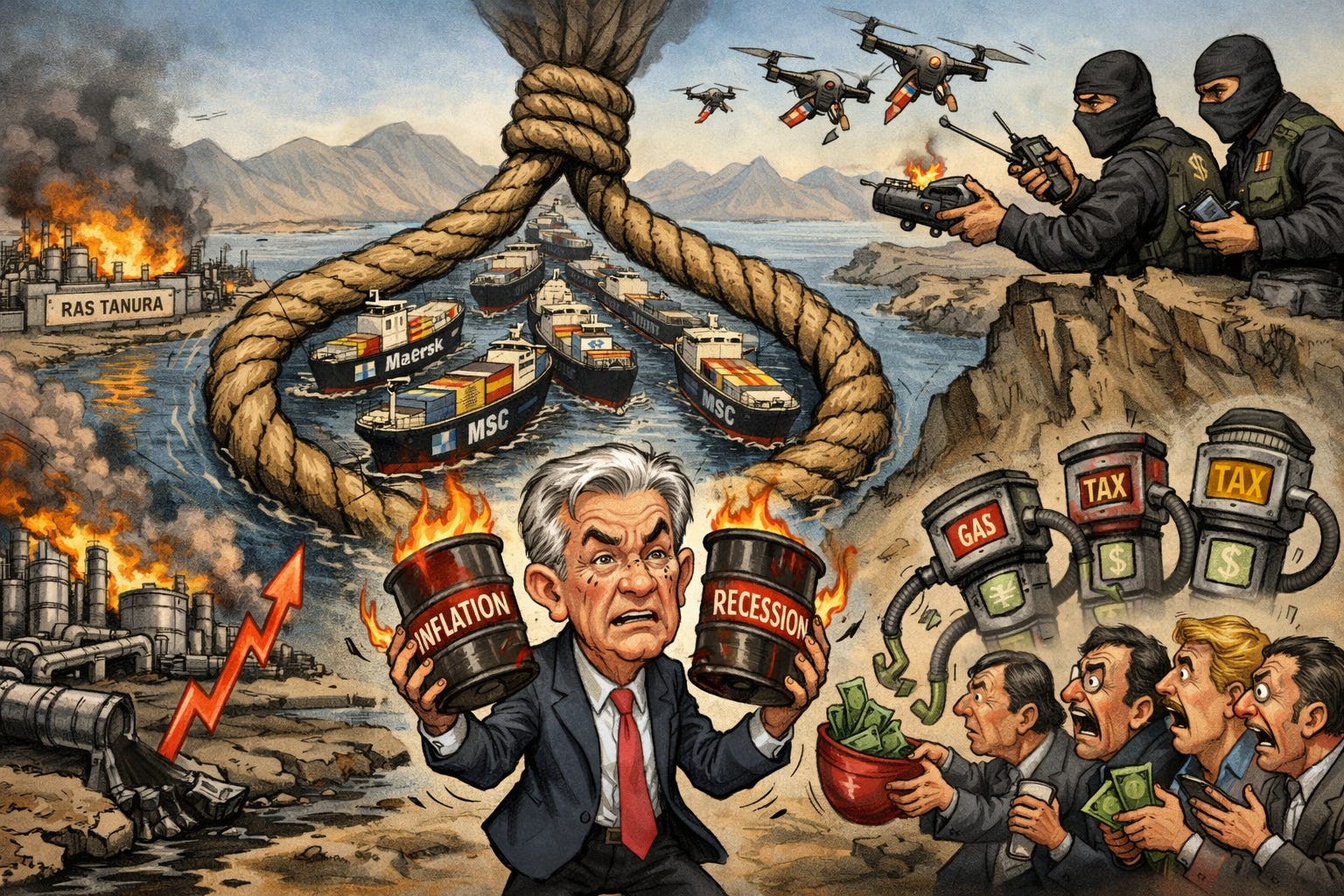
The unthinkable has arrived for energy markets: the Strait of Hormuz is at a functional standstill. Following “Operation Epic Fury,” which decimated Iran’s top leadership, the Islamic Revolutionary Guard Corps (IRGC) began issuing VHF radio warnings to all commercial vessels. While Tehran avoids the word “blockade,” the reality is a de facto shutdown. Major shipping titans, including Maersk, Hapag-Lloyd, and MSC, have suspended all transits or ordered ships to shelter after at least four vessels, including tankers, came under fire. Marine insurers are pulling coverage, and physical infrastructure is already taking hits; Saudi Aramco’s Ras Tanura refinery halted operations after a drone strike (Bloomberg).
The math here is terrifying for global supply. Roughly 20 million barrels of oil per day. 20% of global consumption, pass through this 21-mile-wide choke point. Brent crude futures immediately spiked 10% toward $80, while diesel futures surged over 20%. Even with OPEC+ agreeing to a symbolic output increase of 206,000 barrels per day starting in April, the gesture is moot if the barrels remain trapped behind the strait. Industry analysts at Rystad Energy warn that even if crude is diverted to alternative pipelines, a full closure would still result in a catastrophic loss of 8 to 10 million barrels per day to the global market (Al Jazeera).
Sensei’s Insight: The "shadow blockade" is a nightmare for the Federal Reserve. By making the Strait uninsurable rather than physically blocked, Iran has created a sticky, high-priced energy floor that acts as a global consumption tax. This isn't just a spike; it’s a stagflation trap that could force a recession while simultaneously keeping rate cuts off the table.
🚀 Operation Epic Fury: The Region Ignites
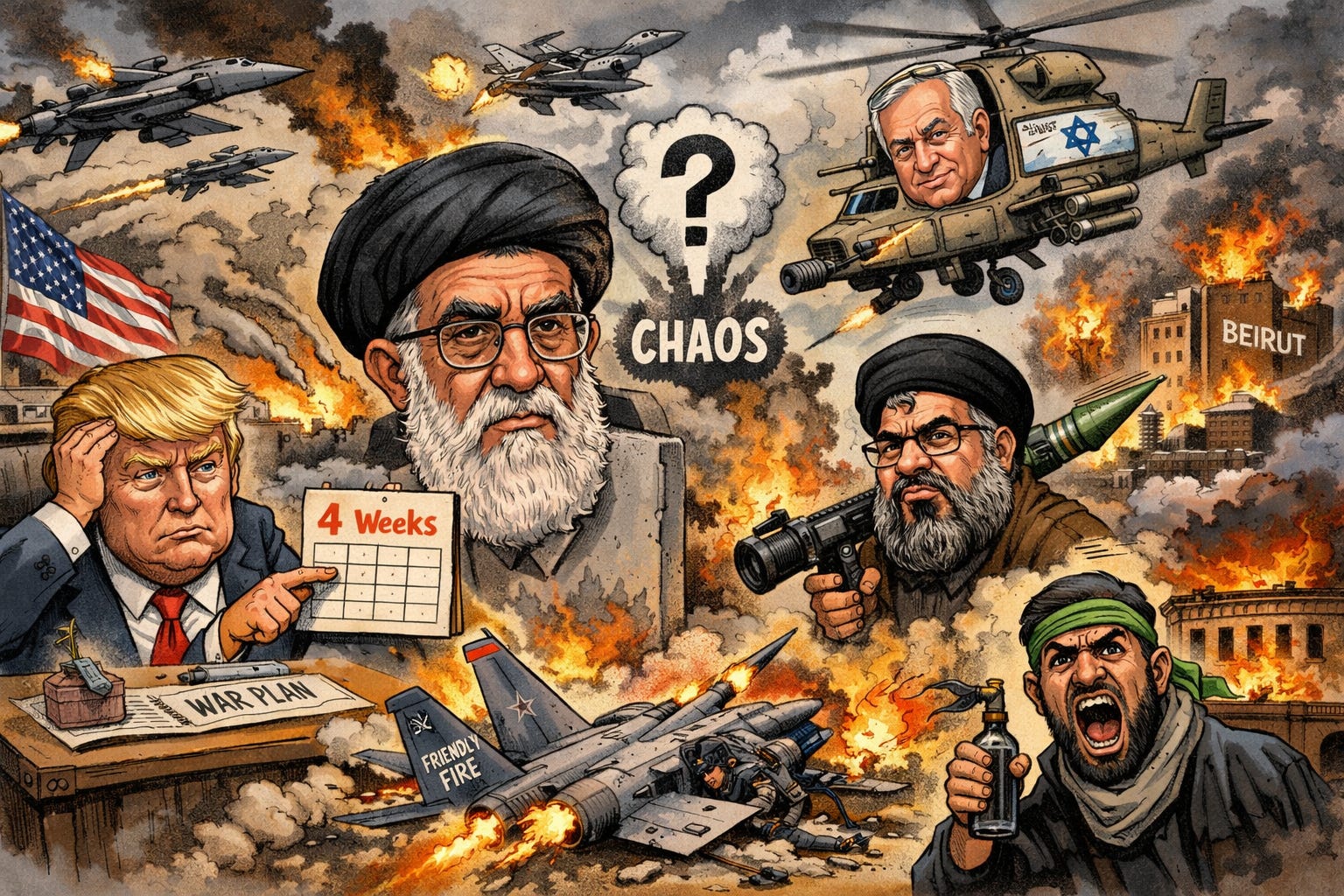
The joint U.S.-Israeli campaign against Iran has entered a chaotic fourth day, characterized by a massive leadership vacuum following the death of Supreme Leader Ayatollah Ali Khamenei. While U.S. forces have struck over 1,000 targets, Iran’s multi-directional retaliation has hit bases and cities across nine countries, including Saudi Arabia and the UAE. The human cost is mounting, with Iran’s Red Crescent reporting over 550 deaths and Israel confirming at least 11 civilian fatalities from retaliatory barrages. In a major blow to U.S. operations, three F-15D Strike Eagles were downed in a “friendly fire” incident by Kuwaiti air defenses, though all crews were recovered (CNN).
The conflict is now a multi-front war as Israel expands operations into Lebanon. Following Hezbollah rocket fire, the Israeli military launched strikes on Beirut’s southern suburbs, killing 31 people and declaring Hezbollah’s leader a “marked target.” Domestically, the fallout has turned violent, with a deadly protest at the U.S. Consulate in Karachi and a religiously motivated shooting in Austin, Texas. While President Trump has signaled a four-to-five-week window for the operation, Iran’s leadership has categorically rejected any back-channel negotiations, suggesting the regional conflagration is far from its peak (Washington Post).
Sensei’s Insight: Regime decapitation rarely equals instant stability. By removing the Ayatollah, we’ve entered a "fog of war" phase where decentralized units act without restraint. If Trump’s four-week timeline holds, the "war premium" shifts from global oil charts to domestic security risks, potentially chilling U.S. consumer spending.
🛩️ Flying Taxis Hit a Make-or-Break Week
The electric vertical take-off and landing (eVTOL) sector is entering what could be its most consequential week yet. Last week, Joby Aviation delivered a broadly positive earnings update, reporting a balance sheet of approximately $2.5 billion and confirming record progress toward type certification. The company reaffirmed its focus on Dubai operations, where it aims to launch the world’s first commercial eVTOL passenger network, and flagged an initial revenue stream through Blade Air Mobility, which it acquired last year. Engineering depth, financial strength and deployment clarity have positioned Joby as the current benchmark in the race to commercialise urban air mobility (Yahoo Finance).
Tonight, the spotlight shifts to Archer Aviation. CEO Adam Goldstein has already confirmed progress on the transition-capable, piloted Midnight aircraft (registration N704AX), enabling entry into the final stages of test flights. Investors will be watching for an updated cash position and projected runway, burn rate trajectory, and confirmation of first defence revenue through Archer’s partnership with Anduril on the autonomous “Omen” system. Archer is also expected to update the market on its Los Angeles network buildout, centred on Hawthorne Municipal Airport, a site secured during the previous earnings call. With the LA28 Olympics approaching, that infrastructure development carries both symbolic and commercial weight.
Beyond earnings, the biggest potential catalyst lands tomorrow. By March 3, the Federal Aviation Administration (FAA) is required to award at least five pilot projects under the Electric Vertical Take-Off and Landing Integration Pilot Program (eIPP), a federal initiative that does not certify aircraft but instead tests real-world integration: vertiport infrastructure, airspace coordination, safety protocols and community engagement. Key U.S. focus regions include the DFW Metroplex in Texas, Southern California tied to LA28 Olympic ambitions, Miami with its tourism-driven metro footprint, the New York City corridor, and the Ohio Medical Corridor. Once awarded, real-world operations are expected to begin within 90 days. The eIPP transforms Advanced Air Mobility from policy discussion into a measurable, operational roadmap (FAA).
Vaz’s Insight: We have been focusing extensively on these two weeks as a key turning point for the eVTOL market. Last week, Joby reported and delivered. Tonight, Archer is in a position to show solid progress in favour of investors. Tomorrow, the eIPP announcement could shift sentiment toward massive optimism. The macro economy and global markets have been facing headwinds, but the fundamentals keep accumulating. Once the geopolitical environment sends the signal for markets to calm down, this sector is ready to take off. Pun intended.
🏔️ Border War: Pakistan and Afghanistan Ignite
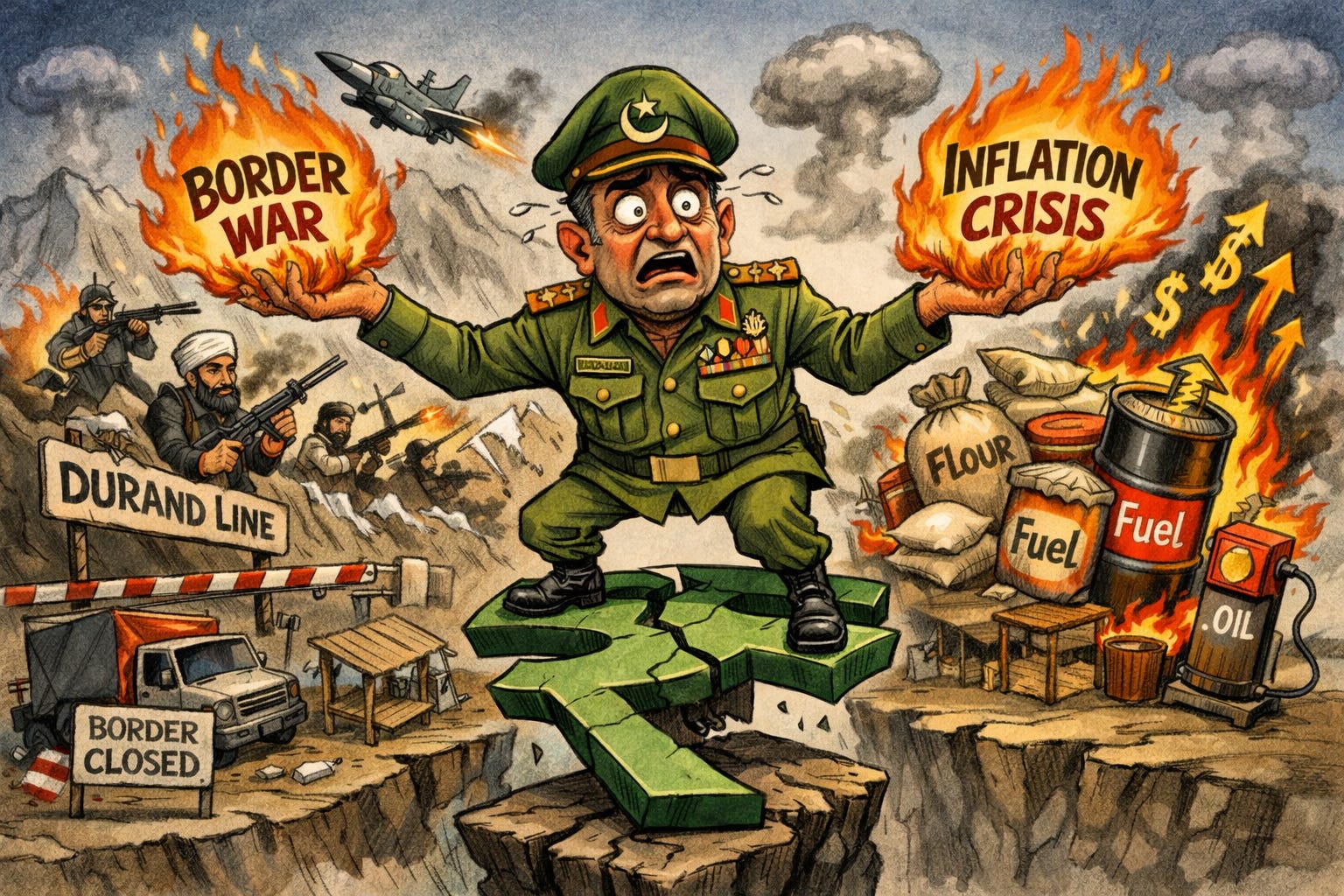
The long-simmering tension between Islamabad and the Taliban has boiled over into “open war” along the 2,611-kilometer Durand Line. Following a series of Pakistani airstrikes targeting insurgent camps, Afghanistan launched a massive retaliatory offensive, leading to active military combat that has entered its fourth day. Pakistan’s defense minister declared the “cup of patience has overflowed,” as the military launched Operation Ghazab Lil Haq, striking over 46 locations across Afghanistan, including the Taliban stronghold of Kandahar. While death tolls are heavily disputed, Pakistan claims to have killed over 350 Taliban fighters, while the Taliban reported striking the Nur Khan military base inside Pakistan today (Foreign Policy).
This conflict represents a spectacular collapse of Pakistan’s 2021 strategy to back the Taliban takeover in hopes of securing its western border. Instead, 2025 became Pakistan’s deadliest year of insurgent violence in a decade, with United Nations reports confirming the Afghan Taliban has been supplying weapons to Pakistani militants. With major border crossings now closed, the economic fallout is immediate; food prices in Pakistan are skyrocketing, further destabilizing an economy already reeling from the global energy shock. The U.S. State Department has expressed support for Pakistan’s right to defend itself, but the prospect of a protracted guerrilla war against seasoned Taliban fighters threatens to pull the entire region into a deeper security vacuum (Al Jazeera).
Sensei’s Insight: Pakistan is the epicenter of a "misery index" spike. The border war is choking food supplies while the Hormuz crisis incinerates their fuel budget. For a nuclear power with a fragile currency, this double-whammy of cost-push inflation is a recipe for internal collapse.
🏛️ Berkshire Hathaway: The Hidden Reality of Q4
Berkshire Hathaway’s fourth-quarter results initially appeared weak, reporting a 30% drop in operating earnings to $10.2 billion. However, a closer look at the 10-K filing reveals a $1.56 billion noncash goodwill impairment charge that was included in those operating figures. Most corporations would exclude such one-time charges, but Berkshire’s conservative accounting made the results look significantly worse than the underlying business performance. When adjusted for this and other noncash factors, the decline in operating profit was closer to 20%. The impairment was primarily tied to Pilot, the truck-stop operator, which saw pretax earnings plummet throughout 2025 (CNBC).
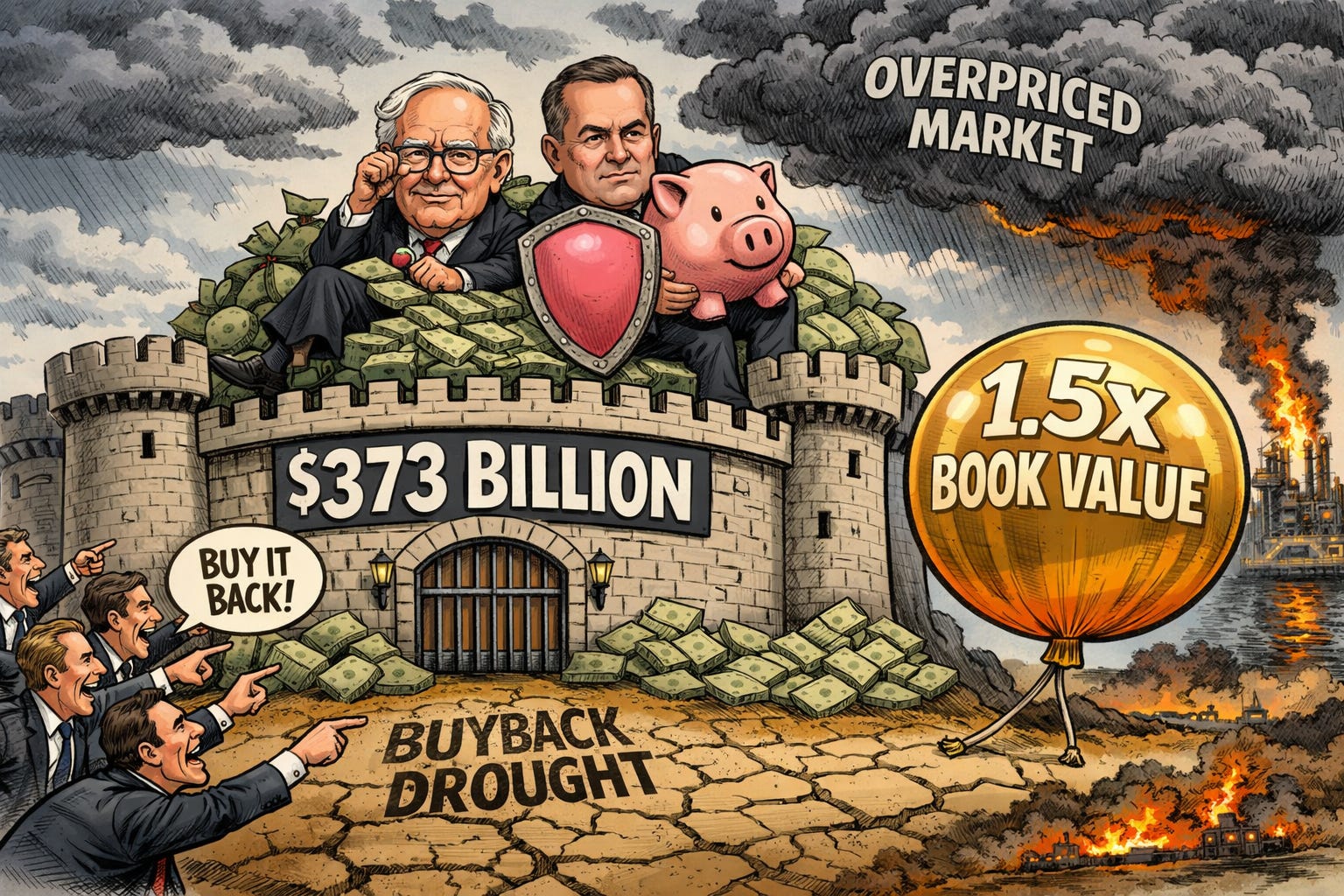
The report also marked a historic shift in leadership as Greg Abel issued his first shareholder letter as CEO. Abel confirmed that Berkshire will not pay a dividend and noted that any share buybacks must still be approved by Warren Buffett, who remains chairman. This power-sharing arrangement comes as Berkshire’s cash pile sits at $373.3 billion, a massive reserve that has yet to be deployed despite a nine-month drought in stock repurchases. While insurance underwriting profits fell 54%, Abel emphasized a focus on long-term stability over quarterly frequency, signaling that Berkshire will remain patient even as its stock performance lags the broader S&P 500 (CNN).
Sensei’s Insight: The buyback drought is the real story here. By sitting on $373 billion and refusing to repurchase shares at 1.5x book value, Abel and Buffett are signaling that the market is too expensive. They are choosing the safety of cash over overpaying for their own stock.
🟡 Gold’s Breakout: Closing In on All-Time Highs
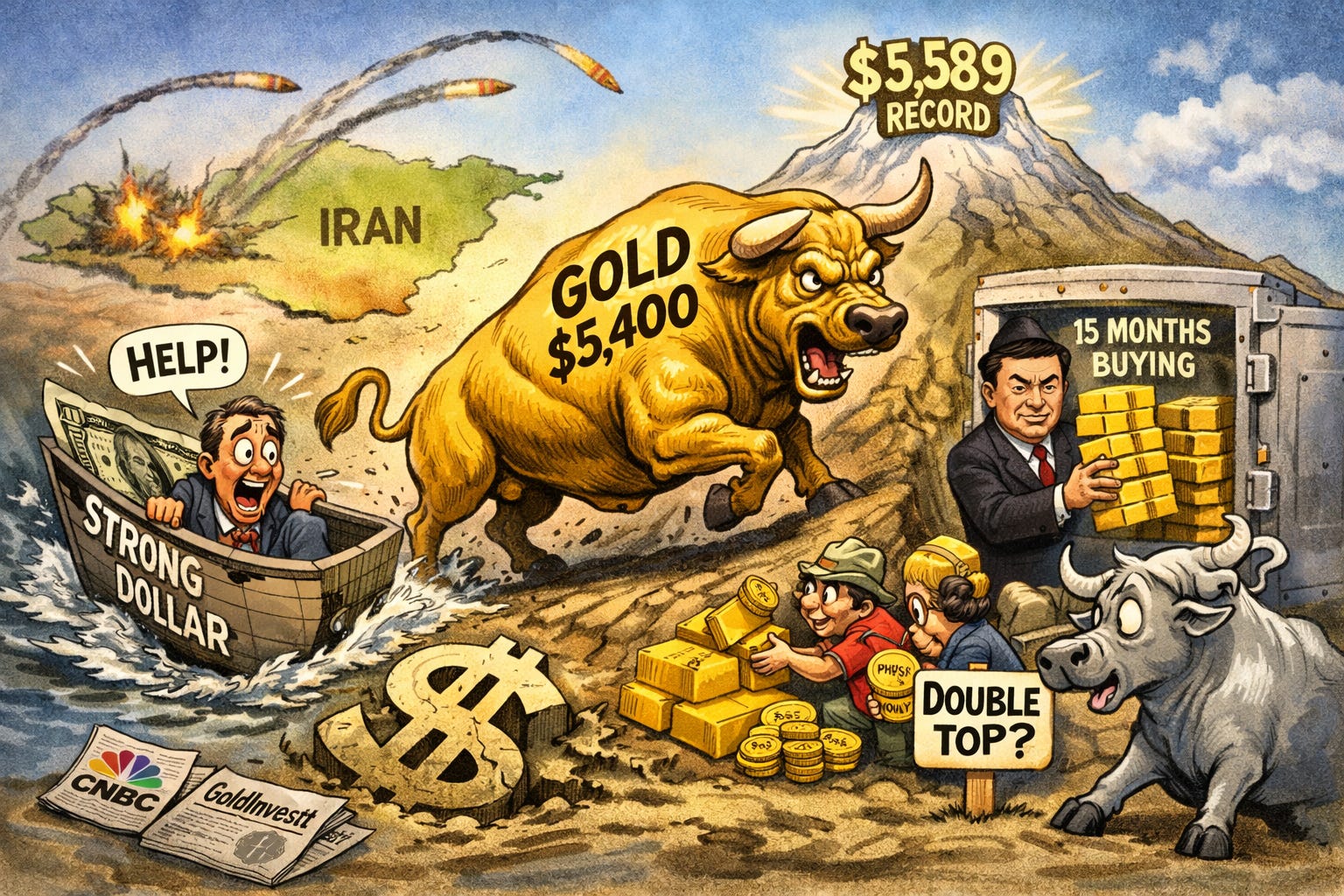
Gold is defying the “strong dollar” gravity, surging toward $5,400 per ounce as the Iran conflict triggers a global rush for hard assets. Up 2-3% today alone, the metal is now within striking distance of the $5,589 record set in January. This move is structurally significant because gold usually drops when the dollar rises; the fact that both are climbing simultaneously signals extreme market distress. Central bank buying remains a massive pillar of support, with China’s central bank continuing a 15-month purchasing streak to diversify away from Western currencies (CNBC).
Silver is following the leader, rallying above $93 per ounce, while tokenized gold products on crypto exchanges are seeing record inflows. Investors are clearly prioritizing physical settlement and sovereign-backed safety over speculative plays. Technical analysts are watching the $5,320 level closely; a weekly close above this point could clear the path for a run toward $6,000, as geopolitical risk premiums become a permanent fixture of the 2026 investment landscape (GoldInvest).
Sensei’s Insight: We identified the gold rally long before the broader market acknowledged its potential. While gold is currently positioned to surpass the $5,589 all-time high, silver continues to underperform. Silver is likely to form a double top or a lower high rather than achieving a true breakout. Investors are prioritizing the primary safe haven over industrial proxies.
🔗 Connect with Us
Stay plugged in across platforms:
Sensei on X: sensei_live_
Martyn Lucas on X: MartynInvestor
Vaz on X: eVTOLHUB
📺 YouTube Channel (Live & Replays): Martyn Lucas Investor

🔍Deep Dive: The Domino Theory: Good Macro, Bad Conclusion