This content is for informational and educational purposes only and does not constitute financial advice. Always do your own research. Not financial advice (NFA).
👀 Today’s Stories at a Glance
📉 Strong Jobs Data Hits Hedges: A hot jobs report lifted rate-hike bets, sinking gold and bitcoin together as yield-free assets lost appeal.
🚀 SpaceX Launches Record IPO: SpaceX prices the largest debut ever at $135 a share, valuing it near $1.77 trillion.
🍎 Apple Bets Comeback on Siri: Apple unveils a rebuilt Siri today, running on a licensed Google model, to rescue its AI credibility.
🛢️ Oil’s Safety Net Runs Thin: Oil sits near $95 despite Hormuz blocked, but the buffers holding it down are nearly spent.
🚪 Blackstone Caps Fund Withdrawals: Blackstone limited redemptions on its $79 billion credit fund as investors rushed to pull cash.
🪖 US Iran War Hits 100 Days: The US Iran war reached day 100 with no deal, and the heaviest fighting since April.
💉 Incyte Eyes $2 Billion Biotech Deal: Incyte nears a $2 billion buyout of Star Therapeutics to plug a looming patent cliff.
🇨🇭 Switzerland Fights US Tariff Threat: Switzerland rejected US forced-labour claims as Washington weighs lifting tariffs on Swiss goods to 12.5%.
🛢️ Arctic Drilling Auction Flops: An Arctic drilling auction drew just $3.74 million as major oil firms stayed away entirely.
📈 Chart of the Day: SMR: NuScale Power sits on strong support near $10, with upside targets stacked above if it holds.
🧠 One Big Thing
Two stories in today's edition point the same way. Rates are heading higher, and Blackstone just capped withdrawals as fresh money into private credit dries up, with fund sales down 63% from a year ago. Higher-for-longer rates are the squeeze: they pull cash toward bonds paying real yield and away from illiquid credit funds that lock money up. That is why the Blackstone cap matters well beyond one fund. If rates climb and inflows keep shrinking, the whole $2 trillion private-credit pile faces redemption math that gets harder each quarter. Watch fund flows, not headlines, for the next crack.
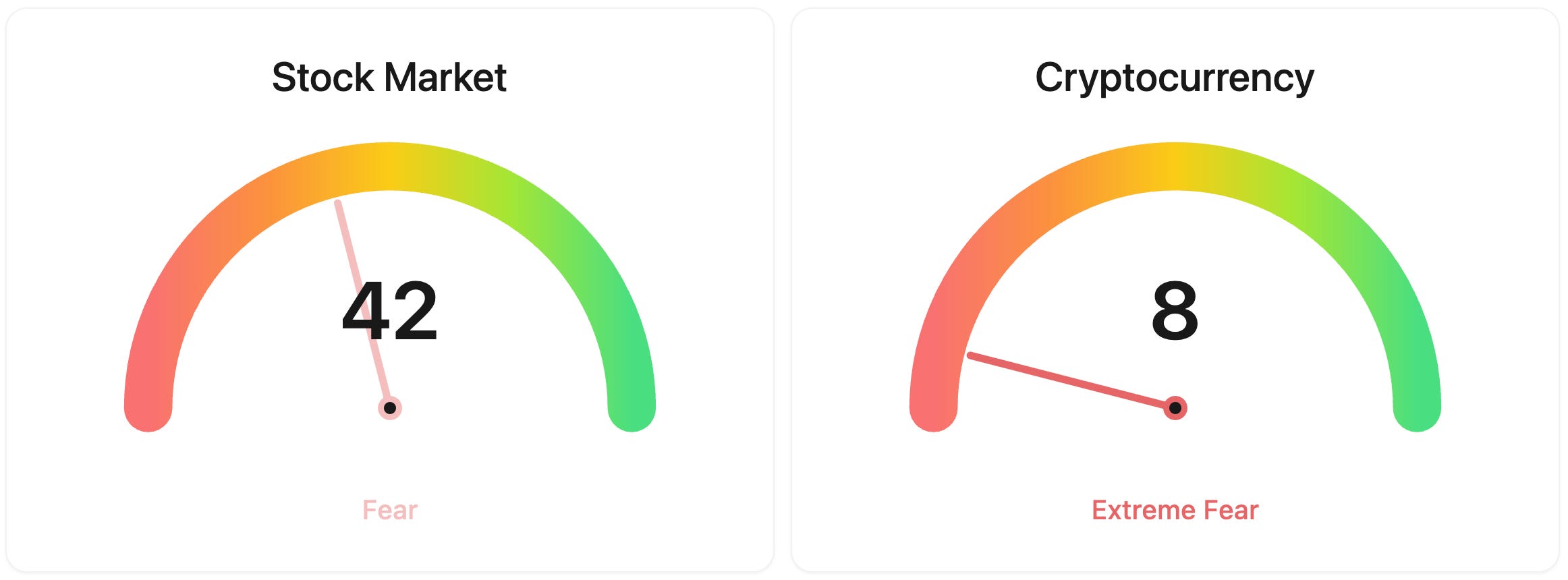
⚖️ Fear & Greed
📉 The Number That Matters
172,000
US employers added 172,000 jobs in May against forecasts near 80,000, a beat of more than double that flipped rate-cut bets into rate-hike bets and sank gold and bitcoin.
⚔️ Winners vs Losers
No major winners or losers today.
📊 Market Snapshot
Cryptocurrencies:
Bitcoin (BTC): $63,129 (▼ -0.27%)
Ethereum (ETH): $1,665 (▼ -1.48%)
XRP: $1.14 (▼ -0.96%)
Equity Indices (Futures):
S&P 500: 7,420 (▲ 0.26%)
NASDAQ 100: 29,198 (▲ 0.59%)
FTSE 100: 10,375 (▲ 0.40%)
Commodities & Bonds:
10-Year US Treasury Yield: 4.56% (▲ 0.62%)
Oil (WTI): $94 (▲ 4.71%)
Gold: $4,294 (▼ -0.80%)
Silver: $67.01 (▼ -1.28%)
Data as of: UK: 11:30 BST / US: 06:30 EDT / Asia (Tokyo): 19:30 JST
✅ 5 Things to Know
📉 Hot Jobs Report Sinks Gold and Bitcoin Together
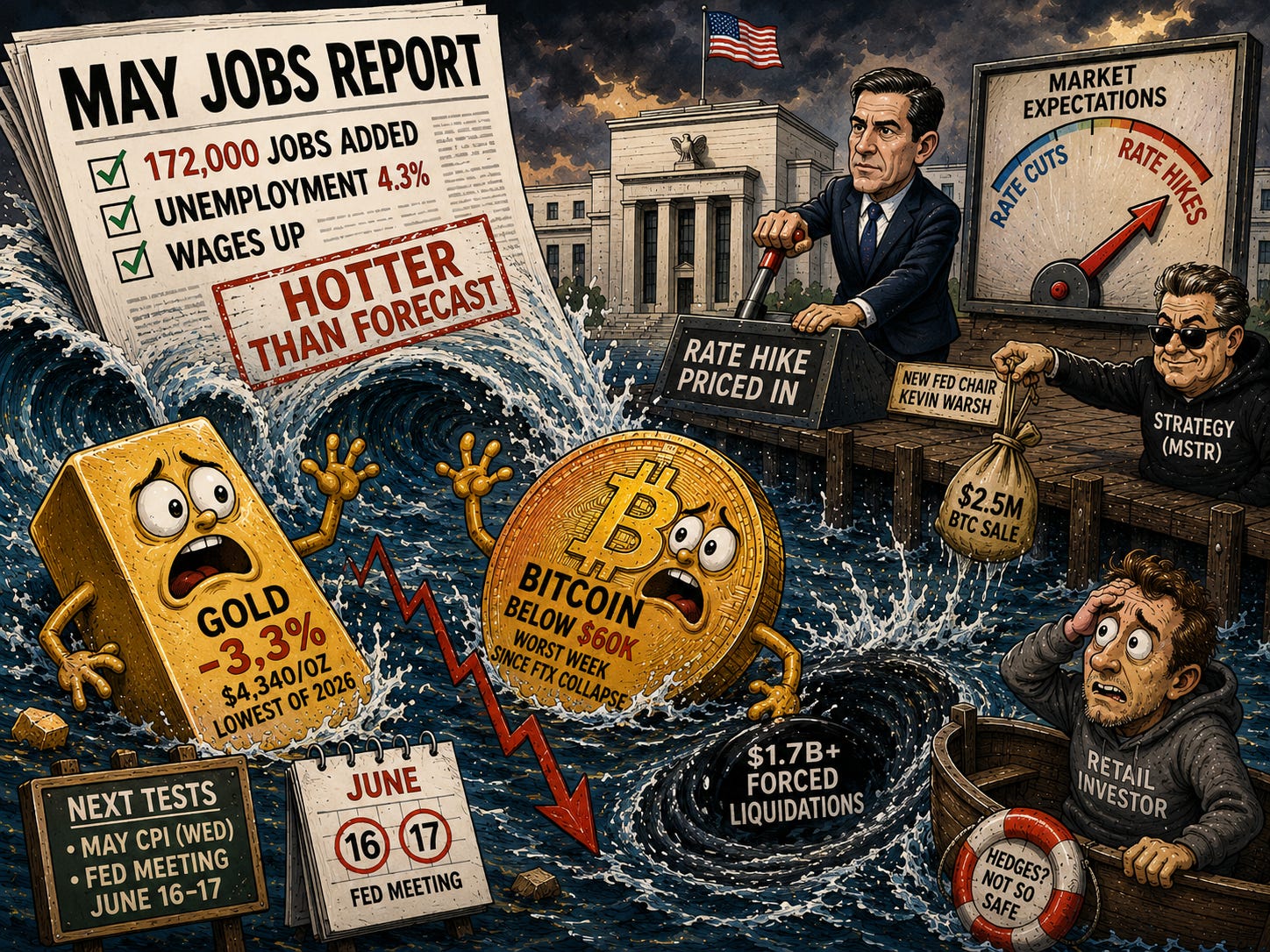
Friday’s May jobs report came in more than twice as strong as forecast, and it broke two trades a lot of retail investors thought were safe. US employers added 172,000 jobs against expectations near 80,000, unemployment held at 4.3%, and wages kept climbing. Bond traders responded by pricing in a Federal Reserve rate hike this year, a full reversal from the cuts the market expected a few months ago. Gold fell 3.3% to about $4,340 an ounce, its lowest of 2026 and enough to wipe out the metal’s entire gain for the year. Bitcoin capped its worst week since the FTX collapse in late 2022, dropping below $60,000 intraday for the first time since October 2024. (CNBC)
The lesson for anyone holding both is that gold and bitcoin, each sold as a hedge, fell at the same moment because the thing moving them was interest rates, not fear. When cash and bonds pay more, assets that pay nothing lose their appeal, and a stronger dollar piles on. Bitcoin clawed back to around $62,000 by this morning, but the crypto fear gauge is still pinned at extreme fear, and a tiny $2.5 million sale by Strategy, the largest corporate bitcoin holder, was enough to set off more than $1.7 billion in forced liquidations in a single day. The next tests are Wednesday’s May inflation report and the Fed’s June 16 to 17 meeting, the first chaired by Kevin Warsh. (Bloomberg)
Sensei’s Insight: Wednesday’s inflation reading is the next domino. A hot number turns the rate hike markets now expect into a near certainty, and the same math that sank gold and bitcoin Friday hits them again. When rates are the story, no-yield assets have nowhere to hide.
🚀 SpaceX Debuts Friday in the Biggest IPO Ever
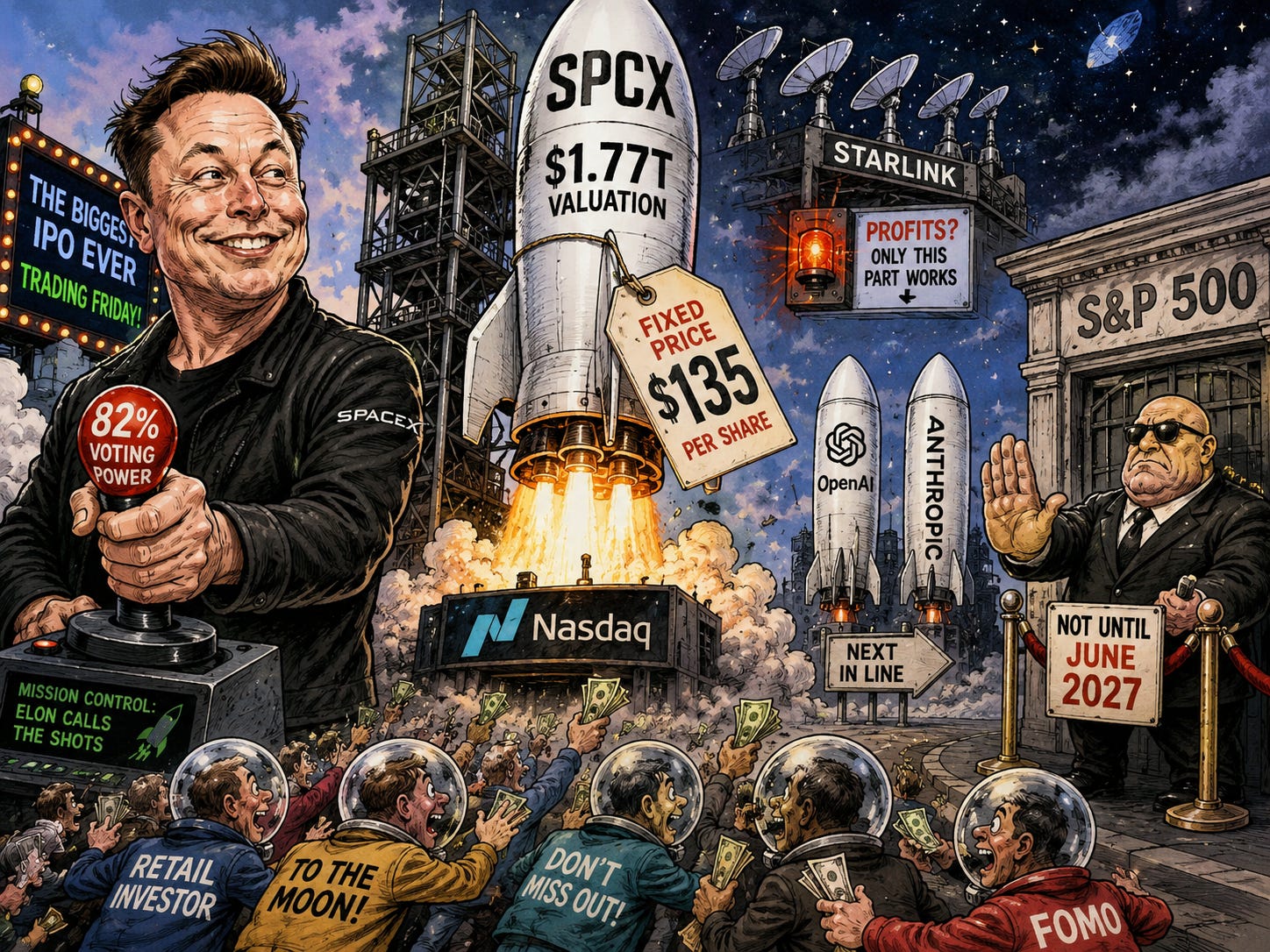
SpaceX prices the largest stock-market debut in history on Thursday and starts trading Friday on the Nasdaq under the ticker SPCX. Elon Musk’s company set a fixed price of $135 a share, an unusual move that skips the normal back-and-forth with investors, and plans to sell about 555.6 million shares to raise roughly $75 billion. That values SpaceX near $1.77 trillion, more than double the record Saudi Aramco set in 2019 and above Tesla’s roughly $1.6 trillion, arriving as the seventh-largest US company. Retail investors have been promised about 30% of the offering, around three times the usual slice, while Musk keeps more than 82% of the voting power. (CNBC)
What buyers are getting is a bet on the next decade, not this year’s numbers. SpaceX booked $18.7 billion in revenue in 2025 but lost $4.94 billion, and only Starlink, its satellite-internet arm, turns a steady profit; the company folded Musk’s AI startup xAI into the business in February. Because the $135 price is fixed, the real value gets decided in Friday’s first trades, and pre-listing markets have changed hands both above and below that level. SpaceX also won’t qualify for the S&P 500 until at least June 2027, so index funds won’t be forced buyers for a year. Anthropic and OpenAI are lining up their own listings right behind it. (Yahoo Finance)
Sensei’s Insight: The fixed price means the real number prints Friday morning. A sharp pop says retail demand swamped supply; a soft open says $1.77 trillion was a stretch. And with no S&P 500 entry until 2027, early trading runs on people who want in, not funds that have to buy.
🍎 Apple Stakes Its AI Comeback on Siri Today
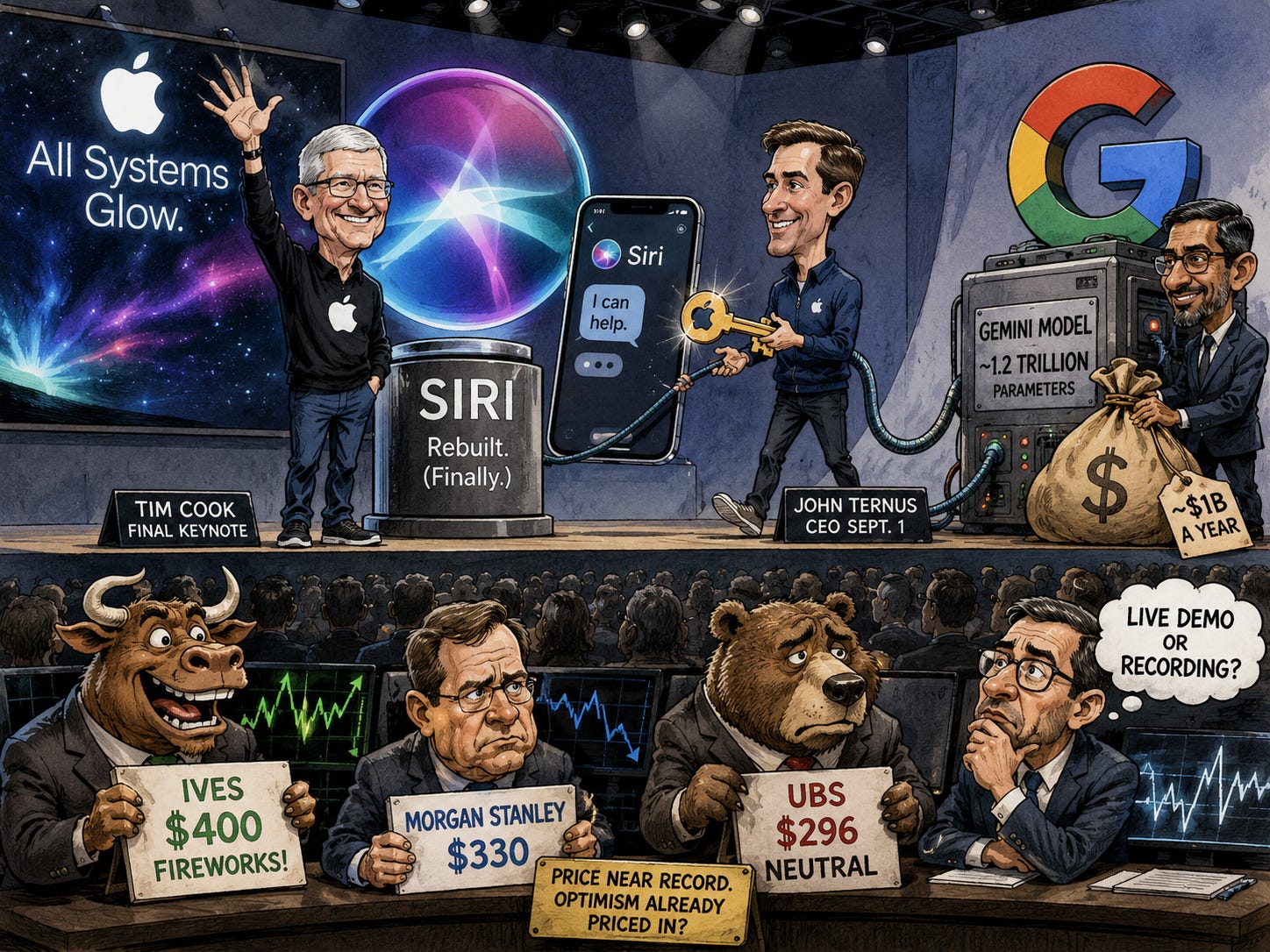
Apple opens its developer conference today at 1 p.m. Eastern with its most closely watched keynote in years, under the theme “All Systems Glow.” The centerpiece is a rebuilt Siri, a feature Apple promised in 2024 and then failed to ship, now running on a custom Google Gemini model with about 1.2 trillion parameters that Apple reportedly pays around $1 billion a year to license. Expect a standalone Siri chatbot app and developer versions of iOS 27, billed as a stability-focused release. It is also Tim Cook’s final keynote as chief executive before he hands the job to John Ternus on September 1. Apple shares closed Friday at $307.34, near a record, with the company worth about $4.5 trillion. (CNBC)
This matters because Apple’s AI credibility is on the line after the botched 2024 rollout, and leaning on Google’s model is an admission it couldn’t catch up alone, which puts real weight on Alphabet too. Wall Street is split: Wedbush’s Dan Ives expects fireworks and sees a $400 stock, Morgan Stanley sits at $330, while UBS is neutral at $296 and warns the event may not move the shares without a real surprise. With the stock already near an all-time high, plenty of optimism is priced in. One thing to watch is whether Apple demos the new Siri live or plays a recording, a quick read on how sure the company is that it actually works.
Sensei’s Insight: Apple shares sit near a record going in, so good news may already be in the price. Watch the Siri demo: a live one signals confidence, a recording signals doubt. The bigger shift is Apple building its AI on Google’s model, which means Alphabet has plenty riding on today too.
🛢️ Oil Dodged $200, but the Cushion Is Thinning
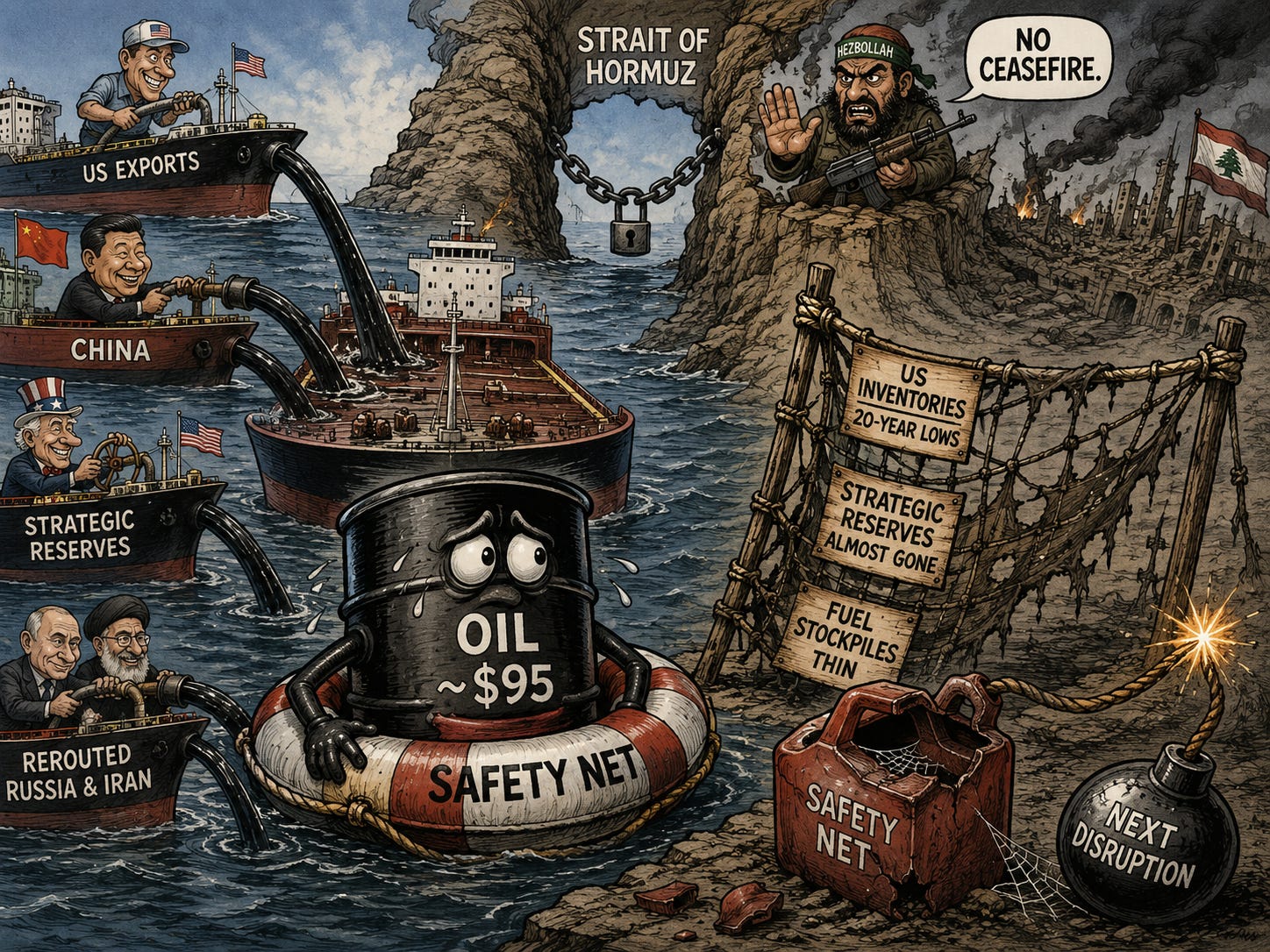
The Strait of Hormuz, the chokepoint that carried about a fifth of the world’s oil before the war, has been largely blocked for more than three months, pulling over 10 million barrels a day off the market in what the International Energy Agency calls the largest supply disruption in the history of oil. For decades the warning was that this would send crude to $200 or higher. Instead Brent sits around $95 a barrel and the US benchmark near $92, up roughly 20% this year but far below past crisis spikes. The gap got filled by record US exports, China cutting its crude imports about 40% in May, a 172-million-barrel release from America’s emergency stockpile, and rerouted Russian and Iranian cargoes. (Bloomberg)
Contained oil is the main reason the global economy has dodged a recession despite the worst supply shock on record, and cheaper-than-feared fuel has kept inflation from running away. The catch is that the buffers doing the work are nearly spent. US oil inventories are at two-decade lows, the emergency reserve has little left, and fuel stockpiles are thin heading into peak summer driving; one Pimco manager estimates the system tightens by 70 to 80 million barrels every week. With the safety net almost gone, even a small new outage could move prices the way the old forecasts warned. Iran-backed Hezbollah just rejected a US ceasefire plan for Lebanon, so the war that started all this is still live.
Sensei’s Insight: Oil isn’t at $200 because the world burned through its safety net to keep it down. Record US exports, Chinese demand cuts and emergency reserves filled the gap, and they are nearly used up. From here, a modest new disruption could finally do what the doom forecasts predicted.
🚪 Blackstone Caps Withdrawals as Investors Rush the Exit
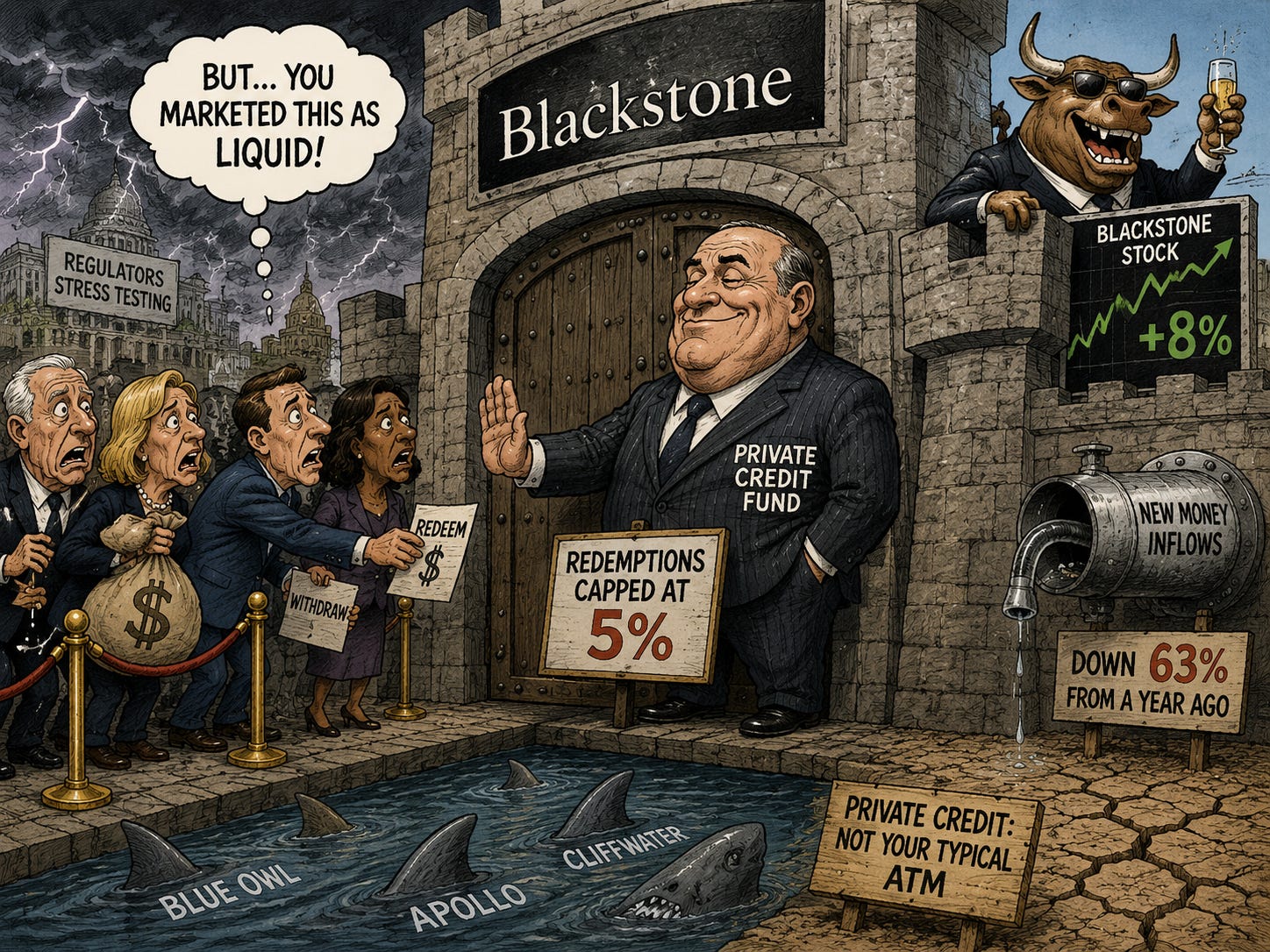
Blackstone capped withdrawals from its flagship private-credit fund for the first time on Thursday, after investors asked to pull about 10% of the $79 billion fund in the second quarter, up from 7.9% in the first. The Blackstone Private Credit Fund, known as BCRED, limited redemptions to its standard 5% quarterly ceiling, leaving some investors unable to cash out fully. The move came a day after Swiss manager Partners Group capped a fund of its own, sending its stock down 18%. Blackstone called the limits a deliberate design rather than a sign of trouble, and said the fund still holds more than $15 billion in available cash. (CNBC)
Private credit, lending done by firms rather than banks, has swelled to roughly $2 trillion and was marketed hard to wealthy individuals, so this is a live lesson that the money in these funds is not always there on demand. Oddly, Blackstone’s stock rose about 8% on the news, because the 10% exit request came in below what analysts feared. The bigger worry is what comes next: new money is drying up, with credit fund sales down 63% from a year earlier in April, and rivals including Blue Owl, Apollo and Cliffwater are facing the same pressure. Regulators in the US and UK have begun stress-testing the sector. (Reuters)
Sensei’s Insight: The strange part is Blackstone’s stock rising after it blocked its own investors, because the exit rush came in below the panic case. The real signal sits in new sales, which are collapsing. If that holds, these funds shrink, and next quarter’s withdrawal math gets harder, not easier.
Stories You Might Have Missed
🪖 US and Iran Reach Day 100 With No Deal
The US-Iran war passed its 100th day yesterday with the two sides still far from a lasting agreement, and the past week brought the heaviest fighting since a fragile April ceasefire. US forces shot down two Iranian drones near the Strait of Hormuz yesterday, after intercepting six ballistic missiles aimed at Bahrain and Kuwait on Friday. Talks remain stuck on tens of billions in frozen Iranian funds, which President Trump won’t release in an early deal, and on Lebanon, where Iran-backed Hezbollah just rejected a US ceasefire plan. The market read runs through oil: Brent is about 36% above its pre-war price, energy is the best-performing S&P 500 sector this year at roughly 31%, and airlines and cruise lines are squeezed by costlier fuel. (CNBC)
💉 Incyte Nears a $2 Billion Bet on Bleeding Disorders
Incyte is close to buying Star Therapeutics, a private biotech focused on bleeding disorders, in a deal worth up to $2 billion, the Financial Times reported yesterday, with $1.25 billion in cash upfront and up to $750 million tied to hitting targets. Reuters said it couldn’t confirm the report and neither company has commented. Star’s lead drug is a once-a-month antibody for von Willebrand disease, the most common inherited bleeding disorder, and it’s in late-stage trials. The logic for Incyte, worth about $19 billion, is a looming patent cliff on its top-selling drug Jakafi around 2028; its new chief executive, a known dealmaker, has said acquisitions are central to filling that gap. The news broke Sunday, so the shares haven’t reacted yet. (Reuters)
🇨🇭 Switzerland Rejects US Forced-Labour Claim Amid Tariff Talks
Switzerland on Friday rejected US findings that it failed to block imports made with forced labour, even as Washington weighs raising tariffs on Swiss goods to 12.5% from 10%. Bern said it strongly disputes the allegation and will keep negotiating; its current 10% duties expire July 24. Swiss officials and business groups see the forced-labour claim as a pretext to keep tariffs in place after the US Supreme Court struck down President Trump’s emergency duties in February. It matters for Swiss heavyweights such as Roche, Novartis, Nestlé and watchmakers Swatch and Richemont, though the 2.5-point gap versus the European Union is viewed as manageable. The bigger swing factor for Swiss pharma is a separate drug tariff, capped at 15%. (Reuters)
🛢️ Arctic Drilling Auction Flops as Big Oil Stays Away
A federal auction of drilling rights in Alaska’s Arctic National Wildlife Refuge drew almost no interest on Friday, pulling in just $3.74 million from two bidders for five of the 58 tracts on offer. The only takers were a state-owned Alaska authority and a small Anchorage gas producer; no major oil company bid. For comparison, a March sale in a nearby Alaska petroleum reserve drew about $163 million from majors like ConocoPhillips. The flop shows that even with federal backing and oil prices lifted by the war, the industry sees Arctic drilling as too costly and risky, with no roads, decades to first production and banks refusing to fund it. It won’t move oil or gasoline prices any time soon. (Reuters)
🔗 Connect with Us
Stay plugged in across platforms:
Sensei on X: sensei_live_
Martyn Lucas on X: MartynInvestor
Vaz on X: eVTOLHUB
📺 YouTube Channel (Live & Replays): Martyn Lucas Investor