

This content is for informational and educational purposes only and does not constitute financial advice. Always do your own research. Not financial advice (NFA).
👀 Today’s Stories at a Glance
📰 FOMC minutes reveal hawkish shift: Officials upgraded economic assessments and discussed potential rate hikes if inflation remains stubbornly elevated.
🤖 OpenAI seeks $100 billion funding: Strategic tech giants back a massive infrastructure build-out to secure essential AI compute capacity.
🇮🇳 Gates skips India AI summit: Recent personal scrutiny caused a keynote cancellation, though Microsoft remains committed to $50 billion investment.
🧬 Nvidia exits Recursion Pharmaceuticals stake: The chipmaker dumped its shares while Cathie Wood’s ARK Invest bought the dip.
🛒 Walmart faces new CEO debut: Markets watch John Furner for fiscal 2027 guidance and strategy regarding high-income shopper trends.
🇮🇷 Rising risk of Iranian strikes: Markets price high conflict odds as US military builds up forces following stalled nuclear talks.
🧠 One Big Thing
US military preparations against Iran have reached a critical threshold, with prediction markets signaling a 70% chance of strikes by late 2026. While historical data shows stocks typically recover quickly from geopolitical conflict, the primary threat to modern portfolios is a sustained energy shock. A closure of the Strait of Hormuz could remove 16 million barrels of oil per day, potentially pushing crude prices toward $130. This scenario would spike US inflation to 6%, forcing the Federal Reserve into a stagflationary interest rate cycle. Investors should note that central bank reactions to energy costs, rather than the military actions themselves, represent the greatest risk to long-term returns. Gold and cash reserves currently offer the most reliable protection against this specific transition from geopolitical tension to structural economic damage.
⚖️ Fear & Greed
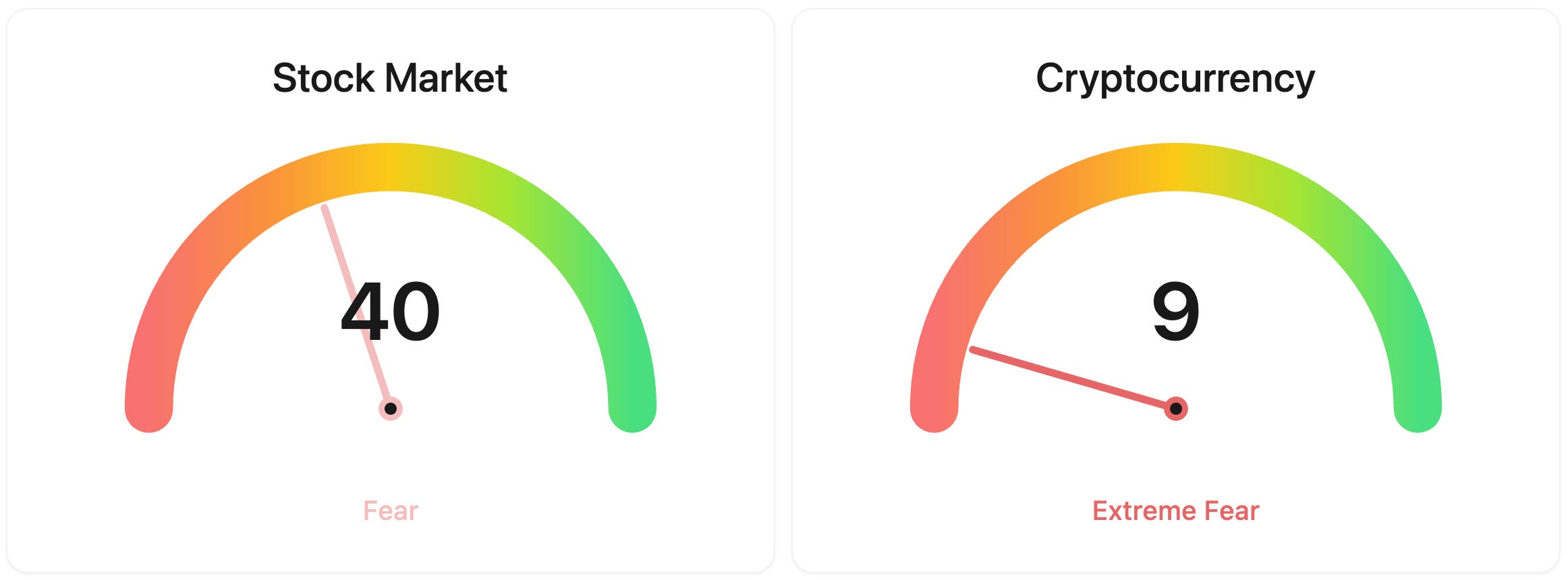
📉 The Number That Matters
70%
Prediction markets currently price a 70% probability of US military strikes against Iran by year-end 2026. This surge follows the largest American military buildup since 2025, signaling that investors fear the uncertainty of conflict more than war itself.
⚔️ Winners vs Losers
Winners
DASH 0.00%↑ DoorDash Inc. climbed after reporting a Q4 beat and issuing strong Q1 guidance alongside a major international platform consolidation plan.
RELY 0.00%↑Remitly Global Inc. surged after delivering a significant Q4 earnings beat and a positive swing to profitability with an upbeat fiscal year outlook.
ETSY 0.00%↑ Etsy Inc. shares jumped after announcing the sale of its Depop subsidiary to eBay for $1.2 billion to refocus on its core marketplace.
DGNX 0.00%↑: Diginex Ltd rallied on a technical oversold rebound and market anticipation regarding the final definitive agreement for the Resulticks Global acquisition.
Losers
CVNA 0.00%↑ Carvana Co. plummeted following a Q4 earnings miss and renewed investor concerns regarding short-seller allegations from Gotham City Research.
BTDR 0.00%↑: Bitdeer Technologies Group fell after announcing a $300 million private offering of convertible notes, raising investor concerns regarding potential shareholder dilution.
📊 Market Snapshot
Cryptocurrencies:
Bitcoin (BTC): $66,667 (▲ 0.33%)
Ethereum (ETH): $1,956 (▲ 0.05%)
XRP: $1.41 (▼ 0.83%)
Equity Indices (Futures):
S&P 500: $6,860 (▼ 0.21%)
NASDAQ 100: $24,878 (▼ 0.31%)
FTSE 100: £10,598 (▼ 0.98%)
Commodities & Bonds:
10-Year US Treasury Yield: 4.10% (▲ 0.37%)
Oil (WTI): $66 (▲ 1.91%)
Gold: $4,984 (▲ 0.16%)
Silver: $78.08 (▲ 1.14%)
Data as of UK (GMT): 11:44 AM / US (EST): 6:44 AM / Asia (Tokyo): 8:44 PM
✅ 5 Things to Know Today
📰 FOMC Minutes Reveal Hawkish Shift
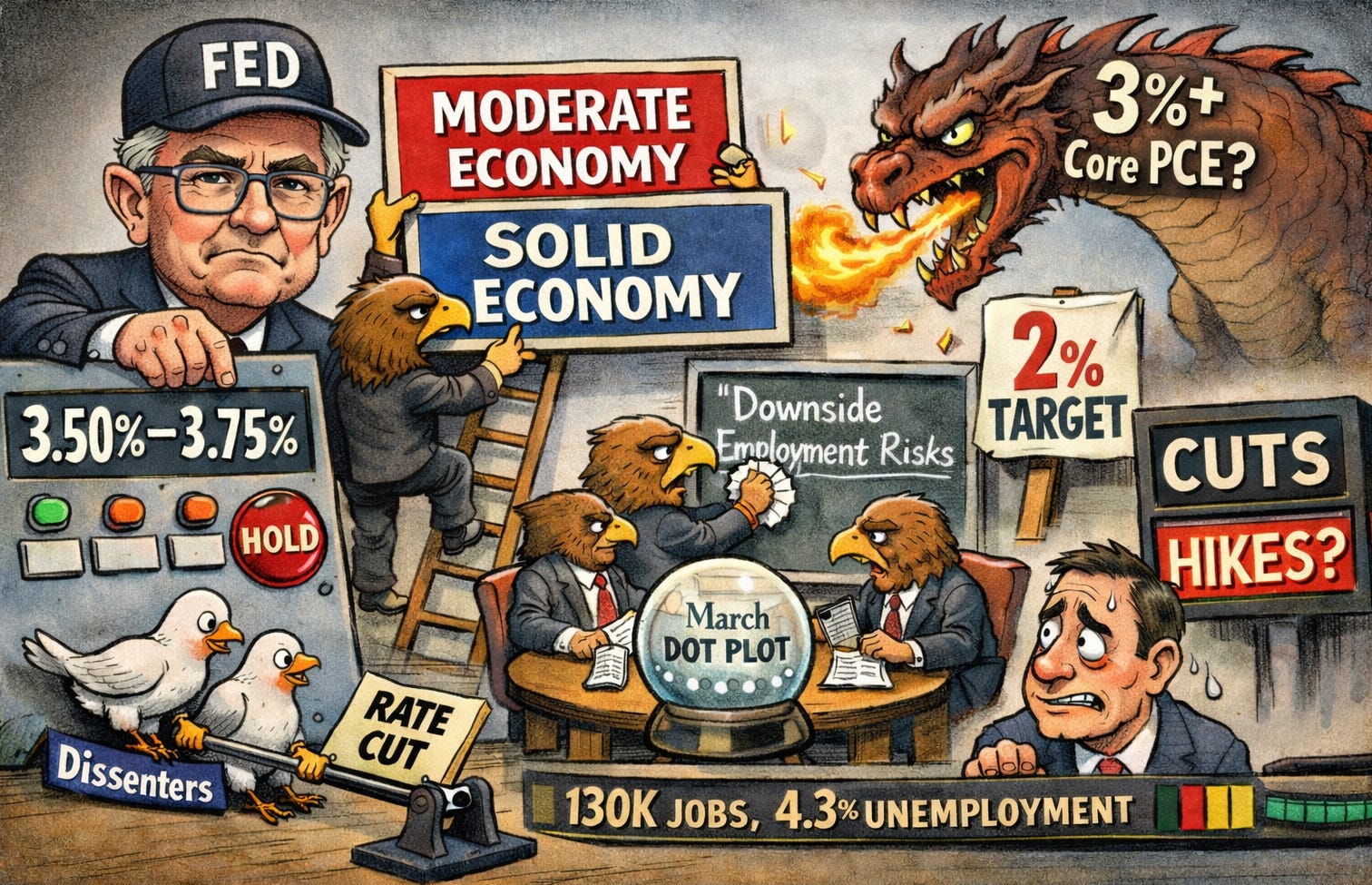
The Federal Reserve held rates steady at 3.50%–3.75% at its January meeting with a 10-2 vote, as Governors Waller and Miran dissented in favor of a quarter-point cut. The minutes, released yesterday, showed the Committee upgraded its assessment of economic activity from “moderate” to “solid” and removed language citing increased downside risks to employment, the key justification behind the three rate cuts delivered in late 2025. The vast majority of participants judged that labor market risks had diminished, while most cautioned that progress toward the 2% inflation target could be slower and more uneven than expected.
In a notable development, several participants raised the possibility that rate hikes could become appropriate if inflation remains elevated; language entirely absent from the December minutes. Staff projections revised inflation slightly higher and now see unemployment falling below the natural rate by year-end 2026. The committee’s composition also shifted hawkish following voter rotation, with known hawks Logan and Hammack replacing more dovish voices. Since the meeting, data has shown payrolls rising by 130,000 in January with the unemployment rate falling to 4.3%, while core CPI advanced broadly in line with expectations.
Sensei’s Insight: These minutes tell a clear story; the bar for the next cut just got higher. The first mention of possible rate hikes, even as a minority view, changes the conversation entirely. Friday’s PCE print is now the single most important data point for near-term direction. If core comes in at 3.0% or above, markets will need to reprice toward one cut or zero for 2026. The March dot plot will confirm whether the hike discussion was noise or signal.
🤖 OpenAI’s $100 Billion Power Move
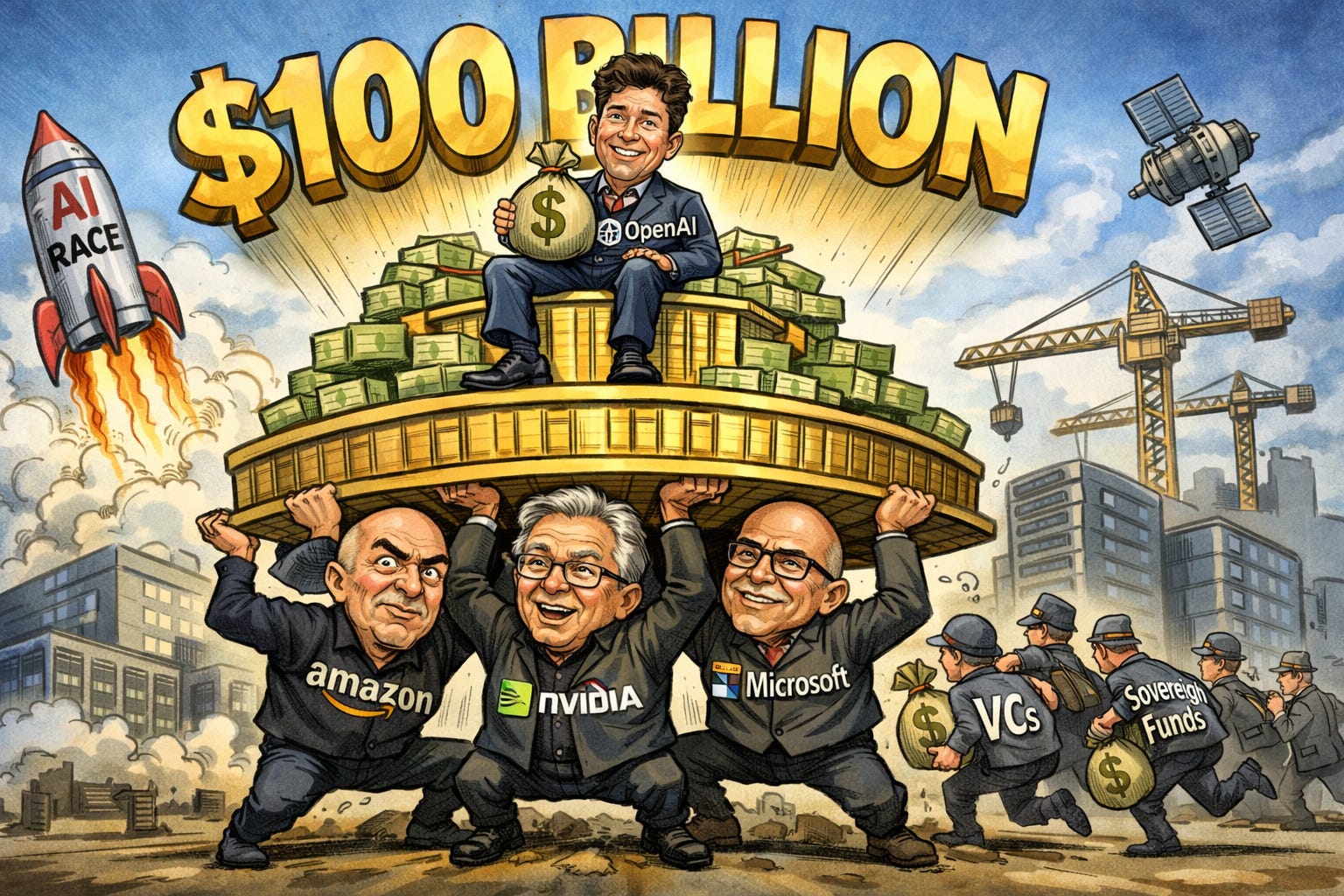
OpenAI is reportedly closing the first phase of a massive funding round that could raise over $100 billion, potentially pushing its valuation past $850 billion. This isn’t a typical venture round; it’s a strategic alliance backed by the heavyweights of the tech ecosystem: Amazon, SoftBank, Nvidia, and Microsoft. The deal is structured in phases, with these corporate giants leading the charge before opening the doors to venture capital and sovereign wealth funds later. While terms are still being finalized and could shift, the sheer scale is record-breaking, with the capital expected to be delivered in tranches throughout the year to fuel a massive infrastructure build-out (Bloomberg).
This level of funding signals that the AI race has moved from software “vibes” to a hard-asset industrial cycle. OpenAI isn’t just raising cash; it’s securing its supply chain. By bringing Nvidia and Amazon into the fold, the company is effectively locking in the chips and cloud capacity needed to train the next generation of models. For retail investors, the read-through is clear: the “AI trade” is increasingly becoming an infrastructure play. SoftBank’s stock already jumped 4% in Tokyo on the news, acting as a public proxy for OpenAI’s private success. It suggests that the winners in this space will be defined by who owns the most “compute” and the deepest pockets to build it.
Sensei’s Insight: Watch the final valuation figures and the participation of sovereign wealth funds in phase two. This will signal if global appetite for “trillion-dollar” AI infrastructure remains robust or is hitting a ceiling.
🇮🇳 Bill Gates Skips India AI Summit Amid Epstein Scrutiny
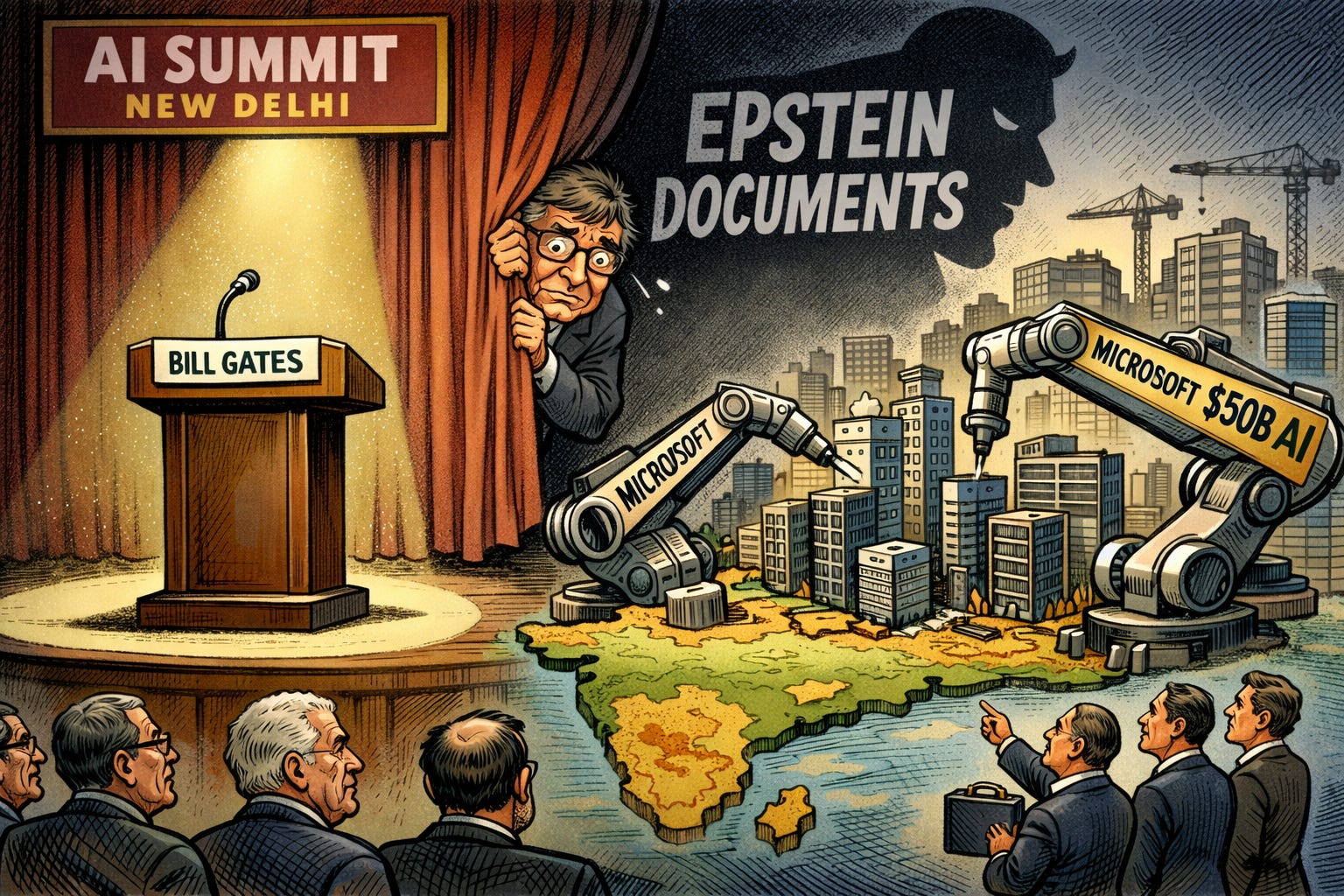
Bill Gates cancelled his keynote at the India AI Impact Summit in New Delhi just hours before he was set to take the stage on Thursday. The Gates Foundation framed the move as an effort to keep the focus on the summit’s priorities, but the timing coincides with a fresh wave of scrutiny over his past ties to Jeffrey Epstein. While Gates has long called those meetings a huge mistake, recent Department of Justice documents have renewed the controversy. Despite his absence, the summit remains a massive capital expenditure event: Microsoft reiterated its plan to invest $50 billion in AI across the Global South by 2030 (Bloomberg).
For those holding Microsoft, this is a lesson in decoupling founder risk from institutional performance. Gates hasn’t held an executive role in years, yet his personal reputational baggage still creates headline noise. The market is largely ignoring the drama, focusing instead on the actual money moving into India’s infrastructure. It’s worth noting that Nvidia’s Jensen Huang also skipped the event, suggesting that while India is a vital growth engine, these high profile summits are becoming political minefields. The real story isn’t the empty podium: it’s the $50 billion Microsoft is committed to spending to ensure its AI tools dominate emerging markets.
Sensei’s Insight: Watch how Microsoft handles the “founder friction” in its PR. The stock is currently trading on capex and tool adoption, so as long as the $50 billion deployment stays on track, the Epstein headlines are likely just a distraction.
🧬 Nvidia Exits Recursion as Cathie Wood Doubles Down
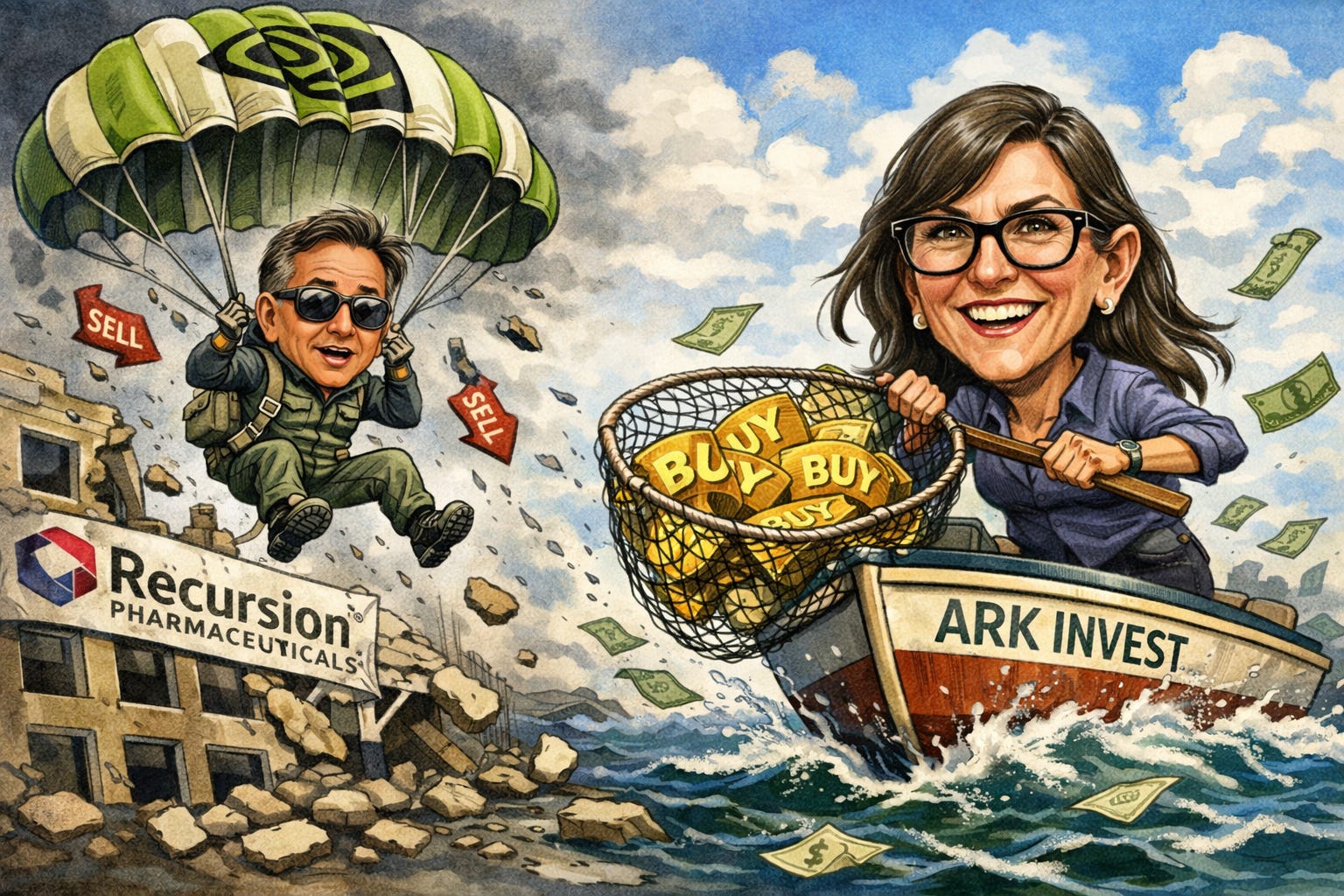
Nvidia just revealed it completely dumped its 7.7 million share stake in Recursion Pharmaceuticals during the final quarter of 2025. The news sent Recursion shares tumbling as much as 14% in early trading before a surprising recovery. While the chip giant pulled its equity, Cathie Wood’s ARK Invest did the opposite: they snapped up 1.25 million shares during the volatility on February 18, 2026. This filing marks a clean break from Nvidia’s 2023 strategic investment, which originally fueled a massive rally and served as a major validation for AI-driven drug discovery (Barron’s).
This split between two high-profile backers highlights the different ways institutions play the AI “TechBio” space. Nvidia might be stepping back from small-cap equity risk to focus on providing the hardware that powers these models, rather than owning the companies themselves. Meanwhile, ARK is leaning into the “abandonment,” treating the price drop as a chance to build a high-conviction position at lower prices. For retail investors, the takeaway is the inherent lag in 13F data. We’re just now seeing moves Nvidia made months ago, suggesting the “smart money” isn’t always moving in real-time.
Sensei’s Insight: Watch the $3.50 support level for Recursion. If it holds despite the loss of a marquee backer like Nvidia, it may signal that ARK’s conviction is shared by the broader market.
Walmart Q4 Earnings - Everything Retail Investors Need to Know
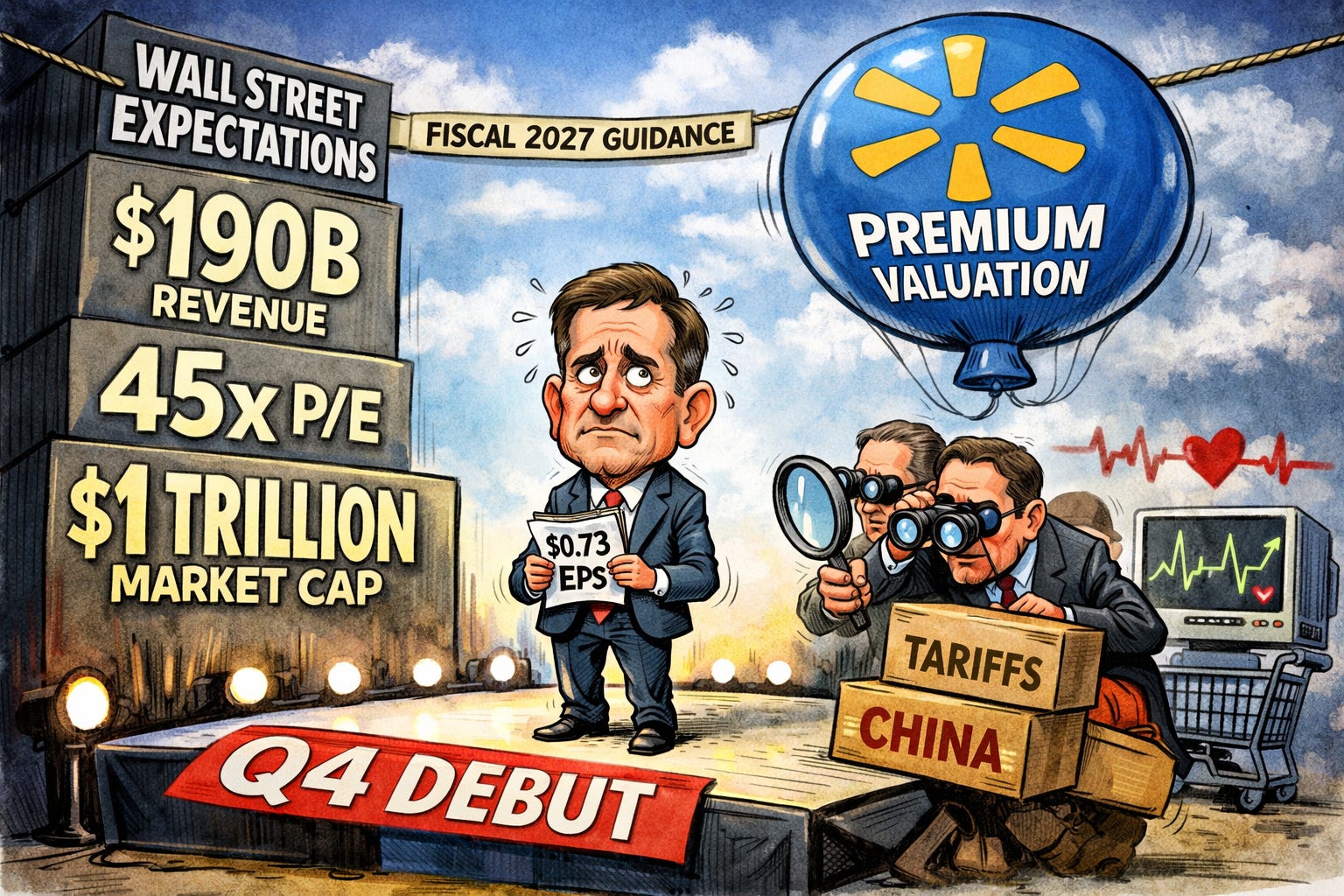
The Numbers Wall Street Expects
Analysts are looking for $0.73 adjusted EPS on roughly $190.5 billion in revenue for fiscal Q4 2026. U.S. same-store sales are projected to grow about 4.3% year-over-year, which would be consistent with the tight 4.5% to 4.8% range Walmart has delivered in each of the last four quarters. On a full-year basis, the company previously guided for net sales growth of 4.8% to 5.1% and adjusted EPS of $2.58 to $2.63. Walmart has beaten Wall Street’s EPS estimates in seven of the last eight quarters, so there is a strong track record of outperformance here.
Why This Report Matters More Than Usual

It’s the new CEO’s debut. John Furner officially became Walmart’s sixth CEO on February 1, replacing Doug McMillon. While most analysts expect a “business as usual” message, investors will be listening closely for Furner’s priorities and any strategic shifts. His vision for where the company goes next will set the tone not just for Walmart, but for the entire retail sector.
Walmart is a consumer bellwether. As the world’s largest retailer and the biggest private employer in the U.S., Walmart’s results function as a real-time health check on the American consumer. This is the first major retail earnings print of the season, arriving ahead of Home Depot and Target. What Walmart says about shopper behavior, spending trends, and confidence will ripple through the broader market.
The stock is trading at extreme levels. Shares are up roughly 14% year-to-date and 22%+ over the past year. Walmart recently crossed the $1 trillion market cap threshold and trades at approximately 45x forward earnings, well above historical norms. That premium valuation means the bar is very high. Even solid results could lead to a “sell the news” reaction if they don’t exceed already lofty expectations. Evercore ISI added Walmart to its tactical underperform list specifically because sentiment is so positive heading in.
The Key Things to Watch
Fiscal 2027 guidance is the main event. Wall Street is projecting about 5% revenue growth and $2.97 EPS for the new fiscal year. But Walmart has a long history of issuing conservative initial outlooks, and the CEO transition may make management even more cautious. Analysts widely expect the first guidance to come in below consensus. The question is whether investors shrug that off (knowing Walmart typically beats its own forecasts) or punish the stock for it.
Tariff commentary will move markets. With inflation cooling toward the 2.4% range, the bigger margin threat has shifted to trade tariffs. Walmart imports roughly $105 billion in merchandise, with a significant portion from China. Management’s language on how they plan to absorb or pass through tariff-related costs will be closely watched by the entire retail sector.
High-income shopper trends. About 75% of Walmart’s recent market share gains have come from households earning over $100,000 per year. Investors want to see if this affluent demographic is sticking around or if the trend is plateauing.
Growth in higher-margin businesses. Walmart Connect (the advertising arm), e-commerce profitability, Walmart+ membership growth, and automation-driven cost savings are the engines that justify the premium valuation. Any deceleration in these areas would raise red flags.
The Bigger Picture
This earnings report sits at a crossroads. Walmart has successfully transformed from a low-margin discount retailer into a tech-forward, data-driven logistics company. Its stock now trades on the Nasdaq, it competes for ad dollars with Google and Meta, and it’s using AI across its supply chain and customer experience. But that transformation is already priced into the stock at a rich multiple.
For retail investors, the real signal isn’t whether Walmart hits or misses by a penny. It’s the forward-looking commentary: how Furner frames the growth story, what management says about the consumer in 2026, and whether the guidance gives the market enough confidence to keep paying up for the stock. If the outlook disappoints, expect a pullback. If Walmart surprises to the upside on guidance, the rally has room to extend.
🔗 Connect with Us
Stay plugged in across platforms:
Sensei on X: sensei_live_
Martyn Lucas on X: MartynInvestor
Vaz on X: eVTOLHUB
📺 YouTube Channel (Live & Replays): Martyn Lucas Investor

🔍Deep Dive: Iran-US Tensions: What Investors Need to Know Right Now
The probability of US military action against Iran has risen sharply. Prediction markets price a 70% chance of strikes by year-end 2026, and the largest American military buildup since last summer’s Operation Midnight Hammer is underway. Meanwhile, gold has surged 74% year-over-year to ~$5,000/oz, oil jumped 4.5% in a single session, and Bitcoin has cratered over 50% from its October 2025 highs. History shows markets fear the uncertainty of war far more than war itself, and that the biggest mistake investors make is panic-selling into geopolitical headlines.