This content is for informational and educational purposes only and does not constitute financial advice. Always do your own research. Not financial advice (NFA).
👀 Today’s Stories at a Glance
📊 Nvidia Beats but Markets Flinch: High growth failed to satisfy extreme expectations; shares remained flat.
🛡️ Pentagon Demands AI Safety Removal: Officials used Cold War laws to threaten Anthropic over military goals.
📉 S&P 500 Stalls Near 7,000: High investor fear and heavy hedging might fuel a move higher.
💥 C3.ai Craters After Revenue Miss: Massive layoffs follow a staggering collapse in quarterly software sales.
🌍 US-Iran Nuclear Talks Open in Geneva: Trump envoys meet Iranian officials as military build-up near the Strait of Hormuz keeps markets on edge.
⚛️ IonQ Hits Quantum Revenue Milestone: IonQ is the first public quantum firm hitting $100 million annually.
🔍 Jane Street Faces Manipulation Allegations: Lawsuits claim the firm manipulated markets and triggered major crypto collapses.
🧠 One Big Thing
The Jane Street Contagion
Jane Street Capital faces legal action on three continents over allegations of systemic market manipulation and insider trading. Federal lawsuits claim the firm used private tips to profit from the $40 billion collapse of the Terra ecosystem. Meanwhile, Indian regulators froze $566 million in profits after identifying predatory index trading strategies. These allegations expose a structural vulnerability since Jane Street acts as a critical gatekeeper for Bitcoin ETFs. The firm leverages opaque derivative strategies that never appear in standard regulatory filings. This lack of transparency means the entities providing market liquidity may also be the ones most capable of exploiting it. Check out the deep dive for the full breakdown.
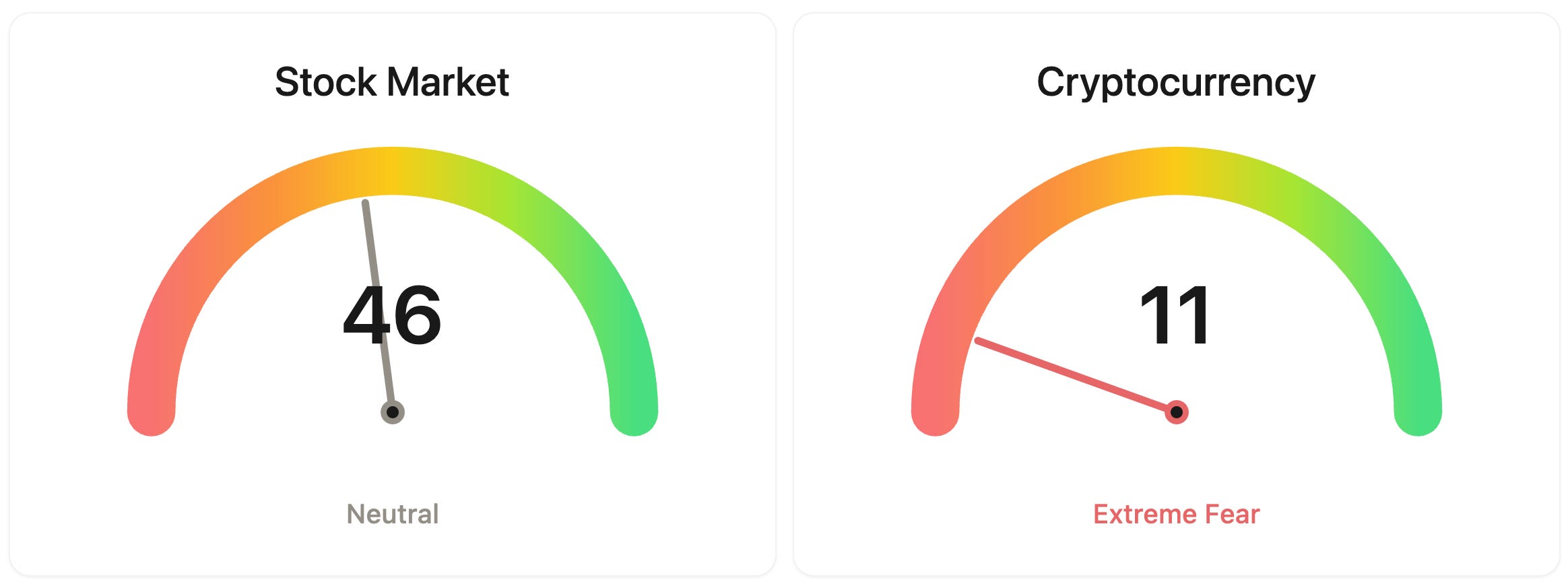
⚖️ Fear & Greed
📉 The Number That Matters
$78 BILLION
Nvidia issued first-quarter revenue guidance of $78 billion, topping the $72.8 billion consensus. Although the outlook represents a 7% beat, shares remained muted as revenue growth decelerated and gaming revenue missed estimates due to persistent memory chip shortages.
⚔️ Winners vs Losers
Winners
NTNX 0.00%↑: Nutanix, Inc. surged after beating Q2 fiscal 2026 estimates on both revenue and earnings, while also announcing a multi-year strategic partnership with AMD that includes a $150 million equity investment and up to $100 million in joint R&D funding to build an enterprise AI platform.
CELH 0.00%↑: Celsius Holdings, Inc. jumped after reporting Q4 earnings of $0.26 per share this morning, comfortably beating the $0.19 consensus estimate.
IONQ 0.00%↑: IonQ, Inc. rallied after blowout Q4 results saw revenue surge to $61.9 million from $11.7 million a year ago, beating estimates by over 50%, while the company guided for $225–$245 million in 2026 revenue.
SEZL 0.00%↑: Sezzle Inc. climbed after posting Q4 earnings of $1.21 per share, well ahead of the $0.96 consensus, extending its streak of double-beat quarters.
SONY 0.00%↑: Sony Group Corporation rose after announcing it is more than doubling its share buyback program to ¥250 billion ($1.6 billion) from the previously announced ¥100 billion.
Losers
PRCT 0.00%↑: PROCEPT BioRobotics Corporation plunged after reporting Q4 revenue of $76.4 million, badly missing the $93.7 million estimate, with a loss of $0.53 per share versus the expected $0.32 loss.
ARRY 0.00%↑: Array Technologies, Inc. tumbled after guiding fiscal 2026 adjusted EPS of $0.65–$0.75, well below the $0.86 consensus, while also disclosing a $102.6 million goodwill impairment and a $29.5 million inventory charge in Q4.
AI 0.00%↑: C3.ai, Inc. cratered after missing Q3 revenue estimates by nearly 30%, slashing its full-year revenue forecast roughly in half to $247–$251 million, and announcing a 26% workforce reduction under its new CEO.
ERII 0.00%↑: Energy Recovery, Inc. fell after Q4 revenue of $66.9 million missed the $82.6 million estimate by 19%, compounded by the decision to wind down its CO2 retail grocery business and ongoing delays in large desalination projects.
📊 Market Snapshot
Cryptocurrencies:
Bitcoin (BTC): $68,220 (▲ 0.33%)
Ethereum (ETH): $2,063 (▲ 0.23%)
XRP: $1.44 (▲ 0.49%)
Equity Indices (Futures):
S&P 500: $6,947 (▼ -0.24%)
NASDAQ 100: $25,367 (▼ -0.06%)
FTSE 100: £10,813 (▲ 0.05%)
Commodities & Bonds:
10-Year US Treasury Yield: 4.05% (▼ -0.20%)
Oil (WTI): $64 (▼ -1.88%)
Gold: $5,173 (▲ 0.17%)
Silver: $87.58 (▼ -1.84%)
Data as of UK (GMT): 11:35 AM / US (EST): 6:35 AM / Asia (Tokyo): 8:35 PM
✅ 5 Things to Know Today
📊 Nvidia Beats Again, But Wall Street Wants More
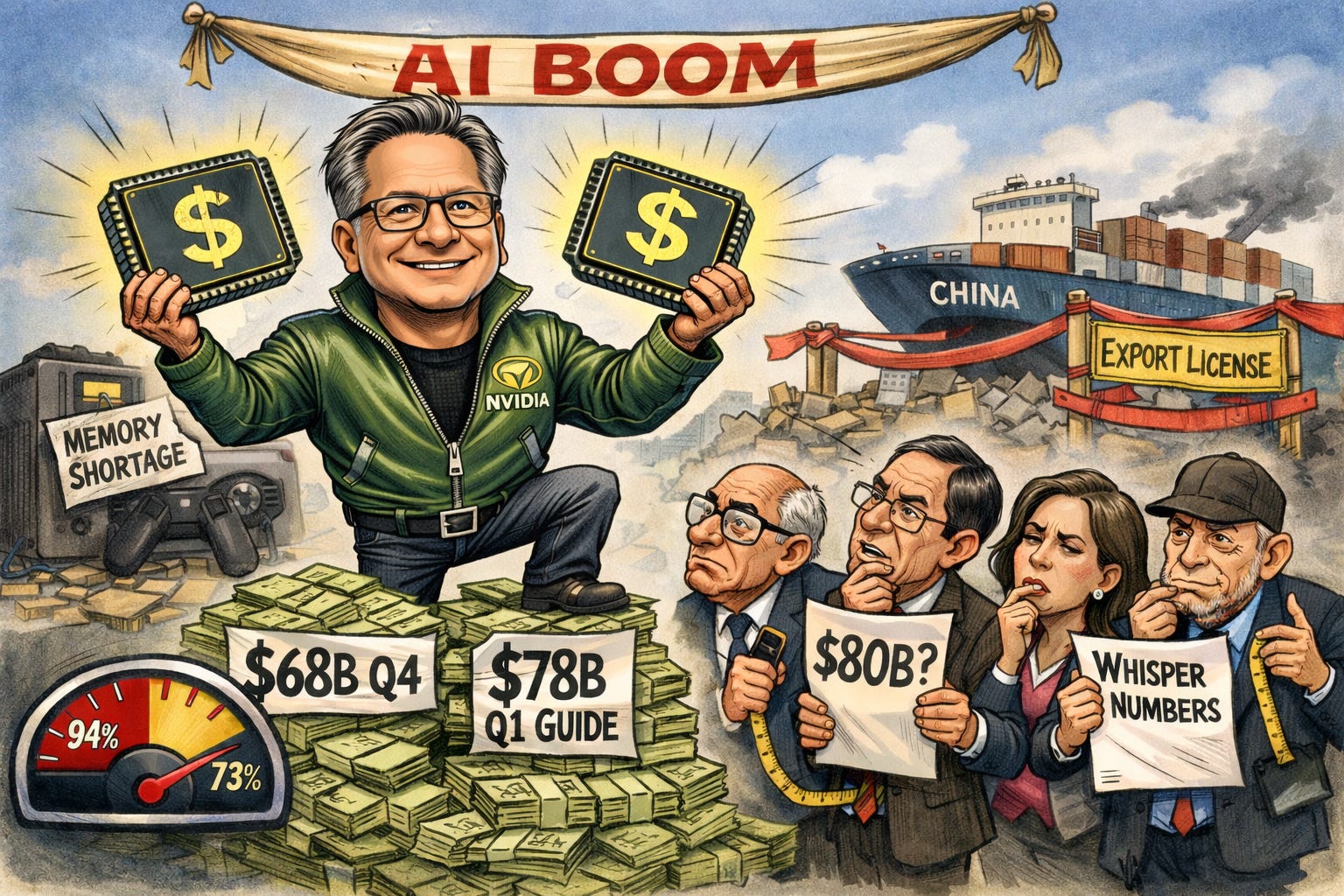
Nvidia posted fiscal fourth-quarter revenue of $68.13 billion, up 73% year-over-year, with adjusted earnings per share of $1.62. Both figures cleared Wall Street estimates. The data center division, now responsible for over 91% of total revenue, hauled in $62.3 billion alone. Full-year revenue hit $215.9 billion. But it was the forward look that stole the spotlight: first-quarter guidance of roughly $78 billion topped the $72.8 billion consensus, though it landed short of whisper numbers approaching $80 billion. Shares barely budged in after-hours trading and were up only about 1% in Thursday premarket (CNBC).
The muted reaction says more than the numbers. Revenue growth decelerated from 94% in the prior quarter to 73%, and the beats, while consistent, are no longer widening. Gaming revenue missed estimates at $3.73 billion, held back by a memory chip shortage that CFO Colette Kress said may not ease this year. Meanwhile, Nvidia disclosed it has secured a US license to ship a small number of older-generation H200 chips to China, but has generated zero revenue from Chinese data center sales and is not baking any into its outlook. Both Washington and Beijing maintain conditions that could stall meaningful shipments for months. The broader market signal is clear: investors have moved past asking whether the AI boom is real and are now asking how long it can last (Bloomberg).
Sensei’s Insight: A $78 billion Q1 guide against a $72.8 billion consensus is a 7% beat on forward revenue, something almost no megacap delivers at this scale. The market shrugging it off suggests Nvidia’s bar is no longer Wall Street estimates but whisper-level expectations only insiders track. Watch whether that gap keeps widening.
🛡️ Pentagon Threatens Anthropic With Cold War-Era Law Over AI Guardrails
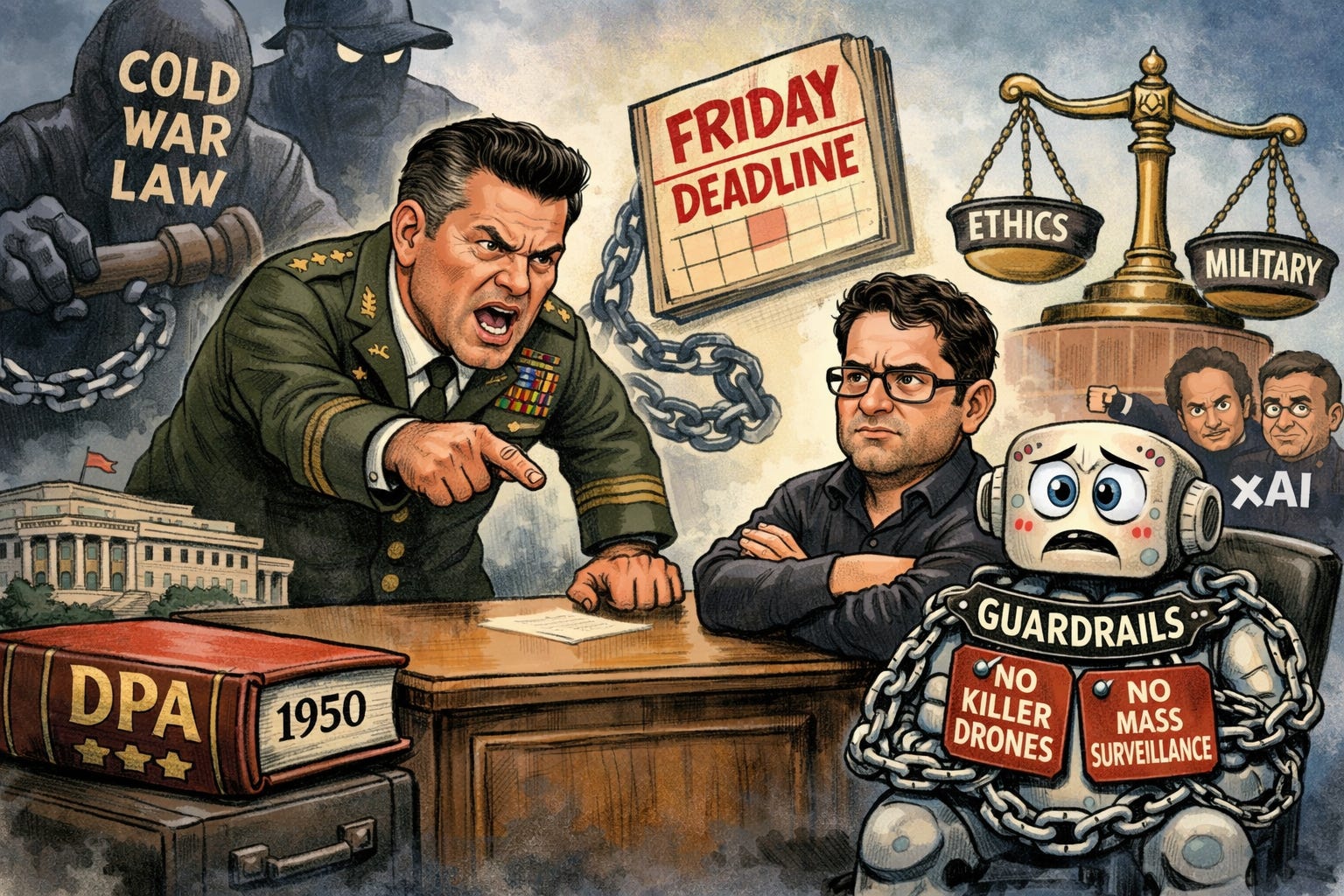
Defense Secretary Pete Hegseth gave Anthropic CEO Dario Amodei a Friday 5 p.m. deadline to remove restrictions on how the US military can use the company’s Claude AI model, or face escalating consequences. Those consequences include terminating Anthropic’s $200 million Pentagon contract, invoking the Defense Production Act (DPA), a 1950 law originally passed to compel industrial output during the Korean War, and designating Anthropic a “supply chain risk,” a classification typically reserved for foreign adversaries like Huawei. Anthropic has two red lines it will not cross: AI-controlled autonomous weapons that fire without human involvement, and mass domestic surveillance of American citizens (Bloomberg).
The standoff is not about whether Anthropic works with the military. It already does. Claude is the only generative AI model deployed on the Pentagon’s classified cloud networks, and it was reportedly used during the operation to capture Venezuelan leader Nicolas Maduro. What the Pentagon wants is blanket “any lawful use” language, stripping Anthropic’s ability to impose any conditions. Rivals OpenAI and Elon Musk’s xAI have already agreed to those terms, and the Pentagon struck a deal with xAI on the eve of the meeting. On the same day as the Hegseth confrontation, Anthropic quietly revised its flagship safety policy, softening its commitment to pause development if safety measures fall short. The timing raises uncomfortable questions, even as Anthropic insists the two events are unrelated (Axios).
Sensei’s Insight: Whatever happens by Friday, the precedent is already being set. If the government can use a Korean War-era manufacturing law to override an AI company’s safety standards, every lab in America now knows the cost of saying no. The era of AI companies setting their own terms with Washington may be ending before it ever really began.
📉 S&P 500 Can’t Crack 7,000, But Strategists Say That’s the Opportunity
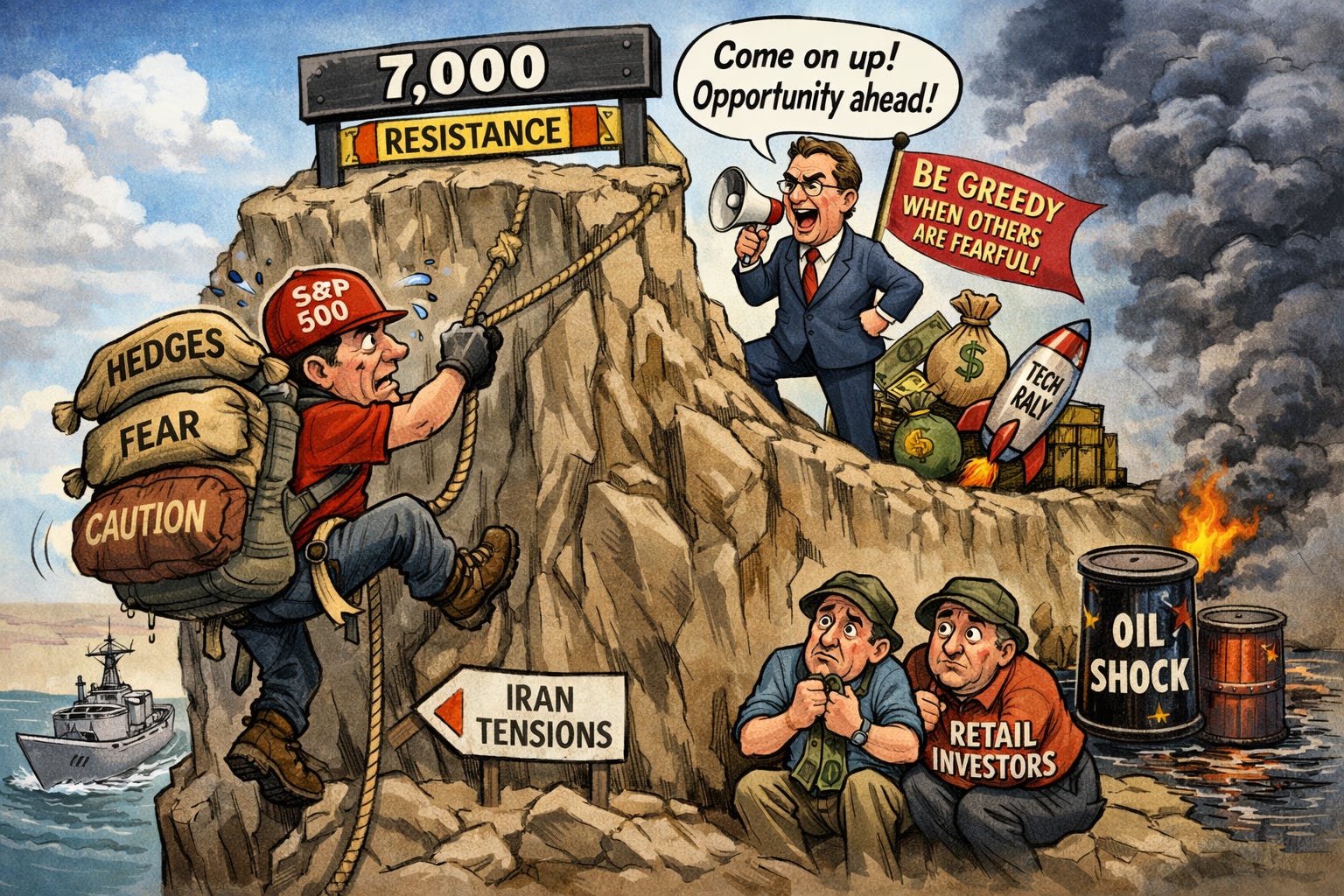
The S&P 500 has spent roughly four months trapped below the psychologically important 7,000 level, closing Wednesday at 6,946. The persistent stall has triggered a measurable shift in investor behaviour. Put-call skew, which compares the cost of buying downside protection versus placing upside bets, hit a two-year high last week. Normalised two-month skew on the index is near the top of its five-year range, meaning investors are paying significantly more than usual to insure against a sharp drop. At the same time, leverage among institutional investors has fallen to levels last seen in November, and retail participation has collapsed: Citi data shows retail traders accounted for just 8.3% of equity volume last week, down from an 11.7% average in 2025 (Bloomberg).
A growing number of Wall Street strategists see that fear as fuel. When portfolios are heavily hedged and cash is parked on the sidelines, the conditions exist for a sharp move higher, because those hedges eventually unwind and that capital eventually gets deployed. BNP Paribas strategist Greg Boutle titled his latest note “Be greedy when others are fearful,” arguing a mega-cap tech rally could drag the index through 7,000 and force sidelined money back in. The median forecast among 20 Wall Street analysts calls for the S&P to advance nearly 12% this year. But real wild cards remain: high-stakes US-Iran nuclear talks are underway in Geneva today, and any escalation near the Strait of Hormuz, through which roughly 20% of global oil flows, could upend the bullish case entirely (CNBC).
Sensei’s Insight: The contrarian setup looks compelling on paper, but there is an anchor the positioning data does not capture. The iShares Expanded Tech-Software Sector ETF (IGV) is down over 27% this year, meaning a huge swathe of the tech sector is actively dragging on the index even as mega-caps hold steady. Watch whether the software bleed stabilises or spreads. That may matter more than any single catalyst for whether 7,000 finally breaks.
💥 C3.ai Craters 23% After Revenue Nearly Halves
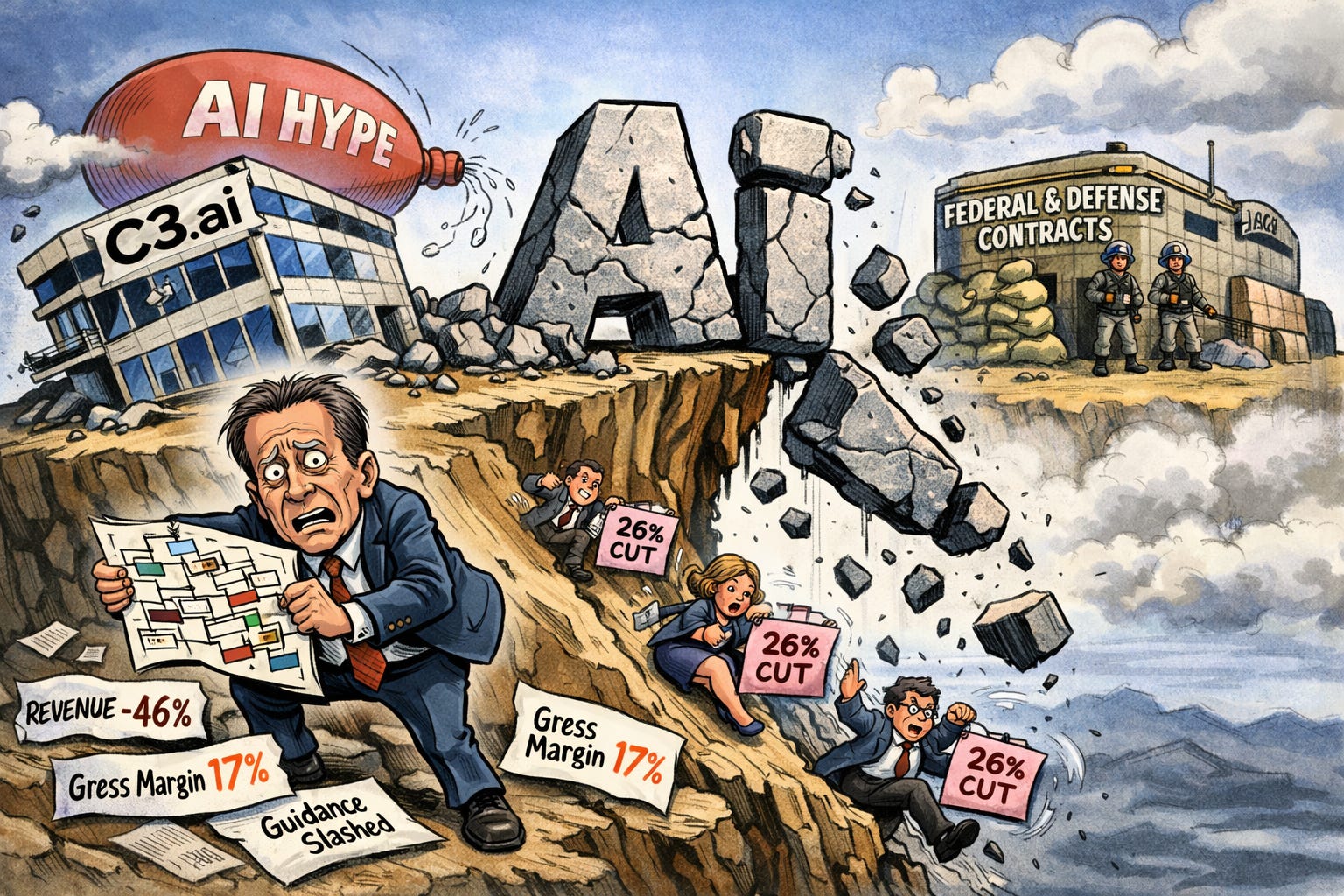
C3.ai, the enterprise AI software company trading under the ticker AI, reported fiscal third-quarter revenue of $53.3 million, down 46% from $98.8 million a year ago and a staggering 29% miss against the $75.6 million analyst consensus. GAAP gross margin collapsed to 17%, down from roughly 59% a year prior, a jarring number for a company that sells software. The adjusted net loss widened to 40 cents per share, well past the 29 cents analysts expected. Shares plunged 23% in premarket to $7.98, extending a brutal run that has seen the stock lose 57% over the past twelve months. CEO Stephen Ehikian, who joined six months ago, was blunt: the company was not organised appropriately when he arrived (Benzinga).
Alongside the results, C3.ai announced a sweeping restructuring. The company is cutting roughly 26% of its workforce, around 280 employees, and eliminating approximately $75 million in non-employee costs. The plan is expected to save $135 million annually, with full savings kicking in during the second half of fiscal 2027. Full-year revenue guidance was slashed nearly in half, from a range of $447.5 to $484.5 million down to $246.7 to $250.7 million. The one bright spot was federal and defence work, where bookings surged 134% year-over-year and accounted for 55% of total bookings. The company still holds $621.9 million in cash, giving it runway, but the quarter is a stark reminder that having “AI” in your name and ticker is no substitute for sustainable commercial execution (C3.ai Press Release).
Sensei’s Insight: C3.ai burned $53 million in cash last quarter alone against $621.9 million on hand. At that rate, the company has roughly three years of runway before the lights go out, and that is before the restructuring charges hit. The $135 million in promised savings could extend the clock, but savings projections from companies in freefall deserve heavy scrutiny. This is not a bankruptcy-tomorrow story, but it is a company racing to find a viable business model before the cash runs dry.
🌍 US-Iran Nuclear Talks Open in Geneva With Markets on Edge
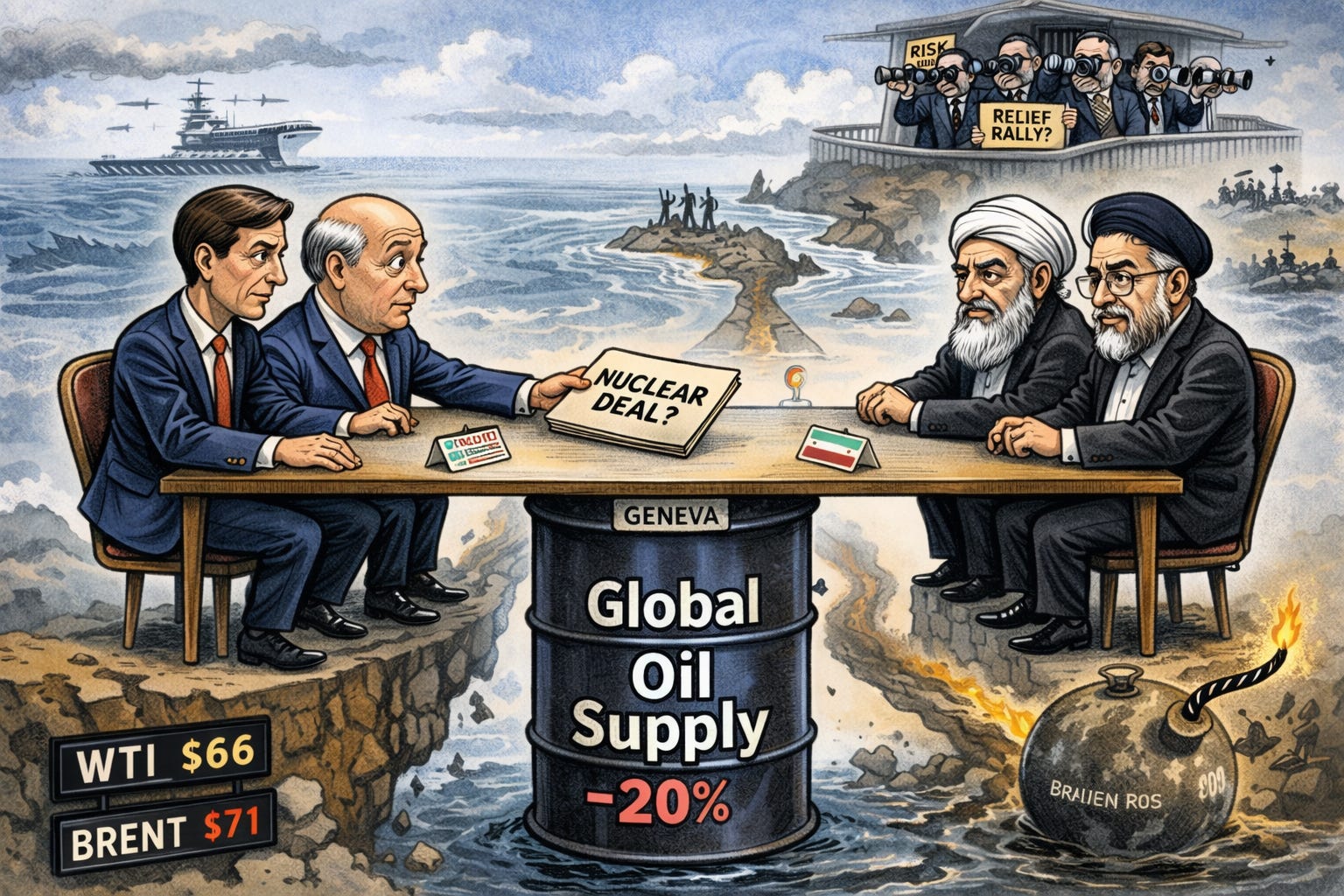
High-stakes nuclear negotiations between US and Iranian officials began in Geneva on Thursday. Trump envoys Steve Witkoff and Jared Kushner are leading the American delegation amid a visible US military build-up near Iran and warnings of potential escalation around the Strait of Hormuz, through which roughly 20% of global oil supply flows. West Texas Intermediate crude is trading near $66 per barrel, with Brent around $71 (Bloomberg).
The talks carry outsized importance for markets. Citi’s Stuart Kaiser specifically cited the Iran risk as a key factor keeping investors on the sidelines, noting that if tensions ease, a significant amount of risk premium could be squeezed out of equities and sidelined capital would start flowing back in. The outcome cuts both ways: progress toward a deal could spark a relief rally, while a breakdown or any military incident near the Strait could send oil prices sharply higher and risk appetite sharply lower.
Sensei’s Insight: Geneva is the quiet catalyst hiding behind all the earnings noise this week. A breakthrough could compress the risk premium that has been keeping investors hedged and sidelined. A breakdown could spike oil and unravel the contrarian bull case for equities almost overnight. Energy and defence names are the most directly exposed, but the ripple effects would reach far wider.
⚛️ IonQ Surges 14% After Becoming First Public Quantum Firm to Hit $100M Revenue
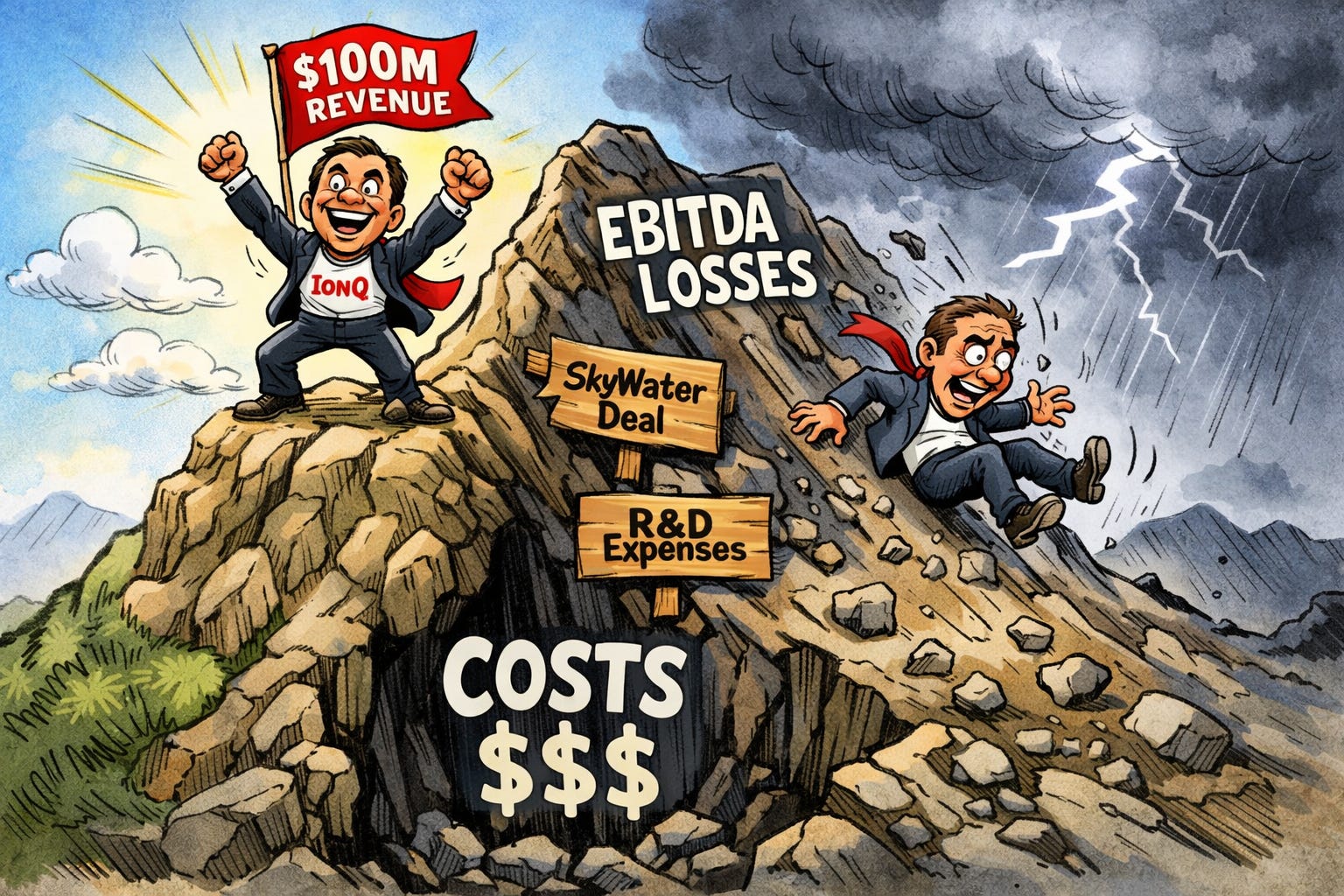
IonQ reported fourth-quarter revenue of $61.9 million, obliterating the $40.4 million analyst consensus by 53%. Full-year 2025 revenue reached $130 million, up 202% from $43.1 million a year earlier, making IonQ the first publicly traded quantum computing company to cross the $100 million annual revenue mark. The company then guided 2026 revenue to a midpoint of $235 million, roughly 23% above the $191 million analysts had expected. Shares jumped 14% in premarket to $38.36, with peers D-Wave Quantum and Rigetti Computing each rising about 7% in sympathy (IonQ Press Release).
The results land at a critical moment. IonQ stock had fallen 25% year-to-date heading into the print, dragged down by a $1.8 billion pending acquisition of chipmaker SkyWater Technology and a short seller report in early February accusing the company of misstating revenue. IonQ called the claims “false, misleading, and unsubstantiated.” Losses, however, remain substantial. The adjusted EBITDA loss was $67.4 million for the quarter and $186.8 million for the full year, with 2026 expected to be worse at negative $310 to $330 million as the company pours money into research and expansion. IonQ holds $3.3 billion in cash and investments, providing significant runway, and more than 60% of its revenue now comes from commercial customers. A Missile Defence Agency contract with a ceiling of $151 billion, announced this week, underscores the scale of the government opportunity ahead (The Quantum Insider).
Sensei’s Insight: Crossing $100 million is a genuine milestone, but the maths on the other side of the ledger deserves equal attention. IonQ is guiding for EBITDA losses of up to $330 million in 2026, which means the $3.3 billion cash pile could be tested within a few years if losses keep widening alongside revenue. The SkyWater acquisition will add further cash demands. This is a company worth watching closely, but the path from “impressive growth” to “sustainable business” is not yet visible.
🔗 Connect with Us
Stay plugged in across platforms:
Sensei on X: sensei_live_
Martyn Lucas on X: MartynInvestor
Vaz on X: eVTOLHUB
📺 YouTube Channel (Live & Replays): Martyn Lucas Investor