This content is for informational and educational purposes only and does not constitute financial advice. Always do your own research. Not financial advice (NFA).
👀 Today’s Stories at a Glance
🏛️ Alphabet issues rare century bond: Google’s parent raised $30 billion to fund AI, treating tech infrastructure like a permanent utility.
📈 Dow hits historic 50,000 milestone: Blue chips crossed the psychological threshold as investors rotate into industrials following a sharp tech selloff.
🏥 Healthcare carries the labor market: The sector provided 69% of 2025’s job growth, masking significant weakness in manufacturing and retail.
🥤 Coke reveals conservative 2026 outlook: Projecting 4% revenue growth, the beverage giant pivots toward zero-sugar lines amid new federal health scrutiny.
🏛️ Courts block federal spending cuts: Judges unfroze $10 billion for infrastructure and childcare, acting as a brake on the administration’s austerity.
🧠 One Big Thing
The U.S. labor market has become dangerously dependent on healthcare and social assistance, which now represent the nation’s sole source of net job creation. While the Dow hits record highs on shifting industrial demand, underlying employment data reveals that manufacturing and retail sectors are actively contracting. This concentration leaves the economy vulnerable to policy shifts, particularly regarding Medicare Advantage and government spending. Investors should prioritize the upcoming January employment report to see if this final pillar of labor support remains intact. A slowdown in healthcare hiring would likely compromise consumer spending despite high corporate profits from capital-intensive AI.
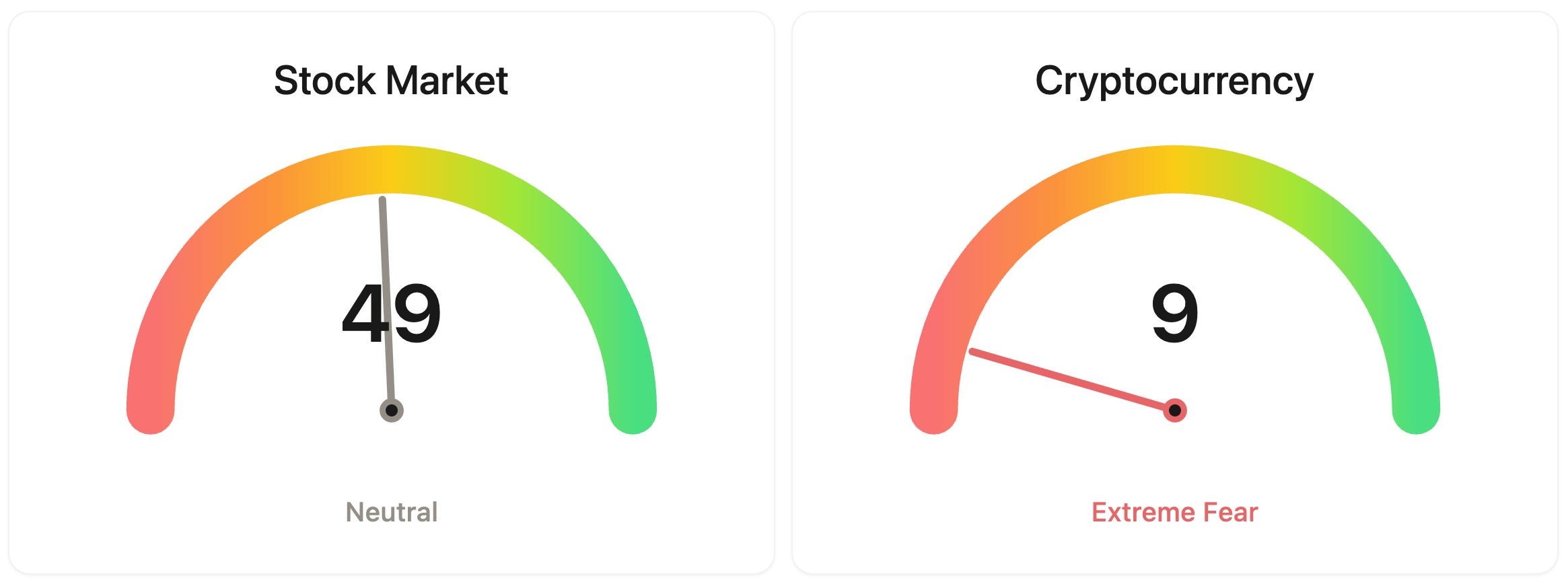
⚖️ Fear & Greed
📉 The Number That Matters
$185 BILLION
Alphabet is front-loading the AI arms race with a projected $185 billion in 2026 capital spending. To fund this, the tech giant launched a global bond blitz, including a rare 100-year century bond to lock in long-term infrastructure rates.
📊 Market Snapshot
Cryptocurrencies:
Bitcoin (BTC): $68572 (▼ 2.16%)
Ethereum (ETH): $2008 (▼ 4.52%)
XRP: $1.41 (▼ 1.91%)
Equity Indices (Futures):
S&P 500: $6965 (▲ 0.02%)
NASDAQ 100: $25383 (▲ 0.11%)
FTSE 100: £10339 (▼ 0.50%)
Commodities & Bonds:
10-Year US Treasury Yield: 4.18% (▼ 0.57%)
Oil (WTI): $64 (▼ 0.09%)
Gold: $5025 (▼ 0.67%)
Silver: $81.51 (▼ 2.23%)
Data as of UK (GMT): 12:50 / US (EST): 07:50 / Asia (Tokyo): 21:50
✅ 5 Things to Know Today
🏛️ Alphabet Sells a Century of Debt for AI
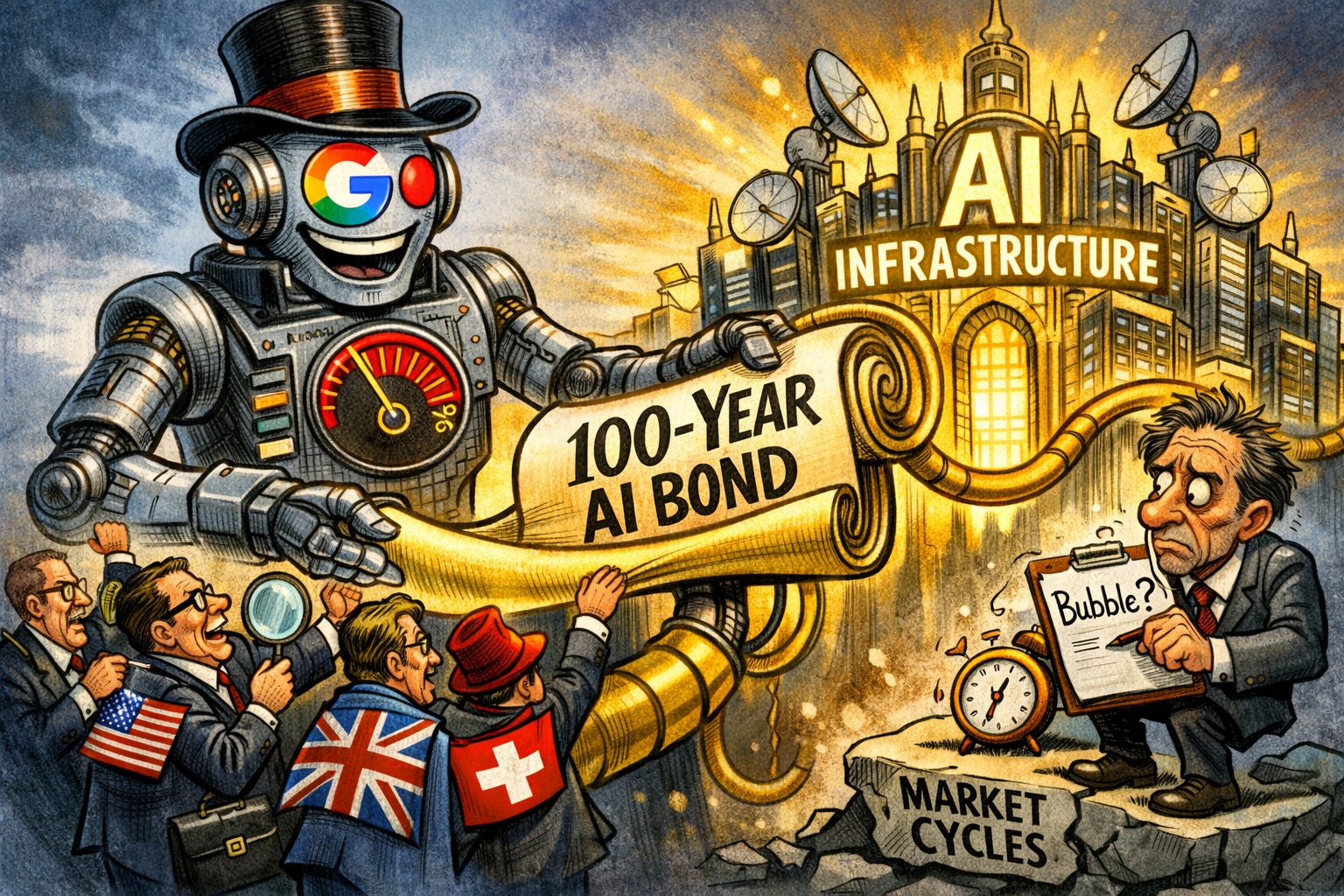
Alphabet just launched a $30 billion global bond blitz to fund its aggressive AI infrastructure expansion. The company priced $20 billion in U.S. debt earlier this week, seeing massive orders of $100 billion that let it squeeze interest rates lower. Now, it’s raising another $9.4 billion in British pounds and Swiss francs. The highlight is a rare 100-year “century” bond in sterling, which hasn’t been seen in the tech sector since the late 1990s. This suggests bondholders are starting to view tech giants as permanent infrastructure providers rather than just cyclical software companies (Bloomberg).
The massive borrowing supports a projected $185 billion in capital spending for 2026, which is nearly double last year’s budget. Alphabet is essentially front-loading the costs of the AI arms race by locking in long-term rates. While the heavy oversubscription shows institutions are hungry for high-grade tech debt, some analysts worry these ultra-long bonds often signal a market top. For those of us watching from the sidelines, the key isn’t just the debt: it’s whether Alphabet can monetize this infrastructure before the technology shifts again. It moves the AI story from simple equity growth to a long-term credit play.
Sensei’s Insight: Watch the secondary market pricing on that 100-year bond. If the value drops, it may signal that institutional faith in the “AI as a utility” thesis is starting to crack.
📈 The Dow Hits 50,000 Amid Data Delays
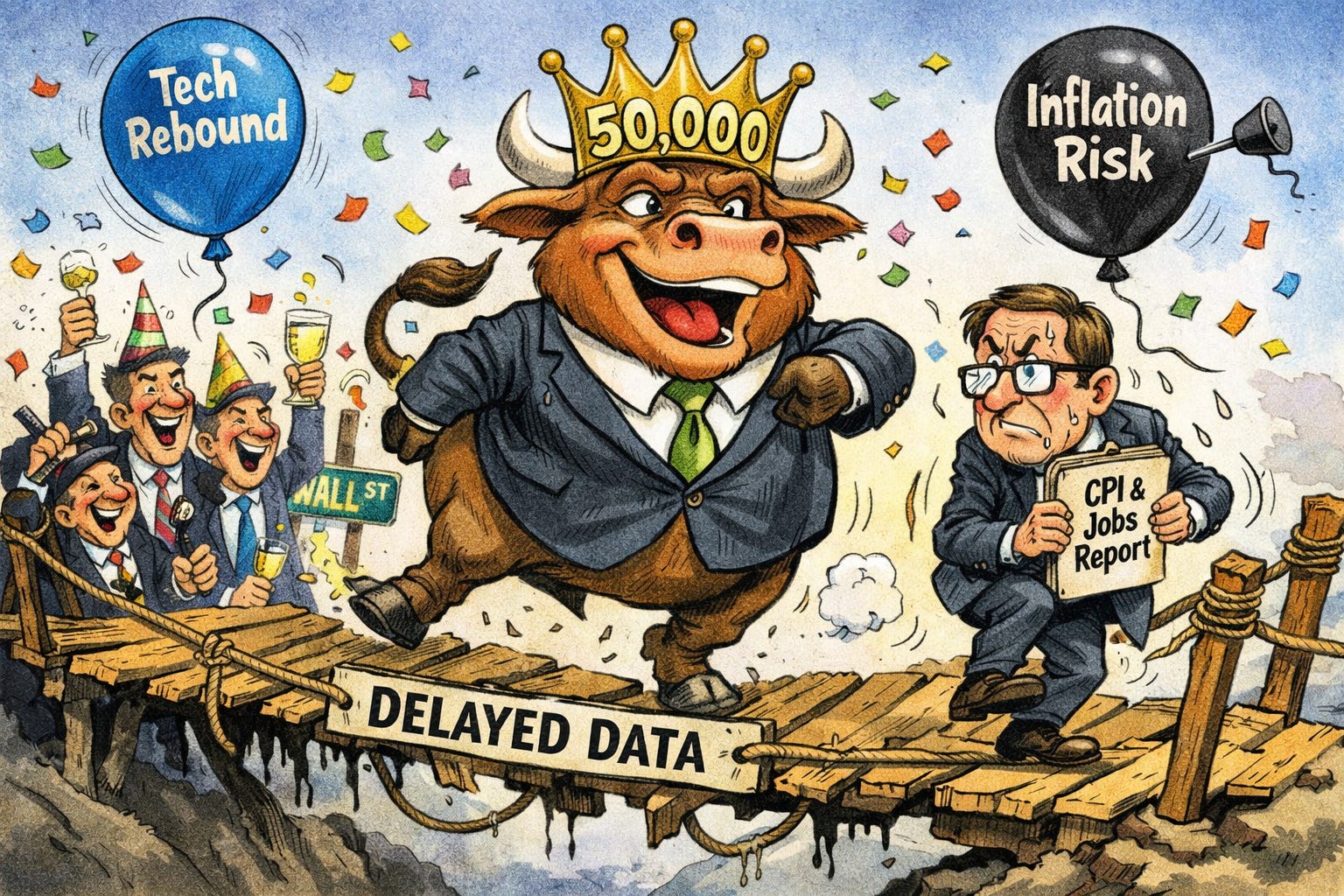
The Dow Jones Industrial Average crossed a massive psychological threshold, closing above 50,000 for the first time on Monday. This morning, futures for the Dow and S&P 500 are up another 0.1%, while the Nasdaq 100 is hovering near flat. It’s a continuation of the tech-led comeback we’ve seen over the last two sessions after a sharp AI selloff last week. Meanwhile, Japan’s Nikkei 225 hit its own record high near 57,000 following Prime Minister Sanae Takaichi’s landslide election win. Treasury yields are easing a bit as we move into a dense week of rescheduled economic reports (Barron’s).
This week is all about the “catch-up” data. Because of the recent government shutdown, we’re getting the January jobs report and CPI numbers later than usual. Tuesday starts with retail sales, but the real fireworks could arrive Wednesday and Friday. Investors are watching to see if the labor market is actually stabilizing or if the 2025 slowdown is deeper than we thought. The Dow’s record high suggests a rotation into value and industrials, but the tech rebound shows the AI trade still has a pulse. It’s a delicate balance: global optimism from Japan is helping, but a hot inflation print could easily derail the party.
Sensei’s Insight: Watch the 50,000 level on the Dow. If it holds, it signals real institutional support for the “boring” cyclicals. If we break below, it might suggest Monday was just a sentimental peak.
🏥 The Only Engine Left in the Jobs Machine
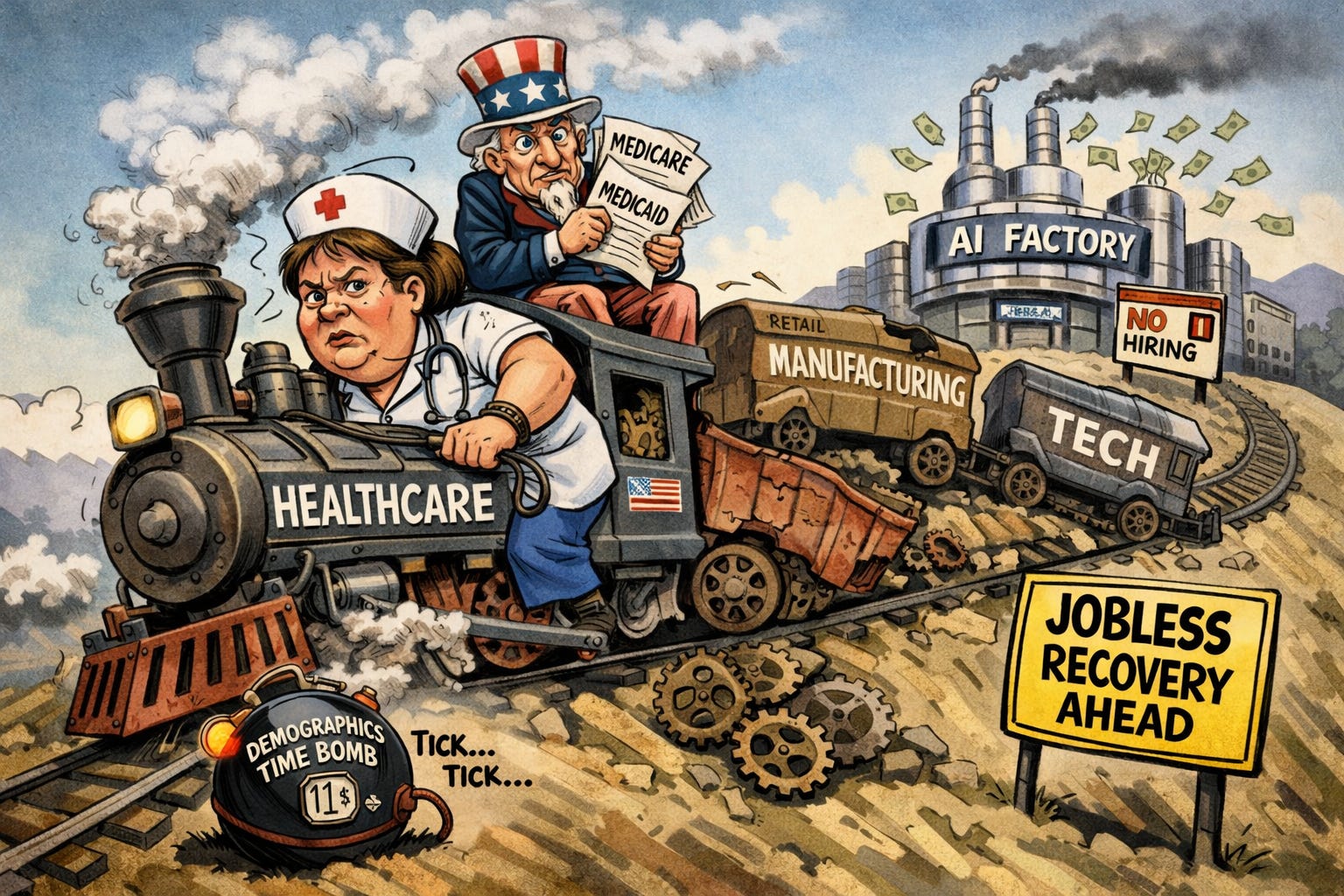
The U.S. labor market is currently a one-trick pony. In 2025, healthcare and social assistance accounted for effectively all net job creation, despite representing less than 15% of total employment. Bureau of Labor Statistics data from December 2025 showed that while healthcare hiring trended up by tens of thousands, total nonfarm payrolls were barely changed. This implies that the rest of the economy, including manufacturing and retail, actually shed jobs on a year-over-year basis. We are seeing a stark divergence where a single, government-funded sector is keeping the national unemployment rate from climbing while other industries stagnate (Wall Street Journal).
This concentration creates a precarious “jobless growth” environment for retail investors. While AI infrastructure is currently a primary driver of economic growth and corporate profits, it is capital-intensive rather than labor-intensive. It doesn’t hire people at the scale healthcare does. Meanwhile, healthcare demand is being fueled by a record number of Americans turning 65, locking in Medicare-driven hiring. However, this engine is sensitive to policy. If private insurers continue retreating from Medicare Advantage or if the government implements sharp Medicaid cuts to rein in per-capita spending, the last remaining pillar of U.S. job growth could buckle, directly hitting consumer spending and tax revenues.
Sensei’s Insight: Watch the January employment report specifically for a slowdown in healthcare hiring. If the one sector carrying the labor market stalls, AI-driven GDP won’t be enough to save the consumer.
🥤 Coke’s 2026 Outlook: Healthy Growth Meets Regulatory Fizz
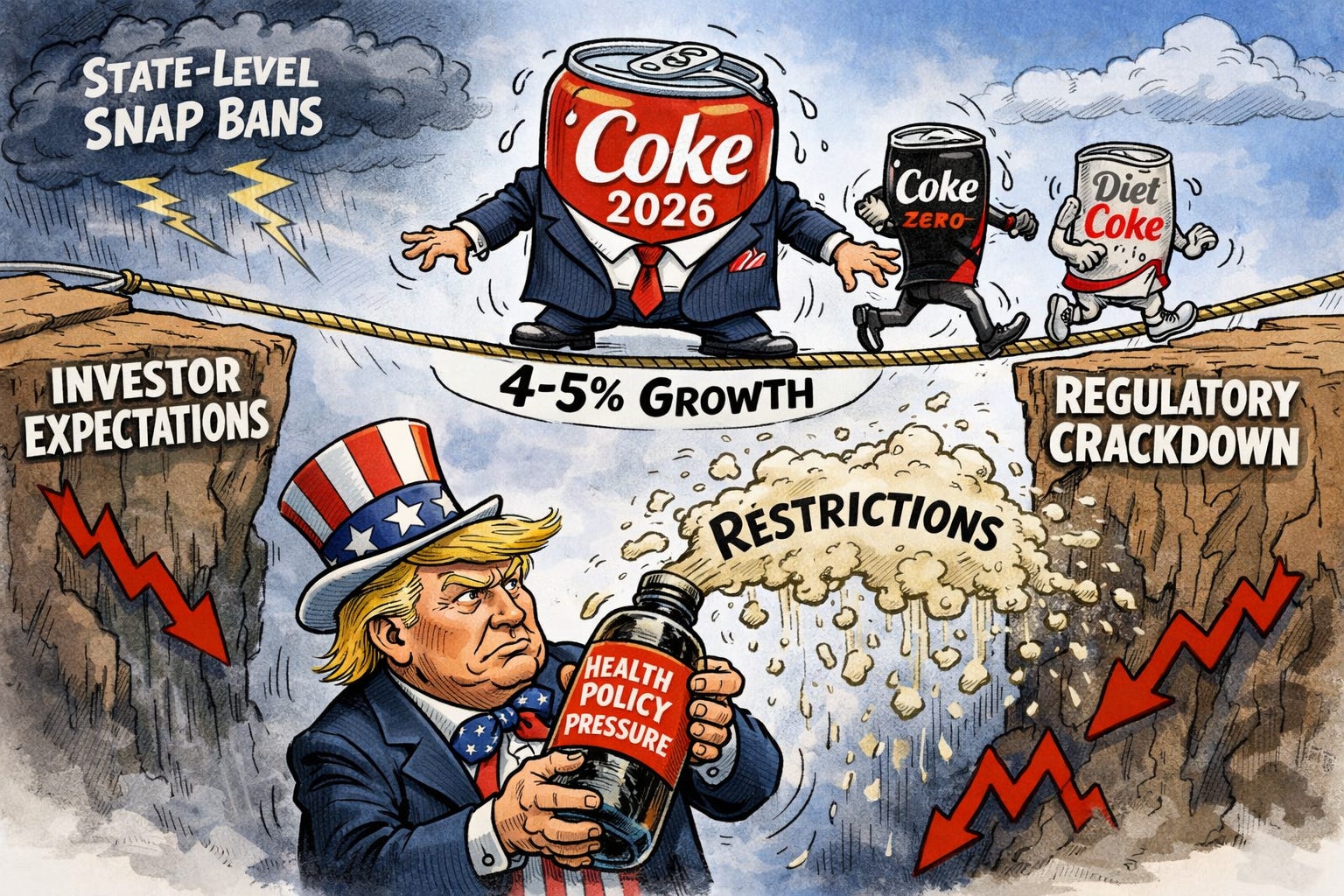
Coke just released its 2026 outlook, projecting organic revenue growth of 4% to 5%. It’s a respectable range, but the bottom end trails the 5.01% analyst consensus. For the final stretch of 2025, the company delivered an adjusted EPS of 0.58, beating estimates. The standout performer remains Coca-Cola Zero Sugar, which grew 14% over the past year, while legacy Diet Coke remained flat. Even with the earnings beat, shares dropped roughly 4% in pre-market trading, suggesting that investors were hoping for a more aggressive forecast to justify the stock’s recent run (Coca-Cola).
This guidance highlights a strategic pivot as incoming CEO Henrique Braun takes the reins. The company is facing a tougher room in D.C., with the Trump administration signaling a more critical stance on soda’s health impacts. On top of that, new state-level restrictions on using food-aid benefits for soft drinks are creating a tangible headwind for volume. Coke’s heavy tilt toward its zero-sugar and healthier lines is a direct response to these pressures. For us, the big question is whether these high-growth diet segments can fully offset the potential volume drag from a more restrictive regulatory environment.
Sensei’s Insight: Watch the 4% growth floor. If federal health rhetoric turns into nationwide policy, Coke’s ability to hike prices without losing shoppers will determine if this defensive play stays a winner.
🏛️ Courts Unfreeze Billions in Federal Funding
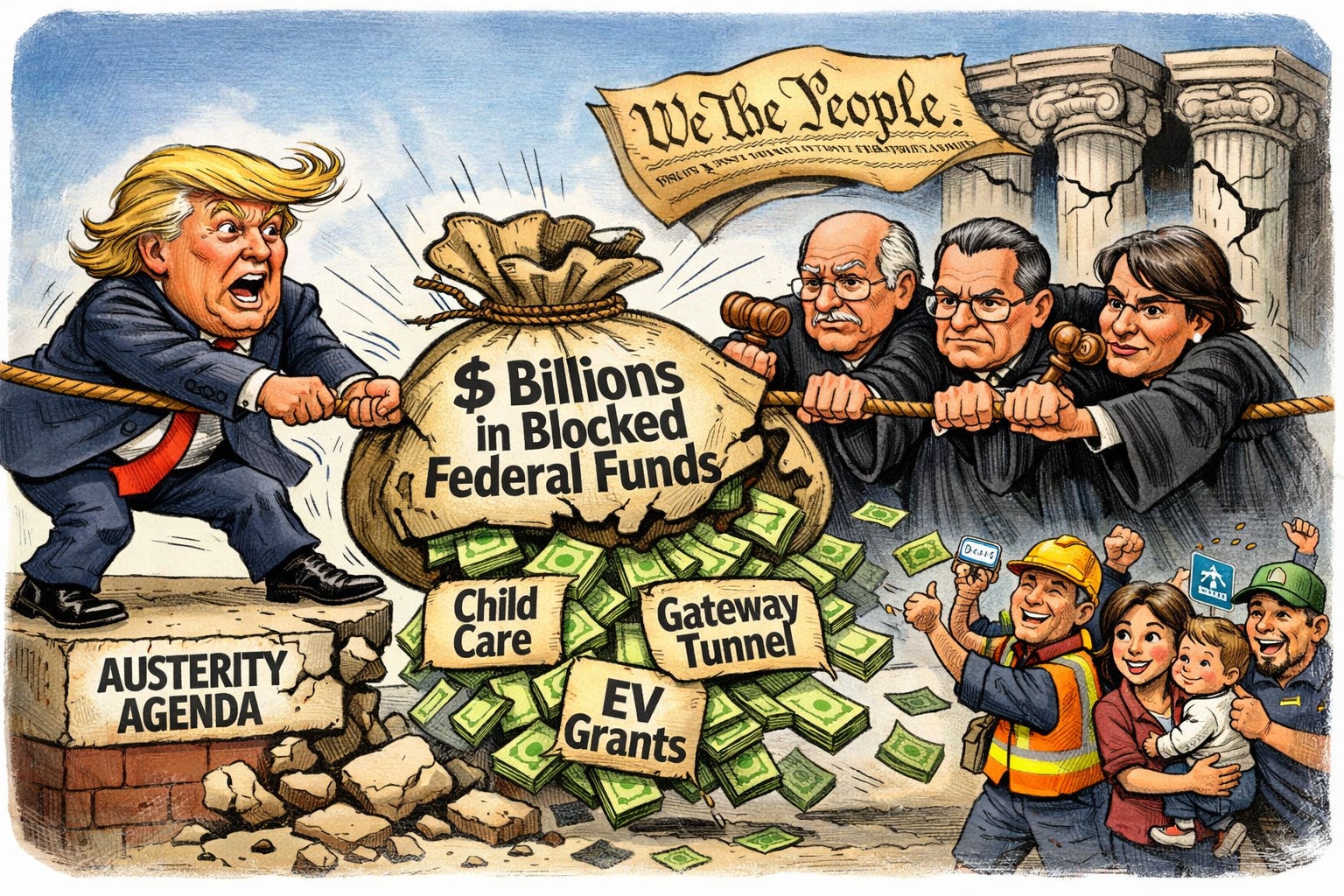
The Trump administration’s aggressive push to slash federal spending is hitting a major judicial wall. A Bloomberg investigation found 167 disputes over funding in federal court filings, with judges halting or reversing the government’s actions in over half of them as of mid-January. These aren’t just small administrative tweaks: individual rulings have recently unlocked over $10 billion in blocked funds, including $10 billion for child care aid and $16 billion for the Gateway rail tunnel project. The Department of Justice is currently appealing roughly 61 of these losses, but for now, the courts are acting as a significant brake on the White House’s austerity agenda (Bloomberg).
This legal friction creates a unique brand of fiscal unpredictability for your portfolio. Instead of the clean break from “inefficient” programs the administration promised, we’re seeing a fragmented landscape where billions in discretionary spending are being forced back into the economy. This is a tailwind for infrastructure and transit players like Caterpillar and Vulcan Materials, which saw modest gains today after the Gateway Tunnel funding was preserved. Even the embattled EV infrastructure sector is catching a bid, with ChargePoint rising 2% on hopes that federal charging grants will remain intact. While the administration seeks to reorient the budget, the Administrative Procedure Act is making it difficult to do so without extensive, time-consuming justification.
Sensei’s Insight: Watch the DC and 9th Circuit dockets closely. If these injunctions hold, the “austerity trade” may lose steam as billions in social and infrastructure spending unexpectedly re-enter the 2026 fiscal flow.
🔗 Connect with Us
Stay plugged in across platforms:
Sensei on X: sensei_live_
Martyn Lucas on X: MartynInvestor
Vaz on X: eVTOLHUB
📺 YouTube Channel (Live & Replays): Martyn Lucas Investor