This content is for informational and educational purposes only and does not constitute financial advice. Always do your own research. Not financial advice (NFA).
👀 Today’s Stories at a Glance
🏁 Trump Signals War Near End: Markets rallied on victory claims; however, Iran vows to continue the fight.
🟠 Strategy Inc Adds More Bitcoin: The firm spent $1.3B while underwater; funding shifted heavily toward common stock dilution.
🔧 White House Targets Gas Prices: Options include emergency oil releases; however, Hormuz closures remain the primary obstacle.
🎭 Abel Restarts Berkshire Share Buybacks: New leadership signals value by deploying cash; Abel personally purchased $14.6 million in shares.
🚀 U.S. Launches Flying Taxi Program: New federal testing aims to integrate electric aircraft into national airspace by summer 2026.
🕵️ Russia Aids Iranian Military Intelligence: Reports suggest Moscow helps Iran target U.S. forces; this complicates efforts to ease sanctions.
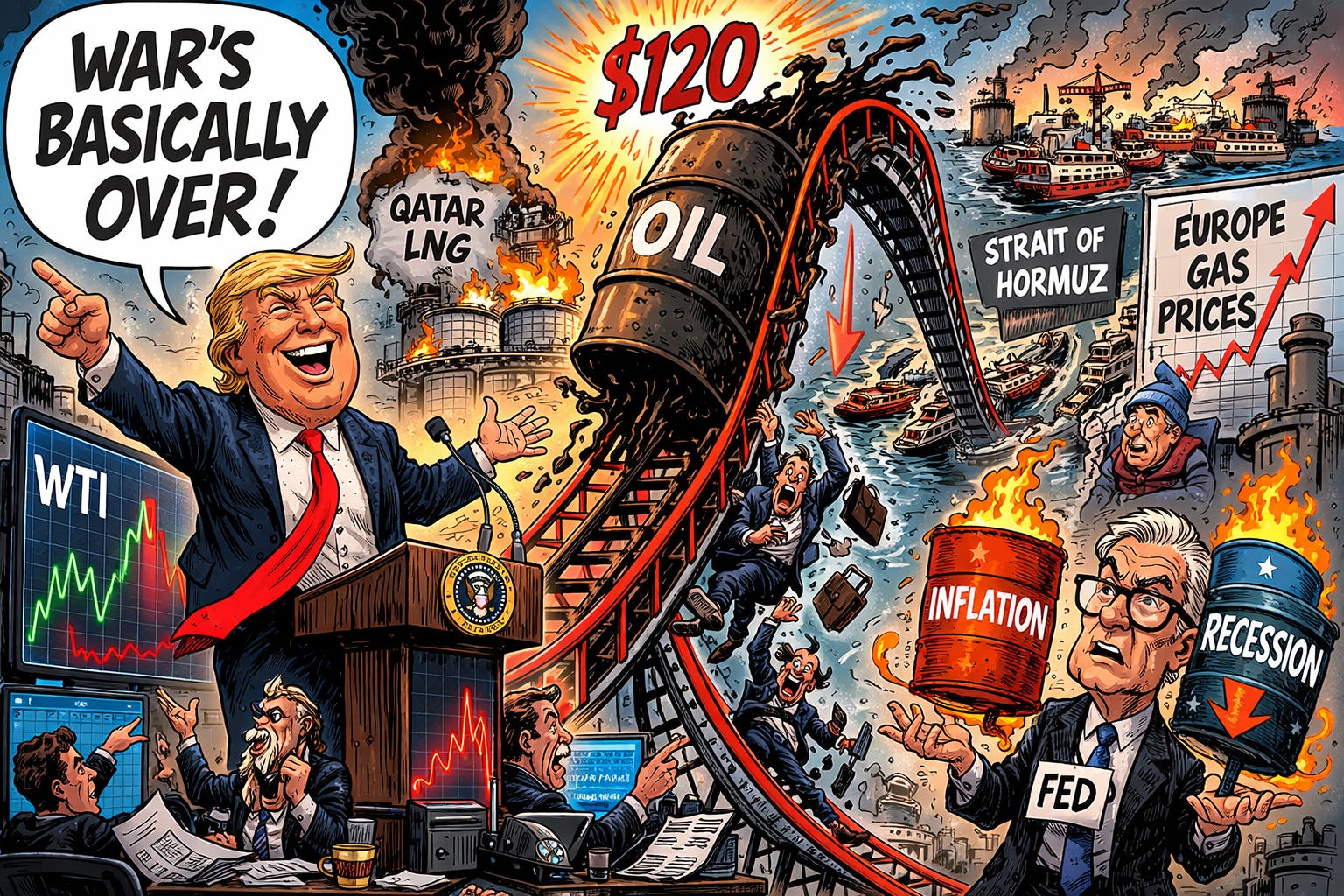
🔍 Global Energy Markets Face Volatility: Crude prices spiked before crashing; meanwhile, natural gas disruptions threaten European industrial stability.
🧠 One Big Thing
The Energy Reality Gap
Global markets are surging on White House claims that the Iranian conflict is largely resolved. This optimism ignores the physical reality that the Strait of Hormuz remains closed to vital energy exports. Since this waterway handles a fifth of the world’s oil, the resulting supply shock cannot be fixed by domestic policy alone. Investors should expect that restoring shipping and infrastructure will take months despite political declarations of victory. This lingering disruption creates a stagflation risk as high energy costs collide with slowing economic growth. Consequently, the Federal Reserve lacks the flexibility to cut interest rates without aggravating inflation.
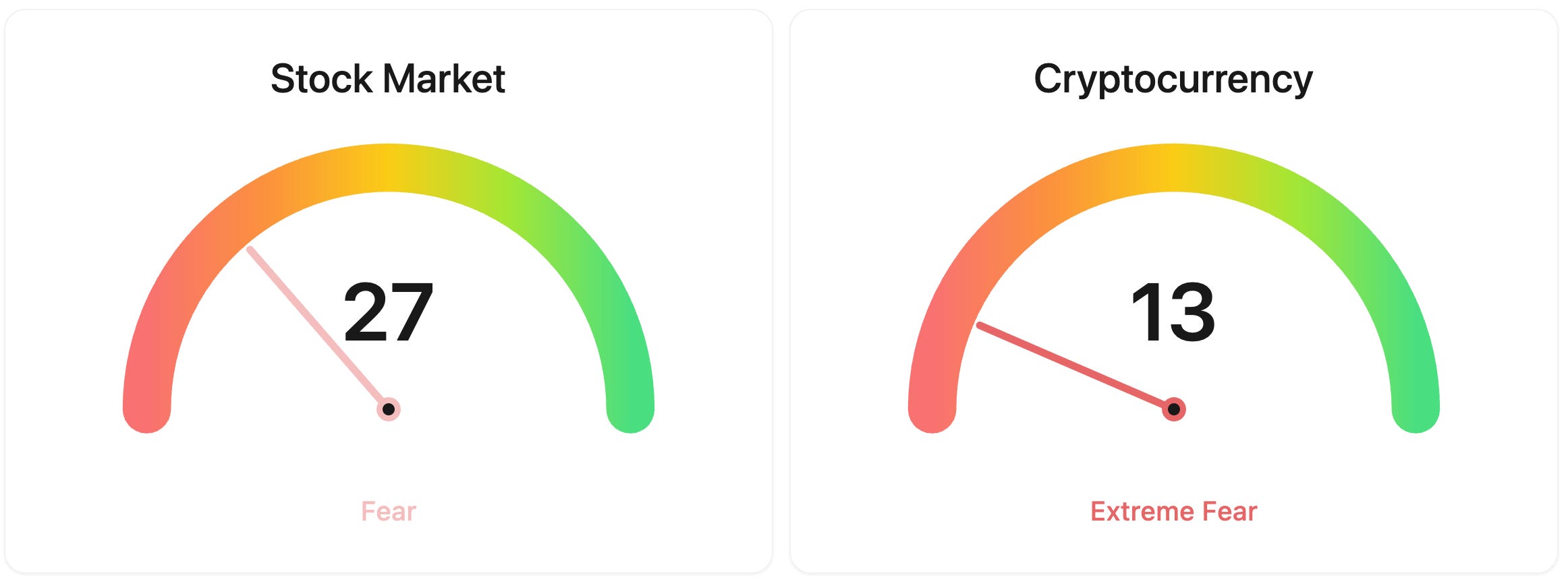
⚖️ Fear & Greed
📉 The Number That Matters
5000
President Trump confirmed the U.S. has struck 5,000 targets during Operation Epic Fury. He claims Iranian missile capability is down to 10% and drone launches have fallen 83%, signaling his intent to exit the conflict ahead of schedule.
⚔️ Winners vs Losers
Winners
ZVRA 0.00%↑: Zevra Therapeutics surged after Q4 earnings of $0.19 per share crushed the $0.05 consensus, with revenue of $34.1 million also topping the $28.1 million estimate.
VRTX 0.00%↑: Vertex Pharmaceuticals jumped after its Phase 3 RAINIER trial of povetacicept met all endpoints in IgA nephropathy, with patients showing a 52% reduction in urine protein versus placebo; the company plans to complete its FDA biologics license application by end of March.
Losers
ARQ 0.00%↑: Arq, Inc. cratered after reporting a Q4 net loss of $50 million, driven by a $45 million impairment charge on its idled Corbin facility after engineering tests revealed the plant could support only half its targeted granular activated carbon output; the company scrapped all GAC production for 2026 and ousted its CFO.
RAIL 0.00%↑: FreightCar America tumbled after Q4 revenue fell to $125.6 million from $137.7 million a year earlier and the company swung to a loss of $0.52 per share, badly missing the $0.18 analyst estimate.
BNTX 0.00%↑: BioNTech SE fell after Q4 and full-year 2025 results showed continued steep declines in COVID-19 vaccine revenue, with 2026 guidance projecting further contraction in Comirnaty sales and no oncology product revenue for the year.
📊 Market Snapshot
Cryptocurrencies:
Bitcoin (BTC): $70,827 (▲ 3.50%)
Ethereum (ETH): $2,064 (▲ 3.53%)
XRP: $1.40 (▲ 2.89%)
Equity Indices (Futures):
S&P 500: $6,813 (▲ 0.37%)
NASDAQ 100: $25,062 (▲ 0.28%)
FTSE 100: £10,438 (▲ 1.05%)
Commodities & Bonds:
10-Year US Treasury Yield: 4.12% (▲ 0.37%)
Oil (WTI): $88 (▲ 3.03%)
Gold: $5,186 (▲ 0.89%)
Silver: $88.64 (▲ 1.91%)
Data as of UK (GMT): 11:06am / US (EDT): 07:06am / Asia (Tokyo): 20:06pm
✅ 5 Things to Know Today
🏁 Trump Says War “Pretty Much Done.” Iran Disagrees.
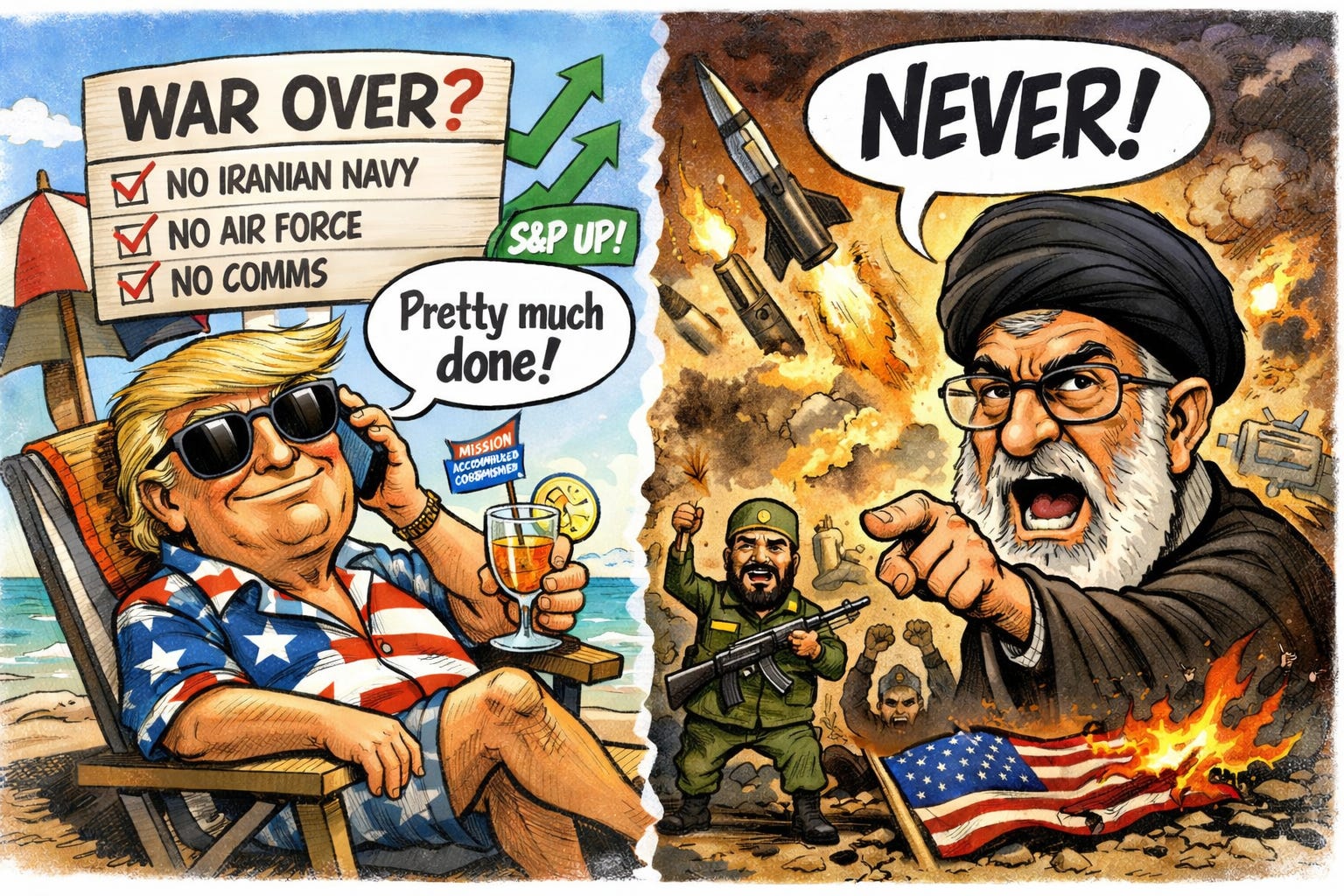
Nine days into Operation Epic Fury, President Trump gave his clearest public signal yet that he wants out. In a phone interview with CBS News, he described the conflict as “very complete, pretty much,” claiming Iran has “no navy, no communications, no Air Force” and that the US is well ahead of his original four-to-five week timeline. At a subsequent press conference at his Doral resort, Trump said the US had hit 5,000 targets, that Iran’s missile capability was down to roughly 10% of its pre-war level, and that drone launches from Iran had fallen 83%. Stocks surged on the comments: the S&P 500 closed up 0.8%, the Nasdaq up 1.4%, and Asian markets followed overnight, with Japan’s Topix gaining 2.9% (Bloomberg).
Iran’s response suggested no appetite for capitulation. The Islamic Revolutionary Guard Corps pledged full loyalty to newly appointed Supreme Leader Mojtaba Khamenei, and Iran’s defence council issued a statement vowing to “obey the commander-in-chief until the last drop of our blood.” A ballistic missile launched from Iran entered Turkish airspace and was neutralised by NATO air defences, the second such incident since the war began, raising the prospect of the alliance being pulled more directly into the conflict. Bloomberg Geoeconomics analyst Dina Esfandiary noted that the new leader “shares many of the same ideological leanings as his father” and that his appointment “suggests Iran won’t be shifting tack” (CNBC).
Sensei’s Insight: Markets are trading Trump’s words as if they’re a ceasefire timeline. They’re not. Iran has a new supreme leader with every incentive to prove hardline credentials, a NATO member’s airspace has been breached twice, and Russia is reportedly feeding Tehran intelligence on American positions. The end date is not Trump’s to set alone.
🟠 Saylor Drops $1.3B on Bitcoin While Underwater on the Trade
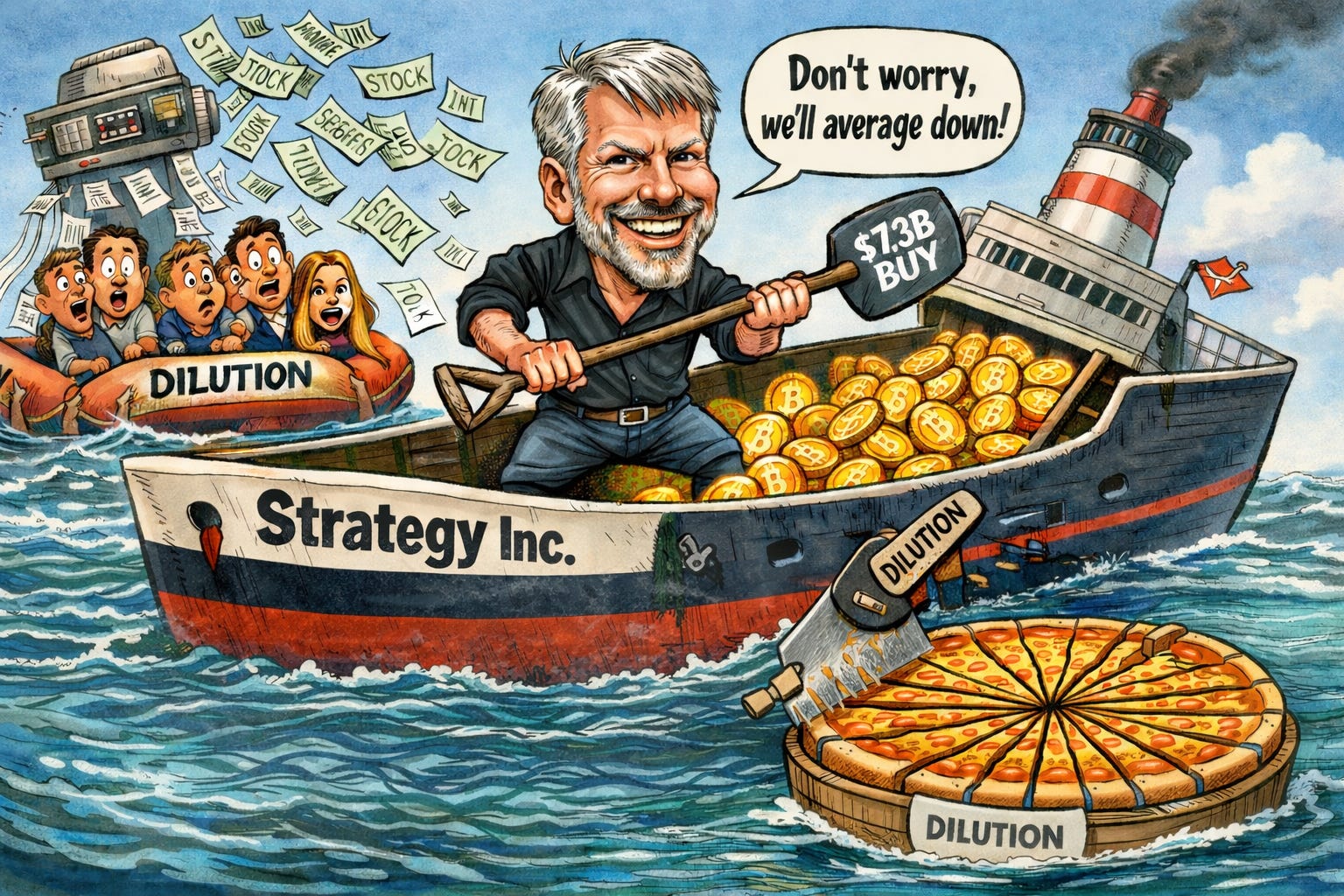
Strategy Inc, the company formerly known as MicroStrategy, disclosed in a regulatory filing Monday that it purchased 17,994 Bitcoin between March 2 and March 8 for approximately $1.28 billion, paying an average of $70,946 per coin. The company’s total holdings now stand at 738,731 Bitcoin, acquired at a cumulative cost of $56.04 billion. The average price paid across the entire treasury is $75,862 per coin. Bitcoin was trading around $68,954 on Monday, meaning the full position is currently underwater relative to cost basis. Strategy’s stock has fallen approximately 55% over the past 12 months (Bloomberg).
The funding mix drew scrutiny. Around $900 million of the purchase was raised through sales of Class A common stock, with the remaining $377 million coming from its “Stretch” preferred shares. That matters because Strategy had been publicly signalling for weeks that it intended to shift away from common stock issuance toward preferred shares as its primary funding mechanism. Preferred shares allow the company to raise capital without diluting existing shareholders as heavily. Think of common stock issuance like cutting a pizza into more slices without making it bigger. The fact that 70% of this purchase reverted to common stock suggests demand for the Stretch series, which pays an 11.5% annual yield, remains in its early stages despite management’s framing (CoinDesk).
Sensei’s Insight: Strategy told the market it was pivoting to preferred shares. Then it funded 70% of its biggest purchase in seven weeks through common stock dilution instead. With the entire treasury underwater and Bitcoin still volatile amid the Iran conflict, the gap between the narrative and the execution is worth watching closely.
🔧 Every Gas Price Fix Has a Time Limit
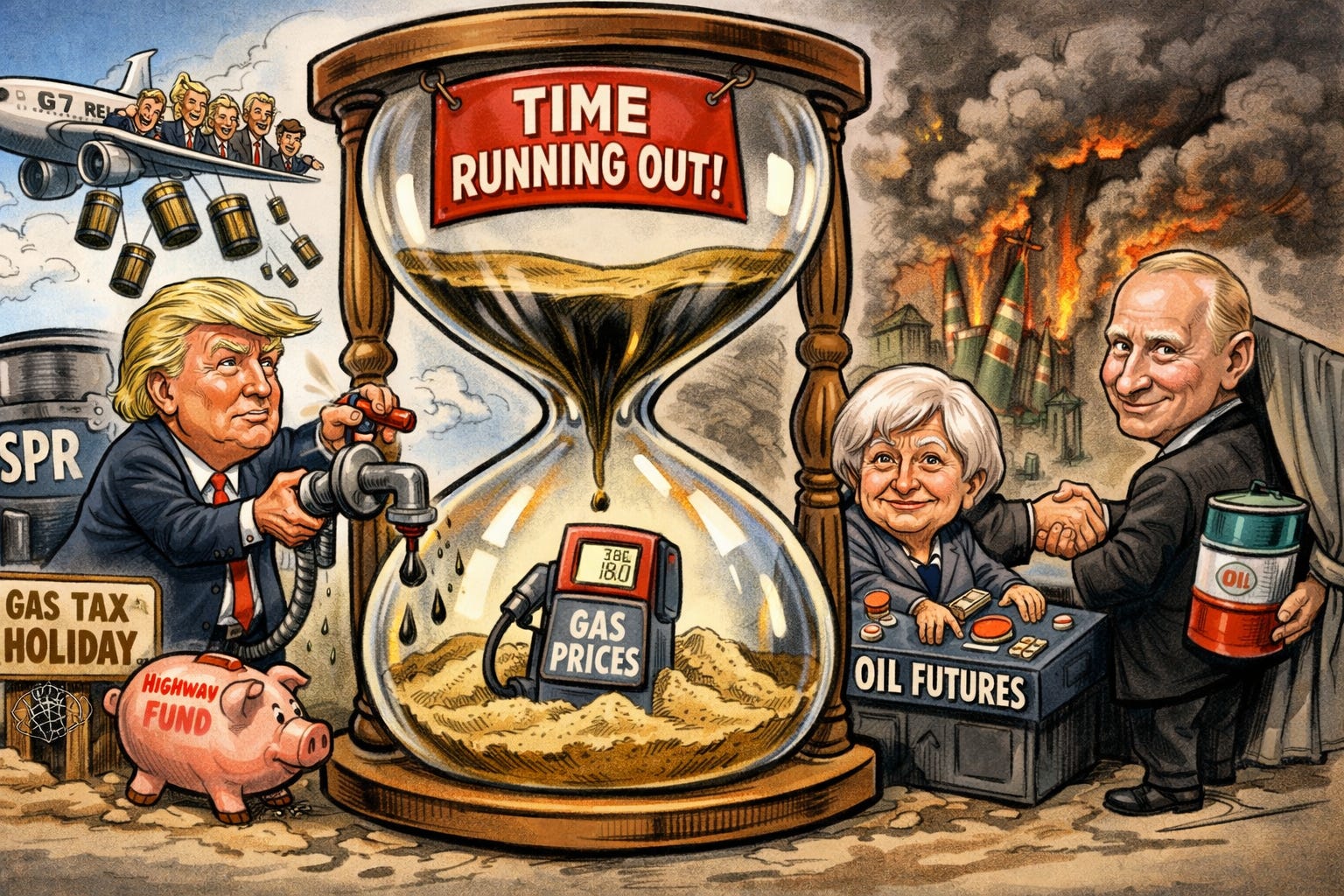
With average US retail gasoline prices at their highest since August 2024 and crude briefly surging past $100 a barrel, the Trump administration is working through a menu of options to limit the damage to American consumers. Three main tracks are under active consideration. First, a coordinated release from the Strategic Petroleum Reserve (SPR), the US government’s emergency oil stockpile held in underground salt caverns along the Gulf Coast, which currently holds around 415 million barrels at roughly 60% capacity. The G7 signalled Monday they are ready to act but “not there yet,” with the US pushing for a joint release of up to 400 million barrels across the alliance. Second, a federal gas tax holiday, suspending the 18.4 cents per gallon petrol levy, though that requires an act of Congress and would drain billions from the Highway Trust Fund that finances roads and bridges. Third, direct US Treasury involvement in oil futures markets, an untested and loosely defined idea (Bloomberg).
The bluntest assessment came from Bob McNally, president of energy consultancy Rapidan Energy Group: “No policy instrument I’m familiar with will come remotely close to that. There’s no substitute for a resumption of Hormuz traffic, period, end of story.” Even a fully coordinated International Energy Agency (IEA) drawdown would cover the supply gap for only a matter of weeks. Saudi Arabia, the UAE, Kuwait, and Iraq have all cut output because they cannot export through the closed Strait, a problem no domestic lever can fix from Washington. A fourth option, easing sanctions on Russian crude to allow more barrels onto global markets, is already in motion after Trump confirmed he spoke with Vladimir Putin and would waive “certain oil-related sanctions,” with Treasury Secretary Scott Bessent having already moved last week to allow Indian refiners to purchase more Russian oil (CNBC).
Sensei’s Insight: The Russia sanctions lever is the one that could actually move barrels at scale, which is precisely what makes it uncomfortable. The US is reportedly receiving intelligence that Russia is helping Iran target American assets. Easing financial pressure on Moscow while that assistance continues is a concession that may prove difficult to walk back politically, whatever it does to pump prices.
🎭 Abel’s Transparency Play Has an Ironic Twist
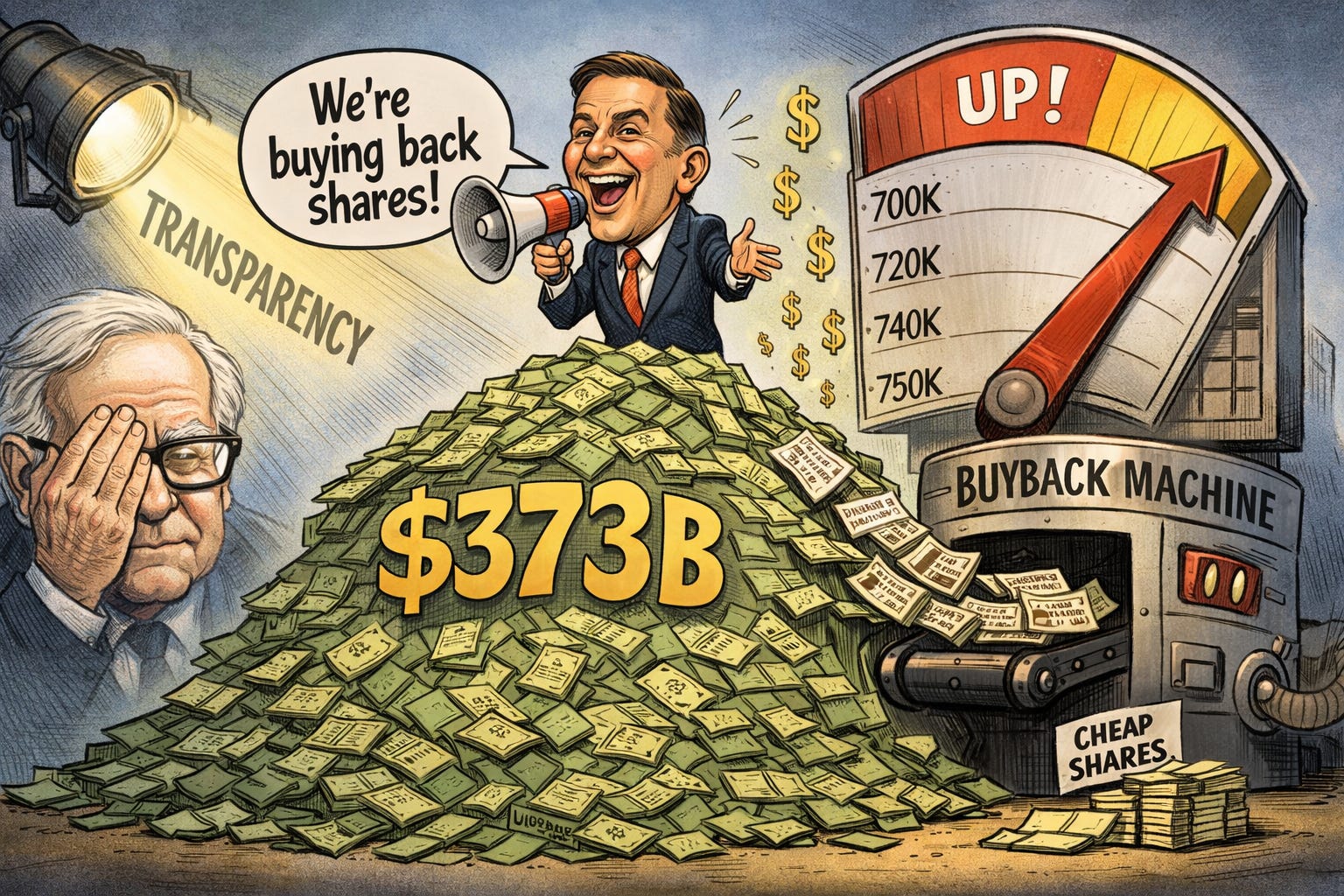
Berkshire Hathaway resumed buying back its own stock for the first time in nearly two years, with new chief executive Greg Abel confirming the repurchases began on Wednesday March 4 in a CNBC interview. Abel also disclosed he personally bought 21 Berkshire Class A shares for approximately $14.6 million, representing the after-tax value of his $25 million salary, and said he plans similar purchases in future years. The company filed an 8-K stating it was disclosing the buyback “in the interest of transparency with our leadership transition,” a notable departure from Berkshire’s long-standing culture of saying as little as possible about its market activity. Berkshire ended 2025 with $373.3 billion in cash on its balance sheet and currently trades at around $745,200 per A share (CNBC).
There is a quiet irony in the announcement. Most companies repurchase shares without saying anything at the time, precisely because announcing it pushes the price up and makes further purchases more expensive. Berkshire under Buffett disclosed buybacks only in quarterly filings, giving the company months of quiet accumulation before markets could react. By going public immediately, Abel signalled undervaluation but may have reduced the window to act on it cheaply. A Barron’s analysis estimated Berkshire could buy back roughly $300 million of stock per day based on volume, meaning the cost of that transparency compounds quickly. Abel acknowledged there would be no further buyback announcements, describing this as a one-time disclosure tied to the leadership change (Barron’s).
Sensei’s Insight: Berkshire sitting on $373 billion in cash and choosing to buy its own stock rather than deploy elsewhere is the signal within the signal. At 1.5 times book value and 23 times projected earnings, Abel is effectively saying: in a market rattled by war and stagflation risk, Berkshire itself is the best available value. That’s either disciplined or alarming, depending on your read of what’s coming.
🕵️ Russia Is Reportedly Helping Iran Target American Forces
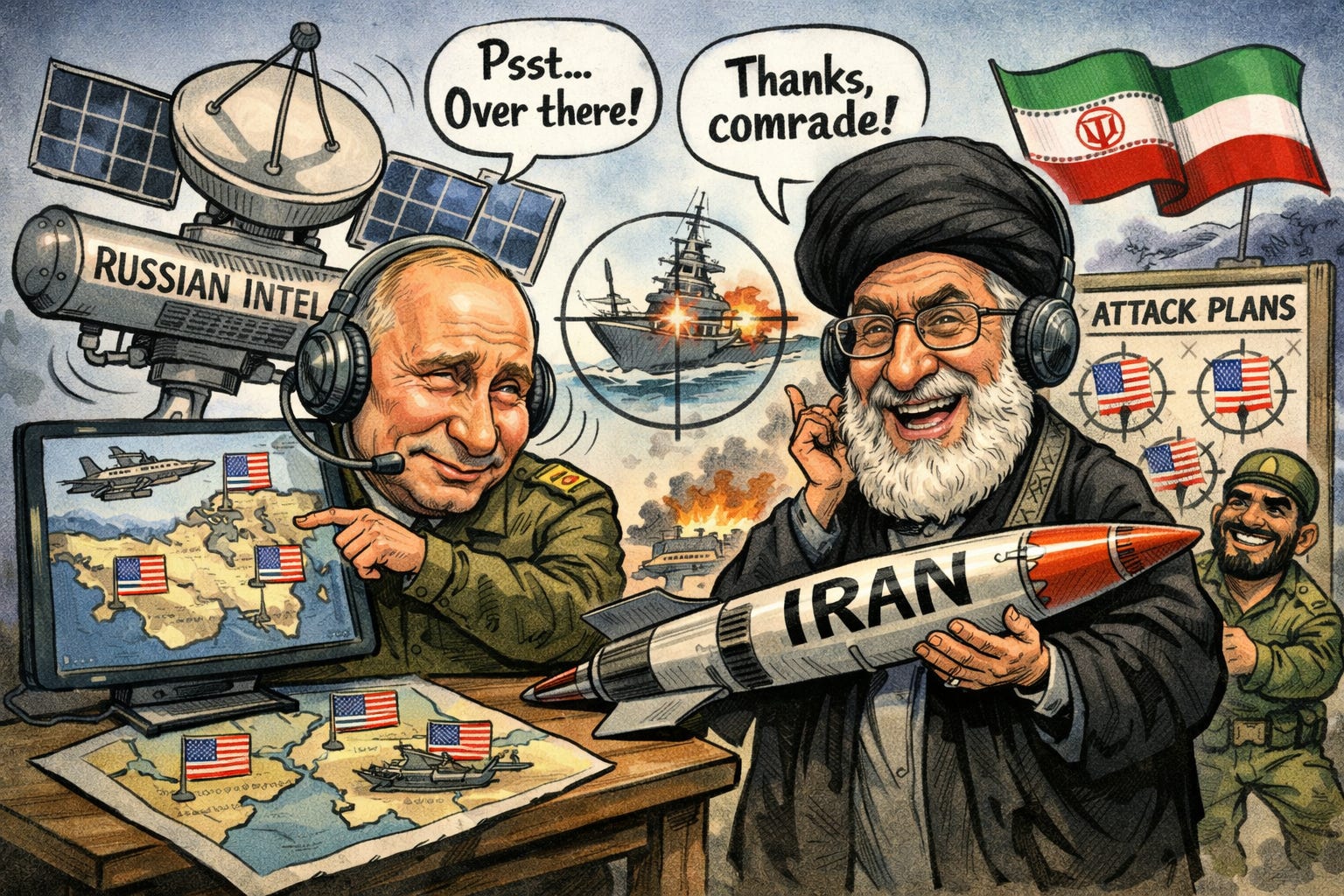
US officials told MSNBC that Russia has been providing Iran with intelligence that could help Iranian forces strike American ships, aircraft, and bases across the region, with one official stating directly that “Russia is providing intelligence help to Iran.” The Associated Press and Washington Post carried related reports over the weekend. Iranian Foreign Minister Abbas Araghchi made no effort to deny the assistance on NBC’s Meet the Press, instead emphasising that Iran’s “strategic partnership” with Russia “is not a secret.” The reports have landed in Washington at the worst possible moment: the Trump administration is simultaneously trying to wind down the war, manage oil prices, and maintain some coherent posture toward Moscow (MSNBC).
The political geometry here is striking. Treasury Secretary Scott Bessent moved last week to allow Indian refiners to purchase more Russian oil, and Trump confirmed Monday he would waive further oil-related sanctions after speaking with Vladimir Putin, citing concern for American consumers. Multiple lawmakers are now questioning the logic of loosening financial restrictions on a government that is reportedly helping the country the US is at war with. For commodity traders and investors with European energy exposure, the key risk is a congressional or public pressure campaign that forces a policy reversal, tightening the one supply lever the administration has actually managed to pull.
Sensei’s Insight: The administration is essentially paying Russia to help offset a supply crisis that Russia is helping to sustain. That contradiction can survive in the short term if the war ends quickly. If it drags, the political pressure to reverse the sanctions easing grows, and with it, one of the few near-term buffers under crude prices disappears.
🛸 The Jetsons Era Moves Closer: America Launches the eIPP
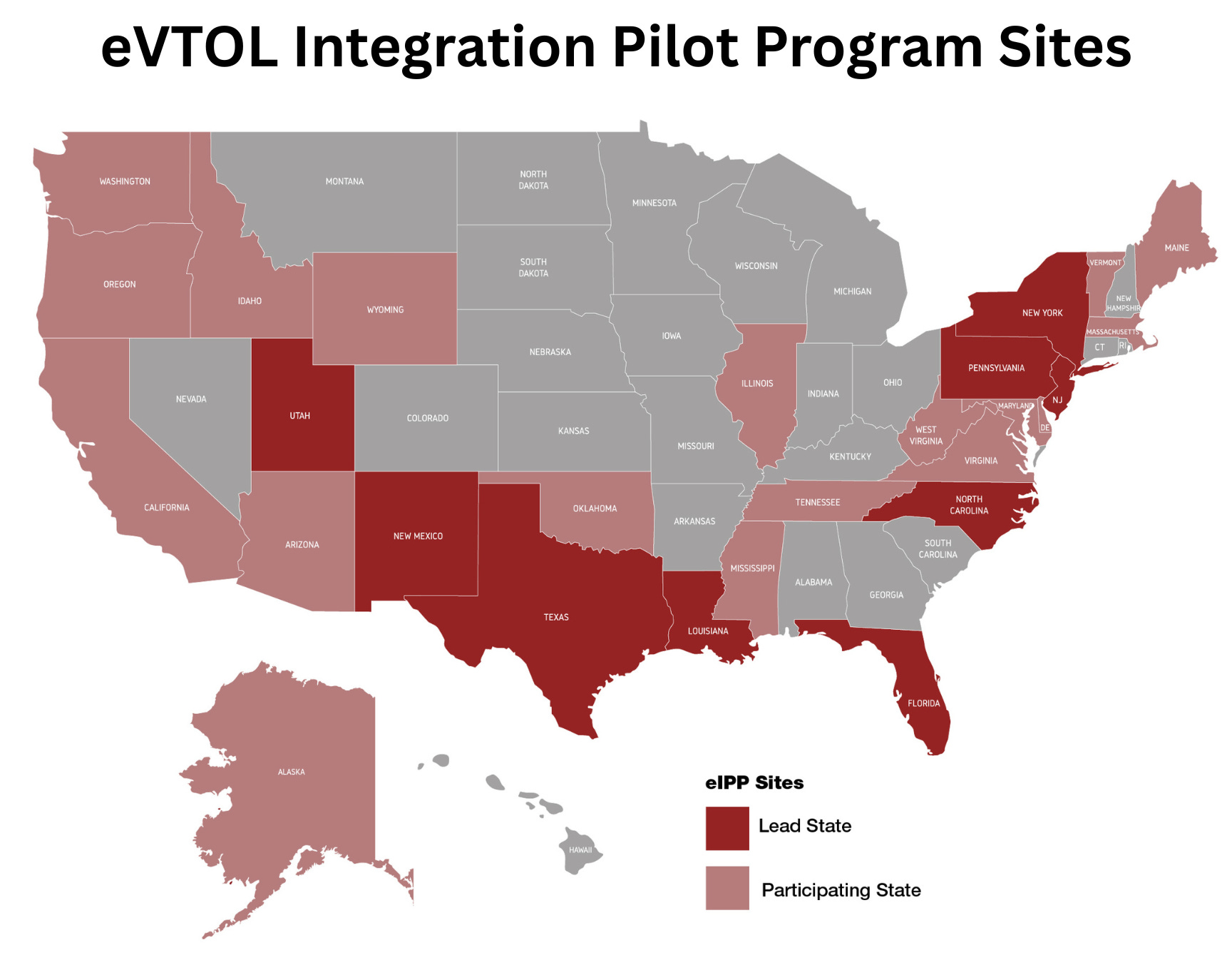
The United States has taken a major step toward bringing flying taxis closer to reality with the launch of the Electric Aviation Integration Pilot Program (eIPP). Announced by the U.S. Department of Transportation and the Federal Aviation Administration (FAA), the program aims to accelerate the safe integration of electric aircraft and other next-generation aviation technologies into the national airspace. The initiative creates real-world testing environments where regulators, cities, infrastructure partners, and aircraft manufacturers can operate new aircraft concepts and gather data that will shape future aviation rules. The first pilot operations are expected to begin as early as summer 2026.
In simple terms, the program is designed to help make flying taxis possible in everyday life. Electric aircraft are expected to be quieter, cleaner, and potentially cheaper to operate than helicopters, while offering fast point-to-point travel across busy cities and regions. Manufacturers across the sector say electric propulsion and simpler aircraft systems could lead to lower operating costs, which may eventually make short urban flights more affordable. The initiative also supports a broader goal: building a new high-tech aviation industry in the United States. A major public demonstration could come during the 2028 Summer Olympics in Los Angeles, where electric aircraft may help transport visitors, athletes, and officials around the city. Selected eIPP pilot projects include:
Port Authority of New York and New Jersey – testing passenger electric vertical takeoff and landing (eVTOL) operations including routes from Manhattan heliports
Texas Department of Transportation – regional air taxi networks linking Dallas, Austin, San Antonio, and potentially Houston
Utah Department of Transportation – multi-state advanced aircraft testing across the western U.S.
Pennsylvania Department of Transportation – regional air mobility routes across a 13-state collaboration
Louisiana – offshore and energy-sector transportation operations in the Gulf region
Florida Department of Transportation – statewide operations including cargo delivery, passenger flights, and medical response
North Carolina Department of Transportation – regional passenger and medical aviation networks
Albuquerque – testing early autonomous aviation operations
Leading aircraft developers participating in these programs include Archer Aviation, Joby Aviation, and Beta Technologies, alongside other emerging aviation innovators. The eight projects span 26 U.S. states, creating one of the largest real-world test environments ever established for advanced air mobility and providing regulators with the operational data needed to enable the next era of flight.
Vaz’s Comment: “This is the moment many of us in the sector have been waiting for. A clear shift from the U.S. government sends a strong message: America intends to lead the advanced air mobility revolution. The future of aviation is no longer a distant concept. It is beginning to take shape right now. Congratulations to everyone involved in this journey, from the companies building the aircraft to the engineers, industry insiders, and the community of retail investors and enthusiasts who have supported the vision. Just imagine it: within a short time, we could be boarding a flying taxi right on our doorstep in the United States.”
🔗 Connect with Us
Stay plugged in across platforms:
Sensei on X: sensei_live_
Martyn Lucas on X: MartynInvestor
Vaz on X: eVTOLHUB
📺 YouTube Channel (Live & Replays): Martyn Lucas Investor

🔍Deep Dive: The Day Oil Went Wild