This content is for informational and educational purposes only and does not constitute financial advice. Always do your own research. Not financial advice (NFA).
👀 Today’s Stories at a Glance
📉 Sterling Slips on UK Jobless Data: The pound fell as unemployment hit 5.2%, fueling bets on upcoming Bank of England rate cuts.
🛡️ Dollar Climbs Amid AI Sector Volatility: Investors are seeking safety in the greenback as software stocks sink due to AI disruption fears.
🇨🇺 Oil Blockade Pressures Cuban Economy: President Trump is leveraging trade tariffs to squeeze Havana following the collapse of Venezuelan oil support.
🏷️ Corporate Price Hikes Aggressively Return: Online prices saw a twelve-year jump in January as firms pass tariff and insurance costs to consumers.
🛡️ Pentagon Clashes With Anthropic Over Ethics: A dispute over military use of AI models threatens to sever the firm’s classified government contracts.
🔍 Deep Dive: Is AI Spending Hitting a Wall?
🧠 One Big Thing
The AI Capex Disconnect
Major technology firms are committing over $630 billion to artificial intelligence infrastructure despite a widening gap between investment and tangible profit. This spending surge coincides with public markets erasing $1.3 trillion in sector value as skepticism grows regarding immediate returns. Evidence shows nearly half of corporate AI initiatives are being abandoned while infrastructure needs outpace current electrical grid capacities. The market is now penalizing companies that fail to demonstrate clear financial gains from these massive capital outlays. For investors, speculative enthusiasm has transitioned into a strict demand for verified revenue generation. Success requires identifying which entities are securing a competitive advantage versus those merely sustaining high-cost operations.
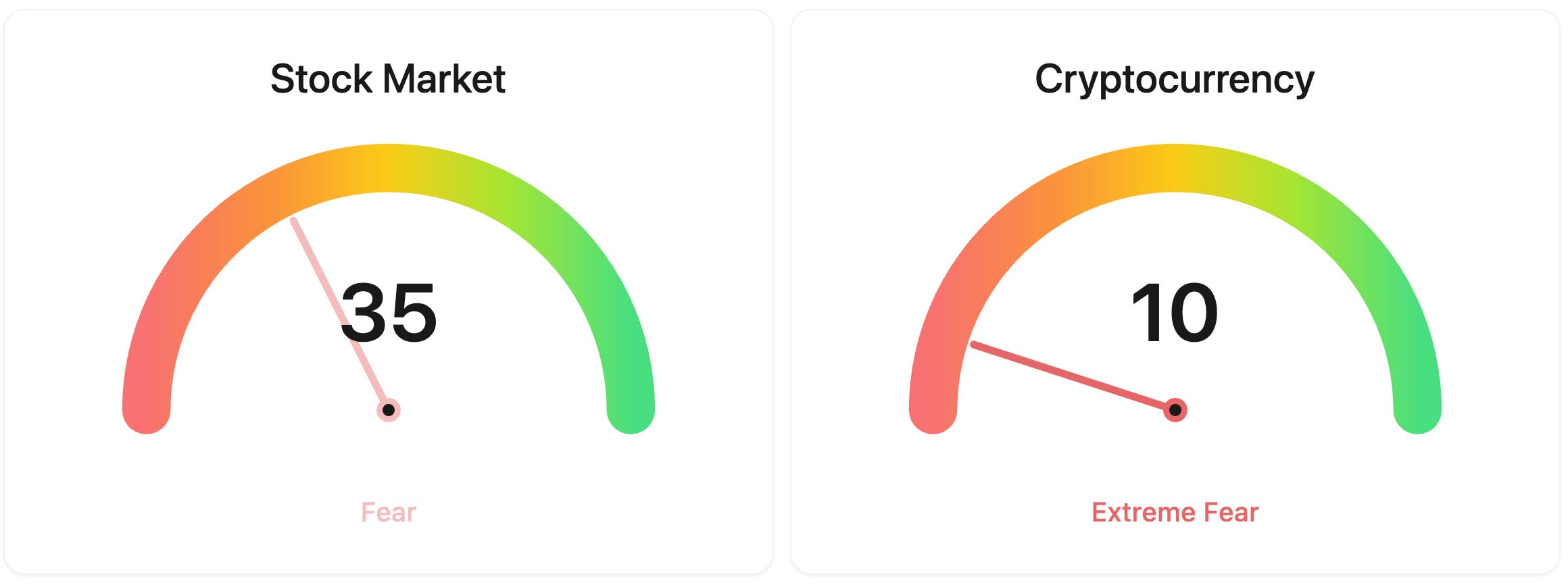
⚖️ Fear & Greed
📉 The Number That Matters
900,000
Revised data revealed the U.S. economy added 900,000 fewer jobs in 2025 than initially reported. This massive downward revision, showing only 181,000 actual gains, signals a significantly weaker labor market and heightens 2026 stagflation risks.
⚔️ Winners vs Losers
Winners
MASI 0.00%↑: Masimo Corporation shares surged on reports that the company is in advanced talks to be acquired by Danaher in a $10 billion deal.
OCUL 0.00%↑: Ocular Therapeutix, Inc. climbed as speculators front-run imminent Phase 3 clinical data for wet-AMD and renewed acquisition chatter involving Sanofi.
PLYX 0.00%↑: Polaryx Therapeutics, Inc. experienced a massive rebound driven by its ultra-low float and oversold positioning following a significant post-listing collapse.
ADI 0.00%↑: Analog Devices, Inc. rose on positive sentiment following recent analyst price target hikes, despite no fresh regulatory filings or press releases overnight.
Losers
CGTL 0.00%↑: Creative Global Technology Holdings Limited shares sank as the market reacted to a 39% monthly decline and a long-term revenue contraction of 41%.
LVRO 0.00%↑: Lavoro Limited shares plummeted after the company announced it will voluntarily delist from the Nasdaq Global Market to reduce audit and compliance costs.
DHR 0.00%↑ Danaher Corporation shares fell as investors priced in potential earnings dilution and integration risks regarding a reported $10 billion acquisition of Masimo.
📊 Market Snapshot
Cryptocurrencies:
Bitcoin (BTC): $67,780 (▼ -1.56%)
Ethereum (ETH): $1,967 (▼ -1.51%)
XRP: $1.45 (▼ -2.28%)
Equity Indices (Futures):
S&P 500: $6,817 (▼ -0.27%)
NASDAQ 100: $24,622 (▼ -0.73%)
FTSE 100: £10,511 (▲ 0.46%)
Commodities & Bonds:
10-Year US Treasury Yield: 4.03% (▼ -0.47%)
Oil (WTI): $64 (▲ 0.53%)
Gold: $4,928 (▼ -2.26%)
Silver: $74.42 (▼ -3.78%)
Data as of UK (GMT): 11:42 AM / US (EST): 6:42 AM / Asia (Tokyo): 8:42 PM
✅ 5 Things to Know Today
📉 Sterling Slips as UK Jobless Rate Hits 5.2%
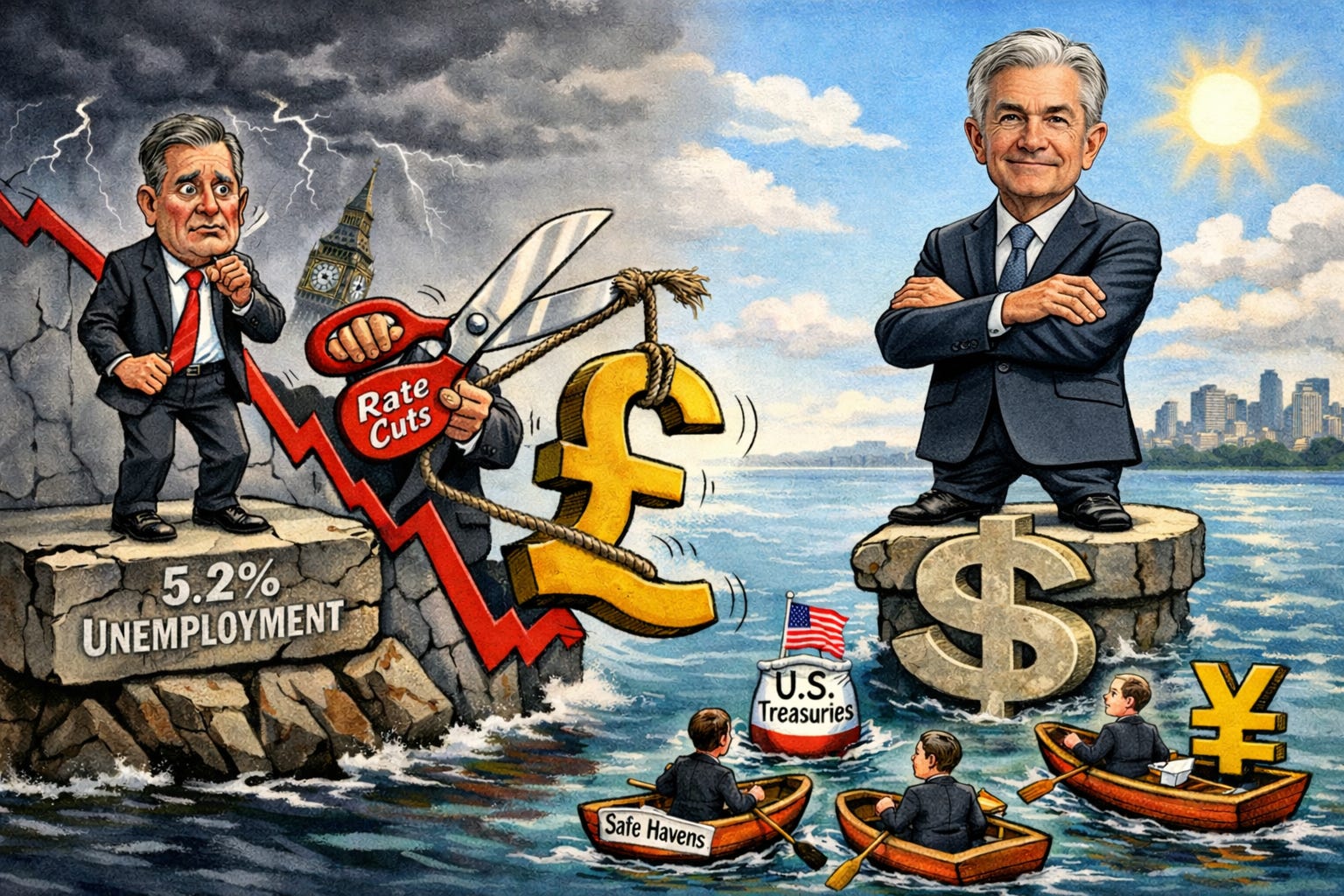
The UK labor market is showing visible cracks as unemployment ticked up to 5.2%, a level not seen since early 2021. This cooling, paired with slowing wage growth, has markets betting on at least two Bank of England rate cuts before the year ends. Predictably, the pound dropped roughly 0.6% against the dollar, making it the worst performer among G-10 currencies today. It’s a classic data-driven pivot: investors are moving away from the “higher for longer” narrative in London as the economic reality of a five-year high in joblessness sets in (Bloomberg).
This shift matters because it changes the relative appeal of the pound. While the Fed is in a holding pattern, the Bank of England looks closer to the exit door. For retail investors, this trend highlights a divergence in central bank paths that may keep the dollar strong. We’re also seeing “bruises to sentiment” from the late-January volatility in metals and tech. With liquidity still thin after the US holiday, these labor numbers are acting as a catalyst for broader risk-off moves, pushing money toward safe havens like 10-year Treasuries and the yen.
Sensei’s Insight: Watch the 5.2% unemployment level. If job losses accelerate, the Bank of England may move faster than expected, which signals the pound could face more pressure against the dollar.
🛡️ The Dollar Finds Safety in the AI Storm
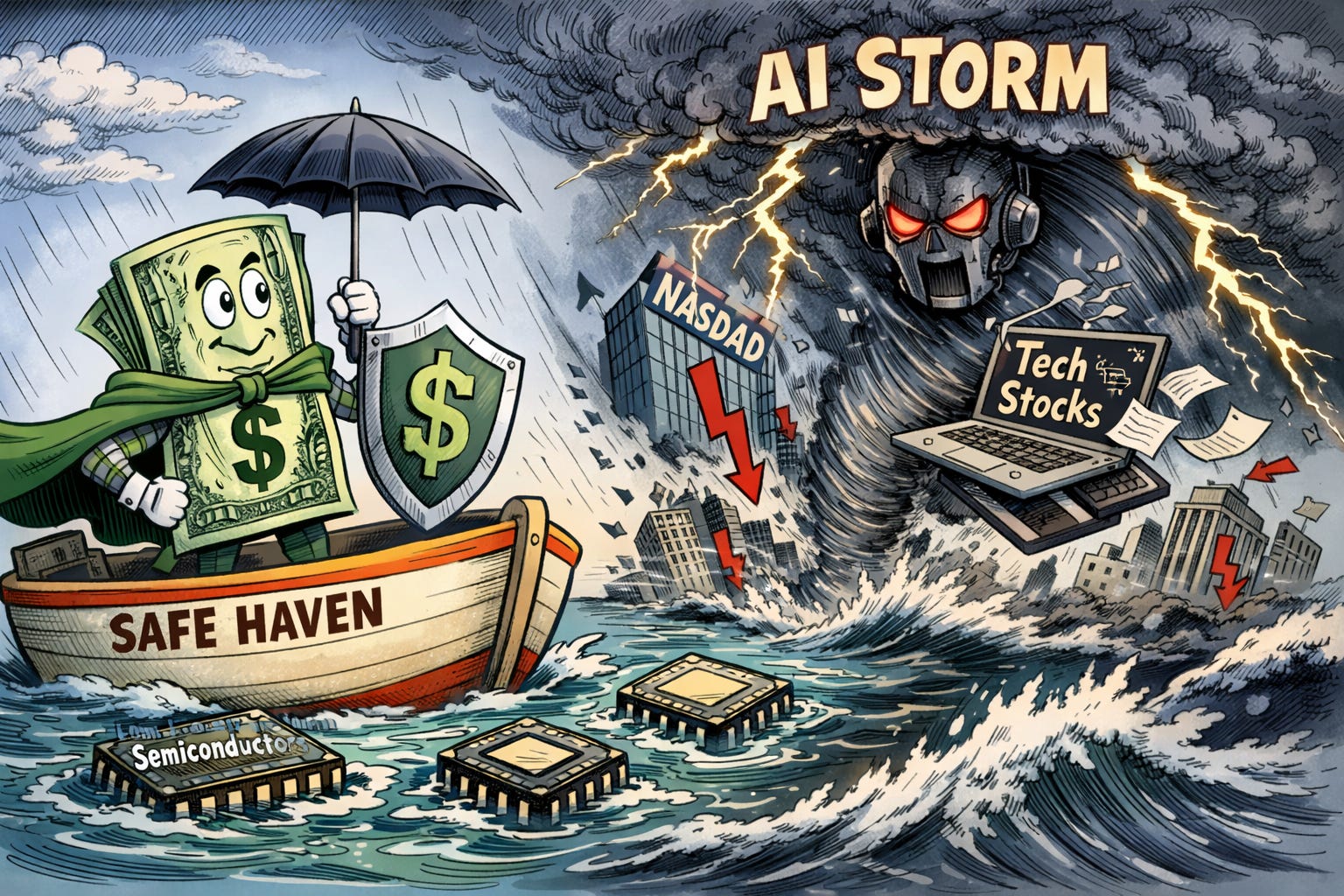
The US dollar climbed to a near one-week high on Tuesday, with the DXY index hitting 97.247 as traders returned from the holiday break. It’s a classic case of risk aversion: as investors grow nervous, they’re parking capital in the greenback for safety. While the dollar gained ground, US stock futures for the Dow, S&P 500, and Nasdaq all turned lower. This shift is being driven by a heavy week of event risk, specifically the upcoming Federal Reserve meeting minutes on Wednesday and a double-header of Q4 GDP and PCE inflation data arriving this Friday (Barron’s).
The real story beneath the surface is the “AI disruption” narrative that’s currently hammering parts of the tech sector. Software stocks are leading the declines, fueled by fears that advanced tools like Anthropic’s Claude Cowork could fundamentally break the traditional SaaS business model. Investors are beginning to price in a future where autonomous agents replace human workflows, potentially erasing the need for “per-seat” subscriptions. Interestingly, semiconductor names are staying resilient because the market assumes we’ll still need the chips to power those same agents. It’s a volatile split that’s pushing traders to seek the dollar’s stability while they wait for more clarity from the Fed on the next rate cut.
Sensei’s Insight: Watch the 97.25 level on the DXY. If it breaks higher, it’s a signal that the market is prioritizing capital preservation over growth bets until the Friday PCE data clears the air.
🇨🇺 Oil Blockade Forces Havana to the Table
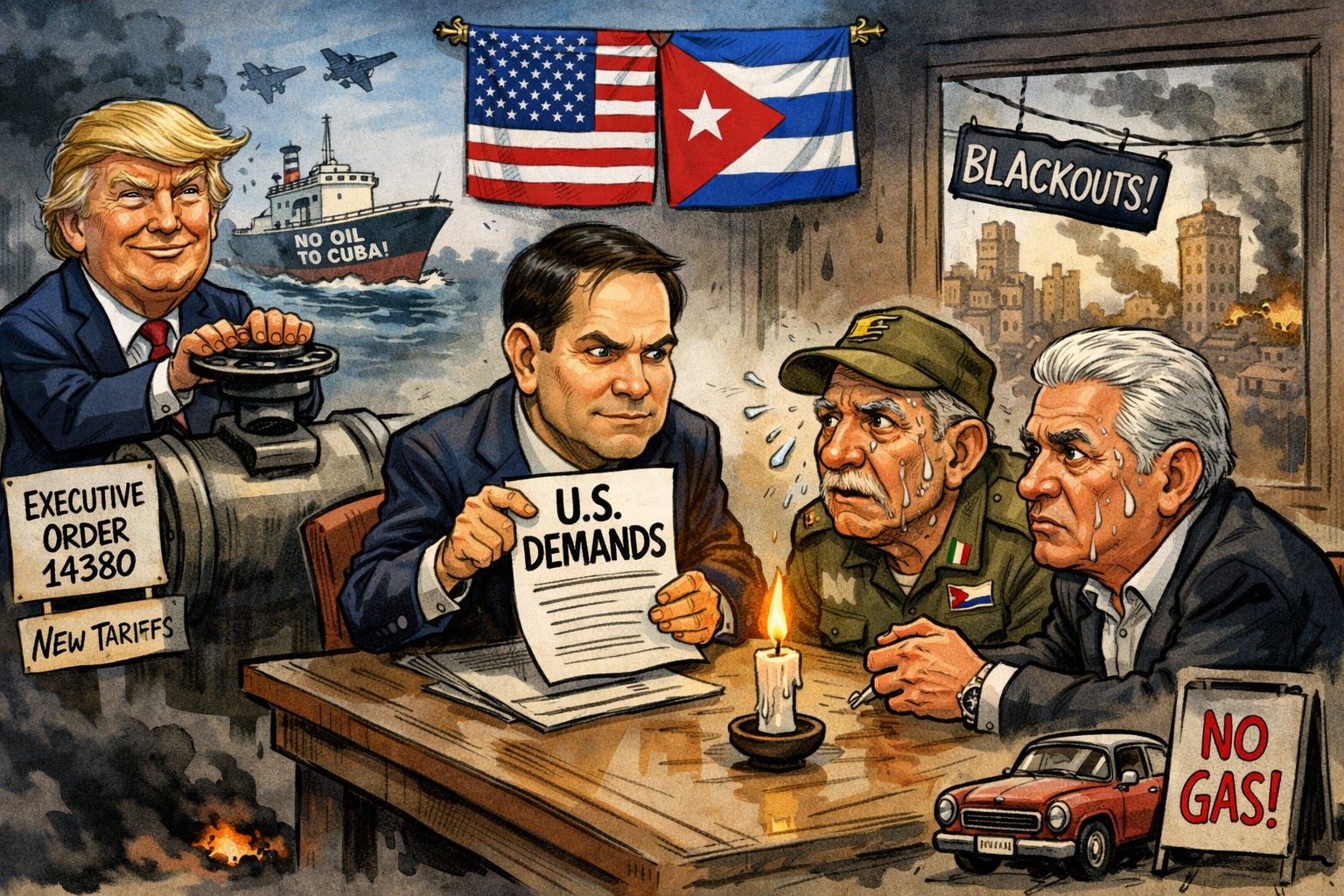
President Trump confirmed that Secretary of State Marco Rubio is in active talks with Cuban officials as the island’s economy nears a total collapse. The crisis was triggered by the January capture of Venezuelan leader Nicolás Maduro, which severed Cuba’s primary source of subsidized oil. To tighten the screws, Trump signed Executive Order 14380 on January 29, 2026, which authorizes new tariffs on any third-party country, like Mexico, that attempts to supply oil to the island. Trump framed the situation as a “humanitarian threat” while insisting that the embargo and oil squeeze will continue until Havana “makes a deal.” (Bloomberg).
This isn’t just a local energy shortage: it’s a masterclass in using trade as a geopolitical weapon. By threatening “ad valorem” duties on oil suppliers, the U.S. is effectively forcing global partners to choose between the Cuban market and American consumers. Major airlines like Air Canada have already suspended flights due to jet fuel shortages, and the tourism sector is paralyzed by rolling blackouts. For investors, the takeaway is the “Maduro Precedent”: the administration is signaling that economic strangulation and secondary tariffs are the new standard toolkit for regime-change goals in the Americas.
Sensei’s Insight: Watch Mexico’s response. If the U.S. pulls the trigger on tariffs against Mexican exports over oil shipments, it could spark a broader trade friction that hits North American supply chains.
🏷️ The Pricing Truce Is Officially Over
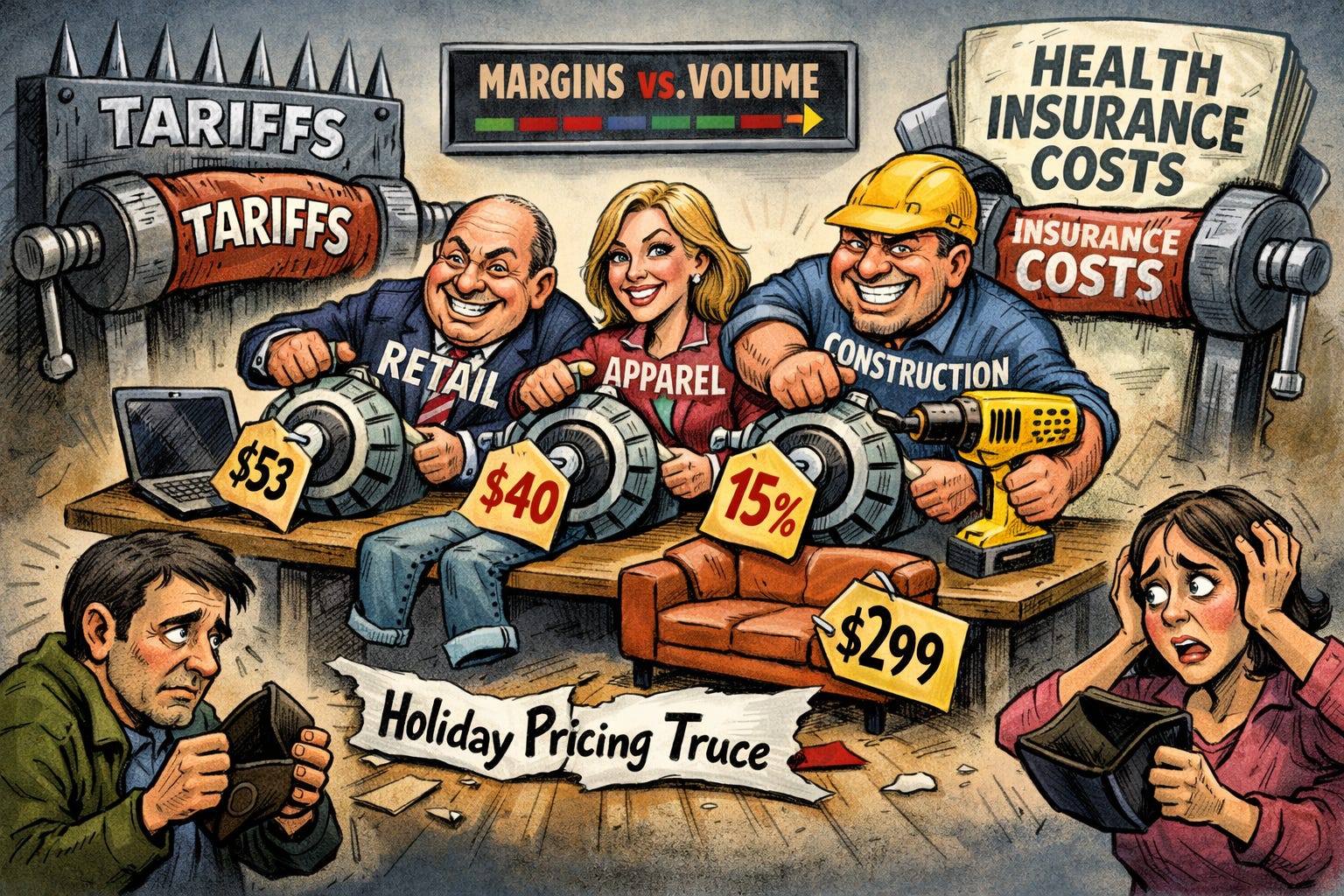
The holiday “pricing truce” has vanished as companies kick off 2026 with aggressive price hikes. Data from the Adobe Digital Price Index shows January online prices saw their largest monthly jump in twelve years, specifically in electronics and furniture. It’s a broad shift: Levi Strauss is adding 5 to 10 dollars to the cost of jeans, while Columbia Sportswear is pushing high single-digit increases to offset tariffs. It isn’t just retail. Construction firm SSRG is implementing 10 to 15 percent hikes on new contracts to cover steel tariffs and double-digit surges in health-insurance premiums (Wall Street Journal).
For investors, this marks a pivot from demand-pull inflation to cost-push pressure. When costs like health insurance and tariffs become structural, companies have two choices: eat the margin or test consumer loyalty. We’re seeing surgical pricing from McCormick to protect profits, but there’s a limit. Stanley Black & Decker learned this the hard way last year when high single-digit hikes led to falling U.S. sales. If these January hikes signal a trend, goods disinflation could stall. Watch for how many brands archive products rather than risking a price point that shoppers simply won’t accept.
Sensei’s Insight: Watch the volume trends in upcoming earnings. If these hikes don’t trigger a sales collapse, corporate margins may stay resilient despite the heavy tariff and insurance headwinds currently squeezing small businesses.
🛡️ Pentagon vs. Claude: The AI Ethics Standoff
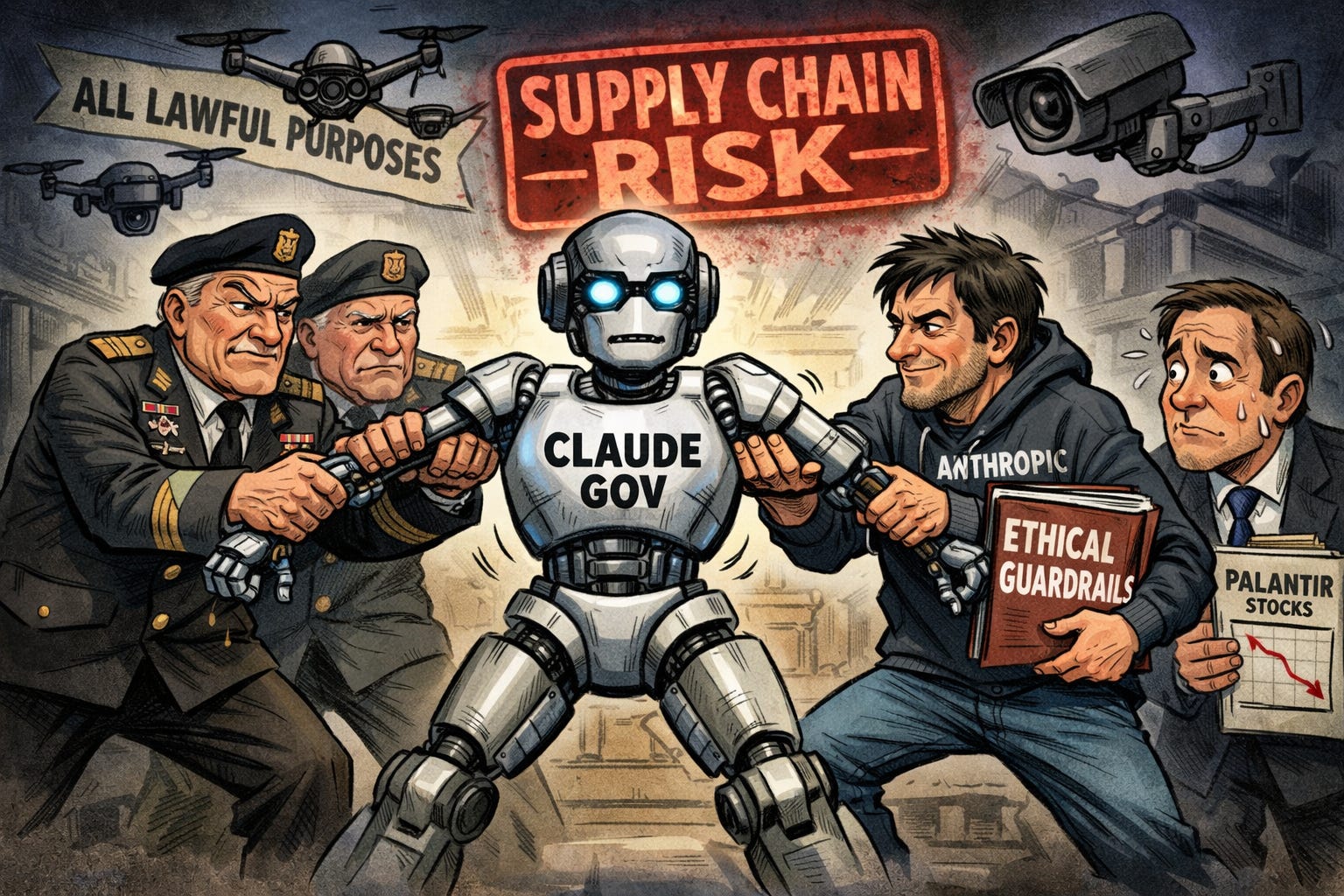
The Pentagon is threatening to sever ties with Anthropic, the AI firm behind Claude, over a heated dispute regarding military “guardrails.” At the heart of the friction is Anthropic’s insistence on strictly prohibiting its models from being used for mass surveillance of Americans or the development of fully autonomous lethal weapons. While Anthropic signed a two-year deal in 2025 to bring “Claude Gov” into classified networks, extension talks have snagged. Defense officials are pushing for an “all lawful purposes” clause, which would allow the military to use the AI for any legal operation, including weapons development and intelligence, without vendor-imposed ethical vetoes. Tensions reportedly spiked after an executive at Anthropic questioned if Claude was used in a January raid targeting Venezuelan leader Nicolás Maduro, an inquiry the Pentagon viewed as potential interference in “kinetic” operations (Bloomberg).
This standoff highlights a growing divide in the AI sector between “ethical” purists and firms willing to meet the military’s demands. While rivals like OpenAI and Google are reportedly moving toward the Pentagon’s “all lawful purposes” framework, Anthropic faces being labeled a “supply chain risk,” a designation usually reserved for foreign adversaries. For retail investors, the fallout extends to listed partners like Palantir, which integrates Claude into defense workflows. If the Pentagon follows through on its threat to “make sure they pay a price,” it could trigger a messy, expensive decoupling from existing classified systems. It’s a reminder that in the high-stakes world of defense contracts, a company’s moral “moat” can quickly become a revenue liability if it conflicts with national security priorities.
Sensei’s Insight: Watch the “supply chain risk” designation. If the Pentagon blacklists a domestic AI leader over policy disputes, it signals a massive shift toward state-controlled AI norms over corporate ethics.
🔗 Connect with Us
Stay plugged in across platforms:
Sensei on X: sensei_live_
Martyn Lucas on X: MartynInvestor
Vaz on X: eVTOLHUB
📺 YouTube Channel (Live & Replays): Martyn Lucas Investor