This content is for informational and educational purposes only and does not constitute financial advice. Always do your own research. Not financial advice (NFA).
👀 Today’s Stories at a Glance
🛢️ Oil whiplashes before ceasefire: Brent reclaims 5% ahead of the expiring ceasefire, unwinding most of last week’s 9% crash.
⚓ Marines take Iranian ship: USS Spruance disabled the Touska and fast-roped troops aboard, the first capture of the war.
🏛️ Warsh testifies under confirmation cloud: Trump’s Fed pick pledges independence today as Democratic opposition and one Republican hold threaten confirmation.
📦 Amazon pricing scheme unsealed: California filings describe a vendor-pressure playbook that lifted rival prices; trial set for January 2027.
🕊️ Tehran freezes Trump’s pitch: Iran says no plans for Islamabad as US demands exceed the 2015 accord on every axis.
🏗️ Jacobs bets $17B on insulation: QXO buys TopBuild at a 23% premium, positioning for data-center infrastructure spend.
✈️ Discount airlines beg for relief: Spirit, Frontier, and peers meet the Transportation Secretary today seeking excise-tax suspension as jet fuel climbs.
🛒 March retail print lands today: The morning release tests the stagflation framing against 3.3% year-over-year consumer price inflation.
🧠 One Big Thing
Brent crude rallied 5.1% to $94.99 after US Marines boarded the Iranian container ship Touska in the Gulf of Oman and Tehran said it has no plans for the restarted Islamabad talks. The two moves together erase most of last week's 9% selloff and put the ceasefire expiration back on the table as a binary market event. Federal Reserve research ties every sustained ten-dollar move in Brent to roughly 0.25 points of added consumer price inflation. That pressure lands directly on Kevin Warsh's rate-cut pitch to the Senate today. Positioning tilts toward defense primes, tanker equities, and short-duration cash until the window closes.
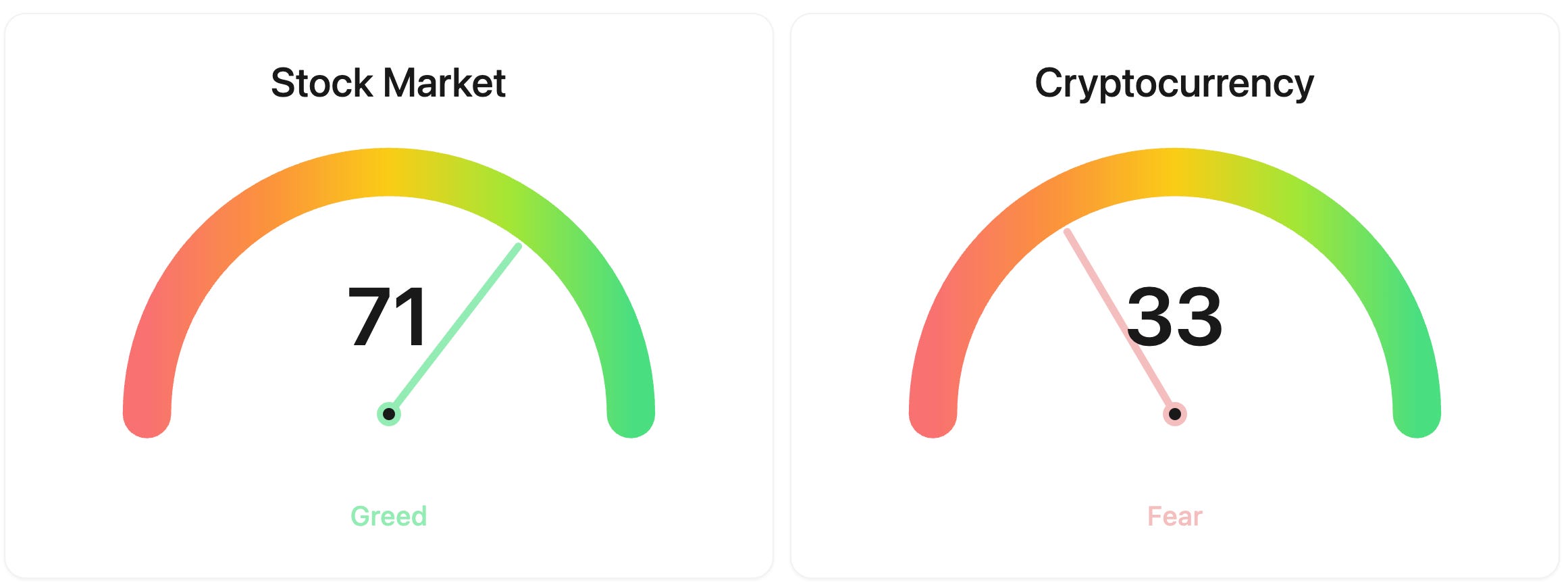
⚖️ Fear & Greed
📉 The Number That Matters
$6.71 TRILLION
The size of the Federal Reserve balance sheet that Kevin Warsh wants to shrink, the specific lever he’ll defend today before a Senate Banking Committee where 11 Democrats and one Republican may be enough to block his confirmation before Powell’s May 15 exit.
✅ 5 Things to Know Today
🛢️ Oil surges 5% as ceasefire deadline looms
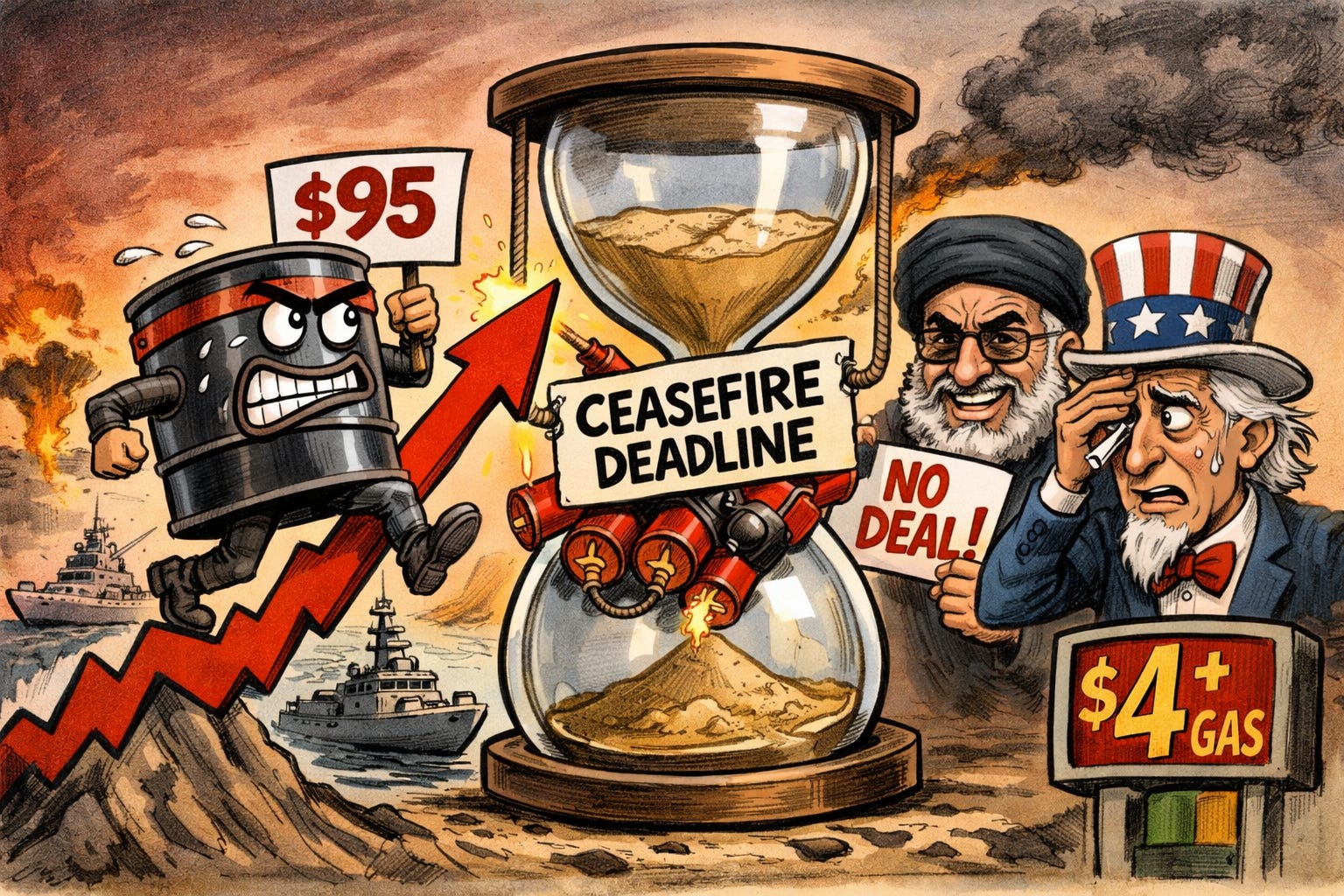
Brent crude jumped 5.1% to $94.99 a barrel in Sunday-evening electronic trading and held the gains into Monday, with US West Texas Intermediate up 5.16% to $88.18. Brent touched 7.9% higher at the intraday peak, approaching $96. The rally almost entirely reverses Friday’s 9% collapse, which followed an Iranian claim that the Strait of Hormuz was “completely open.” Three weekend developments drove the whiplash: the US Navy’s seizure of the Iranian cargo ship Touska, Iran’s declaration that it has “no plans” for this week’s Islamabad talks, and the looming Wednesday-evening expiration of the two-week ceasefire that began April 8. (Bloomberg)
Oil sits upstream of every retail portfolio right now. Federal Reserve research pegs each sustained $10 move in Brent at roughly 0.25 points added to US consumer prices over six months, and March prices already printed at 3.3% year-over-year, the hottest reading since mid-2024. The US gasoline average has climbed past $4.12 a gallon, up more than $1.20 since the war began. Every OPEC+ producer except Saudi Arabia is running flat out, leaving two to three million barrels per day of spare capacity as a shock absorber. Goldman Sachs’ tail case has Brent averaging above $100 through 2026; JPMorgan’s worst case stretches to $150. (CNBC)
Sensei’s Insight: The volatility itself has become the tradeable event. Brent has swung from a record $128 on April 2 to $90 last Friday and back near $95 this morning, all driven by Truth Social posts and shipping incidents. Watch Wednesday’s ceasefire deadline as the binary signal.
⚓ Marines board Iranian ship in Gulf of Oman
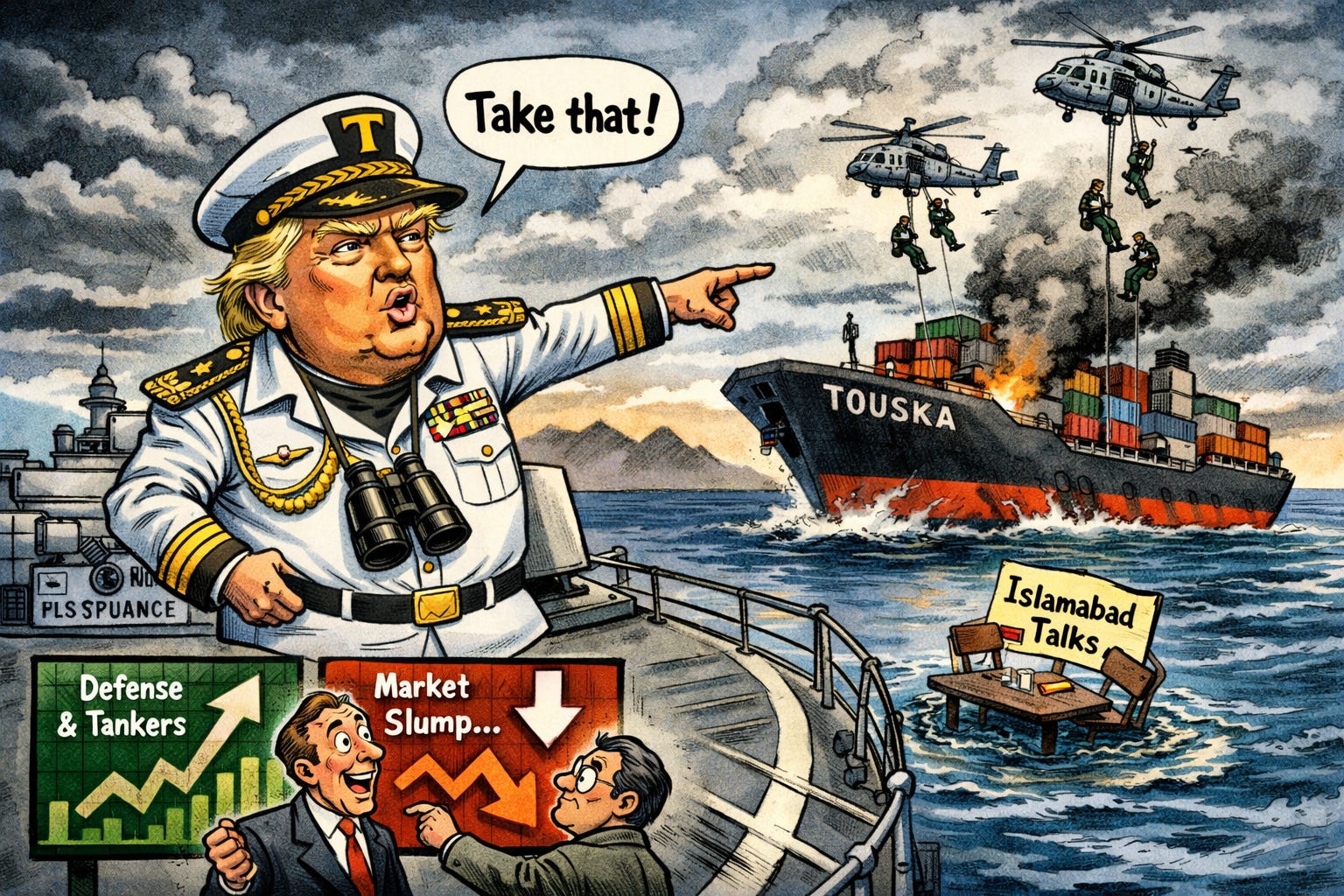
The guided-missile destroyer USS Spruance intercepted the Iranian-flagged container ship Touska in the Gulf of Oman on Sunday evening. After a six-hour standoff, the Spruance fired several rounds from its five-inch naval gun into the 900-foot vessel’s engine room, disabling propulsion. Marines from the 31st Marine Expeditionary Unit then fast-roped onto the deck from Seahawk helicopters. It’s the first boarding and capture of an Iranian-flagged ship in the current war, and part of a wider blockade US Central Command launched April 13. CENTCOM says 25 commercial vessels have been turned back from Iranian ports since the blockade began. (CNBC)
The seizure looks calibrated to apply maximum pressure just as negotiations are meant to restart in Islamabad. Trump followed the action with a Truth Social post threatening to “knock out every single Power Plant, and every single Bridge” in Iran if no deal emerges. Tehran’s foreign ministry called the boarding “armed piracy” and said the US’s conduct makes further talks impossible for now. Investors are reading it two ways: defense primes and tanker stocks benefit from prolonged confrontation, while broader equities sag on the risk that the ceasefire collapses Wednesday evening. RTX reports Q1 numbers tomorrow pre-market with an order backlog near $268 billion. (CNN)
Sensei’s Insight: The Touska is a container ship, not a tanker, which suggests the symbolism outweighs the economic take. The question for markets is whether Iran’s “no plans for talks” language is leverage or a genuine walkaway. Either way, the war-risk premium is back.
🏛️ Warsh faces Senate with independence pledge today
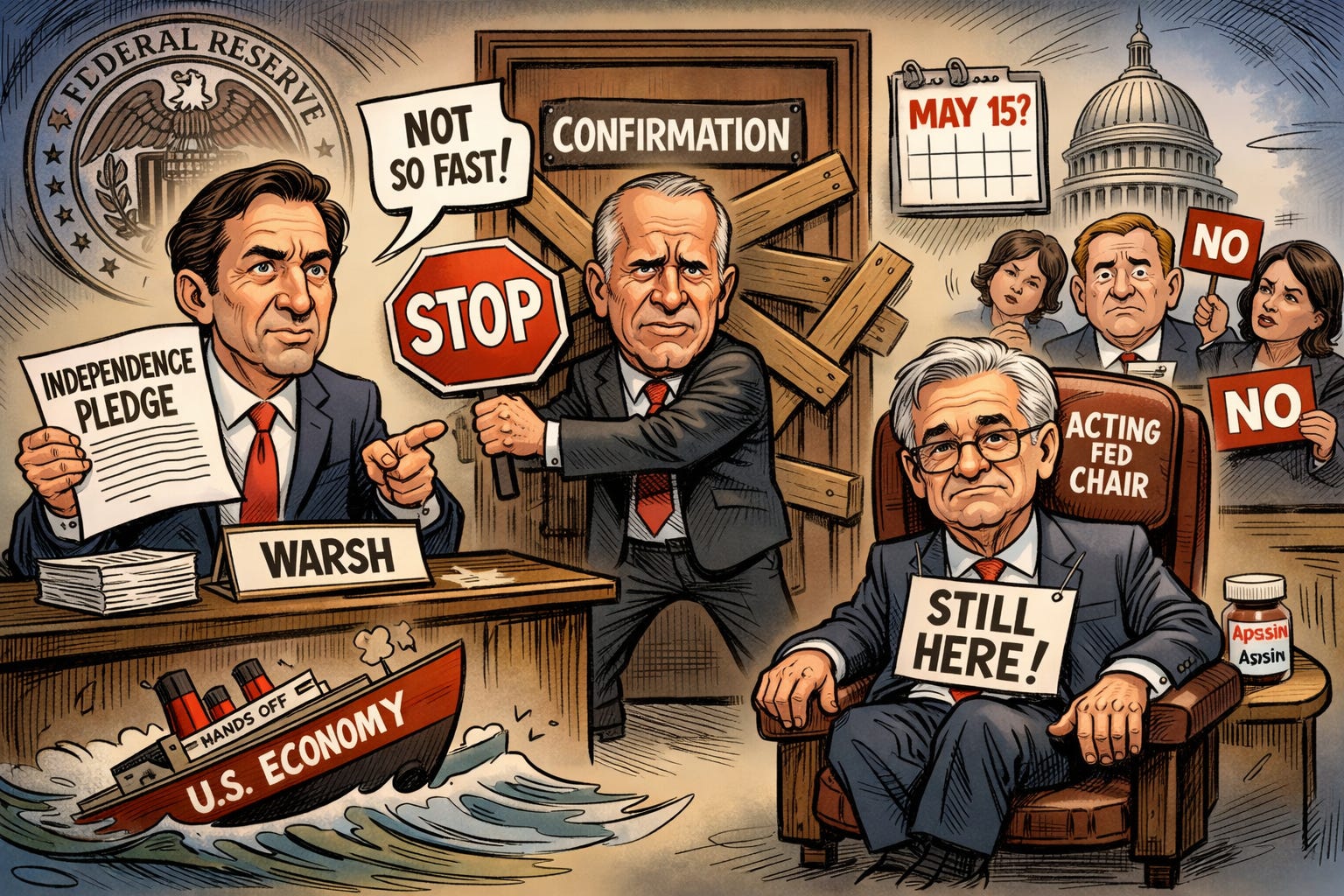
Kevin Warsh, Trump’s pick to replace Jerome Powell at the Federal Reserve, testifies before the Senate Banking Committee today at 10 a.m. Eastern. His leaked opening statement commits to monetary-policy independence in unambiguous terms: “Let me be clear: monetary policy independence is essential.” He also argues the Fed “must stay in its lane” and pull back from fiscal or social policy. Powell’s term as chair ends May 15. Warsh, 56, was the youngest-ever Fed governor when he took the role in 2006 and resigned in 2011 over his opposition to quantitative easing. The Fed’s balance sheet, which Warsh wants to shrink, stands at $6.71 trillion. (CNBC)
This is the most politically charged Fed transition in decades, and confirmation is genuinely in doubt. All 11 Democrats on the committee are expected to vote no, and Republican Senator Thom Tillis has vowed to block the nomination until the Justice Department drops its investigation into Powell over a Fed headquarters renovation. Senate Majority Leader John Thune told reporters last week that confirmation is “probably” impossible without Tillis. If the seat isn’t filled by May 15, Powell has said he’ll stay on in an acting role until a successor is confirmed. Rates, the dollar, gold, and long-duration tech are all exposed to the outcome. (Reuters)
Sensei’s Insight: Warsh is pitching rate cuts justified by AI productivity at the exact moment the Iran oil shock is pushing prices higher. That’s a hard sell to a divided Fed committee. The Tillis question segment may carry more market weight than Warsh’s actual answers.
📦 Unsealed emails expose Amazon’s pricing playbook
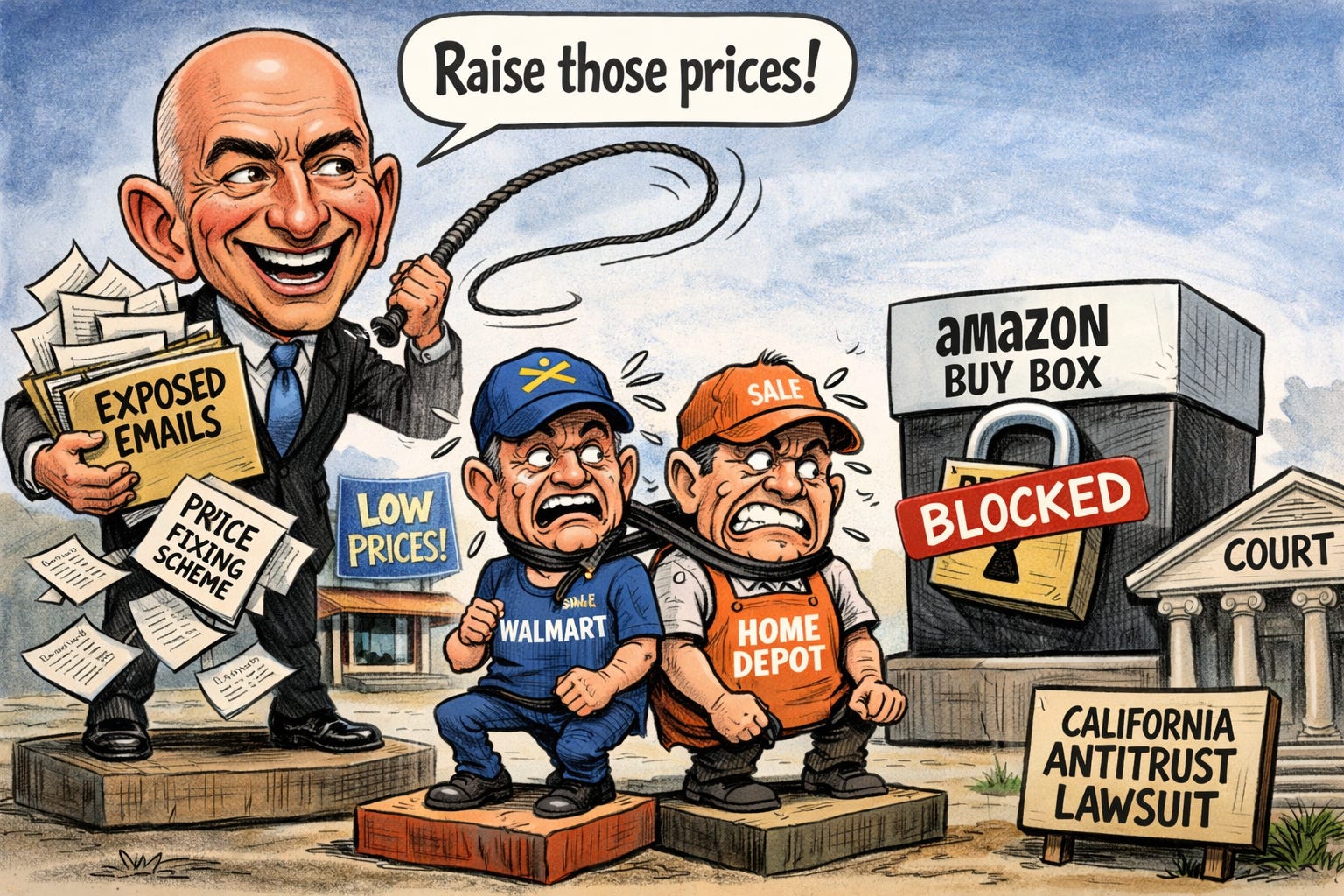
California Attorney General Rob Bonta last week unsealed hundreds of previously redacted documents from the state’s 2022 antitrust lawsuit against Amazon, with Bloomberg giving the release fresh visibility Monday. The filings describe a coordination scheme in which Amazon allegedly pressured shared vendors to raise prices on rival sites like Walmart, Home Depot, and Chewy, so the company wouldn’t have to match. One example: when Walmart undercut Amazon on Levi’s khaki pants, Amazon’s algorithm dropped its price, and the company then pushed Levi’s to get Walmart to raise its own. Amazon is also accused of stripping products from the coveted “Buy Box” slot when rivals priced lower. (Bloomberg)
The case matters because it’s the first concrete legal momentum against Big Tech pricing behavior in a year, and it runs under California’s Cartwright Act, so a weaker federal antitrust environment doesn’t shut it down. A preliminary-injunction hearing is set for July 23, with trial scheduled for January 19, 2027. Amazon reports Q1 earnings April 30, which will test how much this overhang weighs on a stock trading around $250 and within 3% of its all-time high. Walmart and Home Depot aren’t defendants here; they’re the victims in the alleged scheme, so any court-ordered behavioral remedies could actually help them. (Reuters)
Sensei’s Insight: AMZN sits near record highs, which means the stock hasn't priced what's actually at stake: Amazon's ability to push shared vendors into raising prices on Walmart and Home Depot. That's the mechanic protecting the margin. The July 23 injunction hearing is the pressure test.
🕊️ Trump’s “better deal” pitch hits diplomatic wall
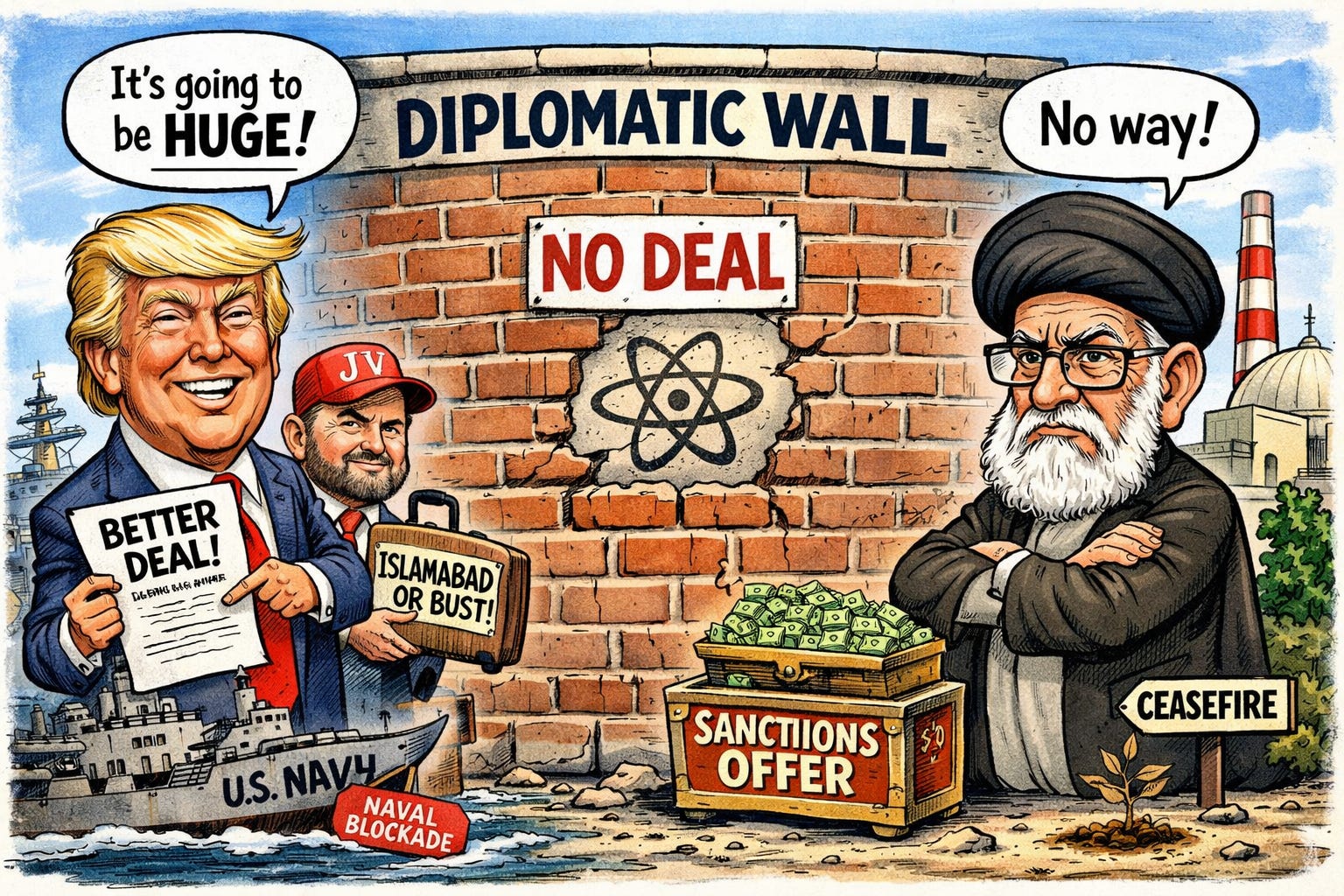
Trump posted on Truth Social yesterday that a new deal with Iran will be “far better” than the 2015 Joint Comprehensive Plan of Action, the Obama-era accord that capped Iran’s uranium enrichment in exchange for sanctions relief. Within hours, CNN and Reuters reported that Vice President JD Vance had not actually left Washington for Islamabad, despite Trump’s weekend claim that US representatives were already on their way. Iran’s foreign ministry said Tehran has “no plans” for the next round of talks and described the US naval blockade as a “war crime.” The current ceasefire expires Wednesday evening Eastern time. (Reuters)
The gap between rhetoric and reality is the entire story. US hard demands, per leaked terms, include a 20-year enrichment pause (versus the 2015 deal’s 15), the physical dismantlement of Iran’s main nuclear sites, and the removal of Iran’s uranium stockpile. In return, Washington is reportedly weighing up to $20 billion in sanctions relief, roughly 12 times what Obama released. Iran’s counter-offer of a five-year enrichment pause with no uranium handover was rejected. A plane carrying Vance to Islamabad on Tuesday could trigger a 3 to 5% oil selloff; a no-show would likely lift Brent back toward $100. (Reuters)Sensei’s Insight: Trump is packaging a deal structurally close to the JCPOA while offering more sanctions relief than Obama did. The negotiating team’s expertise is real estate, not nonproliferation. The pitch targets a domestic audience; the term sheet is technical, and Iran knows the difference.
Stories You Might Have Missed
🏗️ QXO strikes $17 billion deal for TopBuild
Brad Jacobs’ QXO Inc. agreed Sunday to buy insulation and roofing installer TopBuild Corp. for roughly $17 billion in cash and stock, valuing TopBuild at $505 a share, a 23% premium to Friday’s close. TopBuild shareholders can elect cash or 20.2 QXO shares each, subject to a 45% cash cap. The combined company becomes the second-largest publicly traded building-products distributor in North America, with revenue north of $18 billion and adjusted EBITDA above $2 billion. Jacobs cited data-center exposure as a strategic driver, tying the rollup to the AI-infrastructure buildout. QXO closed down 3% Monday on dilution concerns; TopBuild is set up to gap toward $505. (Bloomberg)
✈️ Budget airlines push Washington for fuel relief
The CEOs of Spirit, Frontier, Allegiant, Sun Country, and Avelo meet Transportation Secretary Sean Duffy today to press for temporary tax relief as jet-fuel costs spiral from the Iran war. The group, represented by the Association of Value Airlines, wrote Congress last week asking lawmakers to suspend the 7.5% federal excise tax on airline tickets and the $5.30 per-segment tax, which together would offset roughly a third of the fuel-cost increase. Spirit separately asked for hundreds of millions in direct aid after its second bankruptcy in a year. The move signals the oil shock is moving from market screens into corporate lobbying, with budget carriers the most exposed. (Reuters)
🛒 March retail sales hit the tape today
The Census Bureau releases March retail sales at 8:30 a.m. Eastern, delayed from April 16. Consensus calls for +1.4% month-over-month, up from February’s +0.6%, and the print lands right after the hottest consumer-price inflation since May 2024 (March CPI ran +3.3% year-over-year) and a record-low April consumer sentiment reading. An early look from the CNBC/NRF Retail Monitor showed strong March growth, partly because larger tax refunds offset higher gasoline bills. A hot print reinforces the stagflation framing, pressures long-duration tech, and complicates Warsh’s rate-cut pitch. A cool print lifts bonds and gold as rate-cut expectations firm. The May 6-7 Federal Reserve meeting will be re-priced on the number. (Yahoo Finance)
🔗 Connect with Us
Stay plugged in across platforms:
Sensei on X: sensei_live_
Martyn Lucas on X: MartynInvestor
Vaz on X: eVTOLHUB
📺 YouTube Channel (Live & Replays): Martyn Lucas Investor