This content is for informational and educational purposes only and does not constitute financial advice. Always do your own research. Not financial advice (NFA).
👀 Today’s Stories at a Glance
🗣️ DC Mixed Signals Jostle Oil: Conflicting official reports on naval operations caused extreme crude price volatility.
☁️ Oracle Cloud Growth Beats Estimates: Revenue surged eighty four percent as future contract backlogs hit record highs.
💰 Amazon Raises Record Debt Billions: Massive investor demand fueled a bond sale to fund AI infrastructure projects.
🍎 Apple Launches Cheapest MacBook Ever: The new five hundred dollar Neo targets students to expand ecosystem reach.
🛢️ G7 Weighs Historic Oil Release: Ministers plan a massive reserve release to counter Middle East supply shocks.
🔍 February CPI Masks Stagflation Risks: Upcoming inflation data precedes the oil shock while weak jobs increase fears.
🧠 One Big Thing
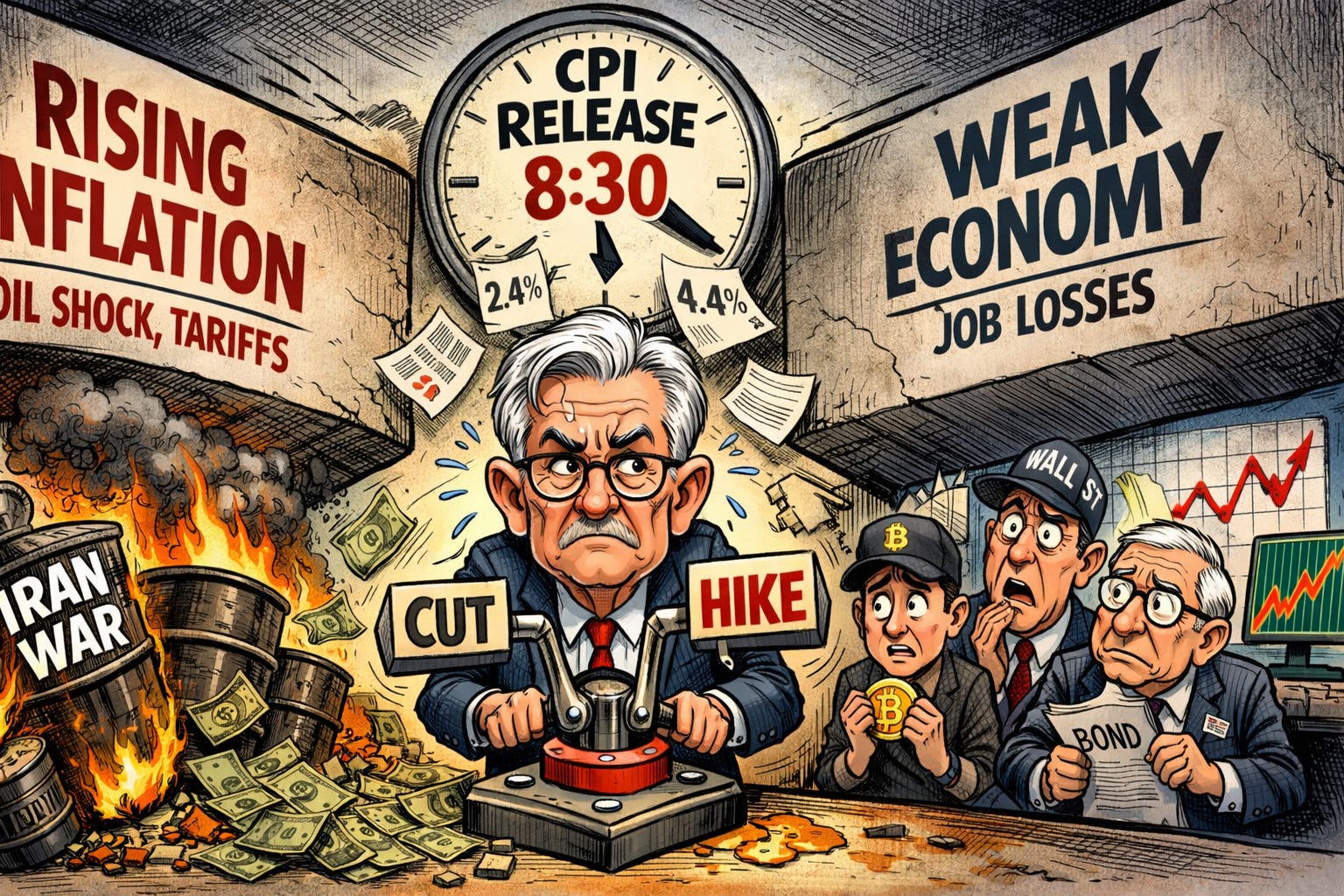
February’s inflation report offers a misleading historical baseline that excludes the massive energy price shock triggered by the Iran conflict. This snapshot captures a pre-war economy already dealing with a cooling labor market and persistent service costs. As contradictory government messaging and G7 indecision leave oil markets without a narrative anchor, investors remain unable to price escalating geopolitical risks accurately. The Federal Reserve now faces a policy deadlock where accelerating energy prices and rising unemployment occur simultaneously.
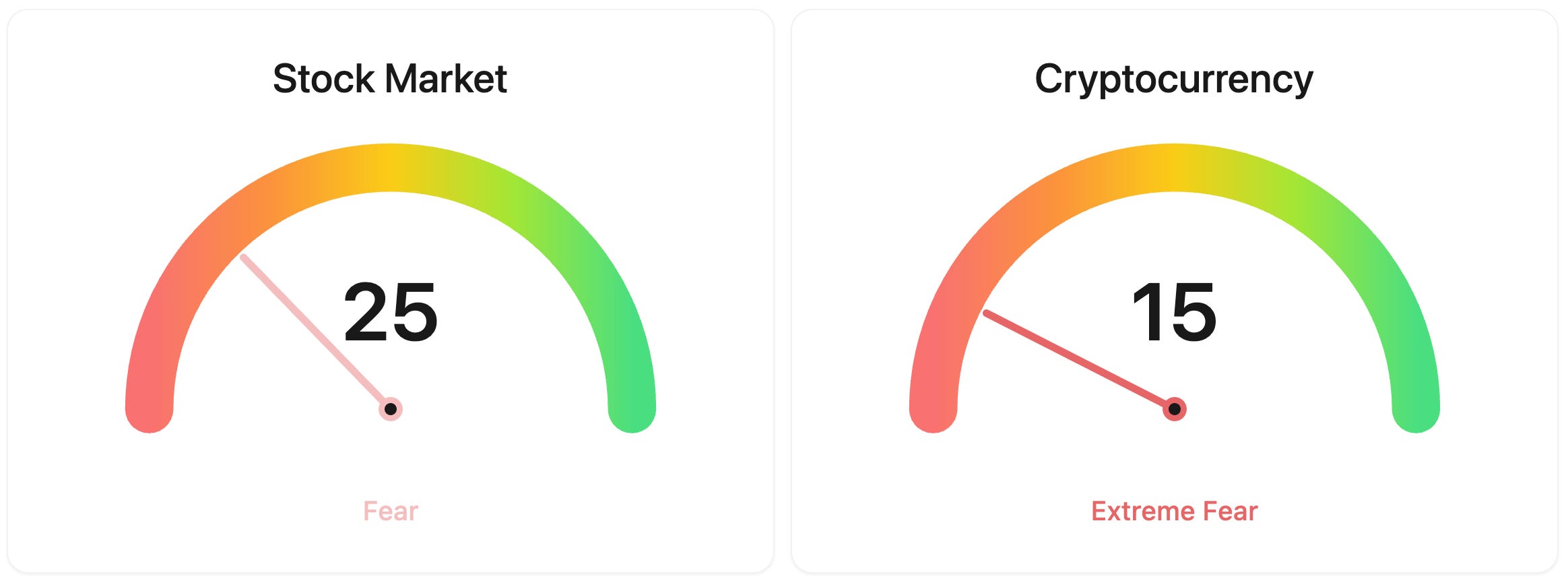
⚖️ Fear & Greed
📉 The Number That Matters
$599
Apple launched the MacBook Neo for $599, the lowest entry price for a Mac laptop ever. The mobile-chip powered device is priced $400 below the MacBook Air to capture market share during a global PC downturn.
⚔️ Winners vs Losers
Winners
DOMO 0.00%↑: Domo, Inc. surged after reporting Q4 results that significantly beat expectations, with adjusted EPS of $0.03 against a consensus estimate of -$0.03 and record quarterly billings of $111.2 million, up 8.4% year over year.
BLDP 0.00%↑: Ballard Power Systems jumped after announcing a commercial agreement with New Flyer for 500 FCmove-HD+ fuel cell engines totaling 50 MW, the largest single commitment from the bus manufacturer in the partnership’s history, with deliveries set to begin in 2026.
ORCL 0.00%↑: Oracle Corporation climbed after posting fiscal Q3 2026 results that beat on both earnings and cloud growth, with adjusted EPS of $1.79 topping estimates of $1.70, cloud revenue surging 44% to $8.9 billion, and the company raising its FY2027 total revenue guidance to $90 billion.
Losers
KOS 0.00%↑: Kosmos Energy Ltd. fell after the deepwater oil and gas producer priced a dilutive public offering of 97.5 million shares at $1.90 per share on March 10, raising approximately $185 million in gross proceeds, compounding investor concern following a weak Q4 report earlier in the month that saw revenue drop 25% year over year to $296.5 million.
📊 Market Snapshot
Cryptocurrencies:
Bitcoin (BTC): $69,523 (▼ -0.62%)
Ethereum (ETH): $2,023 (▼ -0.69%)
XRP: $1.38 (▼ -0.62%)
Equity Indices (Futures):
S&P 500: $6,788 (▼ -0.04%)
NASDAQ 100: $24,977 (▼ -0.02%)
FTSE 100: £10,336 (▼ -0.47%)
Commodities & Bonds:
10-Year US Treasury Yield: 4.17% (▲ 0.26%)
Oil (WTI): $86 (▼ -0.44%)
Gold: $5,184 (▼ -0.13%)
Silver: $86.78 (▼ -1.77%)
Data as of: UK (GMT) 10:40 / US (EDT): 06:40 / Asia (Tokyo): 19:40
✅ 5 Things to Know Today
🗣️ Contradictions From Washington Are Moving Oil Markets

Day eleven of Operation Epic Fury produced some of the most chaotic official communication from Washington since the conflict began, and oil markets priced every contradiction in real time. Energy Secretary Chris Wright posted on social media that the US Navy had successfully escorted an oil tanker through the Strait of Hormuz - sending US crude briefly below $80 a barrel on the implied resumption of transit. The post was then deleted. White House Press Secretary Karoline Leavitt confirmed no such operation had taken place and that Department of Energy staff had “incorrectly captioned” a video clip. Within hours, President Trump posted that the US had no reports of mines in the strait, then told Iran to remove any explosives it had laid, then announced the destruction of ten “inactive mine-laying boats” - all in rapid succession, each post contradicting intelligence reporting that CNN had separately confirmed showing Iran has been actively mining the waterway. Brent crude recovered to around $90 to $93 a barrel by afternoon after the correction, but the session’s intraday whipsaw illustrated a market that has no stable narrative to anchor against (CNBC).
The physical picture has continued to deteriorate. The Ruwais refinery in Abu Dhabi, the largest in the United Arab Emirates and a significant processing hub for Gulf crude, halted operations yesterday after a drone strike caused a fire in the surrounding industrial zone. Overnight, three vessels were struck by suspected projectiles in the Strait of Hormuz and the Persian Gulf, according to the UK Navy, with one cargo ship reporting a fire and crew evacuating. Dubai International Airport briefly halted operations this morning after two drones landed in its vicinity, injuring four people - a direct hit on the world's busiest international hub. KLM has cancelled all Dubai flights through March 28. NATO air defences also intercepted an Iranian ballistic missile over Turkish airspace, the first time a NATO member state's territory has been directly involved in the conflict, raising the possibility that the geographic footprint is widening beyond the Gulf (Bloomberg).
Sensei’s Insight: When official communication shifts from unreliable to self-contradictory within the same hour, markets lose the ability to price risk at all. The Wright correction and Trump’s mine posts signal a White House with no coordinated information strategy. That is not a short-term noise problem - it is a regime where any headline can move oil $5 in either direction, and no one can tell signal from error until after the fact.
☁️ Oracle’s Cloud Surge Silences the Bears - For Now
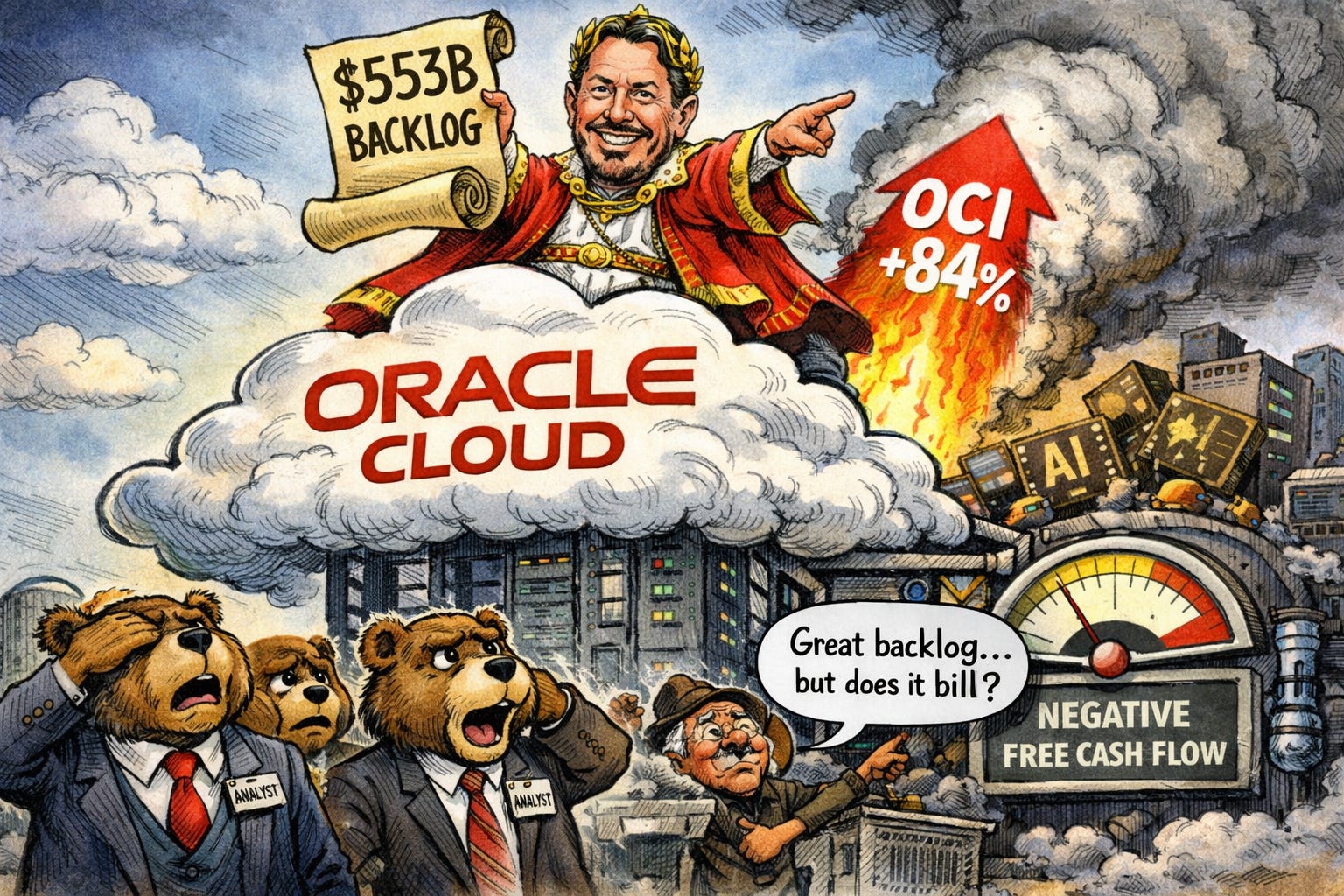
Oracle Corporation reported its fiscal third-quarter 2026 results after the closing bell yesterday, and the numbers did what months of selloffs had begun to make seem impossible: they beat on virtually every line. Total revenue came in at $17.2 billion, up 22% year on year against an estimate of $16.9 billion. Non-GAAP (adjusted) earnings per share, which strips out one-off items to reflect underlying profitability, came in at $1.79 against an estimate of $1.70. The most closely watched figure was Oracle Cloud Infrastructure (OCI) revenue, the company’s data centre and compute business that competes directly with Amazon Web Services and Microsoft Azure. OCI grew 84% year on year to $4.9 billion, accelerating from 68% growth last quarter - the direction the market needed to see. The stock jumped close to 10% in after-hours trading, reaching $164.51 from a closing price of $149.40 (CNBC).
The headline that will generate the most debate is Oracle’s Remaining Performance Obligations (RPO) - the total value of contracts already signed but not yet delivered or billed. That figure hit $553 billion, up 325% year on year. To put it in context, Oracle’s full-year revenue guidance for this fiscal year is $67 billion, meaning signed future work is more than eight times its current annual revenue. Much of that pipeline comes from AI deals where customers are either prepaying for the semiconductors themselves or supplying the chips directly, which materially reduces the capital Oracle needs to absorb upfront. The company also raised its fiscal year 2027 revenue guidance to $90 billion, well above the analyst consensus of $86.7 billion. Capital expenditure for the quarter came in at $18.6 billion, above the $14 billion estimate, though Oracle maintained its full-year capex guidance of $50 billion and confirmed it does not intend to issue additional bonds for the rest of 2026 (Bloomberg).
Sensei’s Insight: A $553 billion pipeline sounds bulletproof until you remember Oracle had $523 billion last quarter and still missed revenue estimates. The acceleration this quarter suggests conversion is finally kicking in, but with $13 billion in negative free cash flow over the past year, the stock’s recovery depends entirely on that backlog turning into actual billings - faster than the debt compounds.
💰 Amazon Raises $37 Billion in a Single Day. Investors Wanted to Give It Three Times More
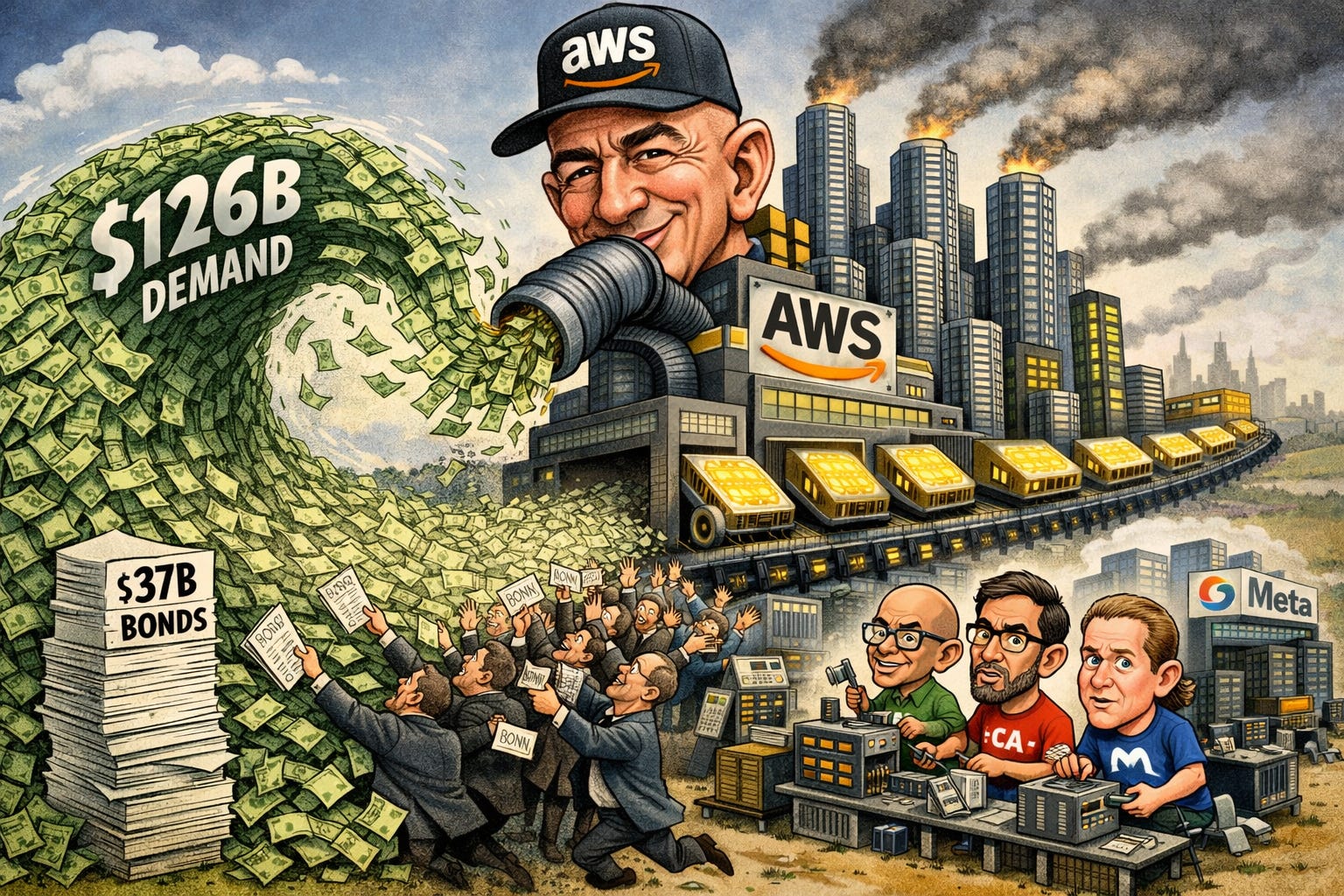
Amazon priced a US dollar bond sale yesterday, raising $37 billion and attracting approximately $126 billion in peak investor demand - meaning investors offered to lend more than three times what Amazon actually took. For context, a bond is essentially a loan from investors to a company, structured as a security that pays regular interest and returns the principal at a set maturity date. The $37 billion figure makes this the fourth-largest corporate bond deal in US history and, more significantly, the largest ever that is not tied to financing a specific acquisition. Amazon structured the offering across up to eleven separate tranches, meaning bonds of different maturities ranging from two to fifty years, giving investors the choice of how long to commit their capital. Simultaneously, Amazon is marketing an eight-part bond offering in euros in the European high-grade market - a structure with no precedent in European bond market history. The combined dollar and euro total could reach $42 billion or more (Bloomberg).
The proceeds are earmarked for Amazon’s planned capital expenditure budget of approximately $200 billion in 2026, focused primarily on data centres, AI chips, and cloud infrastructure. The deal’s timing is telling: it priced on the same day the Iran war was generating significant volatility across global markets, when most corporate borrowers were sidelined. Amazon attracted $126 billion of demand anyway, placing it just behind Oracle’s $129 billion demand record from last month and ahead of Meta’s $125 billion from October 2025. That trio of deals, all within six months, tells a consistent story: the largest pools of institutional capital in the world are actively queueing to lend money to hyperscalers - the handful of giant cloud and AI companies - at a moment when collective capital expenditure across Amazon, Alphabet, Meta, Oracle, and Microsoft is expected to reach approximately $650 billion in 2026 alone (Reuters).
Sensei’s Insight: By borrowing at scale rather than issuing equity, Amazon keeps existing shareholders whole while pre-funding the AWS buildout that its cloud rivals must match. Microsoft and Google face the same infrastructure arms race with the same capital demands. Watch whether Azure and Google Cloud follow with their own debt raises in the coming weeks - the one that moves fastest may define the competitive gap for the next decade.
🍎 Apple Sells Its Cheapest Laptop Ever. The PC Market Won’t Know What Hit It
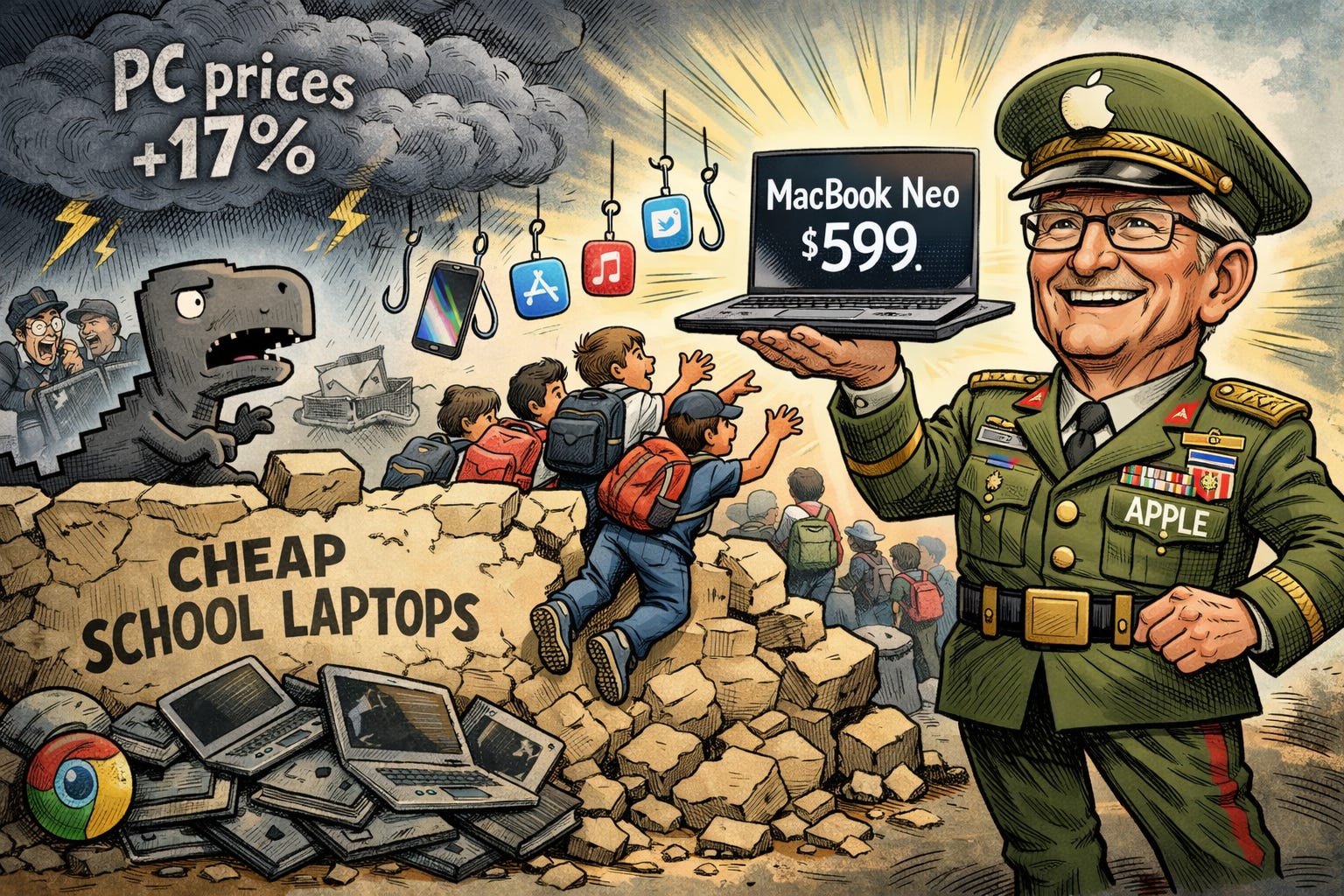
Apple’s MacBook Neo went on sale today at $599 ($499 with student discount) making it the most affordable Mac laptop in the company’s history by a wide margin. The previous cheapest option, the MacBook Air, starts at $1,099 after receiving an M5 chip upgrade this week - meaning the Neo is $400 cheaper than any other current Apple laptop, and roughly half the price of the entry-level Air. The device is powered by Apple’s A18 Pro chip, the same processor found in the iPhone 16 Pro, marking the first time Apple has deployed a mobile-class chip in a laptop. It features a 13-inch Liquid Retina display, an aluminium chassis, MagSafe charging, Wi-Fi 7, and claimed all-day battery life. Education pricing drops it further to $499. The launch comes alongside Apple’s broader March refresh, which also included the new iPhone 17e, an updated iPad Air with the M4 chip, and the upgraded MacBook Pro line - notably with prices on those higher-end models going up (Bloomberg).
The timing is deliberate. Gartner estimates PC prices across the market will rise approximately 17% in 2026, driven by a global memory shortage pushing up costs for Windows laptop and Chromebook manufacturers. Apple is entering that environment with a price-locked entry product before competitors absorb those increases most painfully. The global PC market is expected to shrink approximately 11% this year, yet IDC analyst Jitesh Ubrani says Apple is likely to gain Mac market share in 2026 primarily because of this device. The base model ships with 8GB of RAM - less than half the 16GB standard in the MacBook Air - which has generated debate, though analysts broadly agree the Neo targets students and first-time Mac buyers rather than power users. The deeper strategic logic, as IDC’s Francisco Jeronimo framed it, is ecosystem entry: a student who buys a $599 Neo today is a far more likely iPhone buyer in 2027, and the lifetime revenue from that customer across devices and services far exceeds the margin on a single laptop sale (Yahoo Finance).
Sensei’s Insight: Google built its education dominance on one proposition: Chromebooks are cheap, simple, and good enough. At $499 with Apple silicon, the Neo removes “cheap” as a differentiator and erases “good enough” entirely. Chromebook penetration in US schools runs above 60%. If Apple converts even a fraction of that installed base, the downstream iPhone and services pull-through could be worth multiples of the Mac revenue itself.
🛢️ The IEA Just Proposed the Biggest Oil Reserve Release in History. Prices Rose Anyway
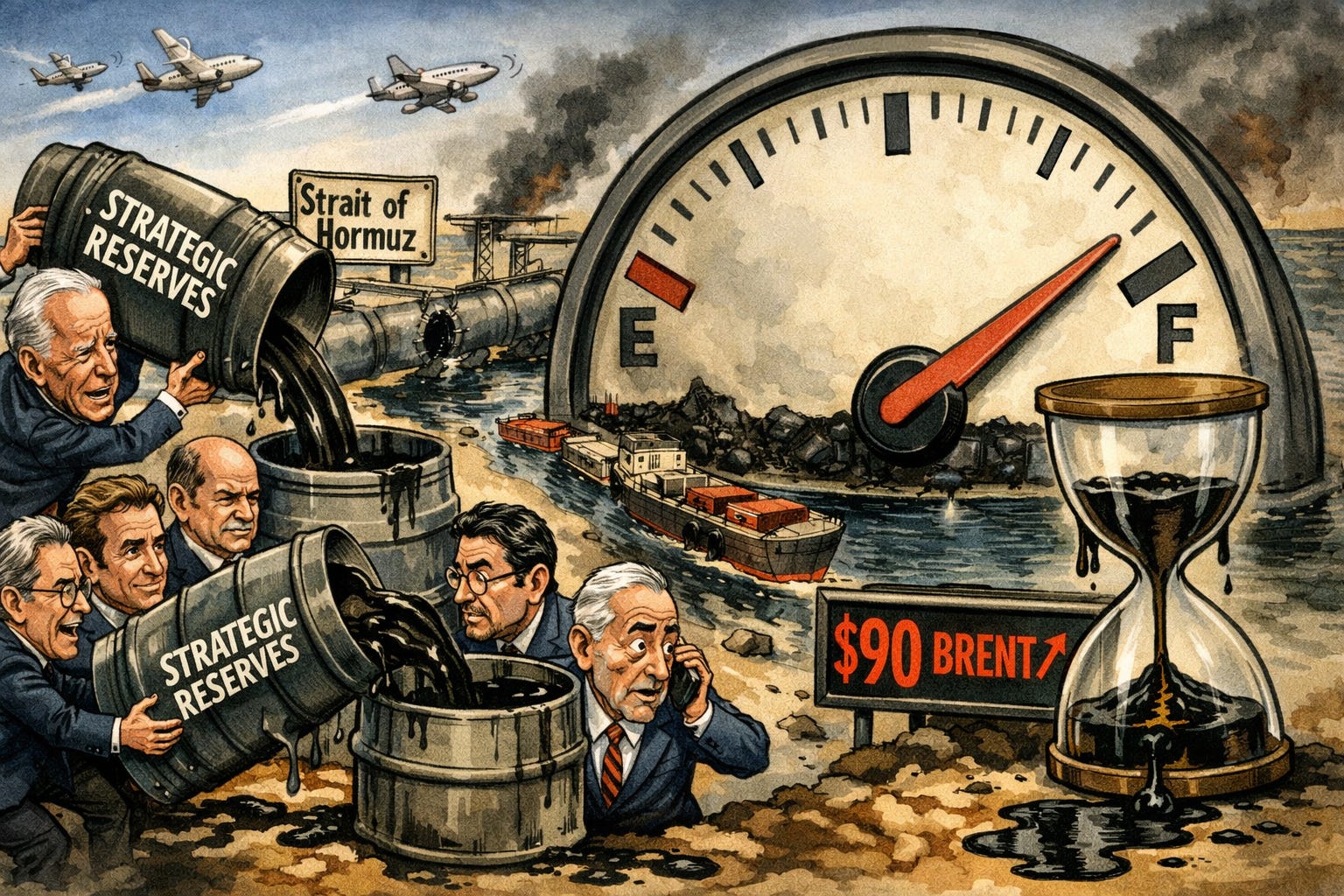
The International Energy Agency (IEA), the Paris-based body that coordinates energy policy among wealthy nations, has proposed releasing between 300 and 400 million barrels from member countries’ emergency oil stockpiles - a scale that would make it the largest coordinated reserve release in the agency’s 52-year history. A decision could come as soon as today. The proposal follows emergency meetings by Group of Seven energy ministers, who issued a statement yesterday endorsing the principle of using strategic reserves and calling Wednesday’s IEA governing board meeting a critical opportunity to assess supply security. For context, the previous record release was 182 million barrels following Russia’s invasion of Ukraine in 2022. Global strategic reserves total approximately 1.2 billion barrels, with the US Strategic Petroleum Reserve currently holding around 415 million barrels (CNBC).
The market’s reaction tells its own story. Brent crude initially dipped on the Wall Street Journal report confirming the proposal, then climbed back above $88 to $90 a barrel - still up more than 2% on the day. The arithmetic explains why. Global oil consumption runs at roughly 100 million barrels per day, and the Strait of Hormuz disruption has cut export capacity by approximately 20 million barrels per day. A 400 million barrel release covers around 20 days of that lost volume - a bridge, not a cure. Vandana Hari of Vanda Insights summed up the market view: a release of this size “would simply make up what the market has already lost.” If the proposal is confirmed, the short-term price relief for consumer stocks, airlines, and inflation-sensitive assets is real but limited. The longer-term dynamic cuts the other way: drawing down reserves creates a future government buying obligation that will provide a structural floor under oil prices well after the conflict ends (Globe and Mail).
Sensei’s Insight: The market pricing Brent higher even as the largest reserve release in history is announced tells you exactly how tight this supply situation is. Governments are deploying their biggest emergency tool and it is not enough to push prices down. Watch whether the decision clears today - a single IEA member objection can delay it - and watch Brent’s reaction. If prices hold above $85 post-announcement, the market is telling you reserves alone cannot solve a Hormuz closure.
🔗 Connect with Us
Stay plugged in across platforms:
Sensei on X: sensei_live_
Martyn Lucas on X: MartynInvestor
Vaz on X: eVTOLHUB
📺 YouTube Channel (Live & Replays): Martyn Lucas Investor

🔍Deep Dive: 🇺🇸 US CPI FEBRUARY 2026 - CHEAT SHEET
Wednesday 11 March 2026 | 8:30 AM EDT / 12:30 PM GMT