

This content is for informational and educational purposes only and does not constitute financial advice. Always do your own research. Not financial advice (NFA).
👀 Today’s Stories at a Glance
🍎 Ternus inherits Apple crown: Hardware chief John Ternus takes over September 1 after Cook’s 24-fold market cap run.
🕊️ Trump extends Iran ceasefire indefinitely: The deadline reversal keeps the naval blockade intact as Iranian gunboats strike another container ship.
💊 UnitedHealth crushes earnings, sector jumps: Adjusted earnings of $7.23 a share beat the $6.59 estimate, sending shares up 8%.
⚖️ Microsoft faces UK class action: A tribunal certified the £2.1 billion Azure licensing case for trial on behalf of 60,000 businesses.
✈️ Trump blocks airline mega-merger: The president nixed United-American talks and floated federal help for bankrupt Spirit Airlines.
💵 UAE requests dollar swap line: White House confirmed the emergency credit request as the dirham peg rides on $295 billion reserves.
🎲 New York sues crypto exchanges: Attorney General James calls Coinbase and Gemini prediction markets illegal gambling under state law.
🛢️ Oil futures mask physical squeeze: Dated Brent cargoes traded $124 to $132 yesterday while the futures screen showed $94.85.
🧠 One Big Thing
Tim Cook steps down September 1 after 15 years running Apple, handing the chief executive role to hardware engineering chief John Ternus. The tension is timing: Cook exits with shares near record highs while Apple visibly trails Microsoft, Google, and Nvidia on artificial intelligence. Picking a 25-year hardware engineer over a services or operations leader signals a hardware-led pivot, possibly toward foldables and on-device AI silicon. Positioning matters because Apple is the largest weight in SPY, VOO, and QQQ, plus Berkshire Hathaway's biggest single holding. Next week's earnings call is Ternus's first test, with Cook remaining as executive chairman.
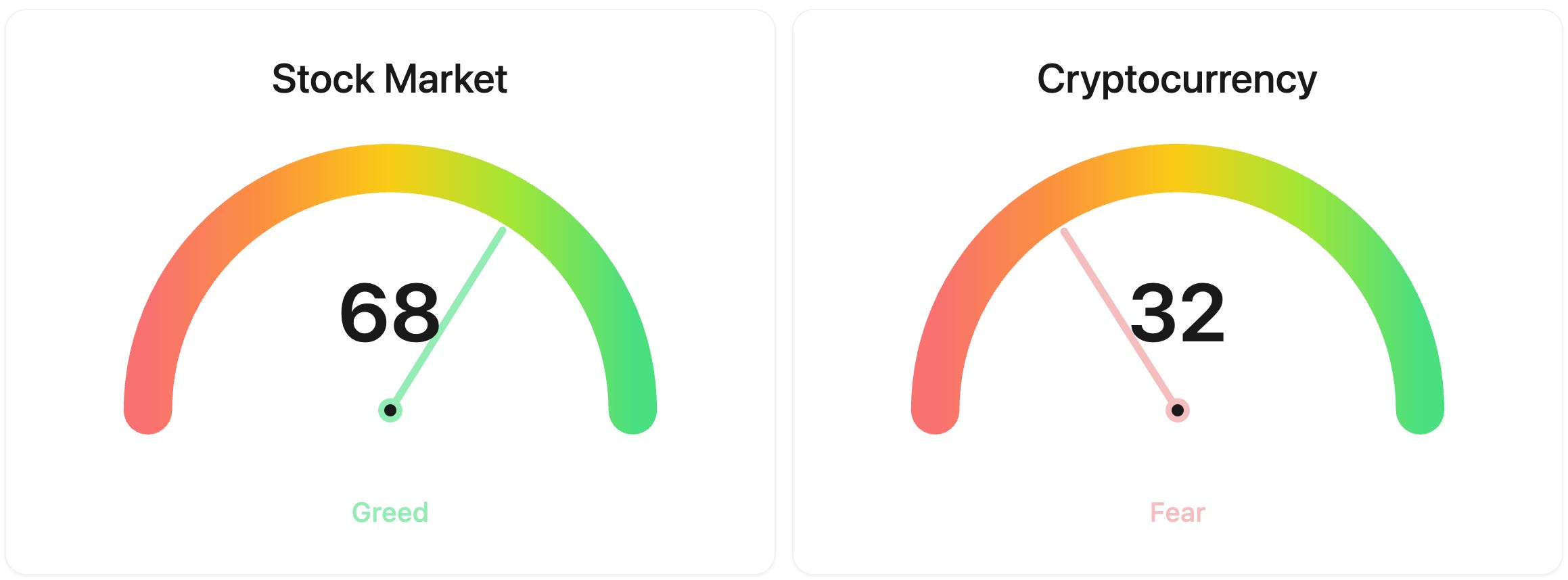
⚖️ Fear & Greed
📉 The Number That Matters
$25 TO $50
The gap between Brent futures and dated physical cargoes, normally under $2 per barrel, now runs $25 to $50, masking a tightening physical oil market that refiners and airlines are already paying for.
📊 Market Snapshot
Cryptocurrencies:
Bitcoin (BTC): $78352 (▲ 2.61%)
Ethereum (ETH): $2401 (▲ 3.13%)
XRP: $1.45 (▲ 1.40%)
Equity Indices (Futures):
S&P 500: $7114 (▲ 0.39%)
NASDAQ 100: $26843 (▲ 0.78%)
FTSE 100: £10508 (▲ 0.69%)
Commodities & Bonds:
10-Year US Treasury Yield: 4.27% (▼ -0.67%)
Oil (WTI): $90 (▼ -0.17%)
Gold: $4752 (▲ 0.67%)
Silver: $78.14 (▲ 1.74%)
Data as of: UK (GMT) 1:15 PM / US (EST): 8:15 AM / Asia (Tokyo): 10:15 PM
✅ 5 Things to Know Today
🍎 Cook hands Apple the keys to Ternus
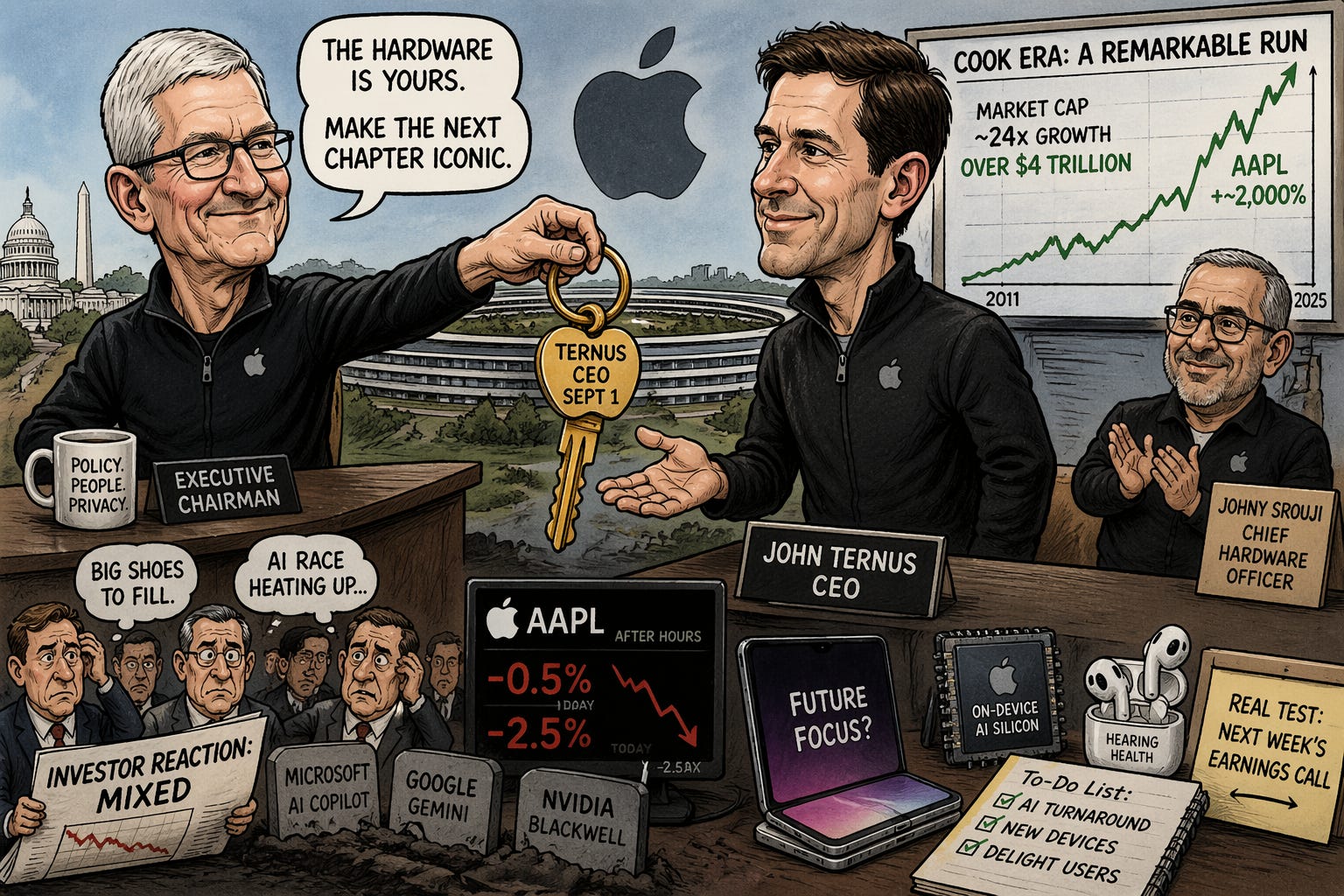
Apple said yesterday that Tim Cook will step down after 15 years running the world’s most valuable company, with hardware engineering chief John Ternus taking the CEO role effective September 1. Cook, 65, becomes executive chairman and will keep engaging with policymakers. Ternus, 51, is a 25-year Apple veteran who led hardware development on the iPhone 17, MacBook Neo, and the AirPods hearing-aid feature. Johny Srouji moves up to chief hardware officer. Cook’s tenure grew Apple’s market cap roughly 24-fold to over $4 trillion, a run that saw AAPL shares gain nearly 2,000%. The board approved the transition unanimously. (Bloomberg)
The succession matters for anyone holding an S&P 500 or Nasdaq fund, which is basically every retail portfolio. Apple is the largest position in SPY, VOO, and QQQ, and Berkshire Hathaway’s single biggest holding. Picking a product-focused engineer rather than a services or operations lifer signals a hardware-led pivot, possibly toward foldables and on-device artificial intelligence silicon, at a moment Apple is widely seen as lagging Microsoft, Google, and Nvidia on AI. Wedbush’s Dan Ives called investor reaction “mixed” and said “these will be big shoes to fill.” Shares dipped 0.5% in after-hours trading and fell 2.5% during the session. (Yahoo Finance)
Sensei’s Insight: Cook leaves on his own schedule with AAPL near all-time highs, which is the gift he’s giving Ternus. The real test is next week’s earnings call, Ternus’s first chance to pitch an AI turnaround story with Cook still in the chair.
🕊️ Trump flips, extends Iran ceasefire overnight
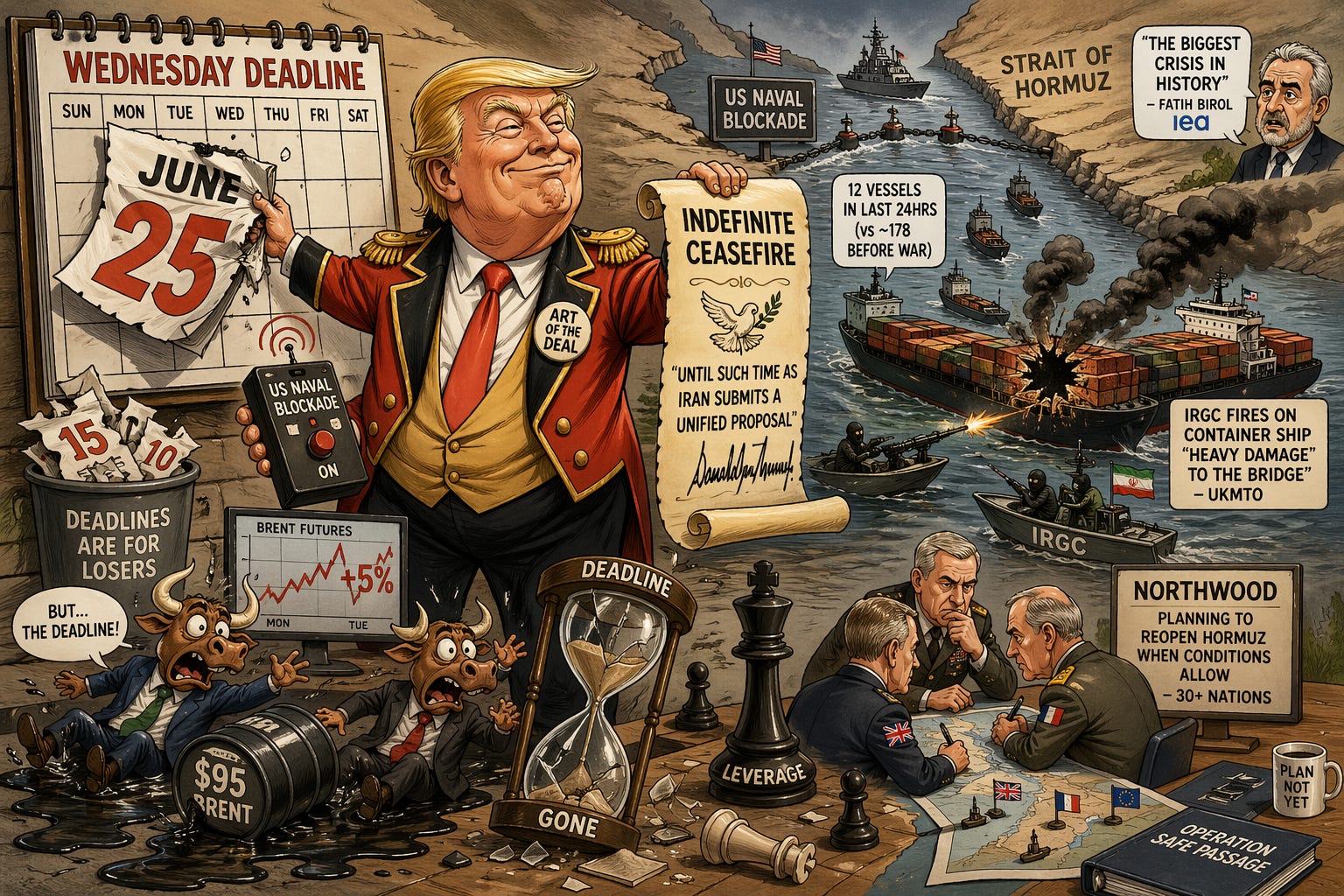
President Trump reversed himself late yesterday, posting on Truth Social that he’ll extend the two-week US-Iran ceasefire indefinitely “until such time as” Tehran submits a unified proposal. Hours earlier he’d told CNBC it was “highly unlikely” he’d move the Wednesday-evening deadline. The US naval blockade of Iranian ports stays in place. Vice President JD Vance’s planned trip to Islamabad for a second round of talks was called off. Iran’s Islamic Revolutionary Guard Corps fired on a container ship in the Strait of Hormuz early this morning, causing “heavy damage to the bridge” according to the UK Maritime Trade Operations Centre. (Bloomberg)
The reversal caught markets leaning the wrong way. Brent futures had spiked 5% on Monday and traded near $95 yesterday on the assumption the ceasefire would lapse. The open-ended extension removes the binary deadline but doesn’t fix the physical crisis underneath it: only 12 vessels crossed Hormuz in the last 24 hours versus around 178 before the war, and the International Energy Agency’s Fatih Birol has called it “the biggest crisis in history.” The UK and France are convening military planners from over 30 nations at Northwood, north London, today to draw up a plan to reopen the waterway once conditions allow. (CNBC)
Sensei’s Insight: Trump bought diplomatic time without giving up leverage, which is actually more dangerous for oil bulls than a deadline. The blockade stays, IRGC gunboats are still shooting at container ships, and the physical supply shock keeps tightening regardless of how futures react to headlines.
💊 UnitedHealth crushes Q1, stock jumps 8%
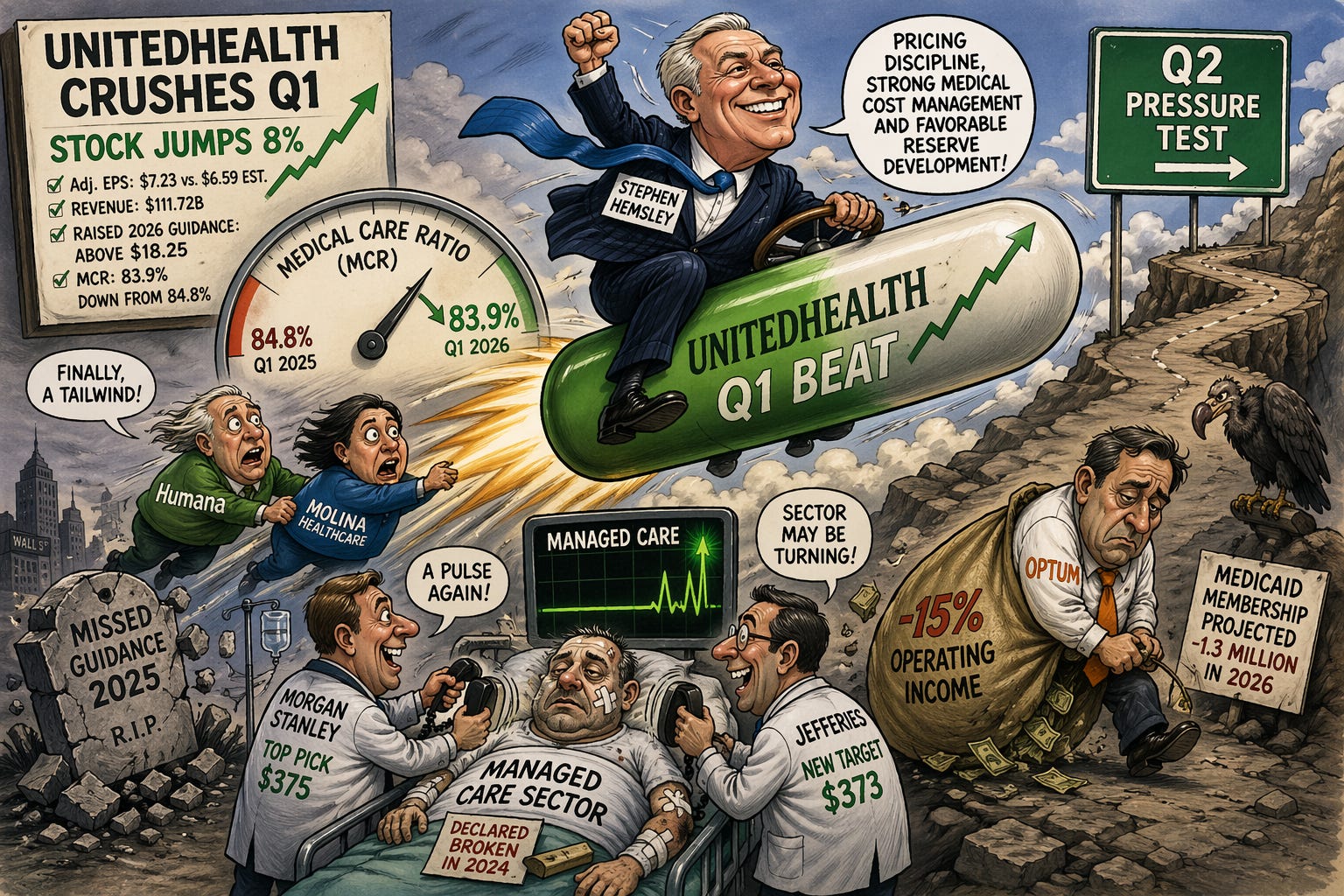
UnitedHealth Group reported adjusted earnings of $7.23 a share yesterday on revenue of $111.72 billion, beating Wall Street’s $6.59 estimate by nearly 10% and sending shares up about 8% on the session. The insurer raised full-year 2026 adjusted earnings guidance to above $18.25 a share from above $17.75. The medical care ratio, which tracks the share of premium income paid out in claims and is the single most-watched number in managed care, fell to 83.9% from 84.8% a year earlier. CEO Stephen Hemsley credited “pricing discipline, strong medical cost management and favorable reserve development.” (Yahoo Finance)
The beat was the single biggest factor lifting the Dow yesterday, which closed up 0.57%. It also matters because UnitedHealth missed its own guidance for four straight quarters in 2025, and investors had started treating managed care as a broken sector. A clean beat on the medical care ratio signals the whole group may be turning. Humana and Molina rose in sympathy. Morgan Stanley named UNH a top pick with a $375 price target; Jefferies moved to $373. The caveats: Optum operating income fell about 15% to $3.3 billion, and Medicaid membership is projected to drop 1.3 million this year. (CNBC)
Sensei’s Insight: The read-through is the whole managed care sector, which has been trading like a broken industry since 2024. One quarter doesn’t declare victory but it is what we are looking for. The Q2 medical care ratio print is the pressure test, since management guided first-half numbers well below the full-year plan.
⚖️ UK court clears £2.1bn Microsoft cloud case
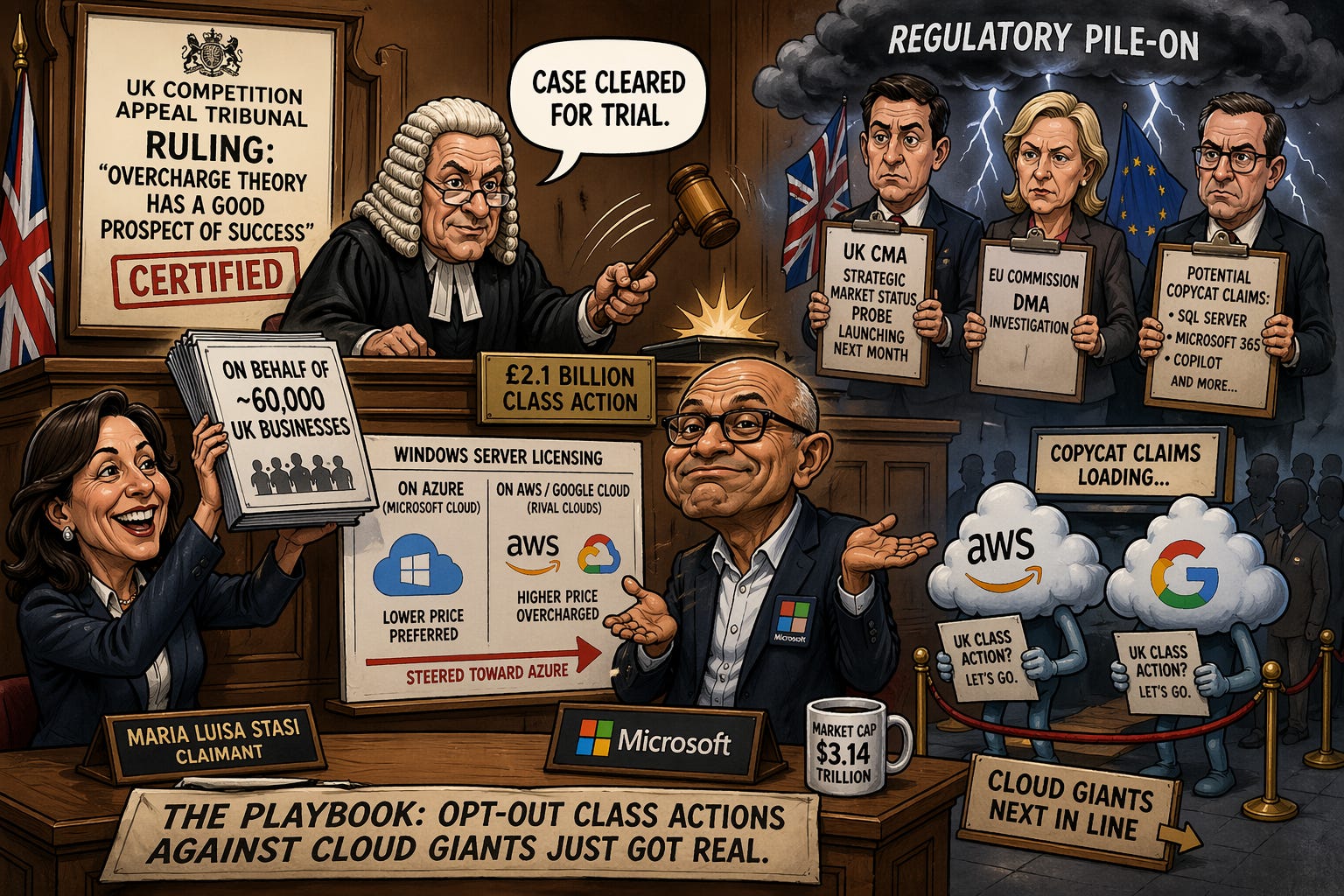
The UK’s Competition Appeal Tribunal yesterday certified a class action against Microsoft over its cloud software licensing, clearing the £2.1 billion ($2.8 billion) case for trial. The claim, brought by competition lawyer Maria Luisa Stasi on behalf of roughly 60,000 UK businesses, alleges Microsoft charges more to run Windows Server on rival clouds like Amazon Web Services and Google Cloud than on its own Azure platform, steering customers toward Azure. The tribunal wrote that the overcharge theory has “a good prospect of success,” unusually direct language at the certification stage. The alleged conduct dates to an October 2019 licensing change. (Reuters)
The damages ceiling is a rounding error next to Microsoft’s roughly $3.14 trillion market cap, and shares rose about 1.7% on the ruling. The bigger question is regulatory momentum. The UK Competition and Markets Authority launches a strategic market status probe into Microsoft’s business software ecosystem next month, the European Commission has a parallel Digital Markets Act investigation, and copycat claims could surface for SQL Server, Microsoft 365, and Copilot. Azure grew 39% last quarter, and compressing that growth tailwind is what the regulatory pile-on ultimately threatens. Microsoft reports Q3 earnings April 29. (Competition Appeal Tribunal)
Sensei’s Insight: The £2.1 billion figure is the headline, but the real story is the playbook. UK opt-out class actions against cloud giants just went from theory to certified reality. Expect funders to line up similar claims against AWS and Google within the year.
✈️ Trump kills United-American merger talk
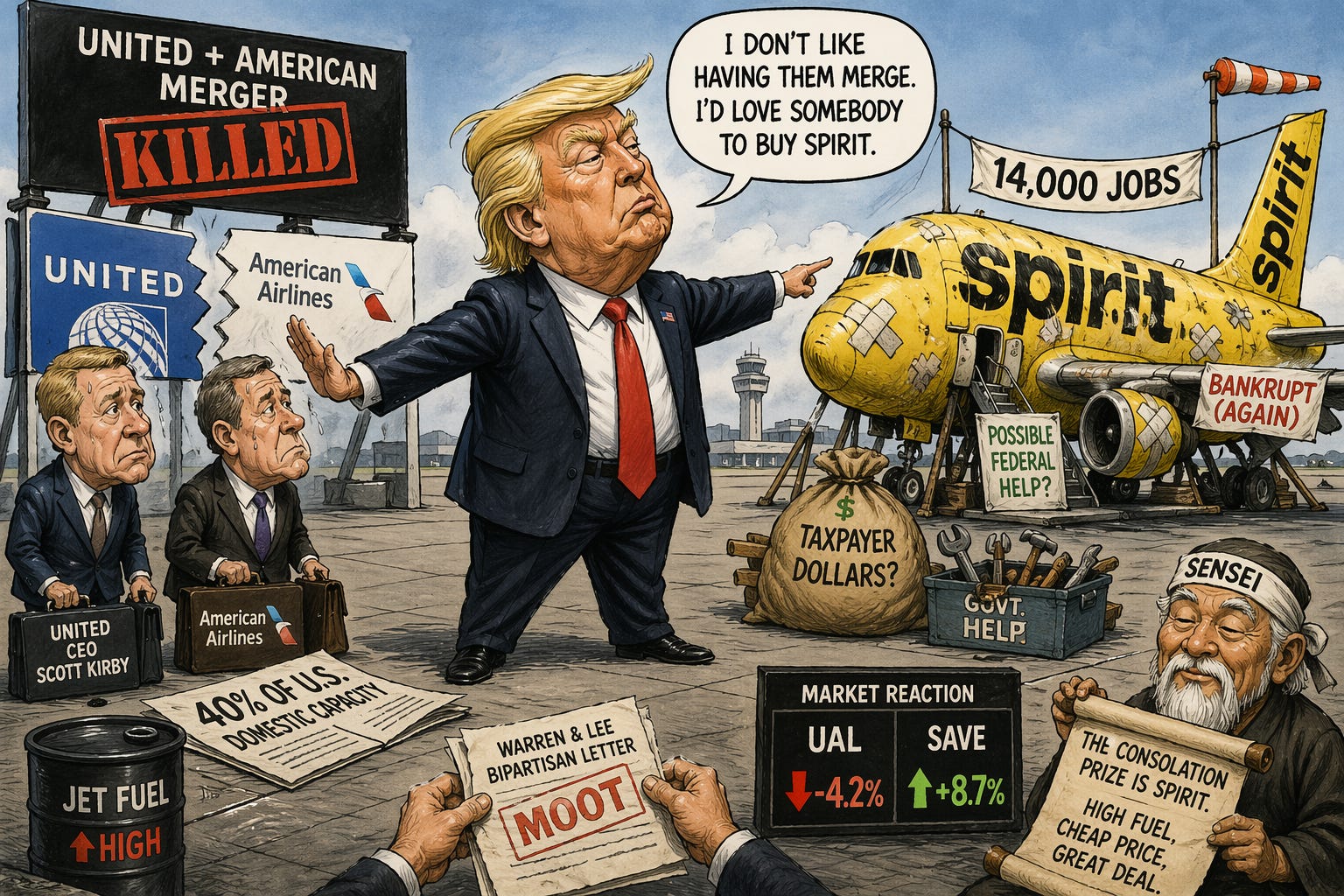
Trump publicly rejected a United-American Airlines merger yesterday, telling CNBC “I don’t mind mergers, but with American it’s doing fine, and United is doing very well. I don’t like having them merge.” The comments ended a week of speculation after Bloomberg reported United CEO Scott Kirby had pitched the combination to Trump at a February White House meeting. American formally declined the approach last Friday. Transportation Secretary Sean Duffy had earlier called the idea “interesting,” a softening of federal posture that briefly kept deal hopes alive. A combined carrier would have controlled roughly 40% of US domestic capacity. (Reuters)
Trump pointed investors toward a different target, saying he’d “love somebody to buy Spirit” and floating possible federal help for the bankrupt carrier, citing 14,000 jobs. United shares fell on the rebuff, and Spirit became the odd winner of the episode. TD Cowen had identified 289 routes where a United-American tie-up would have left only one or two competitors, making any realistic deal a divestiture nightmare. Senators Elizabeth Warren and Mike Lee sent a bipartisan letter demanding merger details by May 3, which now becomes moot. United reported Q1 earnings after yesterday’s close. (Bloomberg)
Sensei’s Insight: The consolation prize is Spirit. Trump’s federal-help hint creates the first real buyout narrative around SAVE since its second bankruptcy last summer. If jet fuel stays elevated, a legacy carrier may well end up with the routes and slots at a bargain.