

This content is for informational and educational purposes only and does not constitute financial advice. Always do your own research. Not financial advice (NFA).
👀 Today’s Stories at a Glance
🎯 Khamenei Dead After Israeli Strikes: Iran faces a leadership vacuum and potential succession crisis while ruling out negotiations with Washington.
⚓ Trump Proposes Gulf Insurance Plan: The US may back maritime insurance and provide naval escorts to restore stalled oil flows.
🏦 Japan Faces Energy Inflation Bind: Governor Ueda warns of economic damage as a weak yen and rising oil prices stall rate hikes.
🚀 Defense Micro-Cap Surges on Orders: Mobix Labs shares soared 533 percent following a US Navy contract for Tomahawk missile electronic components.
₿ Bitcoin Reclaims $71,000 Mark: Crypto markets rallied on institutional inflows and hopes for new digital asset legislation.
📉 South Korea Stocks Suffer Record Crash: The KOSPI plummeted 12.1 percent as energy costs and margin calls hammered major semiconductor manufacturers.
🏚️ Burry Warns of Structural Market Reset: Michael Burry argues extreme valuations and reversing passive flows signal an imminent, violent deflationary collapse.
🧠 One Big Thing
Michael Burry warns that the structural forces sustaining decades of inflated equity valuations are now reversing. The S&P 500 cyclically adjusted price-to-earnings ratio sits at its second-highest historical peak, far exceeding long-term medians. This extreme pricing is vulnerable because the primary drivers of the bull market, corporate buybacks and passive retirement inflows, are evaporating. Major tech firms are diverting cash from share repurchases toward massive artificial intelligence infrastructure instead. Meanwhile, aging demographics are transforming the passive investment system into a source of mandatory selling rather than constant buying. Investors now face a fragile market that lacks both mechanical price support and a fundamental valuation floor.
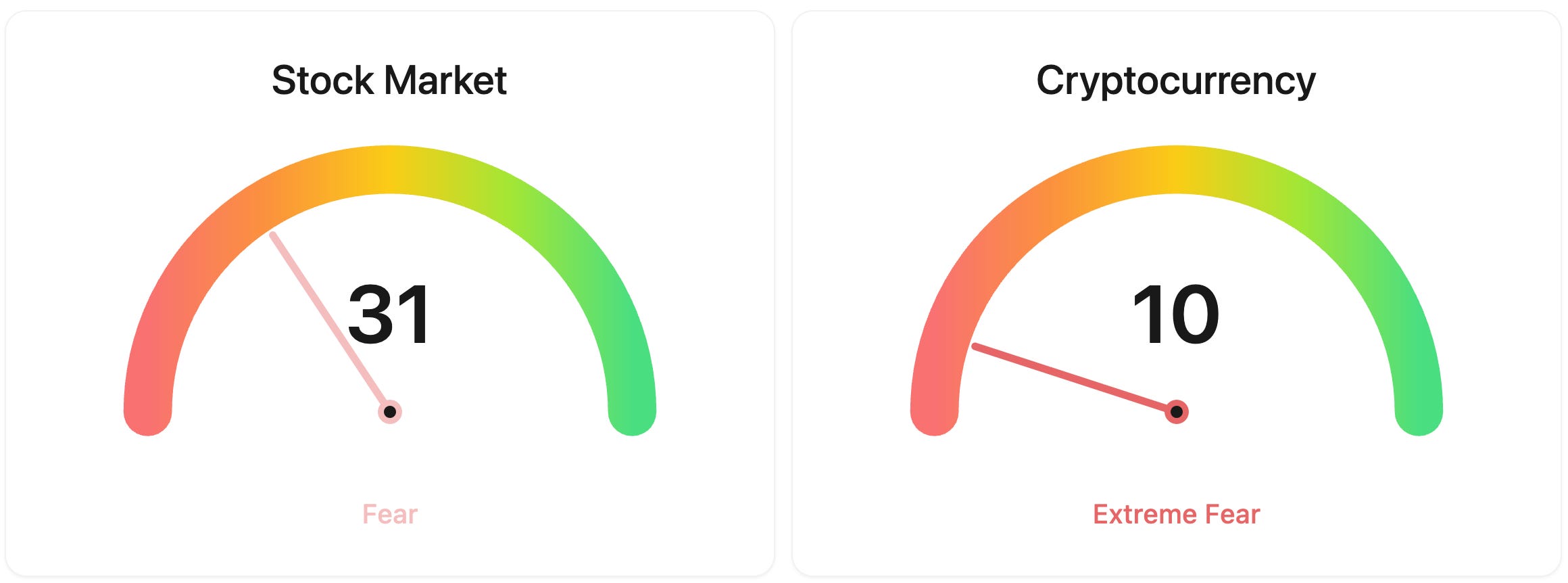
⚖️ Fear & Greed
📉 The Number That Matters
39.7X
The Shiller CAPE ratio currently sits at 39.7x, more than double the long-run median of 16x. This valuation has remained above its historical average for 34 consecutive years, a streak unprecedented in 155 years of market data.
⚔️ Winners vs Losers
Winners
SWIM 0.00%↑: Latham Group surged after reporting Q4 results well above expectations, with net sales of $100 million beating estimates by 4.4% and EPS of -$0.06 trouncing the -$0.11 consensus, as the pool manufacturer cited broad-based growth across all three product categories and issued 2026 EBITDA guidance of $112.5 million at the midpoint, above Wall Street forecasts.
MRNA 0.00%↑: Moderna shares rallied after the company announced a settlement with Arbutus Biopharma and Genevant Sciences resolving all global patent litigation over the lipid nanoparticle delivery technology used in its COVID-19 vaccines, agreeing to pay $950 million upfront with no future royalties, which analysts said removes the worst-case scenario of potential double-digit royalty rates across its entire vaccine pipeline.
ROST 0.00%↑: Ross Stores beat on both the top and bottom lines in Q4, with revenue of $6.64 billion topping estimates of $6.41 billion and EPS of $2.00 clearing the $1.89 consensus on a 9% comparable store sales gain, and the company sweetened the print by raising its quarterly dividend 10% and authorizing a new $2.55 billion share repurchase program.
BNAI 0.00%↑: Brand Engagement Network moved sharply in pre-market with no specific catalyst identified, though the micro-cap AI company has seen increased activity following its March 2 announcement that its AI Concierge system went live at a resort in Armenia, its first guest-facing hospitality deployment.
Losers
WBTN 0.00%↑: WEBTOON Entertainment fell after reporting Q4 revenue of $330.7 million, missing estimates of $334.4 million, with net loss ballooning to $336.5 million from $102.6 million a year ago due to goodwill impairments, and the company guided full-year 2026 revenue to flat or slightly negative on a constant currency basis with Adjusted EBITDA of just $0 to $5 million.
📊 Market Snapshot
Cryptocurrencies:
Bitcoin (BTC): $70,863 (▲ 3.70%)
Ethereum (ETH): $2,050 (▲ 3.38%)
XRP: $1.40 (▲ 2.58%)
Equity Indices (Futures):
S&P 500: $6,829 (▲ 0.36%)
NASDAQ 100: $24,812 (▲ 0.23%)
FTSE 100: £10,552 (▲ 0.34%)
Commodities & Bonds:
10-Year US Treasury Yield: 4.09% (▲ 0.52%)
Oil (WTI): $75 (▲ 0.39%)
Gold: $5,200 (▲ 2.19%)
Silver: $86.70 (▲ 5.74%)
Data as of UK (GMT): 12:08 / US (EST): 07:08 / Asia (Tokyo): 21:08
✅ 5 Things to Know Today
🎯 Khamenei Is Dead. Nobody Knows What Comes Next
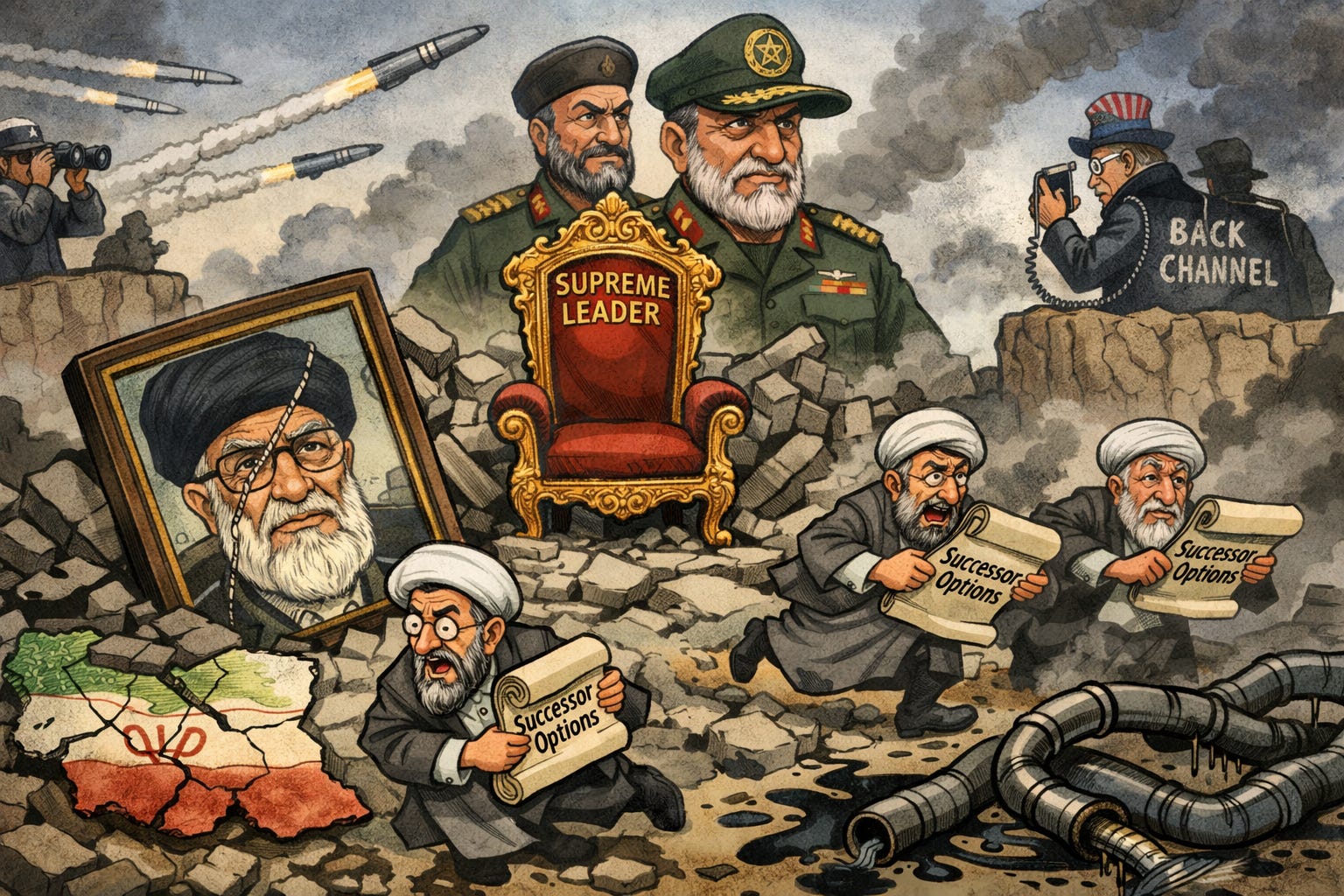
Ali Khamenei, Iran’s Supreme Leader for 35 years, was killed in the opening strikes of Operation Epic Fury on Saturday. It is the first time the Islamic Republic has faced a leadership vacuum since its founding, and the transition is happening under active bombardment. The Assembly of Experts, the clerical body responsible for selecting a successor, was itself targeted by an Israeli airstrike on its meeting building in Qom, though the building was empty at the time. By Wednesday, an Assembly member confirmed that “leadership options have been identified” and a selection would come at the “earliest opportunity,” with a three-day state funeral for Khamenei beginning Wednesday evening (Al Jazeera).
Iran’s interim leadership has publicly ruled out any negotiations with Washington. Mohammad Mokhber, an advisor to the late Supreme Leader, stated on state television: “We have no trust in the Americans and no intention of negotiating with the US.” Yet the New York Times reported that Iranian intelligence made indirect contact with the CIA in the days after the strikes, signalling at least some appetite for back-channel engagement, an approach Israeli officials are urging Washington to reject. The identity and ideology of Iran’s next Supreme Leader will determine whether this conflict finds a political exit or hardens into a prolonged confrontation. A hardline military-backed successor makes negotiation structurally harder. A more pragmatic figure, if one exists, opens a different path entirely (Stimson Center).
Sensei’s Insight: Markets are treating this as an event-driven shock with a resolution timeline. But a fractured Iran produces no single authority capable of issuing a credible stand-down. Without a legitimate counterparty, the insurance market blockade has no clear off-switch, a structurally different risk to a war that can be negotiated to an end.
⚓ Trump’s Gulf Insurance Plan: Bold Signal, Thin Details
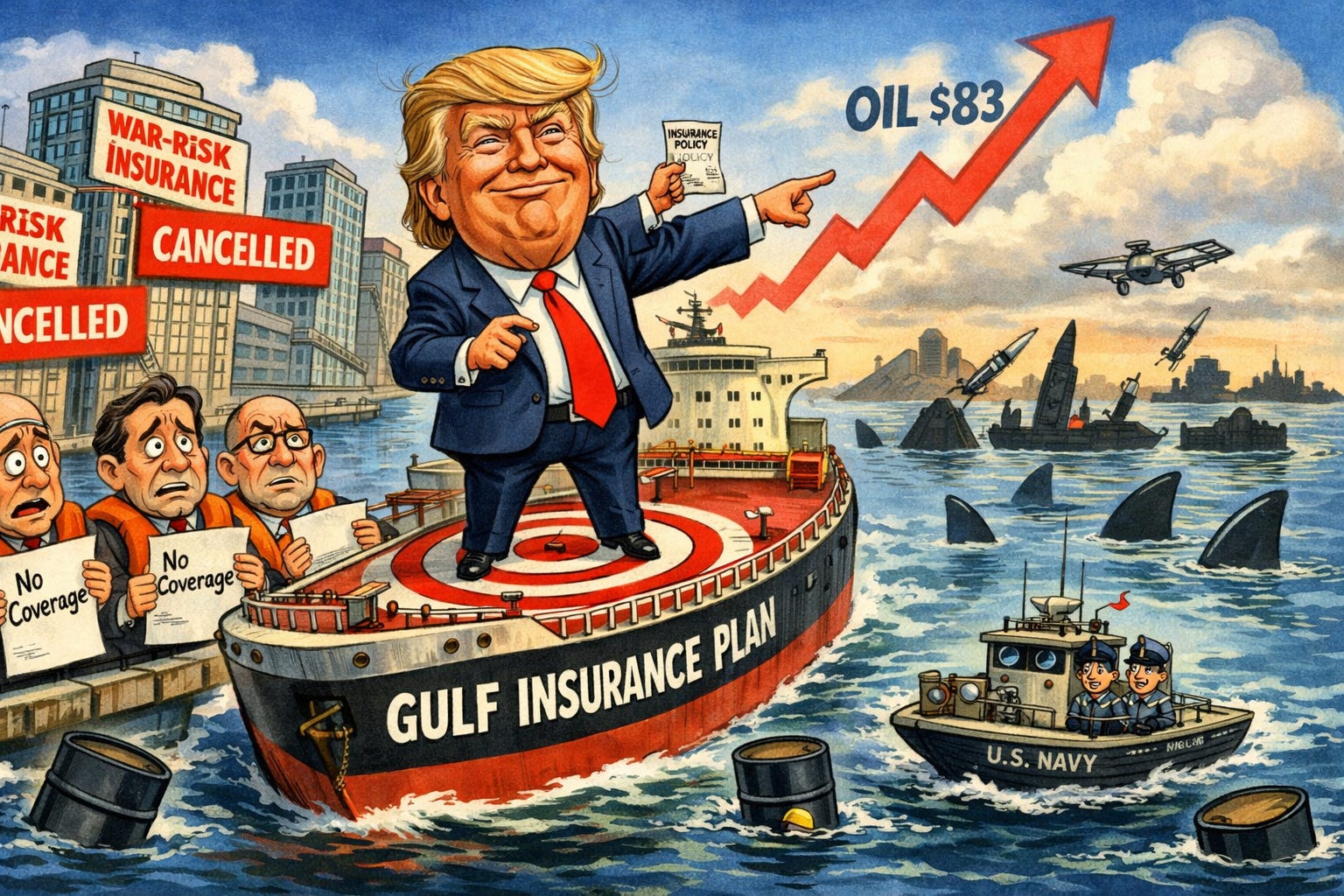
President Trump announced two measures on Tuesday aimed at restoring oil flows through the Strait of Hormuz. First, he ordered the US International Development Finance Corporation (DFC), a government agency originally created to mobilise private capital in developing nations, to offer political risk insurance and guarantees for all maritime trade in the Gulf, with energy shipments as the explicit priority. Second, he stated the US Navy would begin escorting oil tankers through the strait “as soon as possible.” The DFC subsequently published a brief notice confirming its support, but disclosed no premiums, coverage limits, or operational timelines. Brent crude briefly pulled back on the announcement before resuming its climb to around $83.50 a barrel by Wednesday morning (Axios).
The shipping industry’s reaction has been notably cold. The de facto blockade exists not because Iranian warships are physically blocking the strait, but because marine war-risk insurers pulled coverage, and without insurance, most vessels cannot operate regardless of the military situation. Major providers including Norway’s Gard and Skuld, Britain’s NorthStandard, and the London P&I Club have all cancelled or suspended Gulf coverage. The DFC has never operated at this scale or risk profile, and US Navy officials reportedly told tanker executives in private that there is currently no availability to provide escorts. RBC Capital Markets analysts questioned “how much planning has been done on the insurance backstop thus far,” while Bob McNally, a former White House energy official, noted that implementation would require first suppressing Iran’s ability to deploy anti-ship missiles and drones across roughly 1,000 nautical miles of Gulf waters (Maritime Executive).
Sensei’s Insight: The plan assumes escorts deter attacks. The opposite risk is equally plausible: escorted tankers become symbolic targets, every strike on a US-flagged convoy is an Iranian propaganda victory, and the first exchange of fire between US warships and Iranian forces transforms an energy crisis into a direct military confrontation with no obvious exit.
🏦 Japan’s Central Bank Caught Between a War and a Hard Place
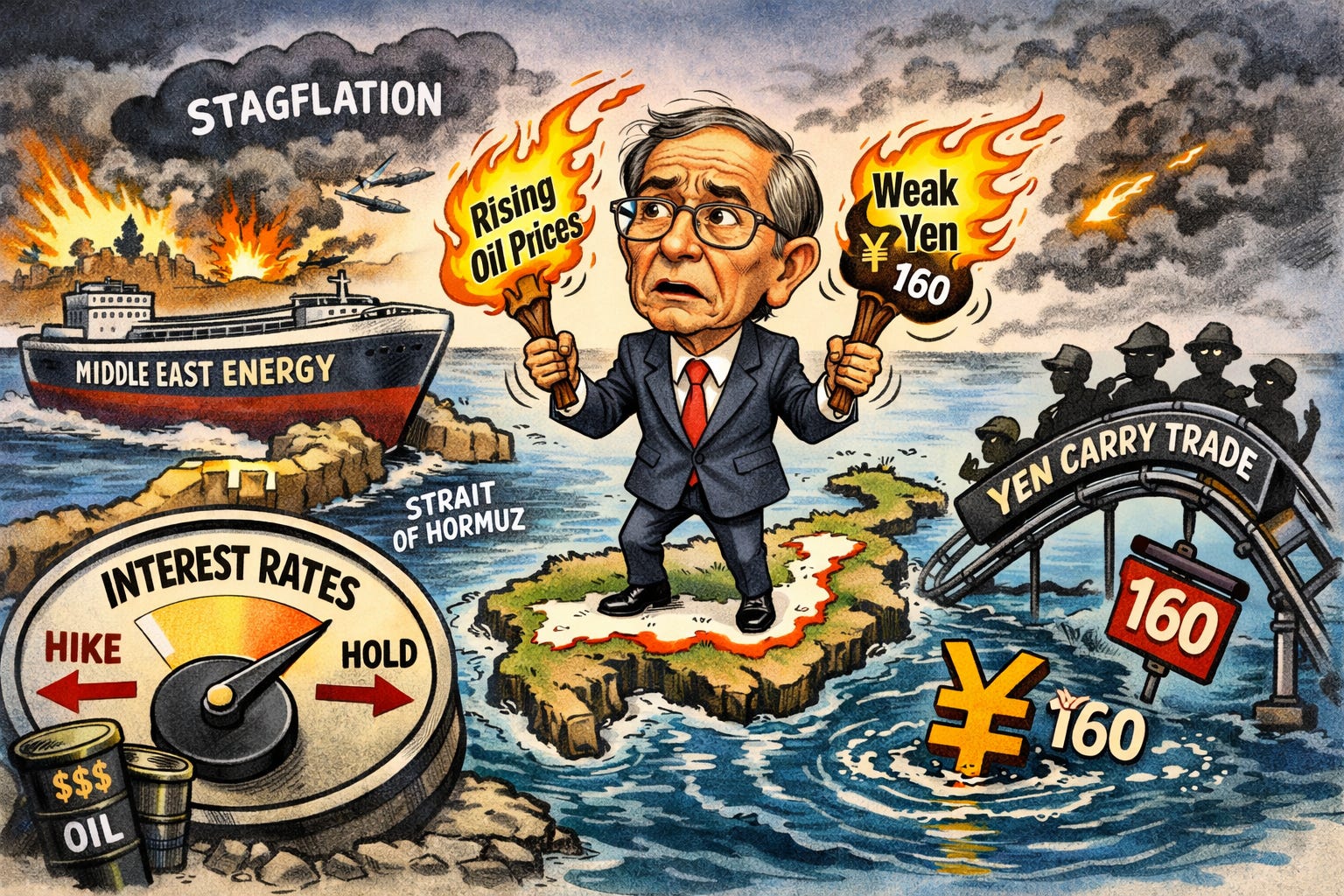
Bank of Japan (BOJ) Governor Kazuo Ueda appeared before the Japanese parliament on Wednesday and explicitly warned that the Middle East conflict could have a “significant impact on the global economy and Japan’s economy.” His testimony covered two transmission channels: crude oil and energy prices, and disruption to international financial markets. The BOJ raised its benchmark interest rate to 0.75 percent in December 2025, the highest level in 30 years, and was on an active tightening path heading into its next meeting on 18-19 March. Before the Iran conflict, markets were actively debating whether a further hike would come in March or April. Ueda’s comments, combined with the absence of any forward guidance from Deputy Governor Ryozo Himino, have effectively ended that debate, with overnight swaps markets pricing a March hike probability of just 6 percent (Japan Times).
Japan’s structural exposure to this crisis is acute. The country relies on imports for essentially all of its fossil fuels, with roughly 95 percent of crude imports sourced from the Middle East as of January 2026, the majority transiting the Strait of Hormuz. Higher oil costs worsen Japan’s terms of trade, the ratio of export prices to import prices, weighing on growth. But if elevated energy prices feed through to medium-term inflation expectations, they could simultaneously push underlying inflation higher. That is the stagflationary bind: growth weakens and prices rise at the same time, which is the worst possible environment for a central bank trying to calibrate interest rate policy. The yen has weakened to the 157-158 range against the dollar this week, amplifying Japan’s energy import costs further since oil is priced in dollars (Reuters).
Sensei’s Insight: A BOJ hold in March removes one near-term amplifier of the global selloff, keeping yen carry trades intact for now. But watch 160 yen per dollar closely. If the yen keeps sliding, the BOJ may be forced to hike to defend currency credibility, triggering the very carry trade unwind markets are currently being spared.
🚀 The Tiny Defence Stock That Just Got a Tomahawk Order
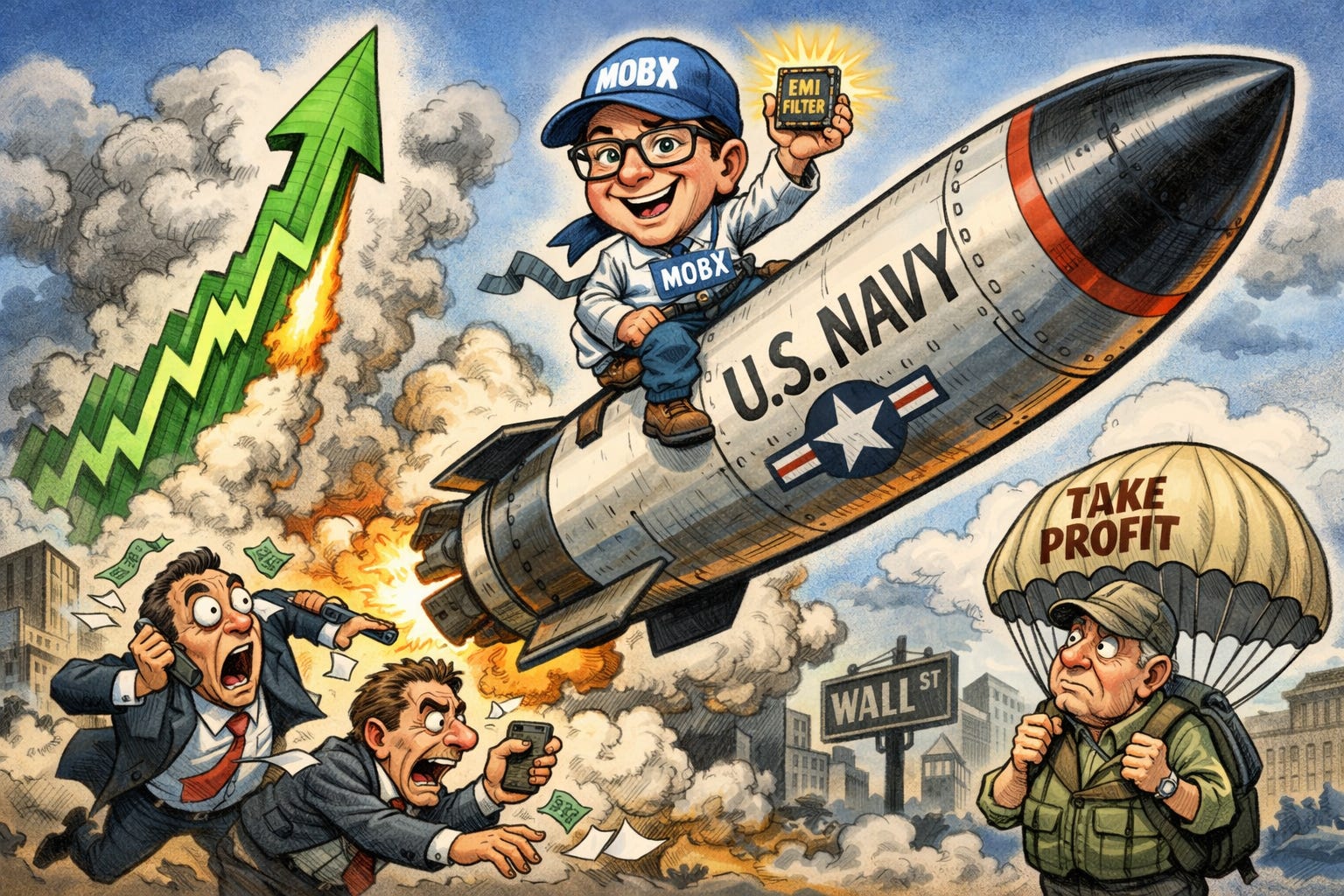
Mobix Labs ( MOBX 0.00%↑ ), a small-cap electronics company based in Irvine, California, announced on Monday it had received a production purchase order from the US Navy for components used in the Tomahawk cruise missile program. The specific product is a high-reliability electromagnetic interference (EMI) filtering component, a small electronic device that shields a missile’s onboard navigation and targeting systems from electrical noise generated by other components during launch and flight. Tomahawks were fired in the opening phase of Operation Epic Fury, and Mobix’s press release explicitly noted the platform’s “continued operational relevance.” MOBX surged from $0.17 to a session close of $1.12 on the day of the announcement, a gain of approximately 533 percent, on volume of roughly 1.3 billion shares against a daily average of around 16 million (Nasdaq).
The move reflects something broader than one company’s press release. Defence component supply chains are extremely difficult to enter. Qualification processes take years of rigorous testing, and being designed into an active weapons platform means demand scales automatically as the Navy orders more missiles, without requiring new contract wins. Mobix is already inside that supply chain. The financial picture is more complicated: the company carries trailing earnings per share of negative $0.65 and a current ratio of just 0.11, a measure of short-term liquidity that signals very limited financial cushion. The order itself has not been quantified in dollar terms. By Wednesday morning, MOBX was indicated at approximately $1.85 in pre-market trading, suggesting the momentum was continuing into a second session (Benzinga).
Sensei’s Insight: MOBX has a real catalyst, but a 533 percent single-session move on a stock with near-zero liquidity and negative earnings is a momentum trade, not a fundamental rerating. At this volatility, the gap between entry price and exit price could be enormous. There is no shame in taking profit early.
₿ Bitcoin Surges Past $71,000: Safe Haven or Something More Interesting?
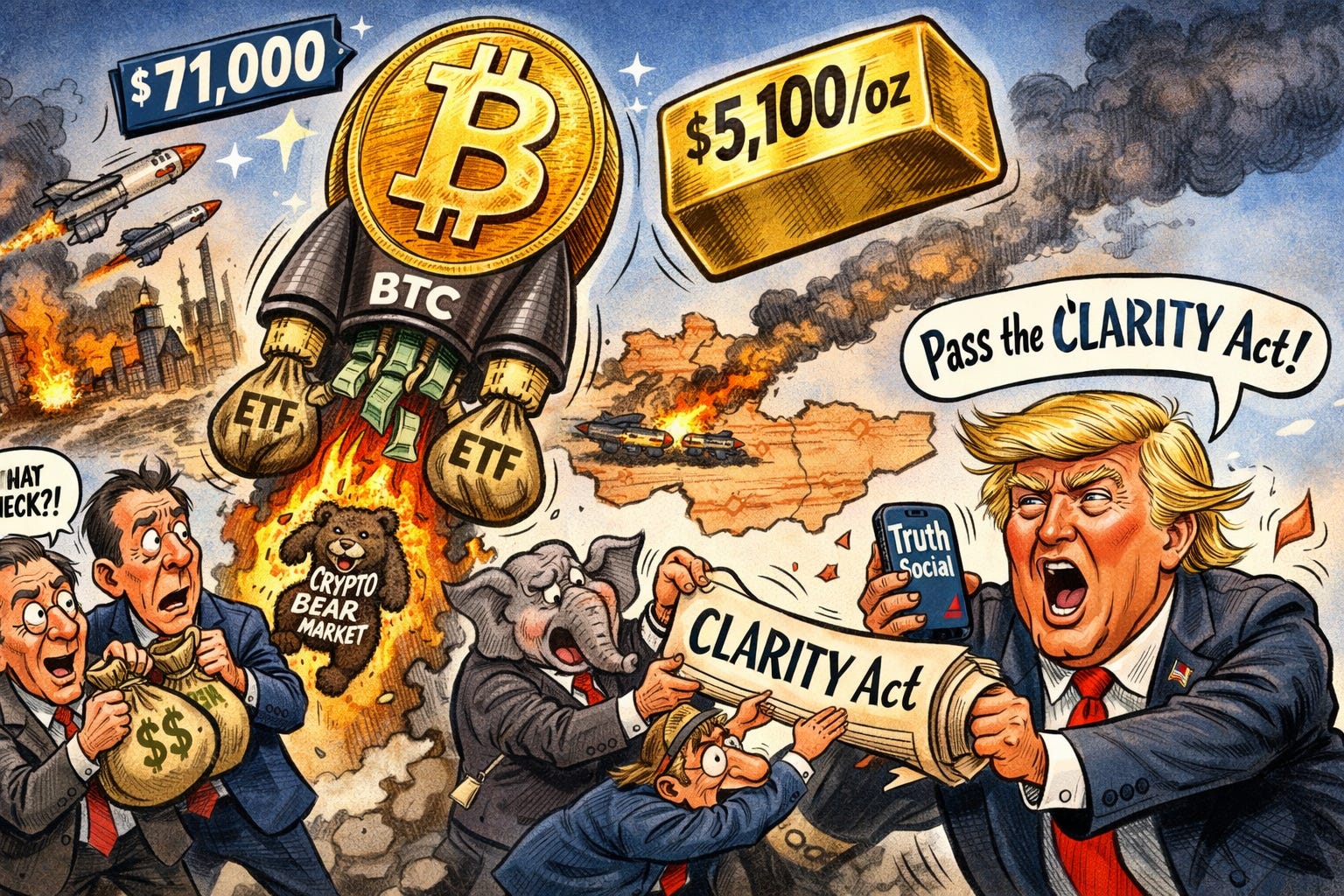
Crypto markets staged a sharp recovery on Wednesday, with Bitcoin climbing as much as 5.6 percent to briefly surpass $71,812 in early London trading, its highest level in nearly a month. Ether rose approximately 6 percent to $2,086, and the broader market turned broadly green. The move reverses a difficult start to the week: when the US-Israel strikes on Iran began on Saturday, Bitcoin dropped as low as $63,038 over the weekend, when traditional equity and foreign exchange markets were closed and crypto was the only functioning price-discovery venue available globally. It recovered sharply once Iranian state television confirmed Khamenei’s death, jumping back toward $68,000 before traditional markets opened Monday (CoinDesk).
The recovery has been accompanied by meaningful institutional activity. Spot Bitcoin exchange-traded funds (ETFs) in the US recorded more than $680 million in combined net inflows on Monday and Tuesday, a notable reversal after February saw $3.8 billion in net outflows, the worst monthly figure since spot Bitcoin ETFs launched. Gold is simultaneously trading above $5,100 per ounce, meaning both traditional and digital perceived safe-haven assets are rising together, which is relatively unusual on days of broad equity selling. Bitcoin nonetheless remains approximately 40 percent below its October peak, reflecting a prolonged bear trend that predates the current conflict entirely. Alex Kuptsikevich, chief market analyst at FxPro, cautioned that Bitcoin is “vulnerable due to the increased volatility of stock indexes, which is forcing institutional investors to reduce their leverage” (Onmanorama).
Sensei’s Insight: Bitcoin’s rally has a second engine beyond the war. On Tuesday, Trump publicly accused banks of holding the Digital Asset Market Clarity (CLARITY) Act hostage on Truth Social, demanding Congress pass it immediately. JPMorgan analysts say passage by mid-2026 could be a structural catalyst for crypto. The “buy the rumour” trade may already be underway.
🔗 Connect with Us
Stay plugged in across platforms:
Sensei on X: sensei_live_
Martyn Lucas on X: MartynInvestor
Vaz on X: eVTOLHUB
📺 YouTube Channel (Live & Replays): Martyn Lucas Investor

🔍Deep Dive: Burry Just Laid His Groundwork
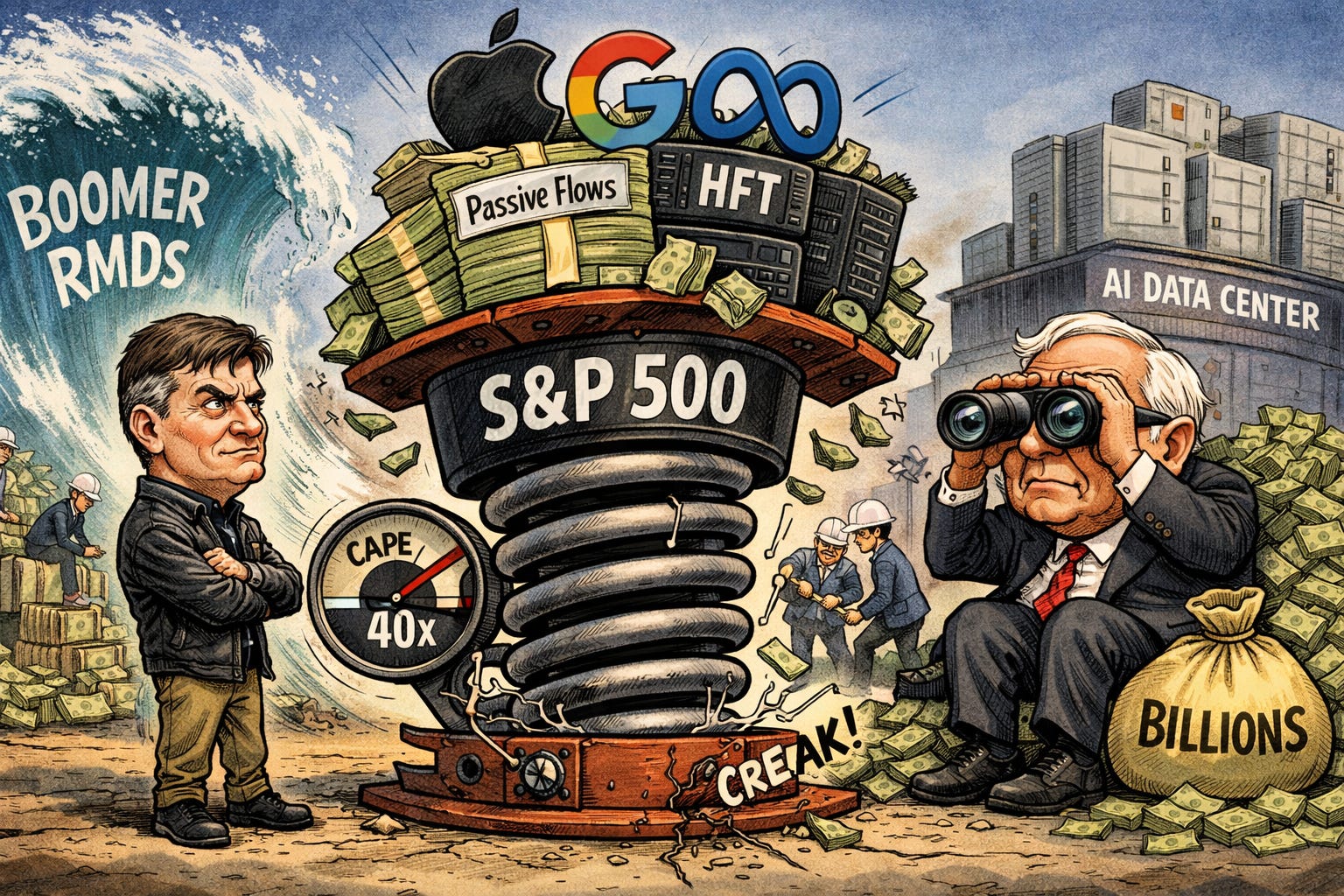
Yesterday, Michael Burry published a 26-page newsletter titled “Foundations: U.S. Market Structure and Value.” For the first time since rebranding as Cassandra Unchained, he has turned his attention away from individual companies and toward the market itself. He describes what he finds as looking “shocking, unreal, not possible.”
Burry is not known for hedging. But this piece is not a position disclosure. There are no new short positions, no options breakdown, no portfolio reveal. What he has published is an intellectual case: a structured, data-heavy argument for why the market is a coiled spring sitting on historically extreme valuations, held up by structural forces that are now beginning to reverse. Read alongside his track record, the pattern is familiar. Before the 2008 trade became famous, he spent years building the intellectual case publicly while assembling his position quietly. This piece reads the same way: laying groundwork before the next move becomes obvious.