


🧠 One Big Thing
All eyes are on today’s U.S. Producer Price Index (PPI) release, a critical inflation signal the Fed watches closely. Economists expect PPI to rise 0.2% MoM and 2.6% YoY for May, up from 2.4% in April, while core PPI (excluding food and energy) is forecast to stay flat at 3.1% YoY (XTB) (Investing.com). The release follows a cooler-than-expected CPI report, but PPI looms large because it captures producer-level inflation, often a leading indicator for consumer prices (Naga).
💰 Money Move of the Day
With today’s PPI data set to shape the inflation outlook, now’s the time to review how your portfolio hedges rising costs. Sticky producer prices could pressure rate-sensitive assets—so many investors are leaning into TIPS, gold, and dividend-growers to stay positioned for persistent inflation without going risk-off.
📊 Market Snapshot
Cryptocurrencies:
Bitcoin (BTC): $107,337 (▼ -1.23%)
Ethereum (ETH): $2,751 (▼ -0.78%)
XRP: $2.24 (▼ -1.40%)
Equity Indices (Futures):
S&P 500 (SPX): 5,995 (▼ -0.46%)
NASDAQ 100: 21,816 (▼ -0.33%)
FTSE 100: 8,853 (▼ -0.03%)
Commodities & Bonds:
10-Year US Treasury Yield: 4.379% (▼ -0.93%)
Oil (WTI): $67.19 (▼ -1.69%)
Gold: $3,384 (▲ +0.80%)
🕒 Data as of UK (BST): 12:00 / US (EST): 07:00 / Asia (Tokyo): 20:00
🎥 Live Show Link – Join the Market Breakdown
Catch the full morning breakdown live with Sensei on YouTube. Watch Now:
We go deeper into today’s moves, charts, and headlines. Bring your coffee, questions, and watchlist.
✅ 5 Things to Know Today
May CPI Comes in Cool Despite Tariffs, Surprising Markets

May’s CPI was closely watched as the first major inflation reading to reflect President Trump’s “Liberation Day” tariffs, and the data delivered a modest surprise. The Consumer Price Index rose just 0.1% month-over-month and 2.4% year-over-year—both below expectations. Core CPI was similarly tame, rising 0.1% MoM and holding at 2.8% YoY (Bloomberg). Despite concerns that tariffs would spike costs, inflation remains subdued—for now. Falling gasoline prices (down 12% YoY) provided key disinflationary pressure (CBS News), while prices for vehicles, furniture, and other tariff-exposed goods declined (Yahoo Finance). Categories like major appliances and toys did see increases, but many firms appear to be relying on pre-tariff inventories and delaying price hikes (CBS News).
This report was particularly critical because it was the first to reflect the 10% baseline tariff and additional duties enacted under Trump’s sweeping April trade reset (NBC News). While the tariffs target sectors like autos and electronics, the May CPI suggested limited immediate pass-through to consumers. Economists caution, however, that this may be short-lived. As inventories shrink and supply chains adjust, inflationary effects could emerge later in 2025 (WYPR) (Deloitte). Fed Governor Adriana Kugler noted, “We are already seeing the effects of higher tariffs, which I expect will continue to raise inflation over 2025” (WYPR). Bradley Saunders of Capital Economics added, “Tariffs are inherently inflationary, regardless of what [President] Donald Trump may convey” (CNBC).
Markets took the tame print as a positive, with Treasury yields falling and expectations growing that the Fed will maintain a wait-and-see posture at the next meeting (Yahoo Finance) (BLS). The muted inflation response has given some breathing room to consumers and policymakers, but analysts broadly agree that tariff effects are not yet fully priced in. The real inflation test may still be ahead.
Sensei’s Insight: Analysts were bracing for tariff-driven inflation to pop in May’s CPI—but it didn’t. For now, it looks like businesses are holding the line, cushioning consumers with inventories and delayed pass-throughs. Maybe this won’t last forever, but the market just got a rare win: tariffs haven’t hit yet like many analysts were calling for.
Markets Brace for May PPI as Fed Watches for Inflation Clues
All eyes are on today’s U.S. Producer Price Index (PPI) release, a critical inflation signal the Fed watches closely. Economists expect PPI to rise 0.2% MoM and 2.6% YoY for May, up from 2.4% in April, while core PPI (excluding food and energy) is forecast to stay flat at 3.1% YoY (XTB) (Investing.com). The release follows a cooler-than-expected CPI report, but PPI looms large because it captures producer-level inflation, often a leading indicator for consumer prices (Naga).
Major analysts warn that while recent CPI and PPI readings have been mixed, any upside surprise in producer prices could quickly shift market sentiment, boosting the dollar and weighing on equities, especially in rate-sensitive sectors (Naga). With the Fed signaling a cautious stance on future cuts due to inflation and tariff risks (IC Markets), traders are bracing for volatility. For investors, the message is clear: PPI may set the tone for Fed policy and market direction through the summer.
Sensei’s Insight: The Fed has been clear: it’s data-dependent, and PPI is part of that data. After a cooler CPI, today’s print will help clarify whether inflation pressures are easing—or just hiding upstream. Sticky producer prices would signal more work ahead.
World Bank Ends Nuclear Ban After 66 Years
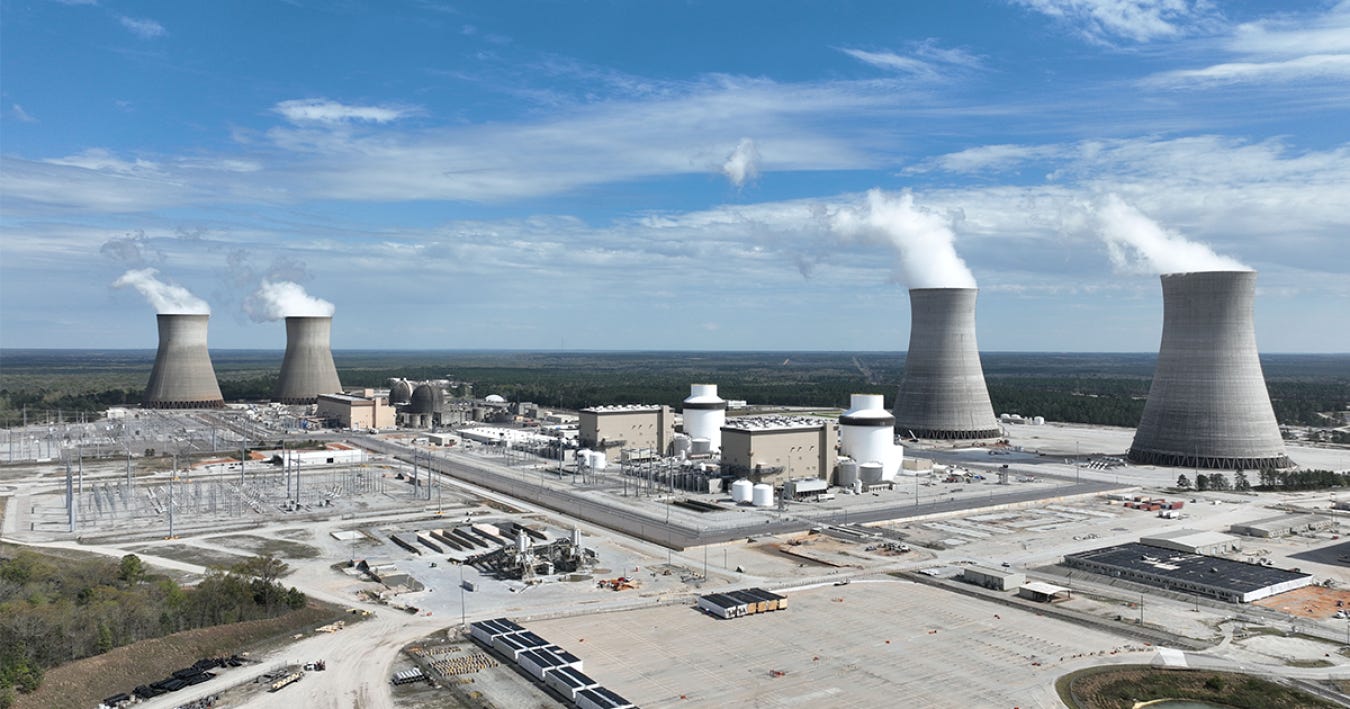
Just yesterday we were discussing nuclear energy’s global prospects—and today, the World Bank has made headlines by ending its decades-long ban on financing nuclear power projects. by lifting its 66-year ban on financing nuclear power projects. President Ajay Banga announced the policy shift on Wednesday, June 11, calling it essential to help developing nations meet skyrocketing electricity demand. The Bank will now support life-extension of reactors, grid upgrades, and Small Modular Reactor deployment, partnering with the International Atomic Energy Agency to ensure non-proliferation and regulatory safeguards are in place (Reuters) (Manila Times).
The move comes as electricity demand in developing economies is projected to more than double by 2035, requiring annual infrastructure investment to climb from $280B to $630B. The shift reflects pressure from shareholders like the U.S. to back “dependable technologies” (Bloomberg) and comes amid debate over upstream gas projects and continued funding for coal retirements and carbon capture. With nuclear now back on the table, the World Bank is redefining how the developing world accesses scalable, low-carbon energy—and reshaping global energy finance in the process.
From yesterday’s newsletter, Top Nuclear Stocks on the Radar
The sector's revival is also reshaping the stock watchlist for those seeking direct exposure:
Rolls-Royce Holdings (RR.L): Leading the UK's SMR push, Rolls-Royce is poised to benefit from government contracts and global demand for compact nuclear solutions.
EDF (Électricité de France): As Sizewell C’s developer and a nuclear heavyweight across Europe, EDF is at the heart of the EU’s nuclear expansion.
Vistra Corp. (VST): A dominant US utility with growing nuclear assets, strong liquidity, and shareholder-friendly capital programs.
BWX Technologies (BWXT): A nuclear supplier with deep ties to commercial and defense sectors. Its recent acquisition of Kinetrics and US Navy contracts point to continued growth.
GE Vernova (GEV): Expanding aggressively in SMRs and advanced nuclear tech, GE Vernova is positioning itself for the next phase of global nuclear adoption.
These companies represent direct exposure to nuclear’s momentum, while sector-specific ETFs offer broader, diversified access. Execution, policy consistency, and geopolitical factors remain the key variables for long-term success (Forbes). Not financial advice.
Sensei’s Insight: Governments are turning pro-nuclear again—this isn’t just climate policy, it’s energy sovereignty. SMRs (Small Modular Reactors) are the new frontier, and capital is chasing durable yield. Nuclear is back on the institutional menu.
🛢️ Oil Spikes 4% on Middle East Tensions and Trade Hopes

Oil prices surged over 4% on June 11, reaching two-month highs as Middle East tensions escalated and optimism around a U.S.-China trade deal lifted demand forecasts. The U.S. began evacuating embassy staff from Iraq and authorized military dependents to leave bases across the region, amid fears of U.S.-Iran conflict potentially disrupting supplies from Iraq, OPEC’s second-largest producer (Reuters) (CNBC). President Trump’s hawkish remarks on Iran’s nuclear ambitions reinforced the geopolitical risk premium. Meanwhile, news of a U.S.-China trade framework buoyed sentiment on global energy demand (Investopedia).
Brent crude closed at $69.77 and WTI at $68.15, rebounding from recent losses tied to OPEC+ supply plans. While OPEC+ is set to increase production by 411,000 barrels per day in July, the market remains sensitive to supply threats. A 3.6 million barrel drawdown in U.S. inventories further signaled firm demand, especially in transport sectors (JPMorgan). Still, analysts warn the rally may prove short-lived amid sluggish demand growth, U.S. pressure for lower prices, and persistent macro uncertainty (Discovery Alert). For investors, the takeaway is a volatile energy market where price spikes can be swift—but staying power may be harder to come by.
Sensei’s Insight: Oil’s spike is a reminder: in this market, headlines move barrels. With Middle East risk flaring and inventories tightening, price action matters. We break down the OIL chart in Chart of the Day—don’t miss the levels traders are watching now.
GameStop Drops 12% After $1.75B Convertible Note Offering

GameStop shares fell 12.7% pre market following news of a $1.75 billion private offering of 0.00% convertible senior notes due June 2032. The notes, available only to institutional investors, can be converted into cash, stock, or a mix—at the company’s discretion (BusinessWire). GameStop said the funds would support general corporate purposes, including initiatives aligned with its new treasury strategy, though no immediate Bitcoin purchases were disclosed (Cointelegraph). The announcement followed a 17% YoY Q1 revenue drop and a 5% intraday decline, wiping out gains from March’s Bitcoin treasury news (Investopedia).
The offering signals GameStop’s continued pivot toward digital assets and alternative treasury models, but the market’s reaction reflects lingering doubts. The dilution risk of the convertible notes, paired with declining revenue, highlights structural concerns. Meanwhile, the company’s evolving crypto exposure could add another layer of volatility to its financial profile (FXLeaders) (AINvest).
Sensei’s Insight: GameStop’s move echoes MicroStrategy—but without the same conviction. Raising $1.75B with no confirmed Bitcoin buy leaves investors guessing. Until they commit like Saylor did, it’s speculation, not strategy.
🔗 Connect with Us
Stay plugged in across platforms:
Sensei on X: sensei_crypto_
Martyn Lucas on X: MartynInvestor
Vaz on X: eVTOLHUB
💎 Premium Discord Access: Join the Discord
📺 YouTube Channel (Live & Replays): Martyn Lucas Investor
👕 Limited Merch: Shop Here
