🧠 One Big Thing
A single penny stock, Healthcare Triangle Inc. (HCTI), accounted for 15% of all U.S. equity trading volume in one day—an extraordinary signal of speculative froth that could ripple across small-cap markets.
💰 Money Move of the Day
Today’s lesson: Not every rally is driven by fundamentals. When volume and volatility explode in low-priced stocks, it often signals a short-term frenzy rather than a sustainable trend. Observing these patterns can sharpen your market radar without jumping into the storm.
📊 Market Snapshot
Cryptocurrencies:
Bitcoin (BTC): $116,613 (▼ -1.49%)
Ethereum (ETH): $3,734 (▲ +0.70%)
XRP: $3.14 (▼ -0.20%)
Equity Indices (Futures):
S&P 500 (SPX): 6,372 (▲ +0.05%)
NASDAQ 100: 23,379 (▲ +0.01%)
FTSE 100: 9,105 (▼ -0.30%)
Commodities & Bonds:
10-Year US Treasury Yield: 4.416% (▲ +0.36%)
Oil (WTI): $67.36 (▲ +0.08%)
Gold: $3,341 (▼ -0.79%)
🕒 Data as of UK (BST): 12:19 / US (EST): 07:19 / Asia (Tokyo): 20:19
✅ 5 Things to Know Today
Global Equities Slip Ahead of Fed, BOJ, and Trump Tariff Deadline
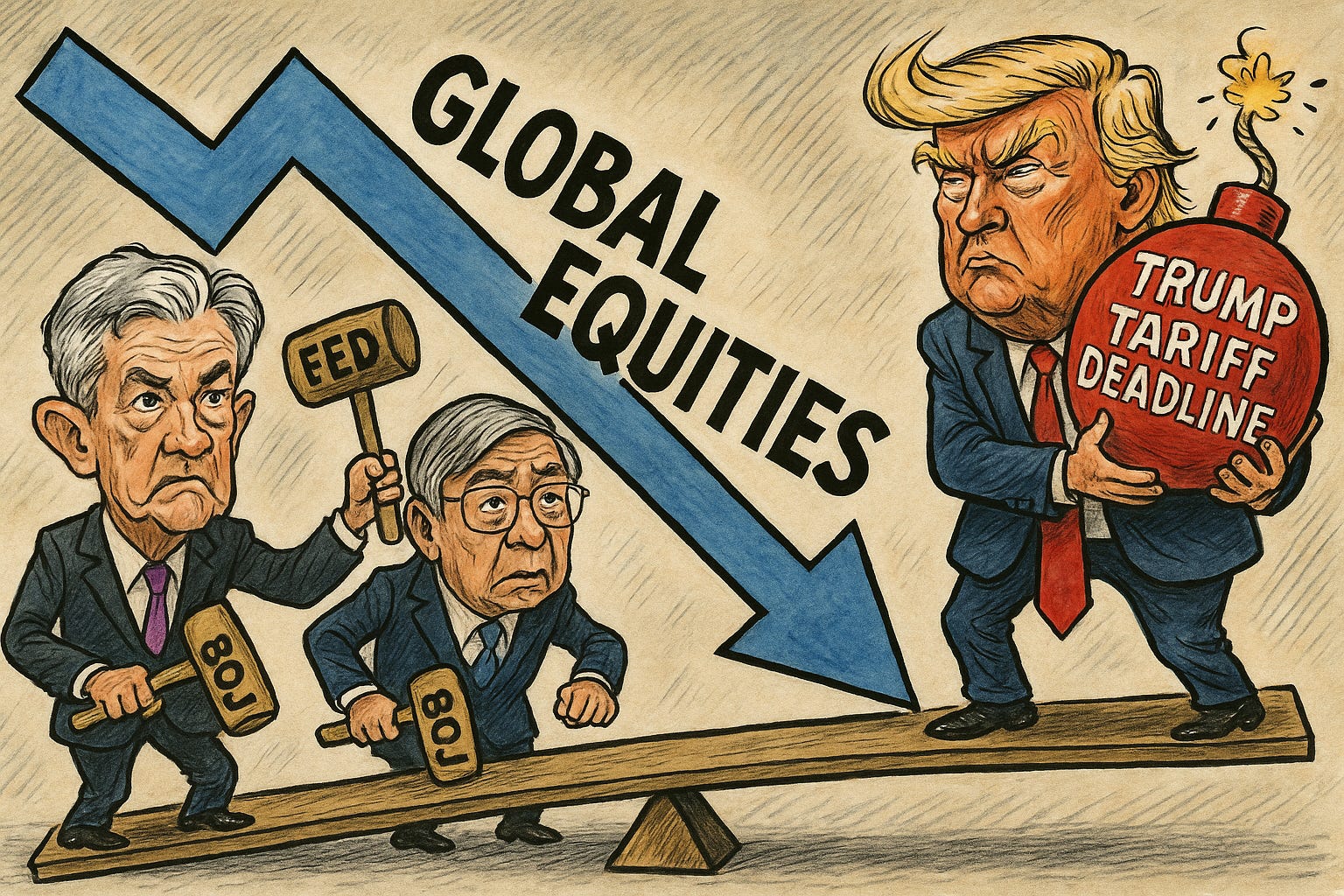
Global equities pulled back Friday, ending a streak of record gains as traders turned defensive ahead of a high-stakes lineup of economic and policy events. The MSCI All Country World Index dipped 0.1% while the U.S. Dollar Indexheaded for its steepest weekly decline in a month (Reuters; Yahoo Finance). The retreat was led by Asia, where Japan’s Topix dropped 0.7% and the Nikkei 225 shed 0.5%, while Hong Kong’s Hang Seng slid 0.5% and China’s CSI 300 fell 0.2% (Mitrade). The losses come as investors weigh the implications of President Trump’s August 1 tariff deadline, which could impose fresh cost pressures on global trade just as the Federal Reserve (July 29-30) and Bank of Japan (July 30-31) prepare to announce policy decisions (Equals Money – Fed; Equals Money – BOJ). Markets are closely tracking whether these central banks signal adjustments to interest rate trajectories, with the BOJ under pressure to clarify its rate-hike timeline while the Fed faces scrutiny over the timing of potential cuts or further tightening.
In the U.S., futures pointed slightly higher despite the global pullback, with S&P 500 contracts up 0.2% after the benchmark index closed at 6,363.35 and the Nasdaq Composite at 21,072.96, both record highs, following a strong earnings report from Alphabet (Reuters). Alphabet posted Q2 revenue of $96.4 billion, up 14%, with earnings per share climbing 22% to $2.31, bolstered by strong cloud services and advertising performance (Alphabet Earnings Report). The results helped ease concerns over Big Tech valuations ahead of key reports next week from Amazon, Apple, and Meta, which collectively account for a significant portion of market momentum (NerdWallet). However, with equity valuations stretched by an AI-driven rally, analysts caution that any negative surprises—either from corporate earnings or a shift in policy signals—could spark a broader risk-off move across equities, bonds, and FX. Investors are particularly sensitive to the interplay of Trump’s tariffs, which could exacerbate inflationary pressures, and central-bank guidance, which may dictate the next phase of global liquidity conditions.
Sensei’s Insight: The next week is a stress test for risk assets. Tariff clarity, Fed and BOJ guidance, and Big Tech earnings will either confirm the market’s bullish narrative or trigger a sharp valuation reset.
Five-Cent Meme Stock Commands 15% of U.S. Trading Volume
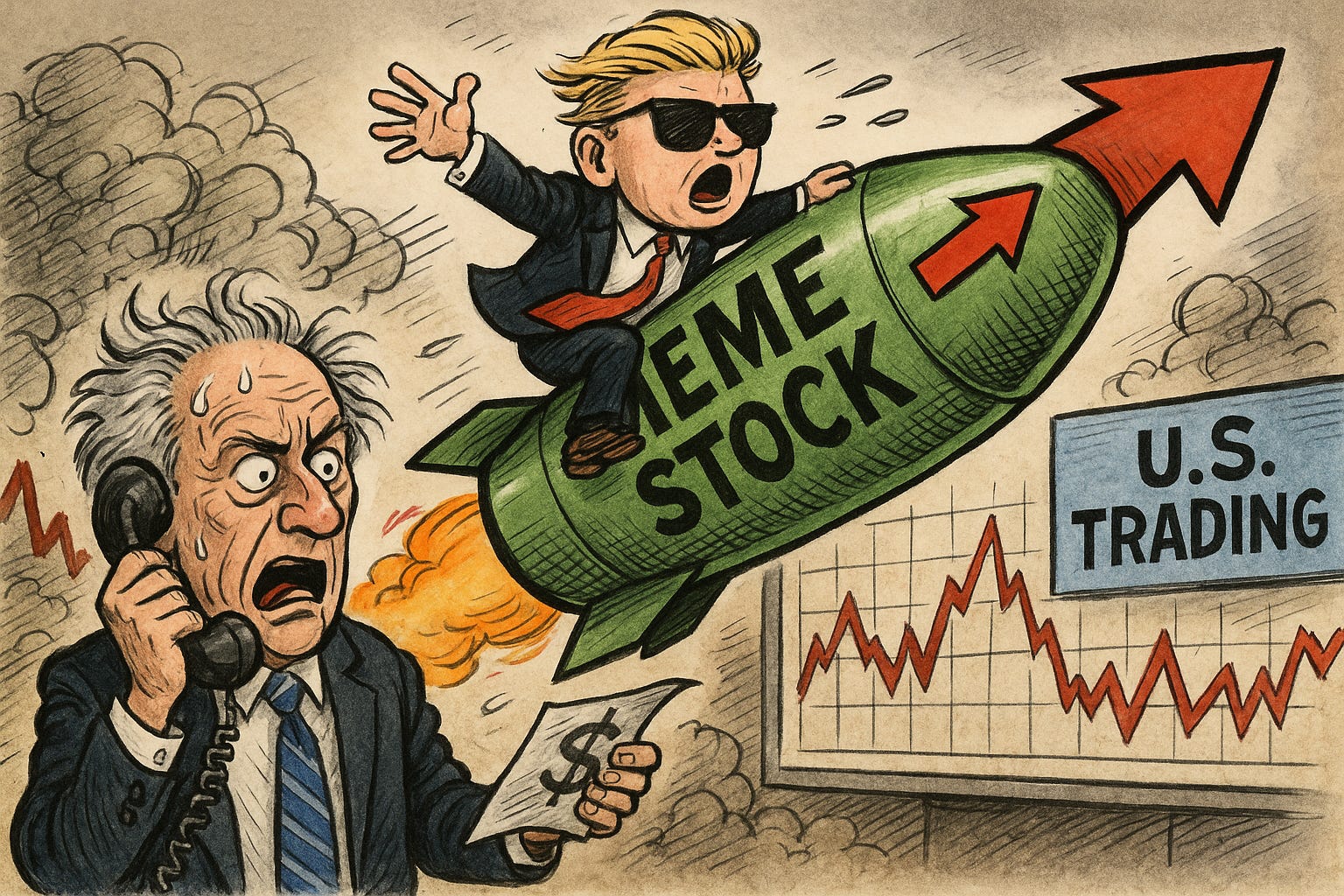
Healthcare Triangle Inc. (ticker HCTI), a penny stock long overlooked by Wall Street, suddenly dominated trading on 24 July 2025 as more than 3 billion shares—representing 15% of total U.S. equity market volume—changed hands. The stock skyrocketed as much as 138% intraday before closing at $0.05, up 115% on the session. The rally produced $150 million in turnover, seven times the company’s pre-rally market capitalization of roughly $22 million, despite no new filings, press releases, or operational updates to justify the move (Bloomberg).
Trading patterns pointed to a familiar meme-stock playbook: retail order flow accounted for more than 85% of executions, while zero-day-to-expiration (0DTE) call options surged, forcing market makers to hedge aggressively. Social-media mentions of HCTI on r/WallStreetBets spiked 1,200% in 24 hours, echoing earlier retail-driven frenzies around names like Opendoor, Kohl’s, Krispy Kreme, and GoPro (Reuters). A single micro-cap absorbing such a large share of U.S. trading volume underscores renewed speculative fervor and raises questions about liquidity distortions, options market instability, and potential regulatory crackdowns on meme-driven volatility.
Sensei’s Insight: When a $0.05 stock captures 15% of national tape, it’s a flashing signal that retail speculation is reaching extreme levels—an environment where liquidity is deceptive, volatility is amplified, and latecomers risk getting caught in a collapsing trade once attention shifts.
UK Chancellor Weighs Bank Lifeline as Car-Loan Mis-Selling Costs Loom
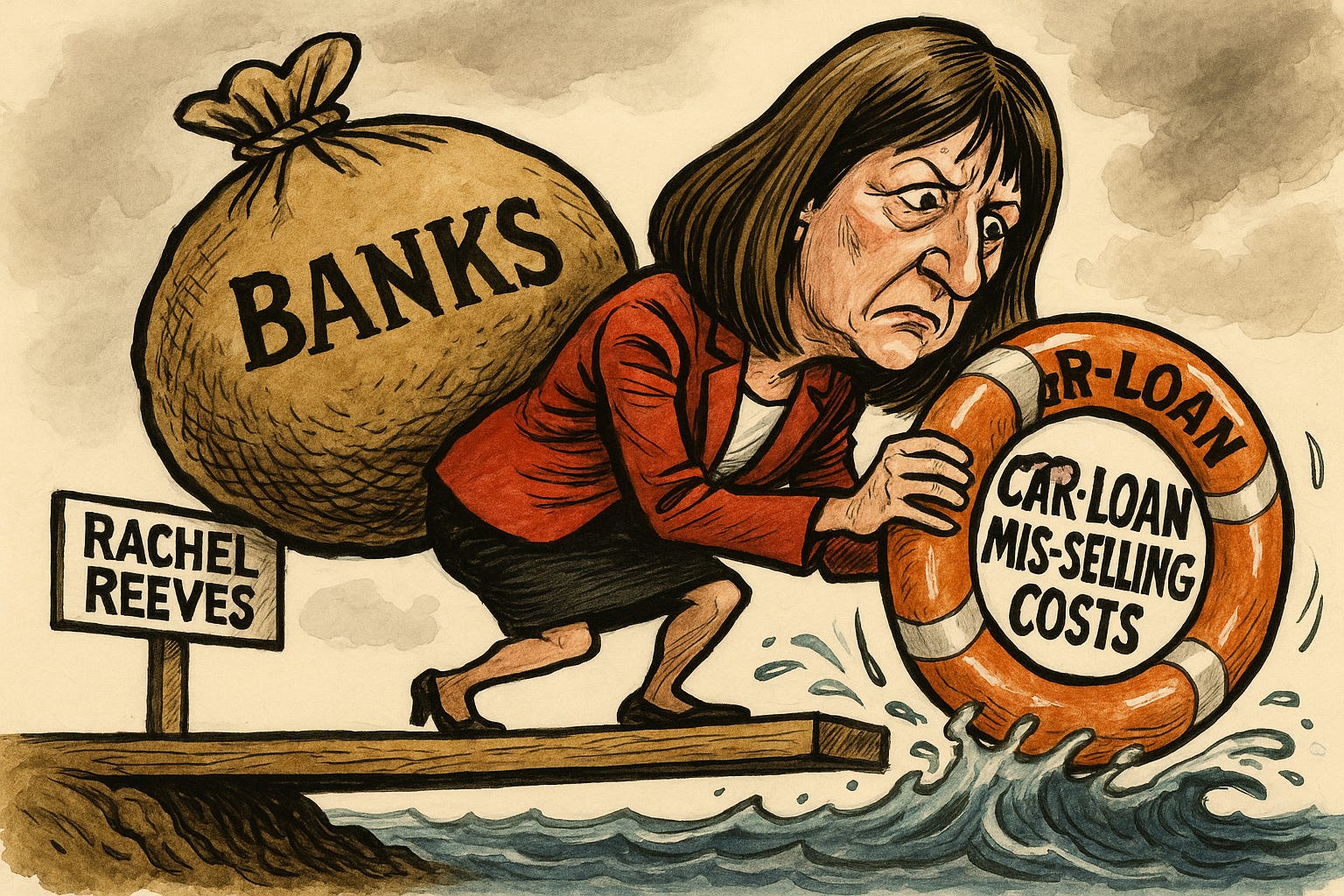
UK Chancellor Rachel Reeves is weighing legislation to cap the massive compensation bill linked to the car-finance mis-selling scandal, according to (The Guardian). Close Brothers Group and Lloyds Banking Group are awaiting a UK Supreme Court ruling on whether dealers’ undisclosed commissions breached consumer law. Industry estimates suggest potential liabilities could reach £44 billion. Banks have already increased reserves to prepare for potential payouts—Lloyds has set aside £1.2 billion, while total sector provisions exceed £1.5 billion (BBC, Bloomberg, Yahoo).
A government-backed settlement could significantly ease capital pressure on UK lenders and prevent a repeat of the costly payment-protection-insurance scandal that weighed on profits for years. The move might also curb litigation risks while safeguarding the availability of motor finance—critical for roughly two million annual vehicle purchases. However, any cap on consumer redress may face political pushback and challenge the Financial Conduct Authority’s (FCA) new consumer-duty rules, making both the Supreme Court decision and Treasury’s next steps key catalysts for UK financials (Botts Online, Reclaim247).
Sensei’s Insight: The Supreme Court ruling could set the tone for years of litigation risk—or relief—for UK banks. If Reeves enforces a cap, expect banking stocks to rally, but regulatory scrutiny and political backlash could limit long-term upside.
UK Households Stash Cash as Savings Index Hits Pre-Crisis High
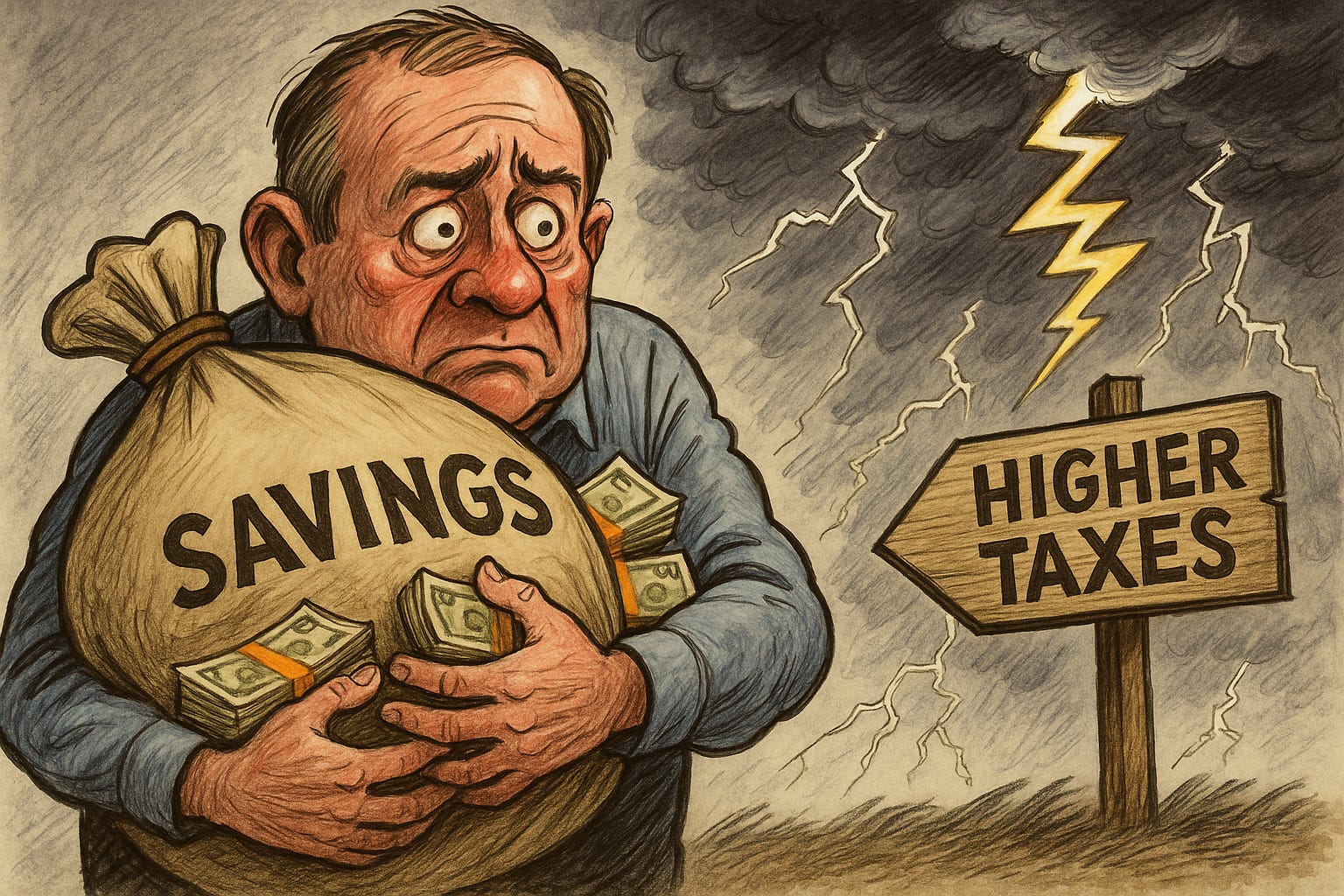
The GfK Savings Index surged 7 points to +34 in July, marking its strongest reading since November 2007, even as the headline Consumer Confidence Barometer slipped to -19 from -18 the previous month. The survey, conducted between 8–11 July, reflects households stockpiling cash amid concerns over higher taxes in the upcoming Autumn Budget and persistent inflation pressures (Reuters, TradingEconomics, TradingView, Retail Bulletin). GfK’s Joe Staton noted that consumers are “sensing stormy conditions ahead,” leading to a defensive pivot toward savings. Expectations for the general economic situation over the next 12 months fell to -29, while views on personal finances held steady at +2. The major-purchase index, a key gauge of big-ticket spending, remained deeply negative at -15.
The shift toward saving and away from discretionary spending could undermine UK retail and services sectors just as GDP momentum slows. Larger household cash reserves might delay a rebound in consumption and complicate the Bank of England’s efforts to stimulate growth. At the same time, elevated deposit inflows could support bank funding margins, especially if interest rate cuts are postponed beyond market expectations (VT Markets).
Sensei’s Insight: A savings surge this steep signals that UK households are bracing for economic turbulence. With consumer confidence weakening and discretionary spending faltering, retail and services may face a rough patch while the BoE’s growth targets slip further out of reach.
Thailand Snubs Third-Party Peace Bids in Escalating Cambodia Border Clash
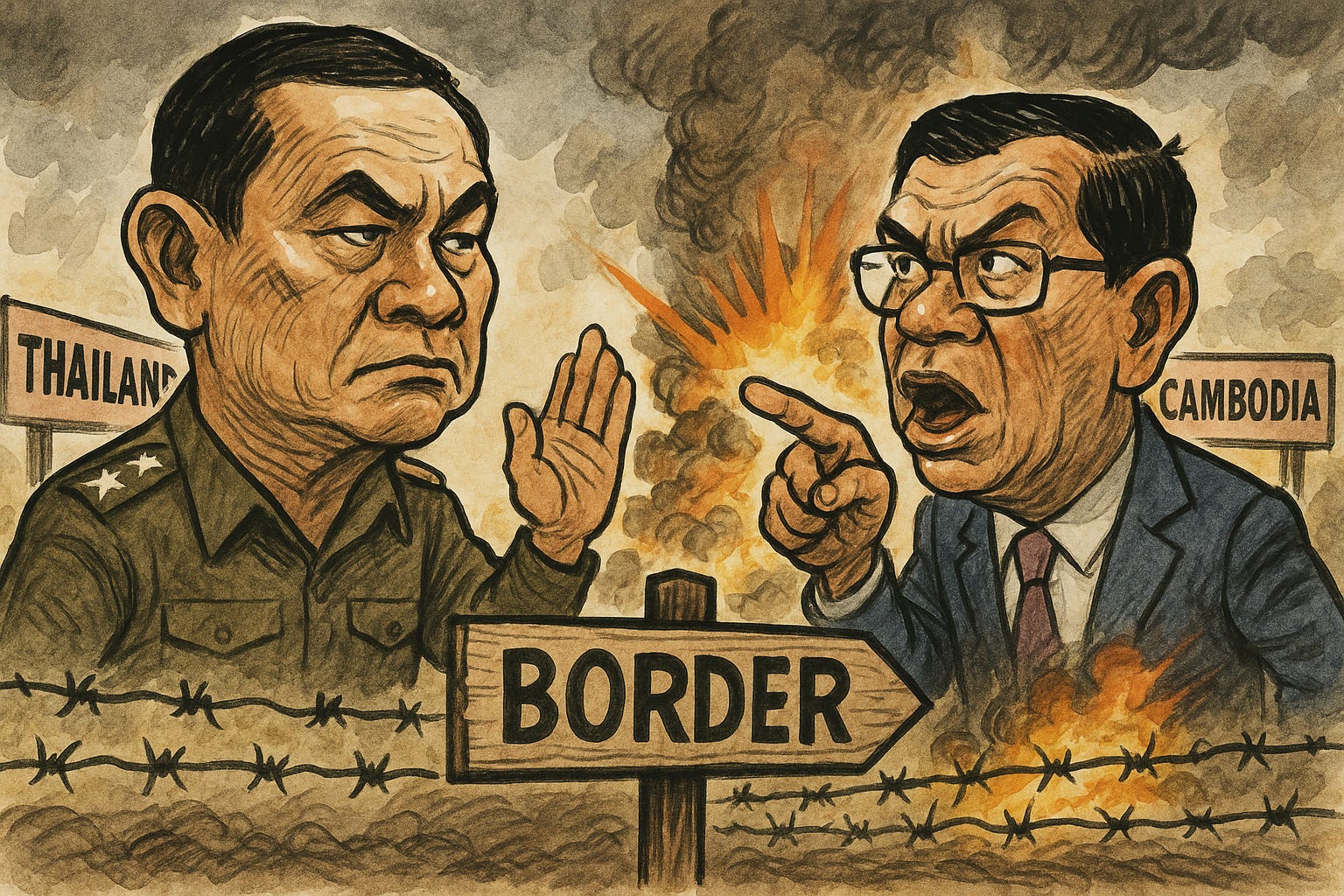
Thailand and Cambodia’s century-old border dispute—rooted in ambiguous French-era maps and flashpoints like the Preah Vihear and Ta Muen Thom temple areas—has sharply escalated following months of skirmishes over landmines and troop movements. Fighting that began on July 24 quickly intensified into artillery duels and a Thai F-16 strike inside Cambodian territory, leaving at least 16 dead (14 Thai civilians, 1 Thai soldier, 1 Cambodian) and displacing over 120,000 residents on both sides of the 800 km frontier (CNN, Reuters, Al Jazeera). Bangkok has rejected mediation offers from the United States, China, and ASEAN chair Malaysia, insisting that all cease-fire and border negotiations must remain bilateral and contingent on Cambodia halting attacks. In a sharp diplomatic escalation, Thailand has recalled its ambassador, expelled Cambodia’s envoy, and warned it will “intensify self-defence measures” if shelling persists, while Cambodian Prime Minister Hun Manet has appealed to the UN Security Council, accusing Thailand of “premeditated aggression” (NDTV, Reuters, Yahoo).
The conflict is rattling Thai financial markets. The baht has slipped from multi-year highs, and the SET Index opened down 0.6% after two straight days of fighting, with consumer staples exporters and border-trade dependent stocks under pressure (Bangkok Post, The Thaiger). Historically, SET drawdowns around Thai-Cambodian clashes average about 3% one month out before recovering, but a prolonged standoff could disrupt cross-border supply chains—impacting beverages, agribusiness, and tourism—and deter already fragile foreign fund inflows into Thai equities (Energy Connects, Bangkok Post).
Sensei’s Insight: Markets are pricing in a short-lived skirmish, but history shows border conflicts between Thailand and Cambodia can flare unpredictably. A rapid de-escalation is critical to avoid deeper economic fallout, especially for exporters and tourism-linked sectors.
🔗 Connect with Us
Stay plugged in across platforms:
Sensei on X: sensei_crypto_
Martyn Lucas on X: MartynInvestor
Vaz on X: eVTOLHUB
💎 Premium Discord Access: Join the Discord
📺 YouTube Channel (Live & Replays): Martyn Lucas Investor
👕 Limited Merch: Shop Here

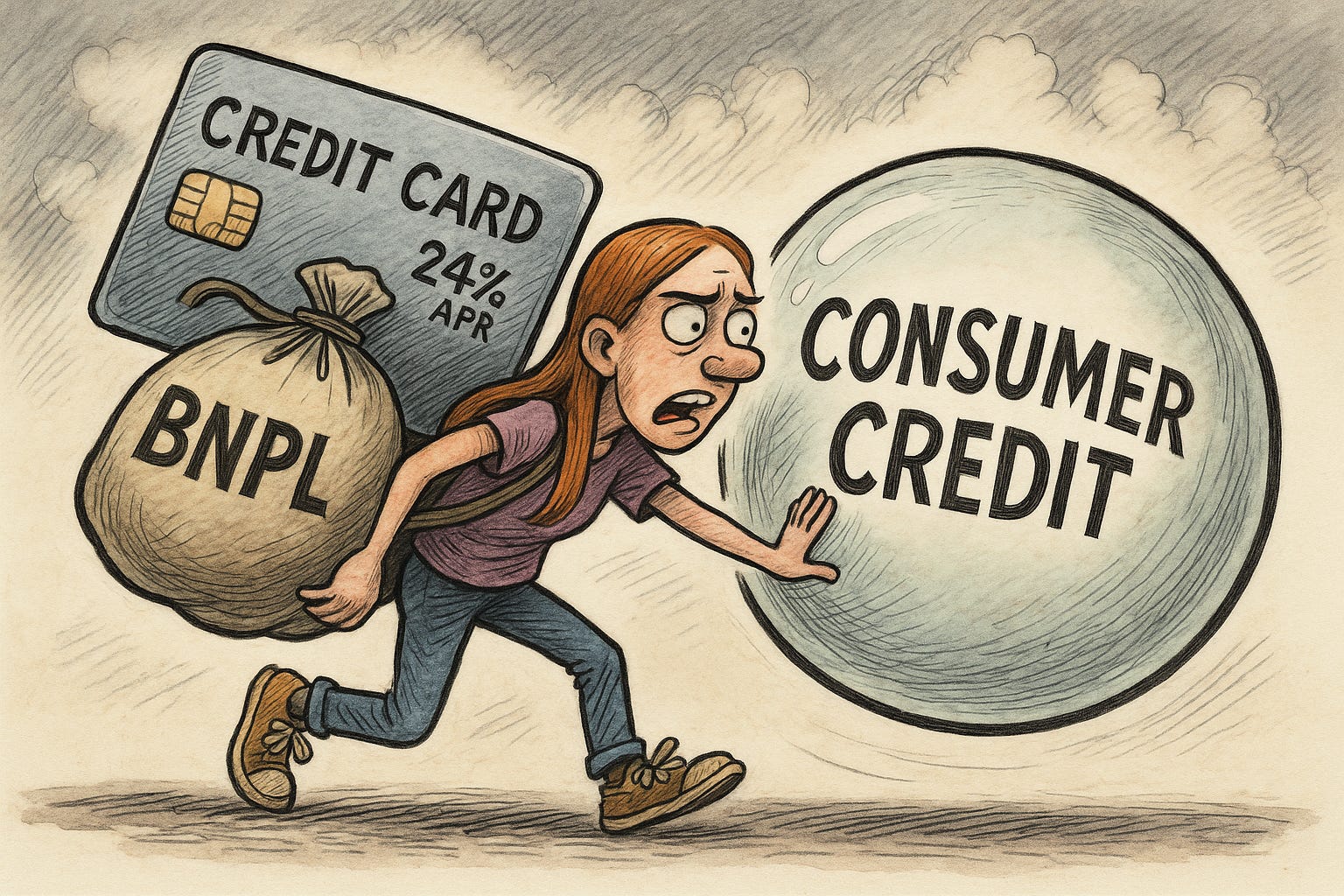
🔍 Deeper Dive: Gen Z’s Credit Boom: Macroeconomic & Market Fault Lines