👀 Today’s Stories at a Glance
🇨🇳 Trump Threatens Trade Retaliation Over Soybeans
Trump targets China’s cooking oil imports after Beijing halts U.S. soybean buys for three straight months.🚖 Waymo’s Robotaxis Head to London
Waymo will test autonomous EVs in London by 2026, aiming for full rollout under new UK laws.🇬🇧 UK Regulator Embraces Tokenised Funds
The FCA will allow tokenised investment funds on public blockchains, aiming to modernise and boost London’s edge.📉 U.S. Shutdown Sparks Global Data Crisis
A government shutdown halts critical economic data, shaking confidence and complicating global policymaking amid IMF meetings.🚨 Musk’s $56B Pay Package Hits Supreme Court
Delaware’s top court reviews Musk’s historic Tesla pay deal in a case with sweeping corporate governance stakes.🔍 Deep Dive: Bank of America, Tokenization, and the XRP Infrastructure Opportunity
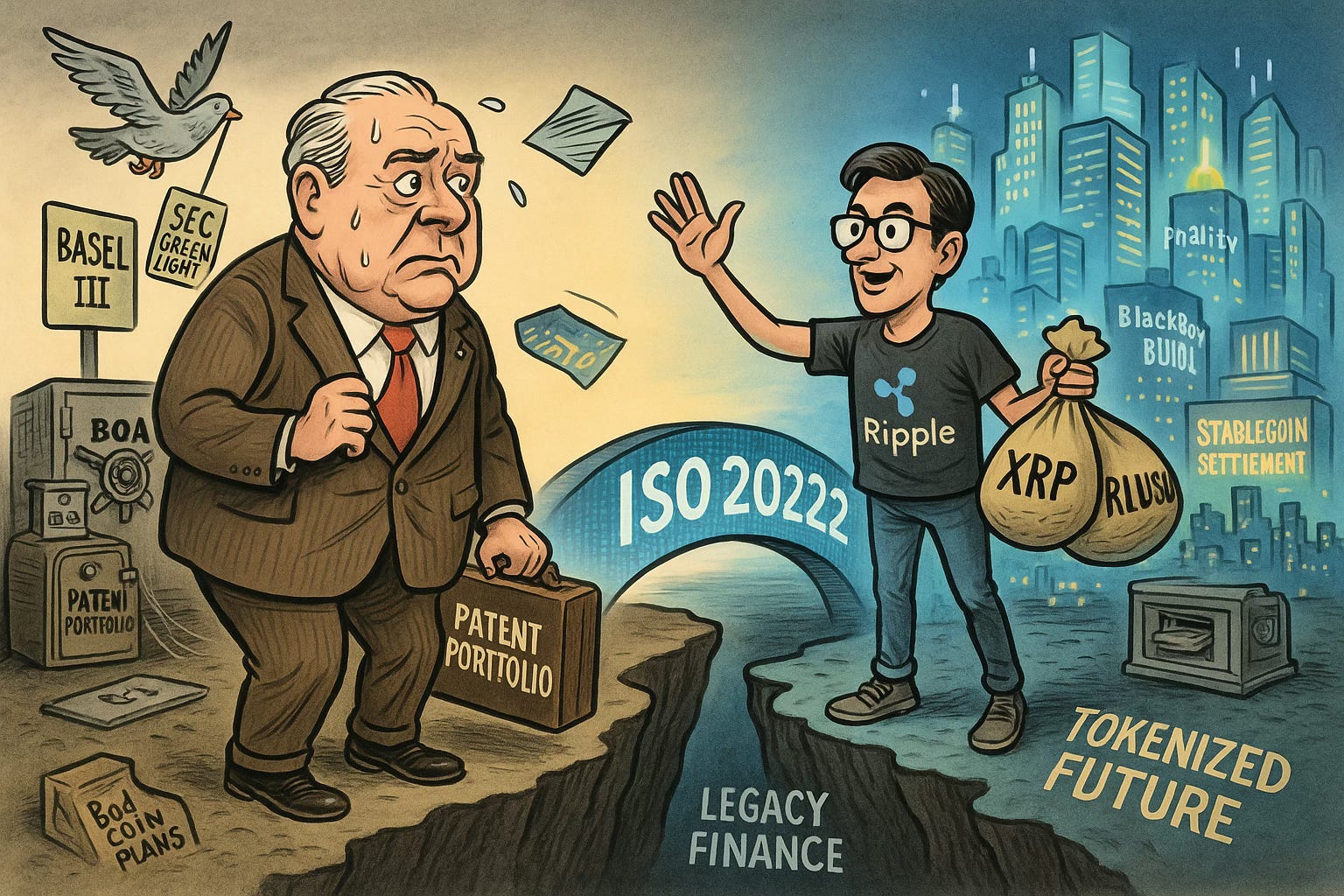
BoA may adopt XRP-linked blockchain tools as ISO 20022 unlocks real-time settlement and tokenized liquidity strategies.
🧠 One Big Thing
The UK just took a major leap toward blockchain finance. With the FCA backing tokenised investment funds on public blockchains like Ethereum, the path is now open for fund shares to be issued as crypto tokens under existing regulations. This could drastically cut costs and increase access to funds—especially for younger, digital-native investors. London’s ambition? Become the global hub for tokenised finance.
💰 Money Move of the Day
Tokenisation isn’t just a crypto buzzword anymore—it’s becoming infrastructure. While this isn’t a cue to chase tokens, it’s worth watching how asset managers start using blockchain rails to issue fund units. The move could reshape how ETFs and mutual funds are created, traded, and settled in the next decade.
📊 Market Snapshot
Cryptocurrencies:
Bitcoin (BTC): $112,089.20 (▼ -0.91%)
Ethereum (ETH): $4,108.12 (▼ -0.49%)
XRP: $2.4913 (▼ -0.57%)
Equity Indices (Futures):
S&P 500 (US500): 6,684.8 (▲ +0.63%)
NASDAQ 100 (NQ1!): 24,959.50 (▲ +0.80%)
FTSE 100: 9,413.96 (▼ -0.67%)
Commodities & Bonds:
10-Year US Treasury Yield: 4.013% (▼ -0.47%)
Oil (WTI): $58.72 (▲ +0.09%)
Gold: $4,201.01 (▲ +1.41%)
🕒 Data as of UK (BST): 12:25 / US (EST): 07:25 / Asia (Tokyo): 20:25
✅ 5 Things to Know Today
🇨🇳 Trump Threatens China Trade Retaliation Over Soybean Boycott
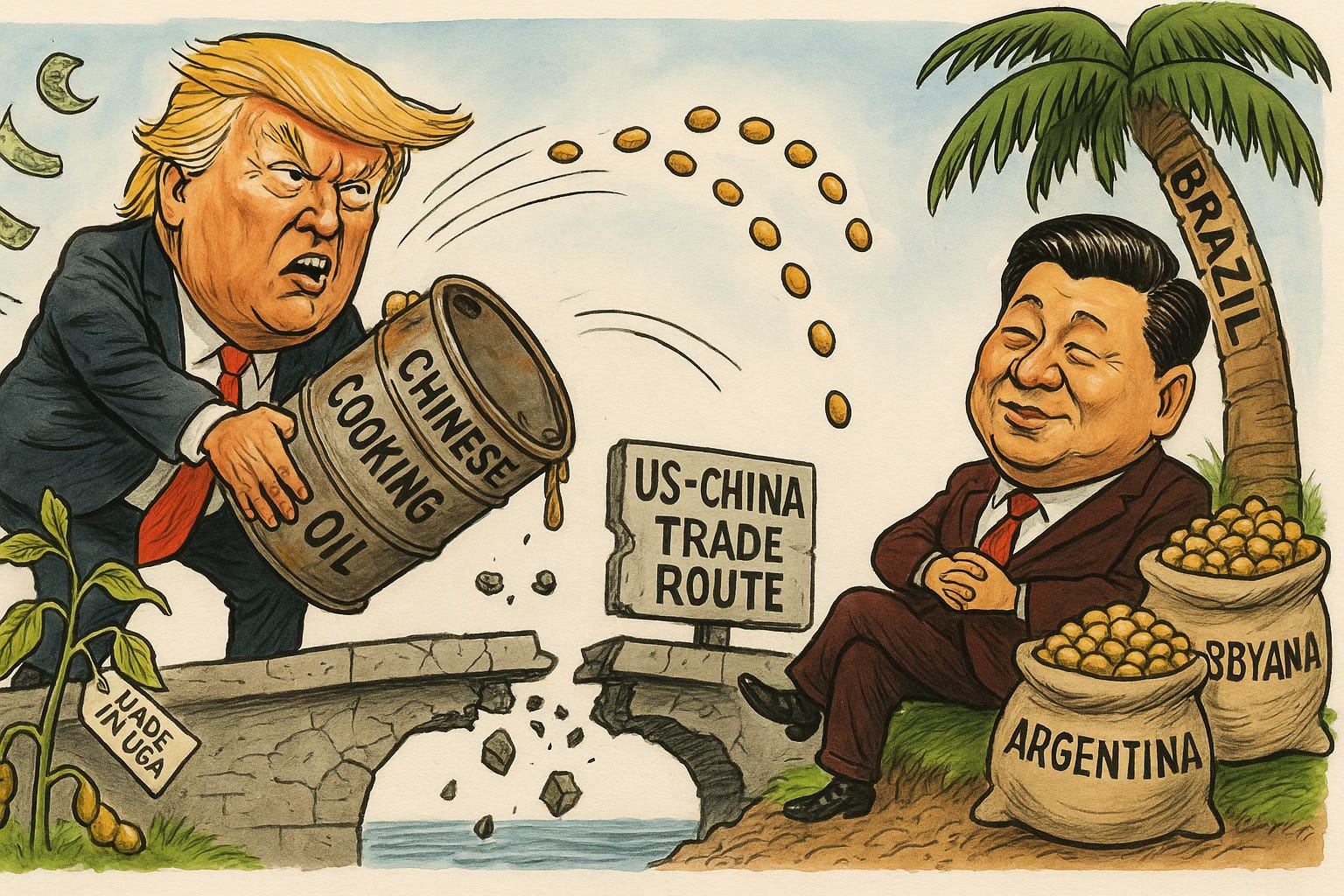
President Donald Trump intensified the ongoing US-China trade conflict on Tuesday by threatening to halt imports of Chinese cooking oil, calling Beijing’s refusal to buy American soybeans an “economically hostile act” (Reuters). China has not imported US soybeans since May 2025, marking three straight months of zero shipments during peak harvest. This stands in stark contrast to 2024, when China purchased $12.6 billion worth of American soybeans—over half of total US soybean exports. China has shifted its buying to Brazil and Argentina, with Brazil now supplying nearly 90% of China’s soybean needs in 2025 (Bloomberg). US soybean prices have dropped around 40% over the past three years as American farmers scramble to find replacement buyers in 19 other countries.
The cooking oil threat, while symbolically significant, involves relatively small trade volumes compared to soybeans. China exported 1.27 million tons of used cooking oil to the US in 2024, valued at $1.2 billion—just 43% of China’s total cooking oil exports and a fraction of the soybean trade’s scale (Energy Connects). Exports have already fallen 43% in 2025 after China revoked tax rebates. For investors, this tit-for-tat escalation signals a wider fracture in the world’s most significant trade relationship. With rare earths and agricultural goods in play, both nations are leveraging economic dependencies as strategic weapons—reshaping global supply chains and commodity markets (Czapp).
Sensei’s Insight: Strategic decoupling isn’t just theory anymore—this is a hard pivot in global agricultural trade, with ripple effects from the Midwest to the Amazon.
🚖 Waymo Launches Robotaxi Service in London, Marking European Debut
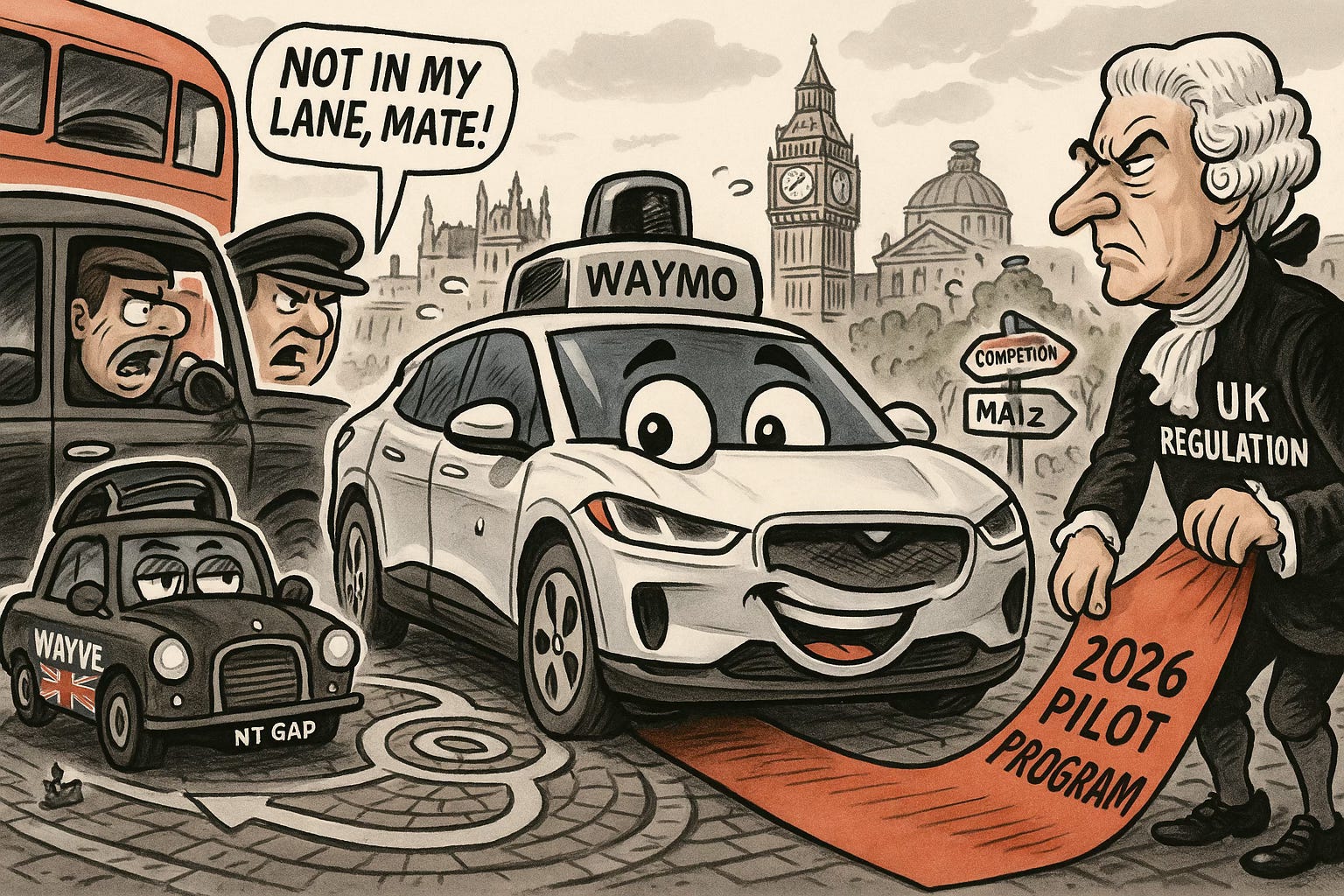
Alphabet’s Waymo announced plans to deploy fully autonomous robotaxis in London by next year, marking its first European market. The company will soon begin testing Jaguar I-PACE electric vehicles with safety drivers across 100 square miles of the city. This follows earlier international expansion into Tokyo, and aligns with UK government plans to allow small-scale autonomous vehicle pilots starting spring 2026. Full commercial rollout is expected by late 2027 under the Automated Vehicles Act. Transport Secretary Heidi Alexander praised the initiative as a boost for jobs and investment. Waymo will partner with Moove, backed by Uber, to manage fleet operations, charging, and maintenance (Reuters, Wired, CNBC).
The move signals growing regulatory and commercial validation of autonomous ride-hailing outside the U.S. Waymo, now valued at over $45 billion after a $5.6 billion funding round in October 2024, handles more than 250,000 paid rides weekly across five U.S. cities, with revenue projected to hit $300 million in 2025. London’s complex, historic road network presents a significant challenge—one that, if overcome, could unlock the UK’s autonomous vehicle market, forecast to hit £42 billion by 2035. However, Waymo will face local competition from London-based Wayve, which is also testing robotaxis with Uber in the same market (The Verge, Forbes, Gov.uk).
Sensei’s Insight: London isn’t just another expansion—this is a litmus test for how autonomous fleets adapt to Europe’s dense, chaotic, centuries-old streets. If Waymo succeeds here, it’s game on for global robotaxi dominance.
🇬🇧UK Regulator Backs Tokenised Investment Funds in Major Digital Asset Push
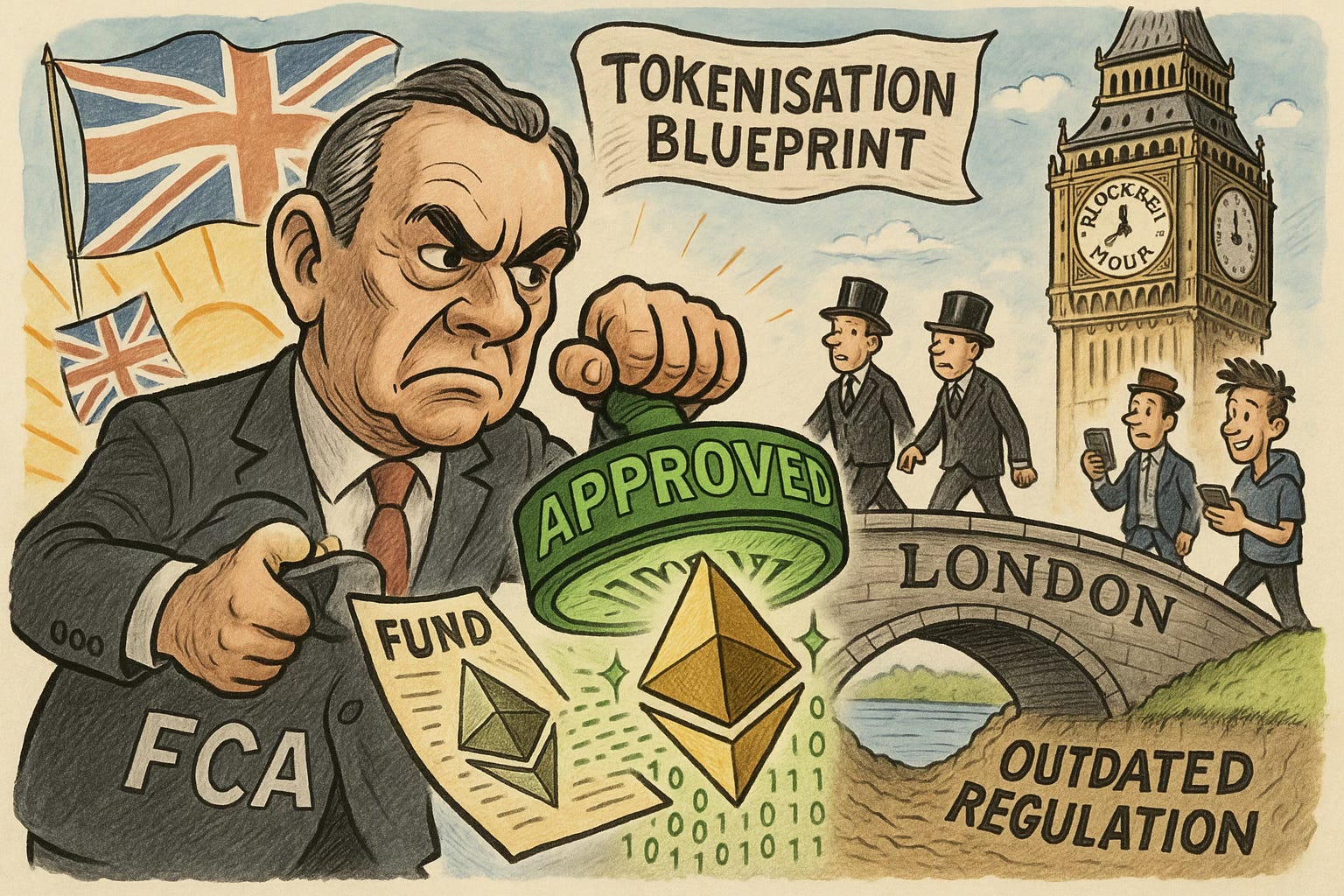
The UK Financial Conduct Authority (FCA) unveiled a sweeping proposal on October 14 to allow asset managers to tokenise their funds on public blockchains such as Ethereum, ending prior restrictions that confined tokenisation to private networks. Detailed in consultation paper CP25/28, the guidance outlines how tokenised fund registers can operate under existing regulations through the UK Blueprint model. It also introduces a “direct-to-fund” dealing framework to streamline the processing of traditional and tokenised fund units. The blueprint builds on the model previously implemented when the FCA authorised the UK’s first tokenised UCITS fund in January 2025, marking another step in the UK’s bid to modernise its asset management infrastructure (Cointelegraph, FCA).
The proposed regulatory structure enables asset managers to issue crypto tokens representing fund shares, using distributed ledger technology to reflect investor ownership digitally. In addition to clarifying the regulatory pathway, the consultation explores the use of stablecoins in fund settlements and presents a roadmap for blockchain-based transaction processing. With the global asset management sector valued at $14 trillion, the FCA’s move is a calculated play to attract innovation and boost London’s appeal as a tokenisation hub. Investors could benefit from reduced operational costs, broader access to private markets, and more dynamic distribution channels targeting digital-native demographics. Regulatory clarity, long cited as a barrier to blockchain integration, now gives UK firms a potential edge in the global race toward asset tokenisation (Reuters, FT).
Sensei’s Insight: A greenlight from the FCA isn’t just a win for fund managers—it signals the UK’s intent to lead in financial innovation. Public blockchain tokenisation could soon be the standard, not the experiment.
📉 US Government Shutdown Creates Global “Data Darkness” Crisis
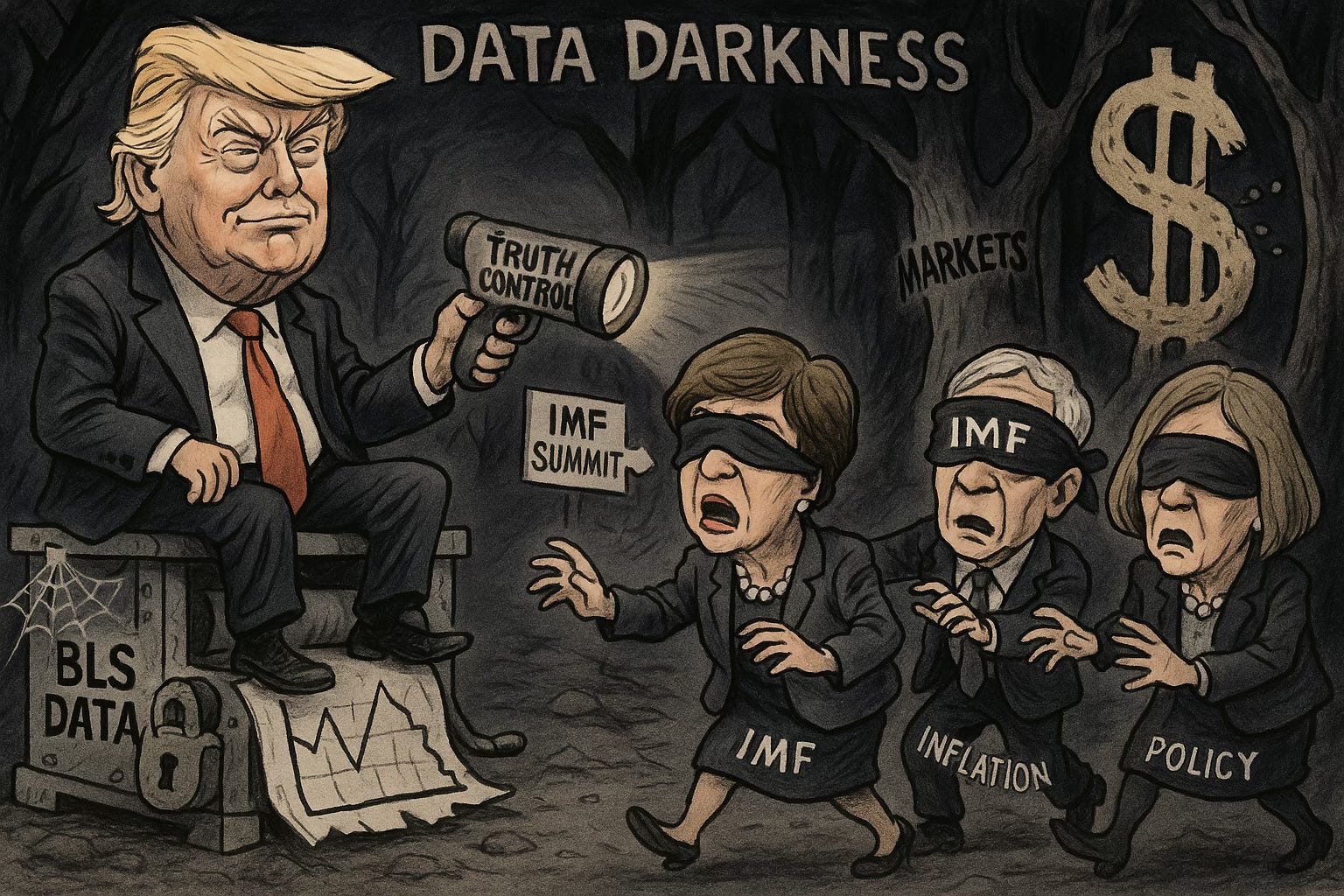
A two-week US government shutdown has halted critical economic data releases from the Bureau of Labor Statistics (BLS), triggering a global “data darkness” crisis. The missing reports include the September jobs report and could affect the quality of October’s Consumer Price Index, as the BLS cannot collect fresh data. The shutdown casts a long shadow over this week’s IMF and World Bank meetings in Washington, where global financial leaders must navigate without key insights from the world’s largest economy, which drives about 25% of global GDP (Reuters, Bloomberg). Bank of Japan Governor Kazuo Ueda called the data blackout “a serious problem,” while Bank of England’s Catherine Mann warned of long-term trust erosion in US institutions, likening the risks to “termites” weakening a global currency’s foundation (BBC).
The crisis coincides with President Trump’s controversial August firing of BLS Commissioner Erika McEntarfer following a disappointing July jobs report, a move sharply criticized by former officials (CNN, Politico). The IMF’s latest World Economic Outlook warns that political interference in statistical bodies could “significantly complicate” policymaking and erode public trust (IMF). With the Federal Reserve now relying on private data and anecdotal sources, markets face heightened volatility amid fragile global conditions (Investopedia, S&P Global).
Sensei’s Insight: When data disappears, uncertainty multiplies. Global markets may tolerate volatility, but they flinch at blindfolded decision-making.
🚨 Musk’s $56B Tesla Payday Heads to Delaware Supreme Court
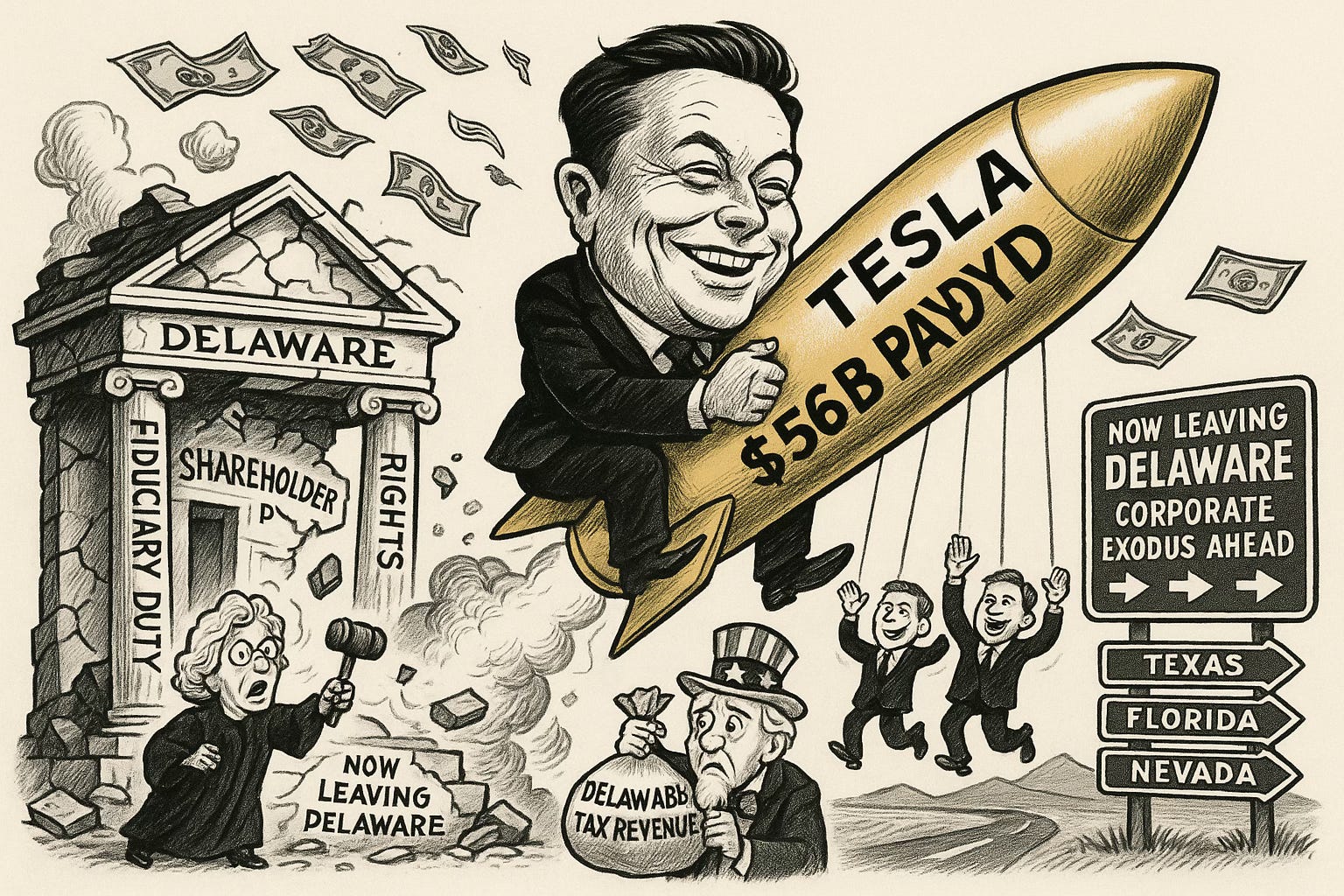
The Delaware Supreme Court heard oral arguments Wednesday in what may be the final legal stage of Elon Musk’s six-year battle over his $56 billion Tesla pay package — the largest in corporate history. Although Tesla shareholders initially approved the performance-based stock plan in 2018, and reaffirmed it by 77% in June 2024, Delaware Chancellor Kathaleen McCormick twice voided the deal, citing Musk’s outsized influence on the board and breach of fiduciary duty. The lawsuit, filed by shareholder Richard Tornetta, argued the compensation was excessive. McCormick ruled in January that Musk, despite a 13% stake, acted as a controlling shareholder with deep personal and financial ties to board members. When Tesla re-submitted the plan for shareholder approval, McCormick rejected the re-ratification attempt in December, asserting that no Delaware court had ever reversed a judgment based on a subsequent vote. All 12 performance milestones — tied to market cap and operational targets — have been achieved, making the package worth approximately $120 billion at current stock prices (Reuters, NPR).
Beyond Musk, the case has ignited a major governance clash between Delaware’s historically shareholder-first legal framework and the rise of powerful corporate insiders. Tesla has since reincorporated in Texas, a move dubbed “Dexit,” and other giants like Dropbox, Meta, and Trump Media are weighing exits to states with more management-friendly laws like Nevada and Florida. Delaware depends on franchise taxes for nearly a third of its revenue, making the outcome potentially destabilizing. Tesla has also added new bylaws in Texas requiring shareholders to own at least 3% to bring litigation, drastically limiting legal challenges. A Supreme Court affirmation of McCormick’s decision could reset norms for executive compensation nationwide and further weaken Delaware’s dominance as America’s corporate hub (NYT, Yahoo).
Sensei’s Insight: Musk’s payday isn’t just about billions — it’s about who controls Corporate America. If Delaware loses its grip, expect a legal arms race among states to attract the country’s biggest companies.
🔗 Connect with Us
Stay plugged in across platforms:
Sensei on X: sensei_crypto_
Martyn Lucas on X: MartynInvestor
Vaz on X: eVTOLHUB
💎 Premium Discord Access: Join the Discord
📺 YouTube Channel (Live & Replays): Martyn Lucas Investor
👕 Limited Merch: Shop Here

🔍Deep Dive: Bank of America, Tokenization, and the XRP Infrastructure Opportunity