🧠 One Big Thing
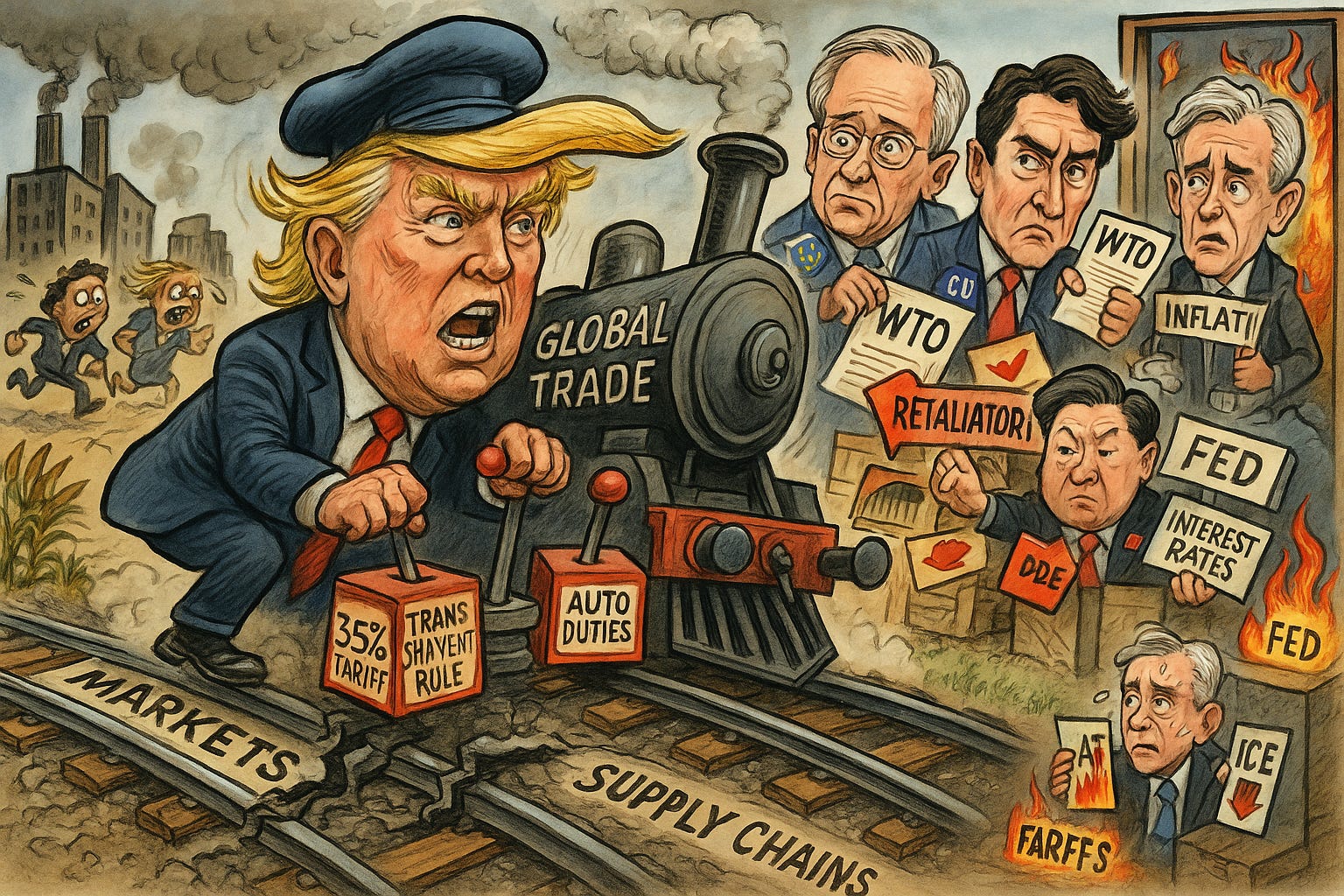
The August 1 U.S. tariff wave hits today, targeting over 90 countries with rates as high as 40%—marking the most aggressive trade reset in over a decade.
💰 Money Move of the Day
When trade policies shift sharply, it doesn’t just impact stocks—it can ripple through currencies, commodities, and consumer prices. Staying diversified across regions and asset types may help buffer the volatility.
📊 Market Snapshot
Cryptocurrencies:
Bitcoin (BTC): $114,926 (▼ -0.72%)
Ethereum (ETH): $3,624 (▼ -2.00%)
XRP: $2.95 (▼ -2.34%)
Equity Indices (Futures):
S&P 500 (SPX): 6,282 (▼ -0.87%)
NASDAQ 100: 23,076 (▼ -1.24%)
FTSE 100: 9,083 (▼ -0.36%)
Commodities & Bonds:
10-Year US Treasury Yield: 4.390% (▲ +0.18%)
Oil (WTI): $69.38 (▼ -1.27%)
Gold: $3,300 (▲ +0.29%)
🕒 Data as of UK (BST): 12:18 / US (EST): 07:18 / Asia (Tokyo): 20:18
✅ 5 Things to Know Today
📌 Eurozone Inflation Steady, But ECB Walks Trade Tightrope
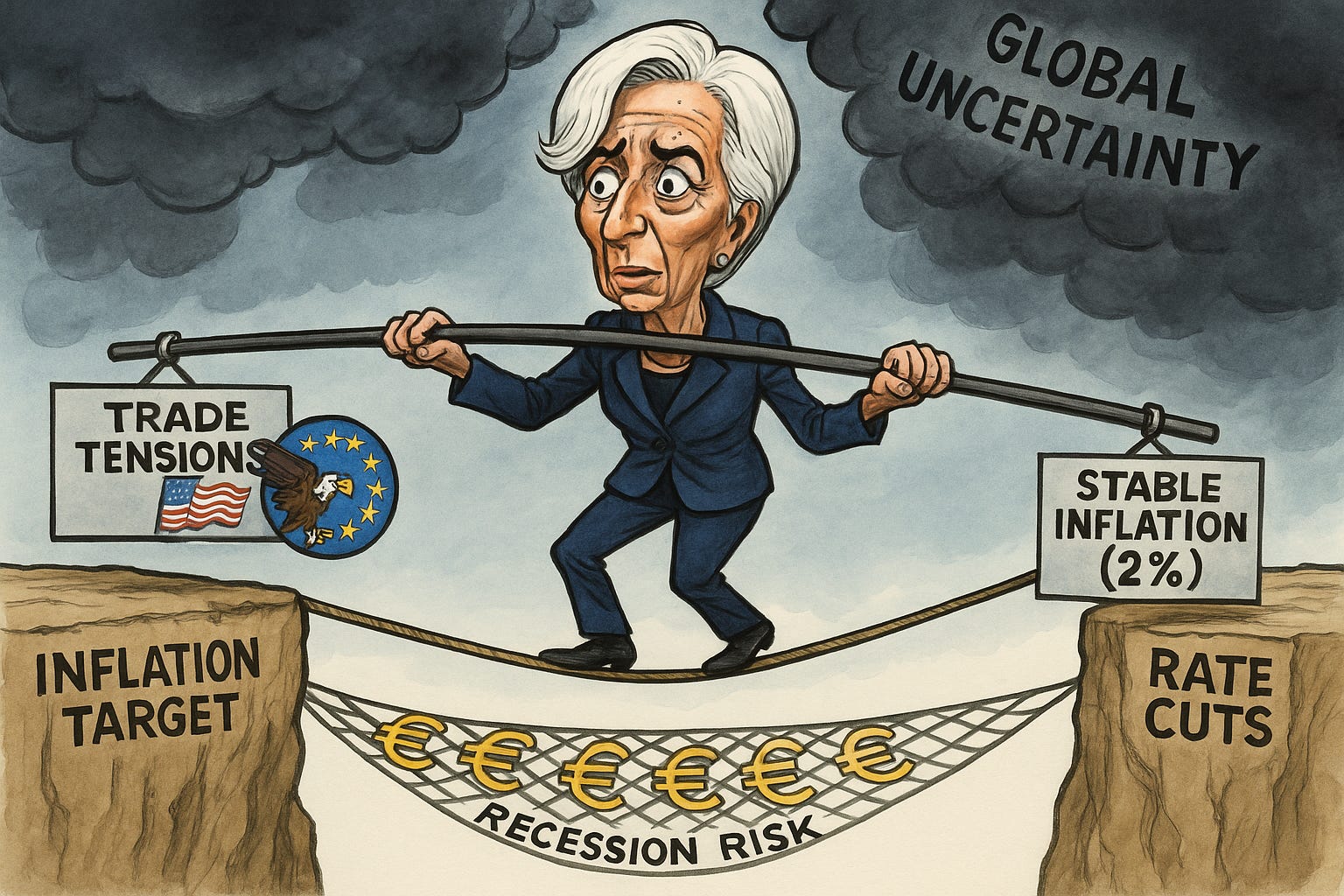
Eurozone inflation held steady at 2.0% year-over-year in July 2025, matching the European Central Bank's target for the second straight month (Yahoo Finance, Trading Economics). The result slightly exceeded market forecasts of 1.9% but remains within the ECB's comfort zone as policymakers weigh the effect of trade uncertainties on monetary strategy (Reuters). The inflation mix showed encouraging signs: services inflation eased to 3.1% from 3.3%, helping counter increases in food, alcohol, and tobacco prices (3.3% vs 3.1%), and non-energy industrial goods (0.8% vs 0.5%) (Trading Economics). Core inflation held steady at 2.3%, its lowest since January 2022 (Trading Economics), while energy prices continued falling, down 2.5% year-over-year.
This inflation backdrop supports the ECB’s decision last week to keep interest rates on hold at 2%, after cutting rates by a cumulative 200 basis points over multiple meetings since June 2024 (Trading Economics, FT). Markets now assign just a 50% chance of another cut this year, as policymakers adopt a cautious, data-dependent stance amid trade tensions between the U.S. and EU (La Française, Reuters). With interest rates near neutral and inflation expectations anchoring, future moves will likely hinge on how global trade disputes resolve and their broader economic impacts (PIMCO, Reuters).
Sensei’s Insight: While inflation progress is encouraging, geopolitical jitters continue to cloud the outlook
Coinbase Misses Q2 Estimates But Unveils "Everything Exchange" Vision as XRP Outperforms ETH
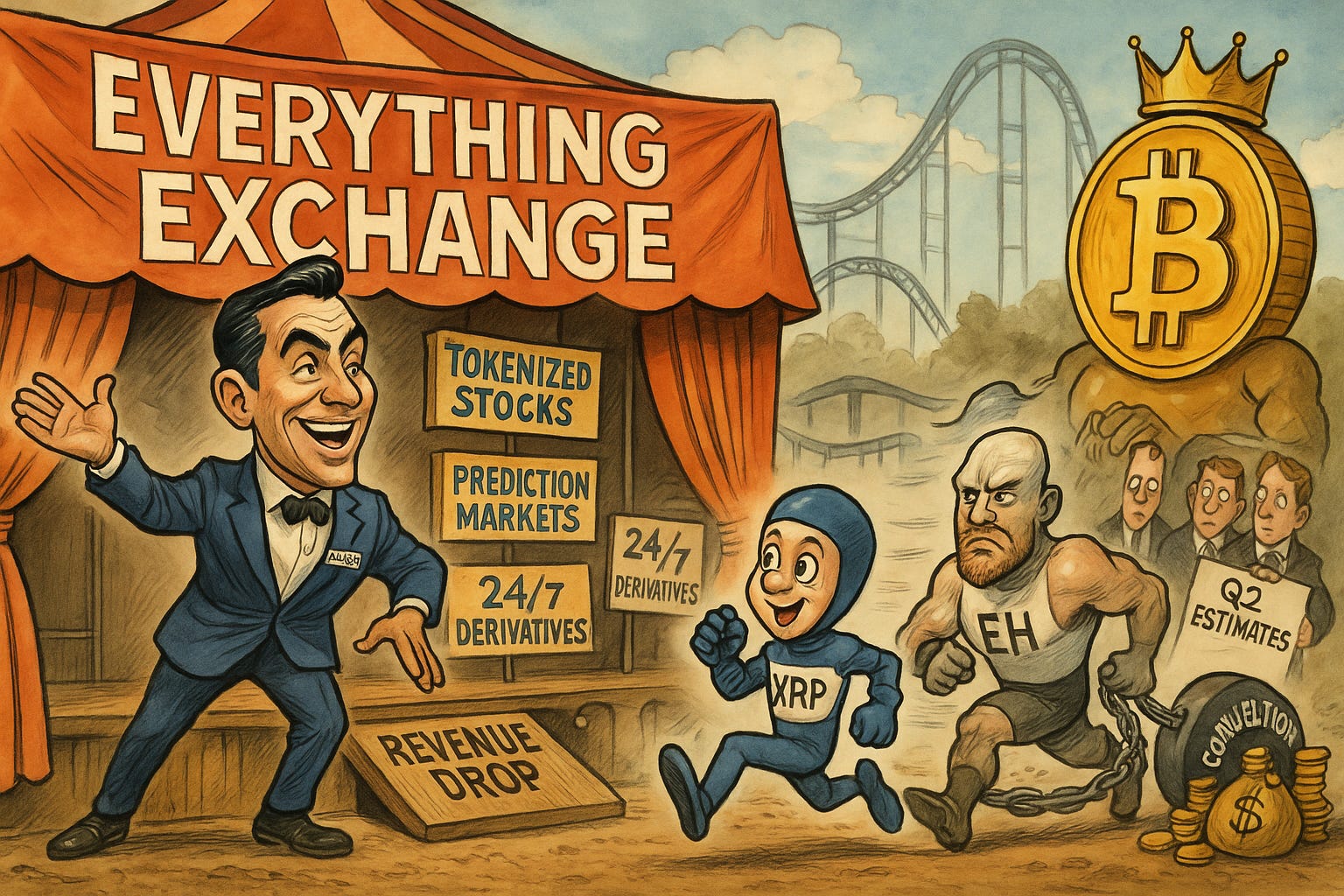
Coinbase reported Q2 2025 revenue of $1.5 billion, missing Wall Street expectations of $1.56–$1.59 billion, with transaction revenue falling 39% quarter-over-quarter to $764 million (Cointelegraph, Cryptorank). Despite the revenue miss, net income surged to $1.43 billion ($5.14 per share), driven by a $1.5 billion gain from its Circle investment and $362 million in crypto portfolio gains (TradingView). In tandem with earnings, Coinbase reiterated its strategic pivot toward becoming an "everything exchange"—a platform offering tokenized stocks, derivatives, and prediction markets with 24/7 instant settlement (CNBC, Proactive Investors).
Notably, XRP outperformed Ethereum in consumer transaction revenue for the second consecutive quarter, capturing 13% versus ETH’s 12%, despite ETH posting stronger price gains (38% vs. XRP’s 11%) (TheCryptoBasic, U.Today). XRP's rising appeal follows regulatory clarity and has seen its trading share rise from under 10% in early 2024 to as high as 18% in Q1. Bitcoin remained dominant with 34% of transaction revenue and 30% of trading volume (CryptoNews). Coinbase also added 2,509 BTC to its treasury, bringing total holdings to 11,776 BTC valued at roughly $1.26 billion (TradingView, Yahoo Finance).
Sensei’s Insight: Crypto alone is no longer enough. With XRP surpassing ETH in revenue despite lagging in price, and Coinbase's strategic pivot toward tokenized real-world assets, regulatory clarity and diversified offerings—not just token performance—are driving the next phase of growth.
🇪🇺 Euro Crashes on Costly US Trade Deal — Is Europe the Biggest Loser?
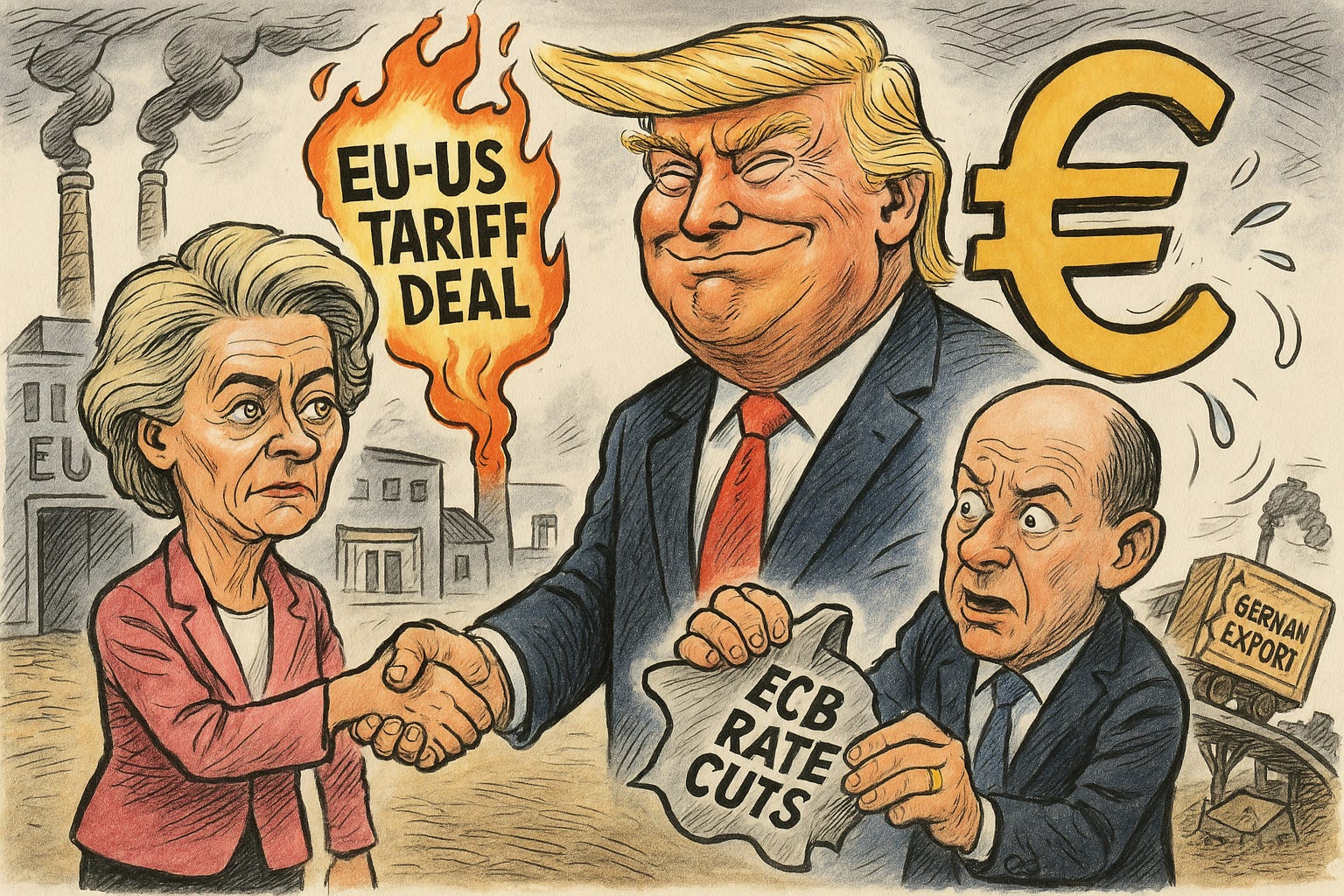
The euro is enduring its steepest weekly decline in nearly three years as markets react to the economic ramifications of the newly signed EU-US trade agreement. The EUR/USD pair has fallen 2.8% this week, now trading at $1.1420, marking the worst week for the euro since September 2022 (Bloomberg). The currency touched seven-week lows around $1.1400 (EWF Pro) after the 15% tariff deal was finalized by European Commission President Ursula von der Leyen and President Trump on Sunday (Fox Business, DW). Over the past month, the euro has dropped 3.32% against the dollar, posting its first monthly loss of 2025 (Trading Economics, Economies).
The agreement avoids Trump’s proposed 30% “reciprocal tariff” but still imposes substantial costs on Europe. Economic projections estimate a 0.3-0.5% reduction in eurozone GDP growth, with Germany expected to be hardest hit due to its reliance on exports (Bruegel, ICGAM). Under the deal, Europe must purchase $750 billion in US energy over three years and commit $600 billion to domestic investment (Fortune), intensifying fiscal strain. European Central Bank officials are re-evaluating their monetary policy outlook, with markets now pricing a 90% chance of a 25 bps rate cut by March 2026 (Trading Economics) amid concerns of inflation from higher import costs.
Sensei’s Insight: The euro’s plunge reflects investor anxiety over Europe’s constrained policy levers in the face of a politically-driven trade shift. The ECB now walks a tightrope—stimulate growth without fueling inflation.
🔥 Big Tech’s AI Spending Spree Finally Delivers
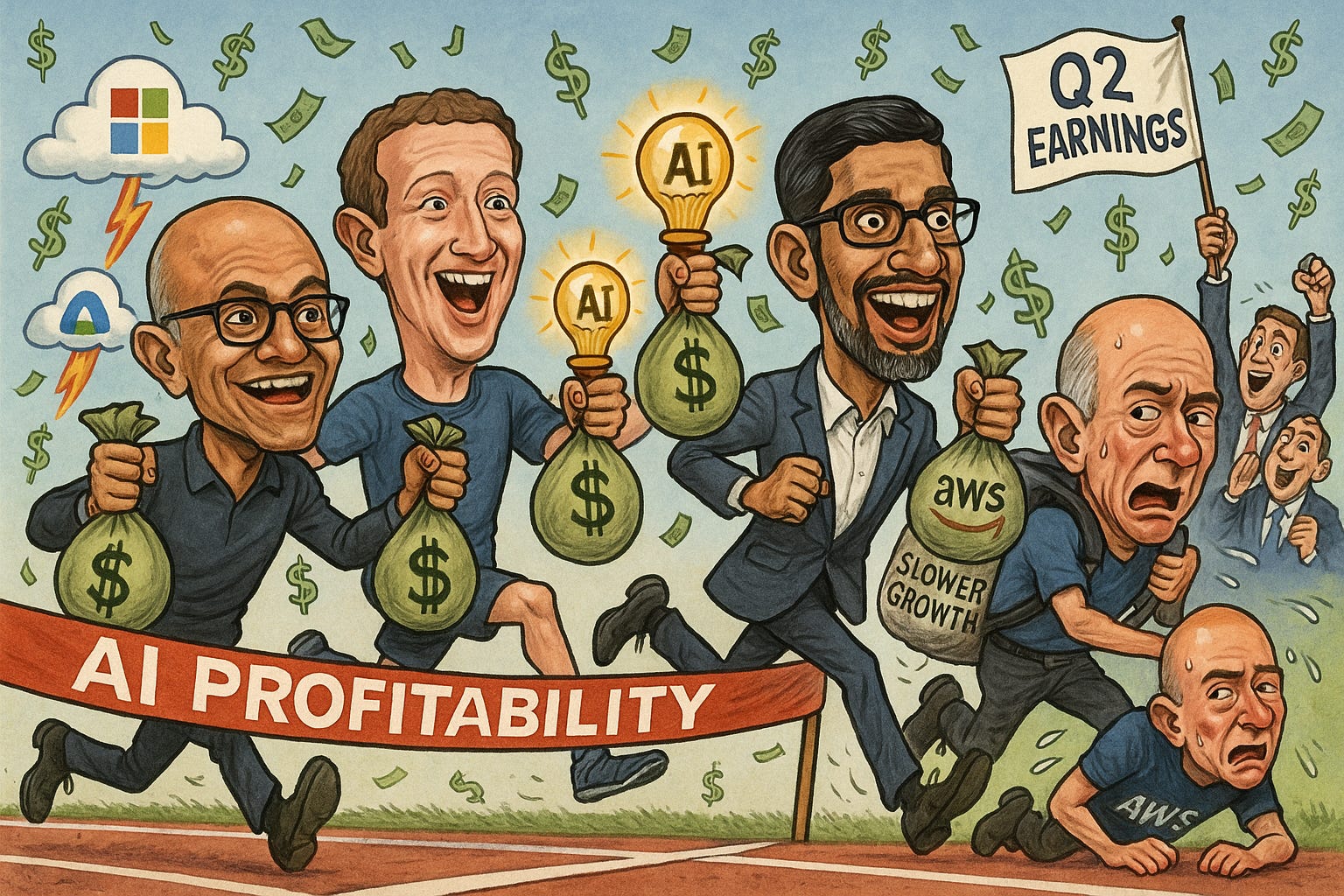
Big Tech's multibillion-dollar bets on artificial intelligence are finally translating into tangible gains, with Microsoft, Meta, and Alphabet collectively adding over $500 billion in market value after smashing earnings expectations and revealing real AI monetization strategies (Reuters, Calcalistech, Reuters). Microsoft led the surge, hitting a $4 trillion market cap for the first time and reporting $76.4 billion in revenue (+18% YoY) and $27.2 billion in net income (+24%), thanks largely to Azure, which surpassed $75 billion in annual revenue with 39% growth (Microsoft, Microsoft News). CEO Satya Nadella confirmed that AI services generated $13 billion in annual revenue, growing 175% year-over-year (AI News). Meta followed with a 22% YoY revenue increase to $47.5 billion and $7.14 EPS, beating estimates by 22%, while boosting 2025 capex guidance to $66–72 billion as AI ad tools lifted conversions by 3–5% across Facebook and Instagram (Forbes, Reuters, Meta Transcript).
The current earnings season marks a turning point, shifting AI from a speculative narrative to a revenue-generating force. Microsoft and Meta’s clear monetization success—$13B in AI revenue and measurable ad lift, respectively—offers the validation investors have demanded amid projections of nearly $400 billion in 2025 AI infrastructure spend (WSJ, Investing). Meanwhile, Amazon tumbled 6.6% pre-market, despite an earnings beat, as its AWS growth (17.5%) trailed Microsoft Azure (39%) and Google Cloud (32%) (CNBC, AJ Bell, Amazon IR). The AI arms race is no longer about who spends the most—it’s about who delivers results.
Sensei’s Insight: The market just fired its flare: AI isn’t a vision—it's a metric. Monetize or move aside.
Investors Question US Market Dominance Despite Record Highs
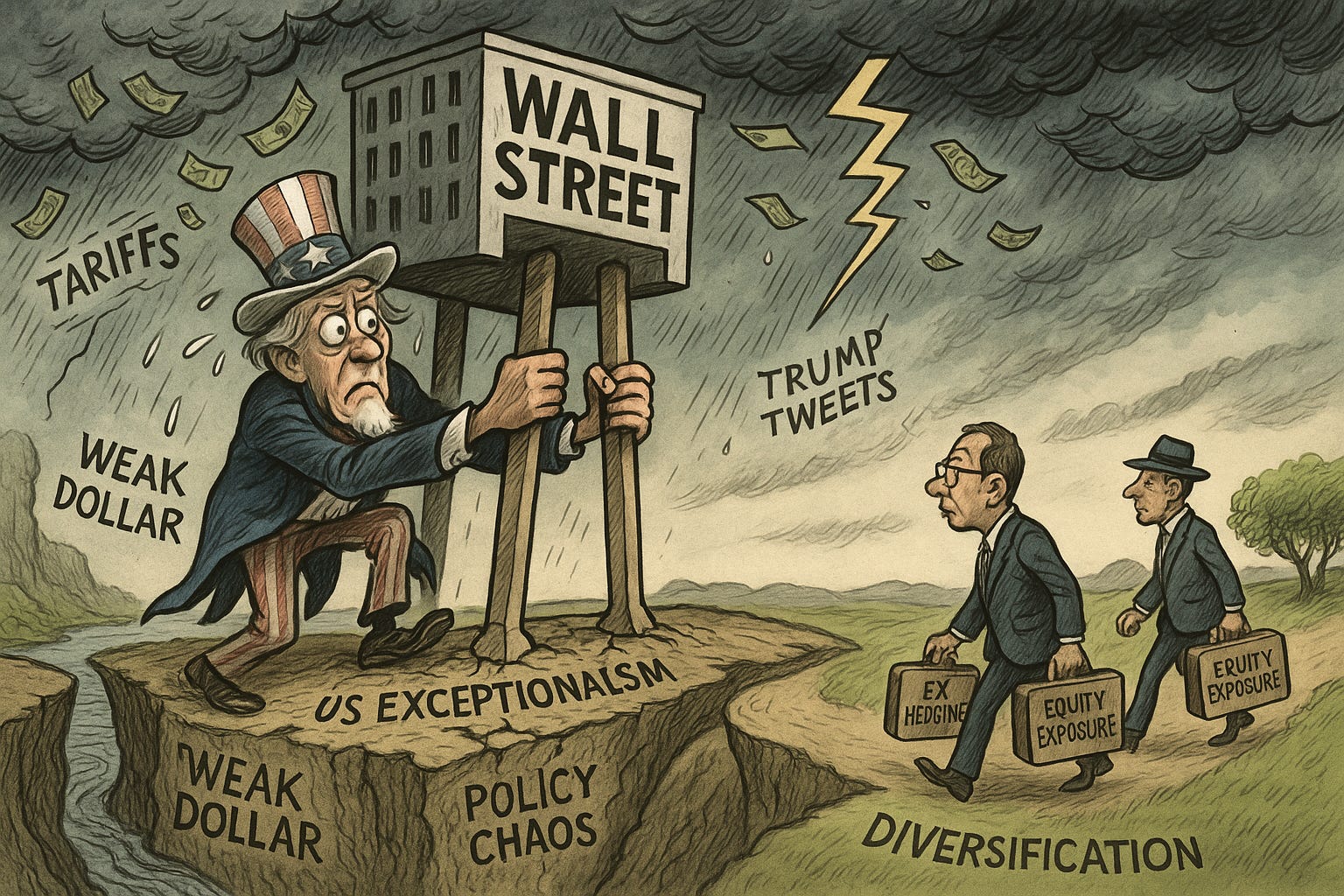
Wall Street's recent surge to fresh highs masks growing concern among institutional investors about the durability of America's financial leadership. A perfect storm of tariff unpredictability, a rapidly weakening dollar, and increasingly stretched tech valuations is triggering a reconsideration of longstanding US-heavy allocations (Reuters). Bank of America's March survey showed clients slashed long US equity positions by 40 percentage points—the largest drop on record (TradeAlgo). Meanwhile, foreign investors have been reducing FX hedges on dollar-denominated assets for three straight years (State Street), signaling a structural departure from the "US exceptionalism" narrative that defined global market behavior through 2024 (Goldman Sachs, Brookings).
The US dollar has posted its worst first-half performance since 1973, dropping 10.8% on the dollar index (Al Jazeera), and policy volatility—fueled by President Trump's tariffs and attacks on the Fed—has reached historic highs (Export Planning, Chatham House). Unlike past risk-off cycles, the dollar is no longer benefiting from safe-haven flows (Brookings, LA Times). Optimism around tech, particularly AI investments from Microsoft and Meta, continues to prop up sentiment (Reuters), but the S&P 500's top-heavy structure—with the Magnificent Seven making up over 32%—is drawing parallels to the dot-com era's fragility (DIY Investor, State Street).
Sensei’s Insight: For over a decade, global markets rode the wave of American exceptionalism. If this rotation proves durable, investors may need to rethink core assumptions—especially the once-reliable trio of US stocks, bonds, and the dollar.
🔗 Connect with Us
Stay plugged in across platforms:
Sensei on X: sensei_crypto_
Martyn Lucas on X: MartynInvestor
Vaz on X: eVTOLHUB
💎 Premium Discord Access: Join the Discord
📺 YouTube Channel (Live & Replays): Martyn Lucas Investor
👕 Limited Merch: Shop Here

🔍 Deeper Dive: Tariff Day Has Arrived - What the Market Didn’t Price In