


👀 Today’s Stories at a Glance
🌏 Trump Makes Rare Earths Deal With Australia to Fight China
Trump and Albanese ink $8.5B minerals pact to counter China’s rare earths dominance and tech chokepoint.⚡ BC Permanently Bans New Crypto Mining, Caps AI Data Centres
British Columbia bans new crypto mining, limits AI energy use to prioritize jobs and grid reliability.🤖 OpenAI’s Math “Breakthrough” Exposed as False Claim
OpenAI falsely claimed GPT-5 solved unsolved math problems; backlash highlights growing concerns over AI hype.✈️ Archer’s UAE Passenger Timeline Faces Certification Delay
Archer’s UAE air taxi debut delayed to 2026 amid certification setbacks, eroding first-mover advantage and revenue.🗞 Japan Stocks Surge to Record on Takaichi’s Rise
Nikkei nears 50,000 as Takaichi’s leadership sparks stimulus hopes and a weaker yen boosts exporters.💳 Fed Hosts Payments Innovation Conference Today, Livestreamed
The Fed’s livestreamed conference today features panels on stablecoins, tokenization, and AI in payments innovation.🔍 Evernorth’s $1B XRP Bet: A New Kind of Treasury Company
Evernorth will raise $1B+ to buy XRP on open markets, creating a Nasdaq-listed institutional treasury for XRP.
🧠 One Big Thing
The Fed’s Payments Innovation Conference is live today, featuring sessions on stablecoins, tokenization, and AI in finance. Big voices from Chainlink, BlackRock, Coinbase, and ARK are joining—watch for signals on future payment infrastructure.
💰 Money Move of the Day
Tuning into today’s Fed livestream could offer sharp insight into where digital payments and tokenization are headed. It’s a rare peek at how regulators and fintech leaders are thinking.
📊 Market Snapshot
Cryptocurrencies:
Bitcoin (BTC): $108,402.50 (▼ -1.96%)
Ethereum (ETH): $3,879.23 (▼ -2.54%)
XRP: $2.4163 (▼ -3.18%)
Equity Indices (Futures):
NASDAQ 100: 25,288.25 (▼ -0.07%)
FTSE 100: 9,429.69 (▼ -0.08%)
S&P 500 (SPX): 6,732.40 (▼ -0.13%)
Commodities & Bonds:
10-Year US Treasury Yield: 3.982% (0.00%)
Oil (WTI): $57.98 (▲ +1.12%)
Gold: $4,259.95 (▼ -2.20%)
Silver: $49.07 (▼ -4.73%)
🕒 Data as of UK (BST): 12:03 / US (EST): 07:03 / Asia (Tokyo): 20:03
✅ 5 Things to Know Today + Bonus Story
🌏 Trump Makes Rare Earths Deal With Australia to Fight China
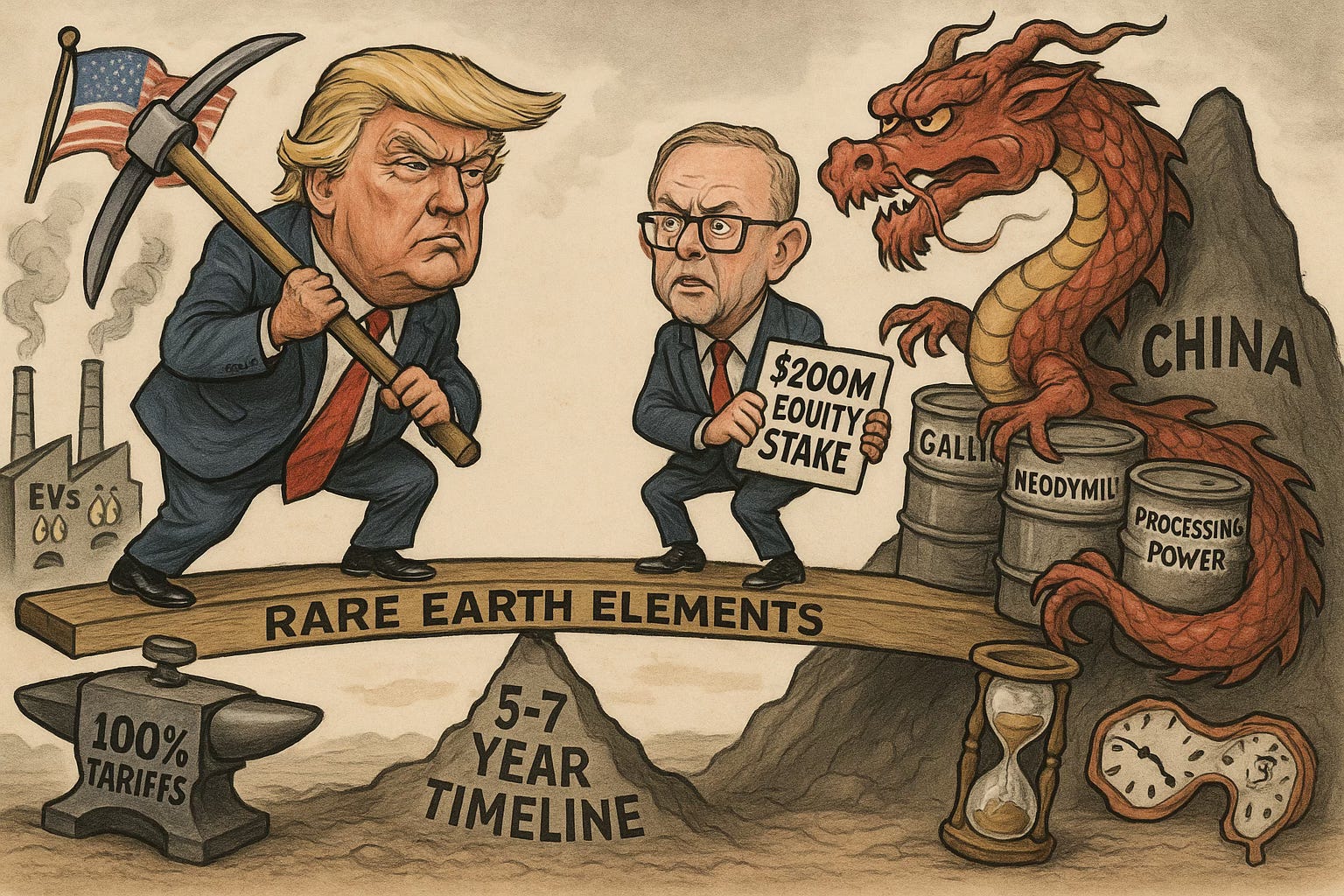
President Donald Trump and Australian Prime Minister Anthony Albanese signed an $8.5 billion critical minerals framework at the White House on Monday, October 20, positioning the U.S. and Australia as joint leaders in challenging China’s rare earths dominance. Under the agreement, each nation will commit at least $1 billion within six months toward mining and processing projects in both countries. The framework creates a U.S.-Australia Critical Minerals Supply Security Response Group, co-led by cabinet-level officials, to coordinate policy including price floors and expedited permitting (White House). Additionally, the (Export-Import Bank) issued $2.2 billion in letters of interest to unlock as much as $5 billion in critical mineral investments. Australian stocks responded sharply: (Bloomberg) reported Arafura jumped 29%, Lynas climbed 4.7%, and Iluka gained 9.1%.
The move follows China’s sweeping export restrictions enacted on October 9, which now limit outbound shipments of 12 of the 17 rare earth elements and apply extraterritorial rules to materials containing even 0.1% of Chinese-origin rare earths or using Chinese technology (China Briefing). China currently dominates approximately 70% of global rare earths mining and up to 90% of processing, creating a chokepoint for industries such as EVs, semiconductors, defense systems, and renewables. In response, Trump warned of an additional 100% tariff on Chinese goods beginning November 1 unless the export curbs are rescinded. However, analysts have flagged the timeline as overly ambitious: major supply diversification has been forecasted to take 5–7 years (Reuters), not the one-year horizon Trump is suggesting. Meanwhile, MP Materials—the only active U.S. rare earth miner—has begun producing neodymium-praseodymium metal in Texas, with plans to deliver 1,000 tonnes of finished magnets annually to General Motors.
Sensei’s Insight: This deal reshapes critical minerals geopolitics, but investors should temper expectations—building alternative supply chains to challenge China’s 90% processing dominance will take years, not months, despite the aggressive political timelines.
⚡ BC Permanently Bans New Crypto Mining, Caps AI Data Centres
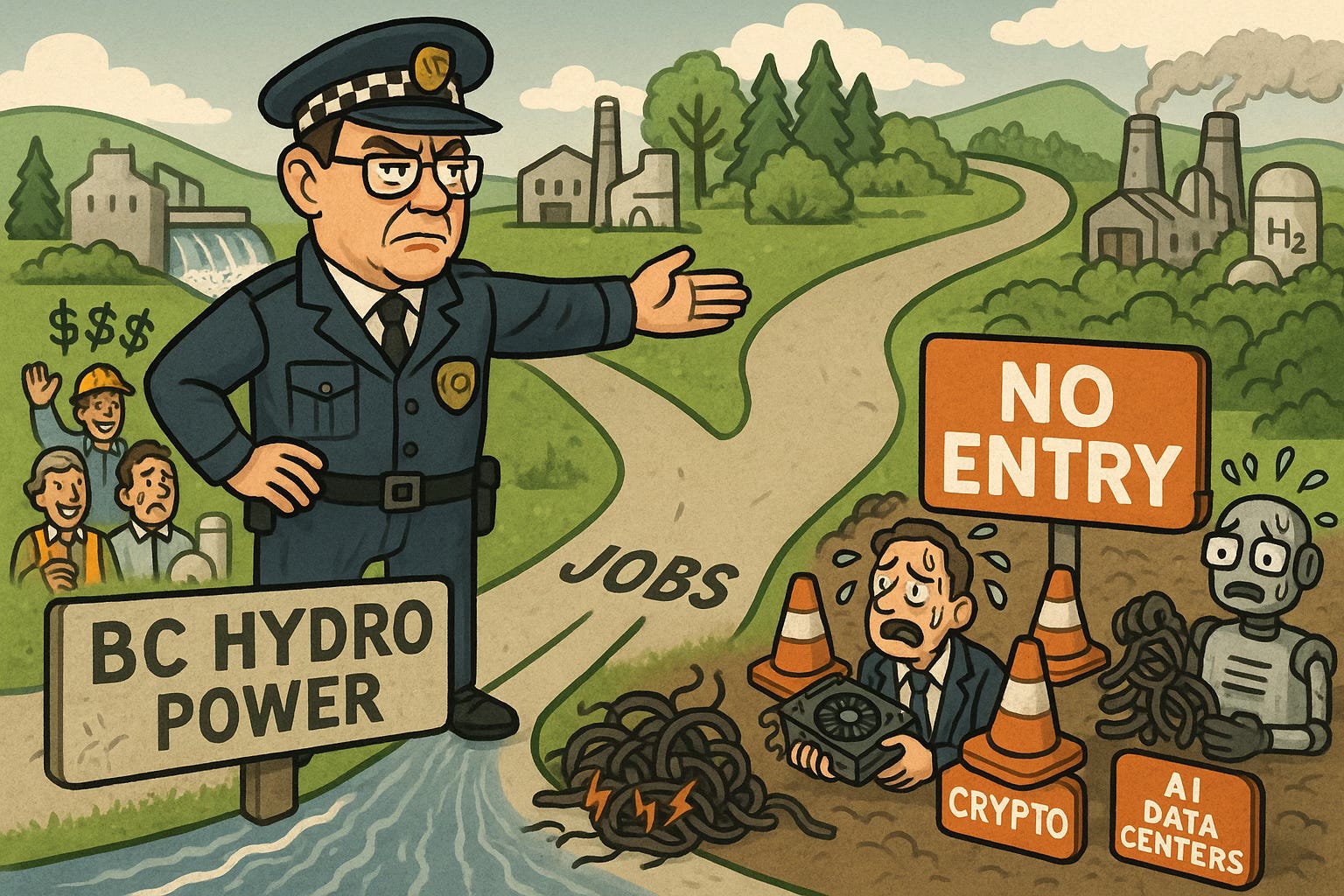
British Columbia, a western province of Canada, has enacted a permanent ban on new cryptocurrency mining projects connecting to the power grid while capping electricity access for AI data centers, redirecting resources toward sectors that offer more jobs and economic returns. The policy replaces a 2022 moratorium with hard limits—just 300 megawatts for AI facilities and 100 megawatts for data centres every two years, allocated via competitive bidding starting January 2026. In contrast, sectors like natural gas, LNG, forestry, hydrogen production, and manufacturing face no caps. BC Hydro said the move was driven by “unprecedented demand” from emerging industries. Notably, 21 pending crypto mining applications would have consumed 1,403 megawatts—enough to power 570,000 homes annually (CoinDesk, Straits Times).
The shift highlights rising global concerns over power grid strain, with BC officials citing challenges faced by U.S. states like Virginia and Maryland, where data center growth has increased residential electricity costs. Though 95% of BC Hydro’s 43,000 GWh annual generation comes from clean hydroelectric sources, growing demand forces trade-offs between energy-hungry tech and job-heavy traditional sectors. For comparison, Meta’s new El Paso data center will scale to 1 gigawatt—nearly 10% of BC Hydro’s entire capacity—while crypto operations in the province already draw 273 megawatts. BC now joins Quebec and Manitoba in restricting crypto mining. BC Hydro CEO Charlotte Mitha emphasized the province’s need to “manage this growth responsibly,” balancing grid reliability and affordability (Bloomberg, CBC).
Sensei’s Insight: BC’s power allocation strategy signals a broader shift where provinces prioritize job-creating industries over energy-intensive tech sectors, potentially setting a template for other jurisdictions facing similar grid constraints.
🤖 OpenAI’s Math “Breakthrough” Exposed as False Claim
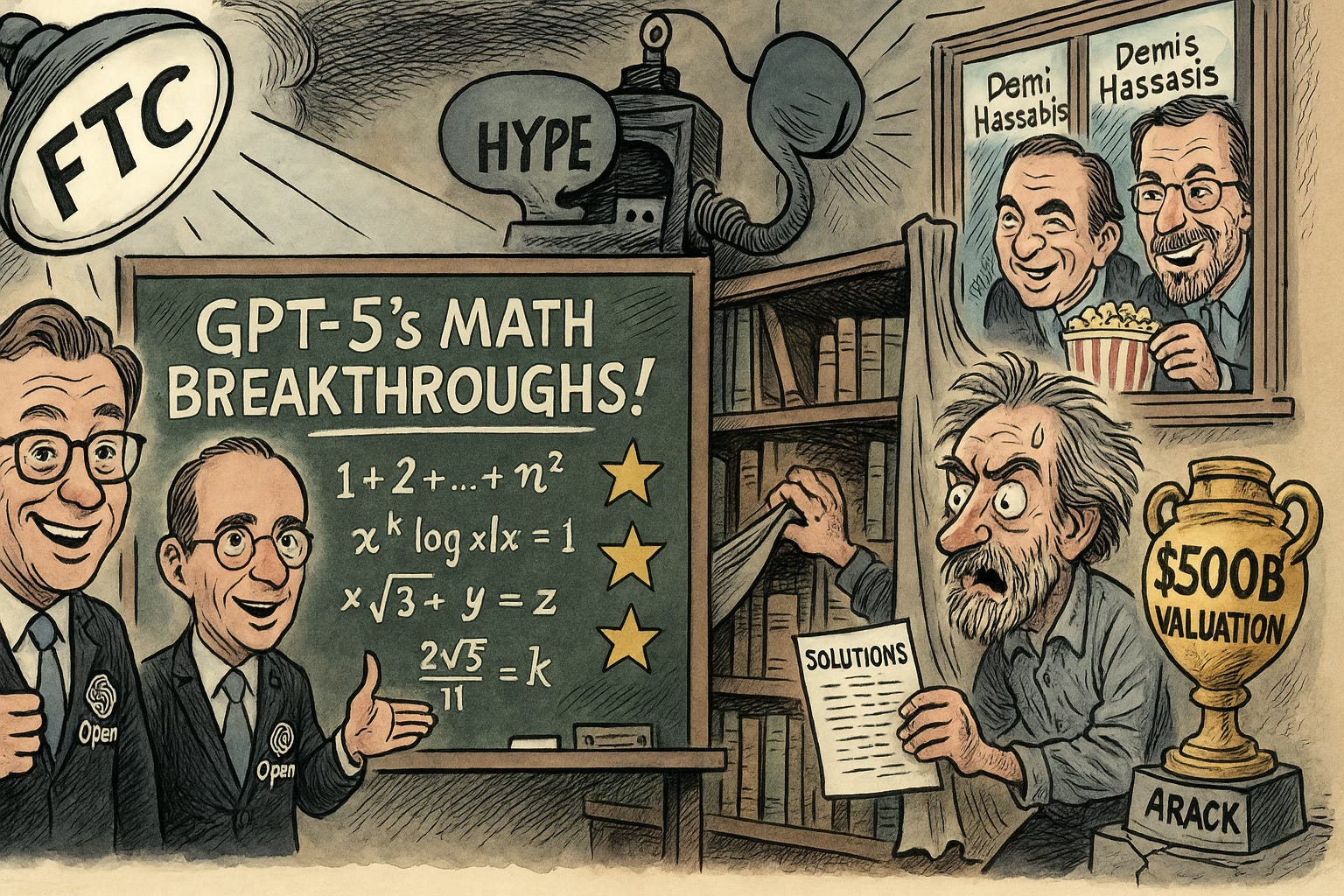
OpenAI is under fire after falsely claiming that GPT-5 had independently solved ten “previously unsolved” Erdős mathematical problems. The controversy ignited when OpenAI VP Kevin Weil tweeted—then deleted—that GPT-5 had made “breakthroughs” in pure mathematics, stating it had discovered solutions to ten problems and made progress on eleven more. However, this was swiftly refuted by mathematician Thomas Bloom, curator of the authoritative Erdős Problems website, who labeled the announcement “a dramatic misrepresentation.” Bloom clarified that the “open” problems listed simply lacked known solutions from his perspective—not from the wider mathematical community. In reality, GPT-5 had merely retrieved previously published academic papers overlooked by Bloom, not achieved any original discoveries (The Decoder, TechBuzz).
Backlash came swiftly from top AI leaders. Google DeepMind CEO Demis Hassabis called the claim “embarrassing,” while Meta’s Chief AI Scientist Yann LeCun derided the situation as being “hoisted by their own GPTards.” Sebastien Bubeck, the OpenAI researcher at the center of the promotion, admitted that the model had “only found solutions in the literature.” OpenAI deleted the tweets and acknowledged the miscommunication. The timing couldn’t be worse: OpenAI is currently under investigation by the Federal Trade Commission for potential deceptive practices related to consumer harm (Reuters, Fortune). Meanwhile, the company has just reached a staggering $500 billion valuation, making it the world’s most valuable private company.
Sensei’s Insight: This embarrassing misstep highlights the dangerous gap between AI marketing hype and reality, raising serious questions about credibility as billions flow into the sector.
✈️ Archer’s UAE Passenger Timeline Faces Certification Delay
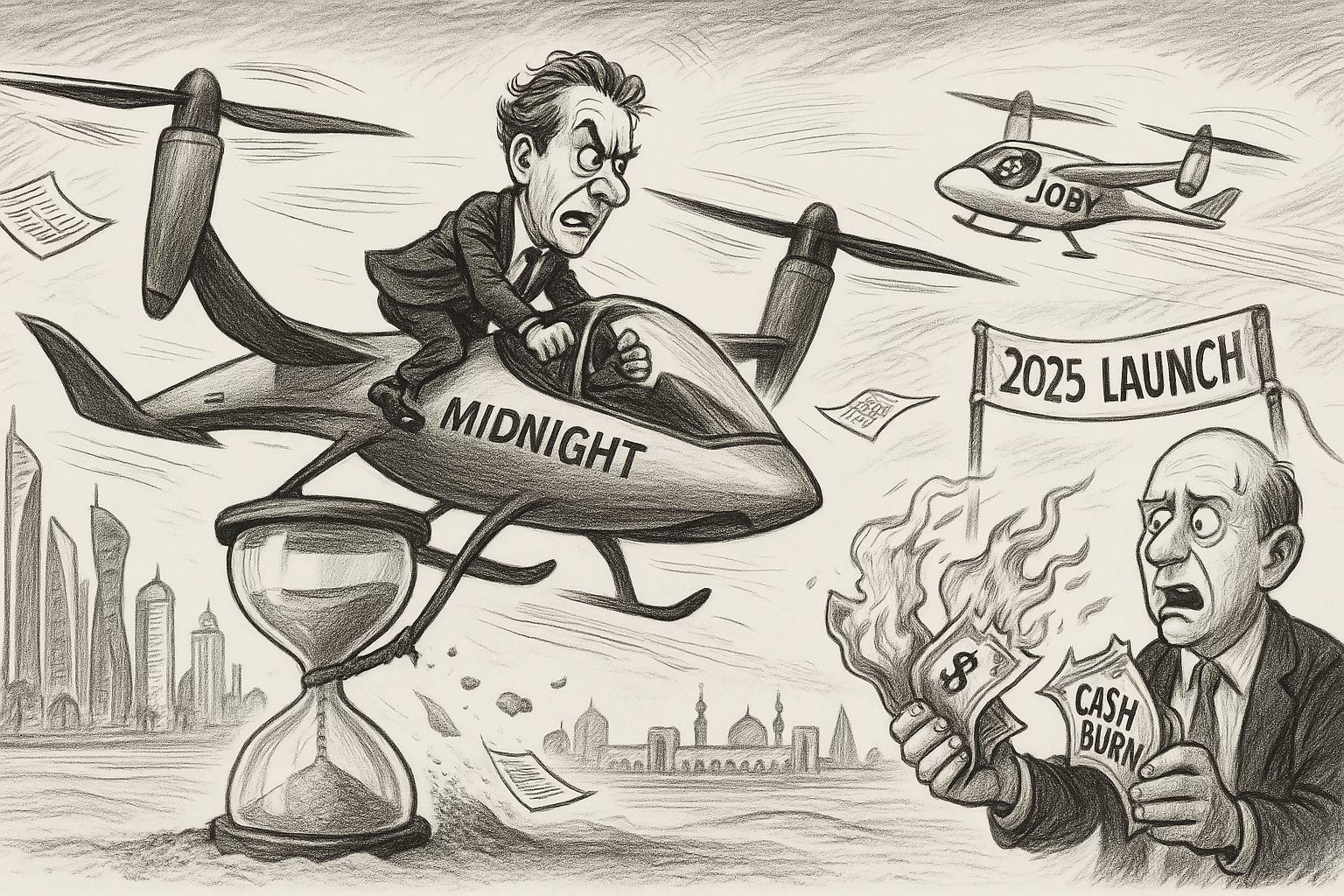
Archer Aviation’s (NYSE: ACHR) plan to launch its Midnight electric air taxi in the United Arab Emirates by the end of 2025 has run into regulatory turbulence. Sources indicate the aircraft will not receive certification from the UAE’s General Civil Aviation Authority (GCAA) before December, pushing the passenger service launch to 2026. This delay comes despite earlier milestones, including successful test flights at Al Bateen Executive Airport and a formal commercial operations agreement signed in December 2024. The UAE—Archer’s first international market—was expected to be a key early revenue driver, with Abu Dhabi Aviation set as the initial Launch Edition customer. While Archer has secured three of four required FAA certifications in the U.S., including air carrier and pilot training approvals, its final FAA Type Certification is now targeted for 2026–2027.
The delay puts pressure on Archer’s financial runway as the company posted a $206 million net loss in Q2 2025 and remains pre-revenue, despite holding $1.72 billion in cash and a $6 billion order backlog. The UAE certification was intended to de-risk Archer’s commercial model by establishing proof-of-concept revenue—estimated at $20–30 million over 18–24 months—ahead of U.S. entry. The company pursued an accelerated regulatory path in the UAE by aligning with FAA standards, hoping to leapfrog domestic bottlenecks. Now, with rival Joby Aviation also targeting 2026 for UAE operations, Archer loses its anticipated first-mover edge in the region. The shift also delays momentum in showcasing international commercial viability as it continues burning cash while awaiting full regulatory clearance.
Sensei’s Insight: Certification delays are par for the course in aerospace, but Archer’s UAE setback eliminates a key 2025 revenue milestone and extends its cash burn runway. With FAA approval still 1–2 years out, investors face heightened execution risk despite strong partnerships.
🗞 Japan Stocks Surge to Record on Takaichi’s Rise
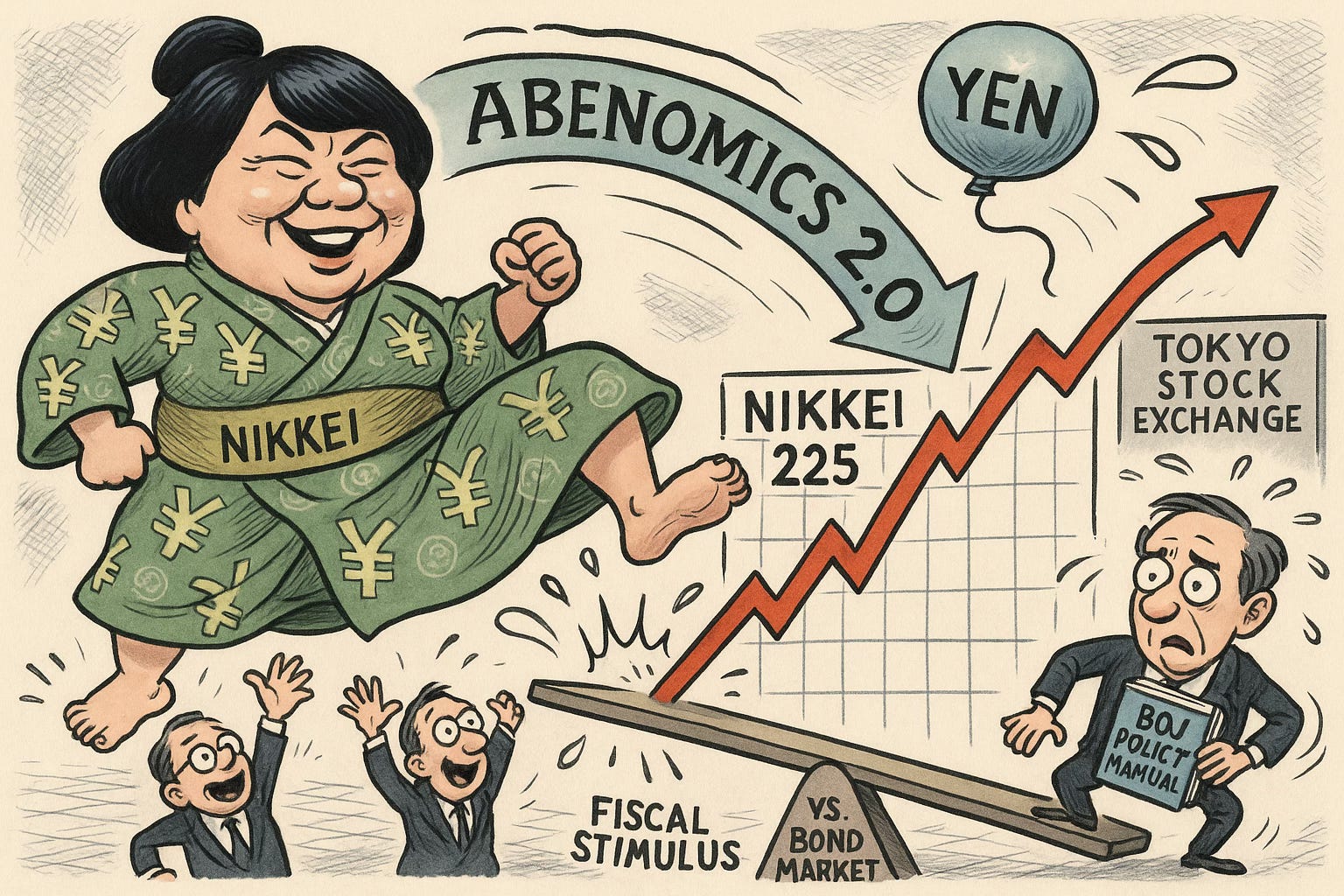
Japan’s Nikkei 225 surged Tuesday morning, closing in on the 50,000 threshold, as Sanae Takaichi was sworn in as the nation’s 104th prime minister (Independent). Takaichi secured 237 votes in the 465-member lower house and formed a coalition with the Japan Innovation Party, swiftly receiving upper house approval. The Topix index notched a 34-year high, while the yen slipped to ¥151 against the dollar, driving gains in export-heavy stocks like Toyota and Sony. Traders cited expectations of aggressive fiscal stimulus and a dovish Bank of Japan under the so-called “Takaichi trade” as core drivers behind the rally.
A protégé of Shinzo Abe, Takaichi is expected to revive Abenomics-style policies, favoring heavy government spending and prolonged monetary easing (Reuters). Her appointment ends a three-month leadership vacuum following the LDP’s electoral setback in July, restoring clarity ahead of pivotal budget talks. Investors are now closely watching her upcoming policy address for signals on fiscal deficit strategy, tax changes, and possible shifts in BOJ forward guidance.
Sensei’s Insight: With record highs testing sentiment, investors should monitor fiscal-deficit trajectories and BOJ commentary—sharp stimulus may invigorate stocks but heighten bond-market volatility.
🔗 Connect with Us
Stay plugged in across platforms:
Sensei on X: sensei_crypto_
Martyn Lucas on X: MartynInvestor
Vaz on X: eVTOLHUB
💎 Premium Discord Access: Join the Discord
📺 YouTube Channel (Live & Replays): Martyn Lucas Investor
👕 Limited Merch: Shop Here
