This content is for informational and educational purposes only and does not constitute financial advice. Always do your own research. Not financial advice (NFA).
👀 Today’s Stories at a Glance
🇯🇵 BOJ Hike Tests Carry Trade: The Bank of Japan lifted rates to 1%, highest since 1995, yet the yen held firm.
🛢️ Hormuz Reopens, Stocks Hit Records: A US-Iran truce reopened the strait, sending the Dow to a record and oil down 5%.
🚀 SpaceX Hits Our Target Zone: SpaceX pushed above $215, landing in the $190 to $220 profit zone our playbook flagged.
📺 Fox Buys Roku, Shares Sink: Fox agreed a $22 billion Roku deal, its largest ever, and shares fell 15%.
🏛️ Warsh Meeting May Kill Cuts: Kevin Warsh chairs his first Fed meeting, where the dot plot could erase 2026 cuts.
⚖️ Paramount-Warner Merger Cleared: US regulators approved the $110 billion media tie-up with no conditions, an unusually permissive call.
🤖 OpenAI, Anthropic Eye Listings: Both AI giants filed confidential paperwork, building an AI listing pipeline worth trillions alongside SpaceX.
💳 Payments Dealmaking Heats Up: Amex bought TheFork for $700 million while Nuvei agreed to buy Payoneer for $2.75 billion.
🥇 Gold Sits Below Its Record: Gold rose a third session but trades 25% under January’s record as real yields bite.
📈 Oil Breaks $80 Support: WTI broke below $80 to $78.32, with the $71 to $75 zone the next buy area.
🧠 One Big Thing
The Bank of Japan raised rates to 1%, the highest since 1995, and signalled more increases ahead. That sounds like the kind of move that rattles markets, and in August 2024 a surprise hike helped knock Bitcoin down about 25% in days. This time the reaction was calm: the yen held near 160, stocks stayed at records, and Bitcoin slipped under 1%. The reason is the yen. A weak yen near 160 means the carry trade, where investors borrow cheap yen to buy higher-yielding assets, has not unwound. While the yen stays weak, the feared selling cascade stays contained. A sharp yen rally is the one thing that would change the story, so watch the yen, not the rate.
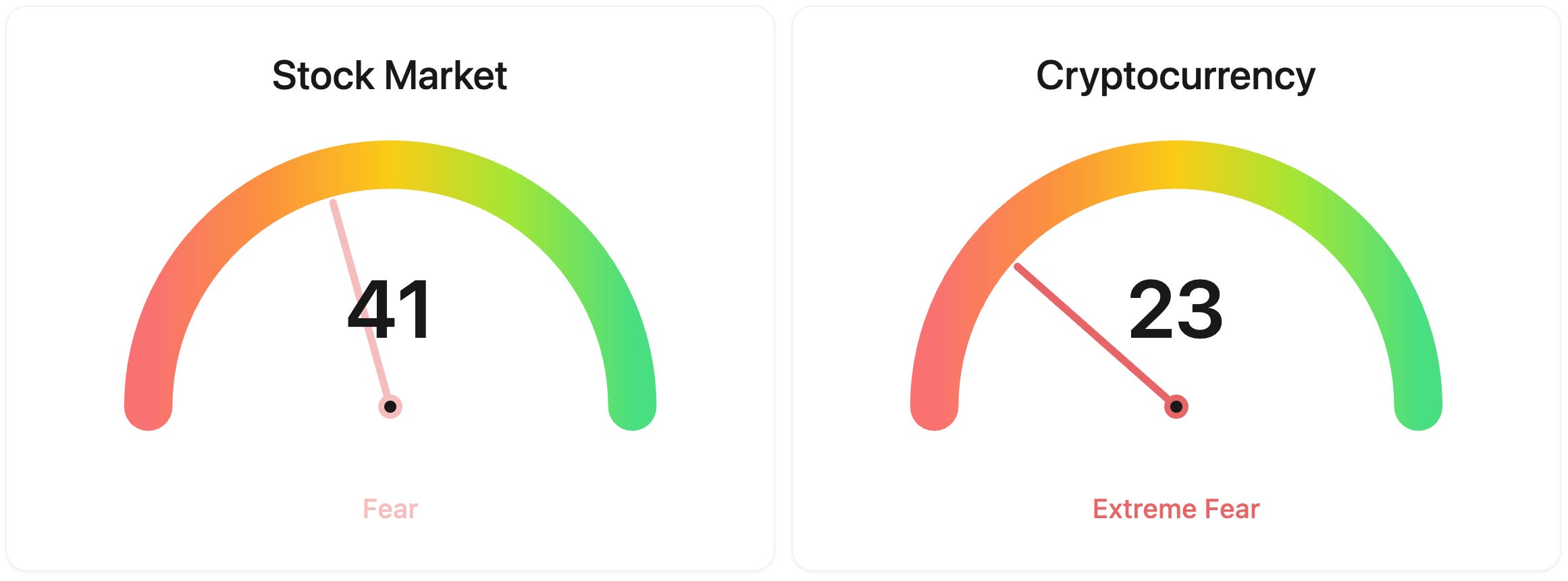
⚖️ Fear & Greed
📉 The Number That Matters
$63
Morningstar pegs SpaceX fair value at $63 a share against a price above $215, so at $63 the stock would trade at barely a third of where forced index buyers are now lifting it.
⚔️ Winners vs Losers
Winners
PURR 0.00%↑ +14.67% Hyperliquid Strategies Inc extended its run as HYPE, the native token of the Hyperliquid blockchain it holds as a treasury asset, rallied hard and traders positioned ahead of the stock’s late-June Russell 2000 and 3000 inclusion. The small float and heavy call buying have driven gamma-squeeze speculation, so the move is as much mechanical as fundamental.
SPCX 0.00%↑ +8.54% Space Exploration Technologies Corp, the SpaceX entity that staged the largest IPO in history on its Nasdaq debut last week, climbed again as deep institutional demand and post-listing momentum kept pulling capital into the stock.
WDC 0.00%↑ +7.66% Western Digital Corporation rose for a second straight session after Morgan Stanley reiterated the hard-drive makers as top picks and said the HDD shortage and firming pricing should run through 2028, a note that made WDC the S&P 500’s biggest gainer on Monday.
STX 0.00%↑ +5.70% Seagate Technology Holdings plc advanced on the same Morgan Stanley call, which tagged it a top IT-hardware pick on the strength of AI-driven demand for high-capacity nearline drives.
Losers
No major losers today.
📊 Market Snapshot
Cryptocurrencies:
Bitcoin (BTC): $66,486 (▲0.30%)
Ethereum (ETH): $1,795 (▼0.01%)
XRP: $1.24 (▲0.15%)
Equity Indices (Futures):
S&P 500: 7,630 (▲0.04%)
NASDAQ 100: 30,950 (▲0.28%)
FTSE 100: 10,485 (▲0.65%)
Commodities & Bonds:
10-Year US Treasury Yield: 4.45% (▼0.63%)
Oil (WTI): $78 (▼3.50%)
Gold: $4,339 (▲0.69%)
Silver: $70.40 (▲0.59%)
Data as of: UK: 12:19 BST / US: 07:19 EDT / Asia (Tokyo): 20:19 JST
✅ 5 Things to Know
🇯🇵 Japan’s Rate Hike to 1% Tests Global Markets
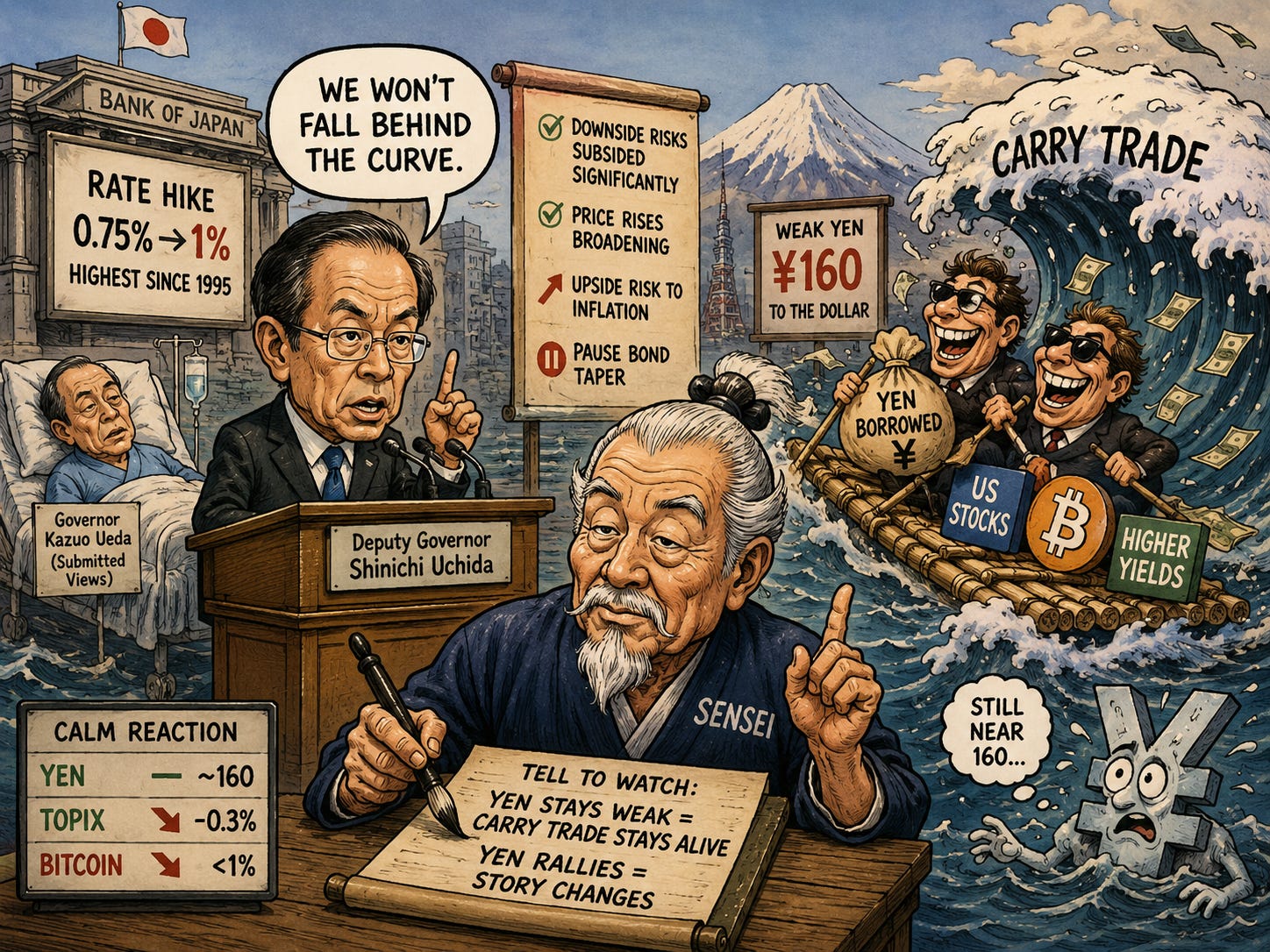
The Bank of Japan raised its policy rate today from 0.75% to around 1%, the highest since 1995, a quarter-point move markets had almost fully priced. The board split 7 to 1, with member Toichiro Asada dissenting in favour of holding, and it signalled more increases lie ahead. Governor Kazuo Ueda, hospitalised for an infection, missed the meeting and submitted his views in writing rather than casting a vote, leaving deputy Shinichi Uchida to deliver the message and front the press conference. The tightening lands as a weak yen near 160 to the dollar, and inflation lifted partly by the Iran war, squeeze Japanese households. Japan spent two decades near zero rates, so even a small step carries weight. (BBC)
The wording was the real news. The Bank said downside risks to the economy had “subsided significantly,” warned that “price rises are broadening,” and flagged a risk that underlying inflation could “deviate” above its 2% target. Standing in for Ueda, Uchida was firm: the Bank would guide policy “so that we won’t fall behind the curve,” and the weak yen’s pass-through into prices “may have a bigger impact” as companies grow bolder on wages and pricing. He called the US-Iran memorandum “a welcome move” but cautioned there is still “uncertainty on the pace” of oil supply returning to normal. The Bank also confirmed it will pause the wind-down of its bond buying from April 2027, holding purchases near 2 trillion yen a month. Economists now expect one more hike to around 1.25% by year-end, on the way to roughly 1.5% in 2027. This was not a one-and-done. (Reuters)
A Japanese rate move ripples worldwide because of the carry trade, where investors borrow cheap yen to buy higher-yielding assets like US stocks and Bitcoin. Higher Japanese rates make that trade less profitable and can trigger selling to repay the loans, draining liquidity everywhere. That is what happened in August 2024, when a surprise hike helped knock Bitcoin down about 25% in days and sent global stocks tumbling. The difference this time is the move was expected, and the reaction has been calm: the yen barely moved near 160, the Topix eased just 0.3%, and Bitcoin slipped under 1%. We walked through the full mechanics, the scenarios, and what actually triggers an unwind in our BOJ playbook. (Bloomberg)
Sensei’s Insight: The hike was priced, so the message mattered more, and the message was hawkish in plain language: “broadening” price rises, an upside risk to inflation, a vow not to “fall behind the curve,” and a pause to the bond taper. Yet the yen still sits near 160, which tells you the carry trade has not unwound. That is the tell to watch. While the yen stays weak, the feared cascade stays in the box. A sharp yen rally is what would change the story.
🛢️ Iran Truce Reopens Hormuz, Stocks Hit Records
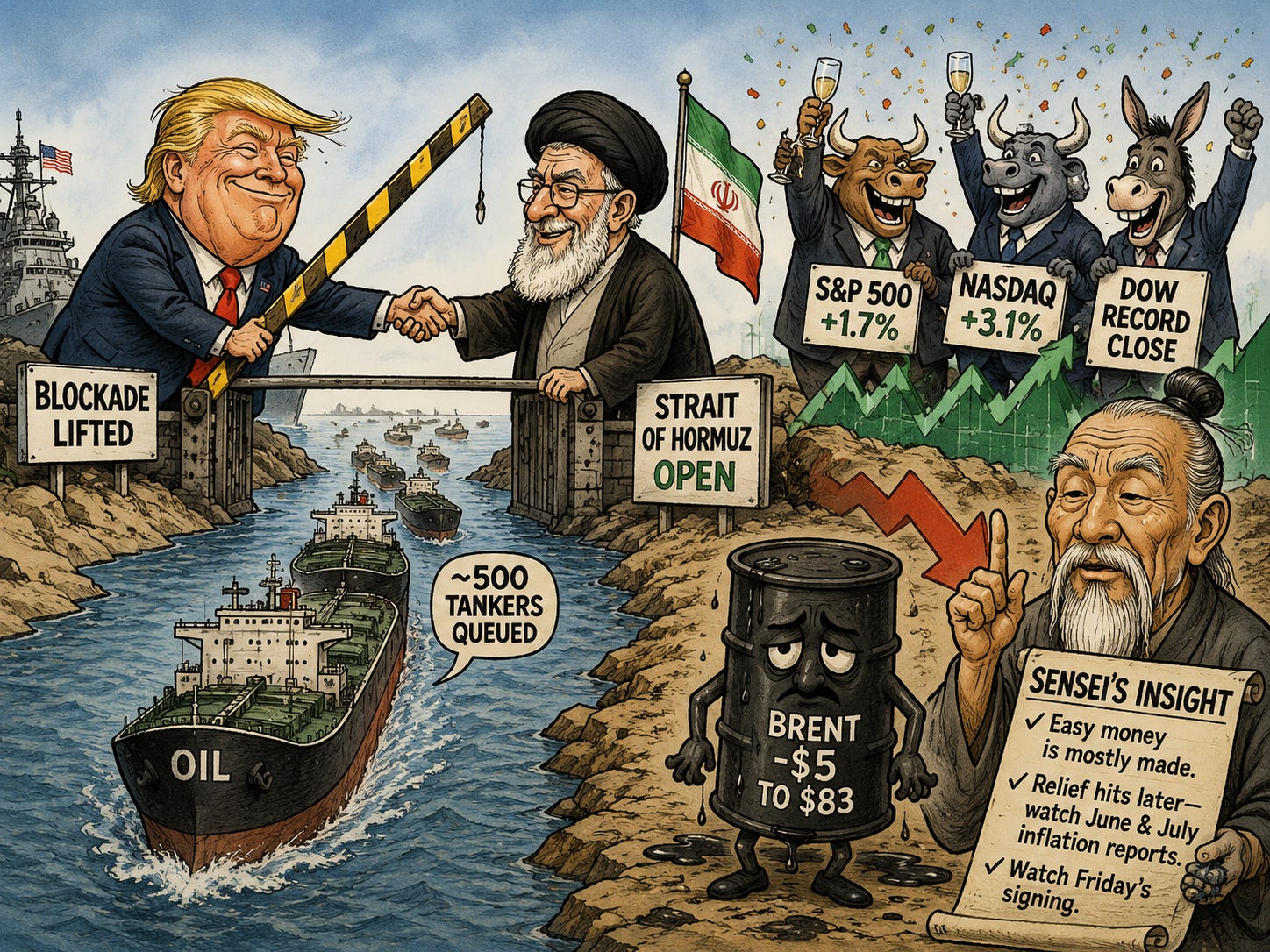
The United States and Iran finalized a memorandum of understanding to end the Gulf war and reopen the Strait of Hormuz, the chokepoint that carries about a fifth of the world’s oil. President Trump said the deal is signed and that he authorized lifting the US naval blockade of Iranian ports, and Iran’s Supreme National Security Council confirmed the wording. A formal signing is set for this Friday in Switzerland. Markets treated it as the all-clear: the S&P 500 rose 1.7%, the Nasdaq Composite jumped 3.1%, and the Dow Jones Industrial Average closed at a record. Brent crude fell almost 5% to about $83 a barrel, its lowest since early March. (Al Jazeera)
This matters because the war was the main force pushing US inflation to a three-year high, so cheaper oil flows straight through to lower gasoline and an easier squeeze on households. The reported terms include suspending sanctions on Iranian oil sales and releasing about $24 billion in frozen Iranian assets. Supply will take weeks to normalize, with roughly 500 tankers still queued to transit the strait. The forward risk: this is a 60-day ceasefire framework, not a settled peace, and a similar truce in April rallied markets before fraying. Overnight, Asian stocks wavered and US futures slipped as traders paused to judge whether the relief holds. (Bloomberg)
Sensei’s Insight: The easy money here is mostly made. Oil fell 6% the week before the deal and stocks are already at records. The real relief shows up later, when June and July inflation reports finally reflect cheaper gasoline. Watch Friday’s signing for any slippage.
🚀 SpaceX Tops $215, Right Into Our Target Zone
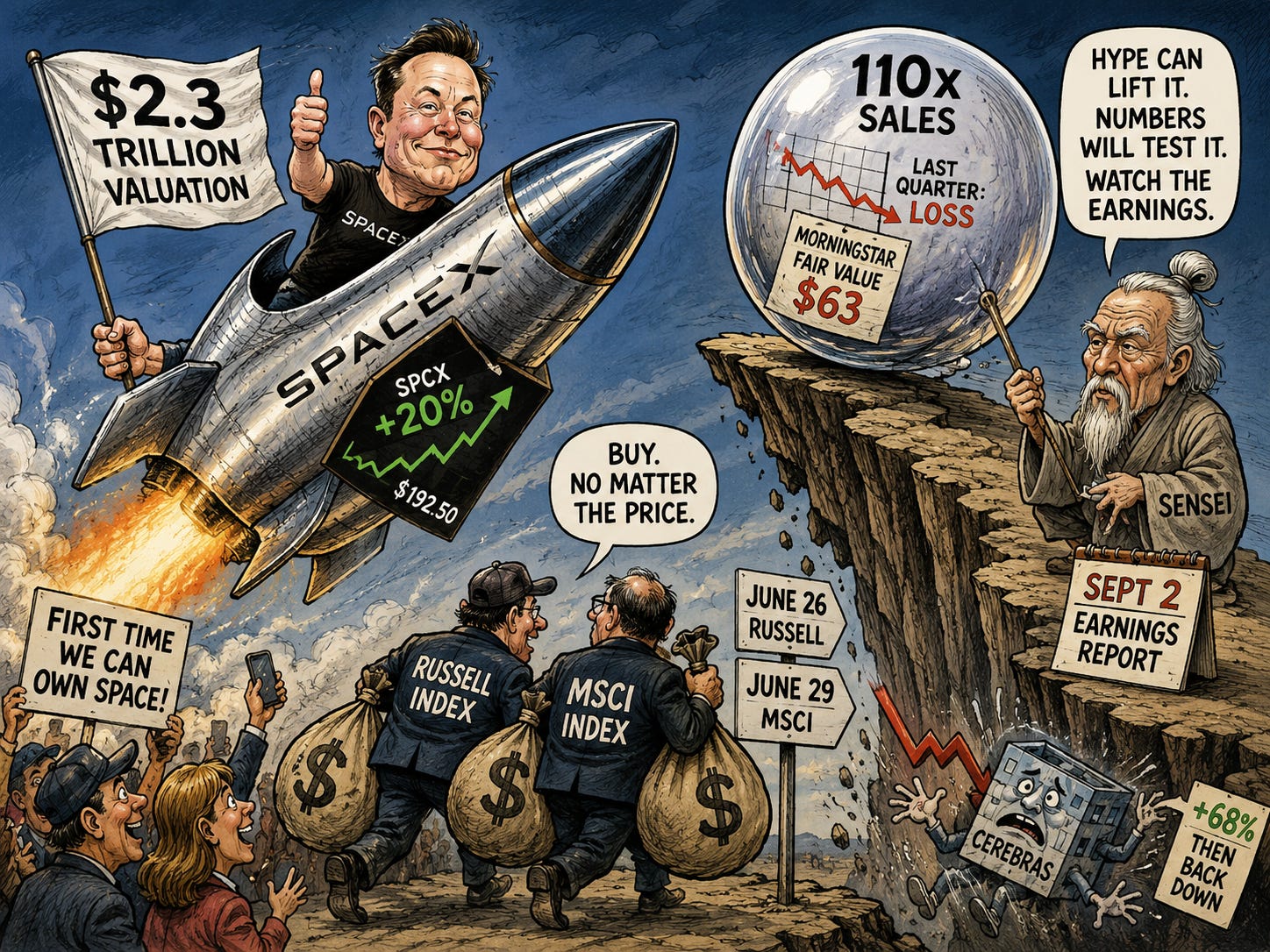
SpaceX (Nasdaq: SPCX) is not slowing down. After climbing about 20% on its second full day of trading to close near $192.50, the stock pushed above $215 in pre-market this morning, extending the run from the largest initial public offering, the first sale of shares to the public, in history, and landing in the upper end of the $190 to $220 peak zone our playbook flagged for this month. The rocket, Starlink, and artificial-intelligence company priced shares at $135 on Friday, raised roughly $75 billion, and rose 19% on debut. Three sessions in, its market value has swelled toward $2.8 trillion, placing it among the most valuable public companies on earth and making Elon Musk the first person worth more than $1 trillion on paper. Underwriters can still sell another 83 million shares under the standard overallotment option, the extra slice banks release when a deal runs hot. (CNBC)
The reason the price can keep running has little to do with the business right now and everything to do with plumbing. For the first time, ordinary investors can own a piece of SpaceX, and index money is about to be forced in whether the price makes sense or not. FTSE Russell adds the stock after the close on June 26 and MSCI follows around June 29, which compels trillions in passive retirement funds to buy it on a set date regardless of value, with a likely Nasdaq-100 entry to come in July. That is the engine behind the melt-up: a tiny tradable float, a wall of mechanical buyers with deadlines, and a crowd of new holders who do not want to miss out. (SpotGamma)
The numbers sit far below the story. At $215 the company trades at well over 100 times its sales, it lost money last quarter, and Morningstar pegs fair value at just $63 a share, about $780 billion, less than half the IPO price and barely a third of where it now trades. The first hard test arrives with earnings around September 2, the first real look at whether revenue can grow into a faith-based valuation. The closest recent parallel is Cerebras, which jumped 68% on its 2026 debut and then handed all of it back. We mapped the likely path, the index-buying window, and the supply waves that follow in our SpaceX playbook. (Morningstar / CNBC)
Sensei’s Insight: We flagged $210 to $220 as the spot to take profit, and that is exactly where we now sit. If I owned a significant about of shares, I would sell most here and keep just a few in case the momentum and the forced index buying carry it higher into the late-June deadlines. I expect it to peak this month, then drift back toward the $135 IPO price later this year as the index bid fades and the first earnings and lockups arrive, and that drift is where I would look to buy back. Forced index demand is mechanical, not a verdict on value, and the real numbers do not land until early September. Remember Cerebras: up 68% on debut, then a full round-trip.
📺 Fox Bets $22 Billion on Roku, Shares Drop 15%
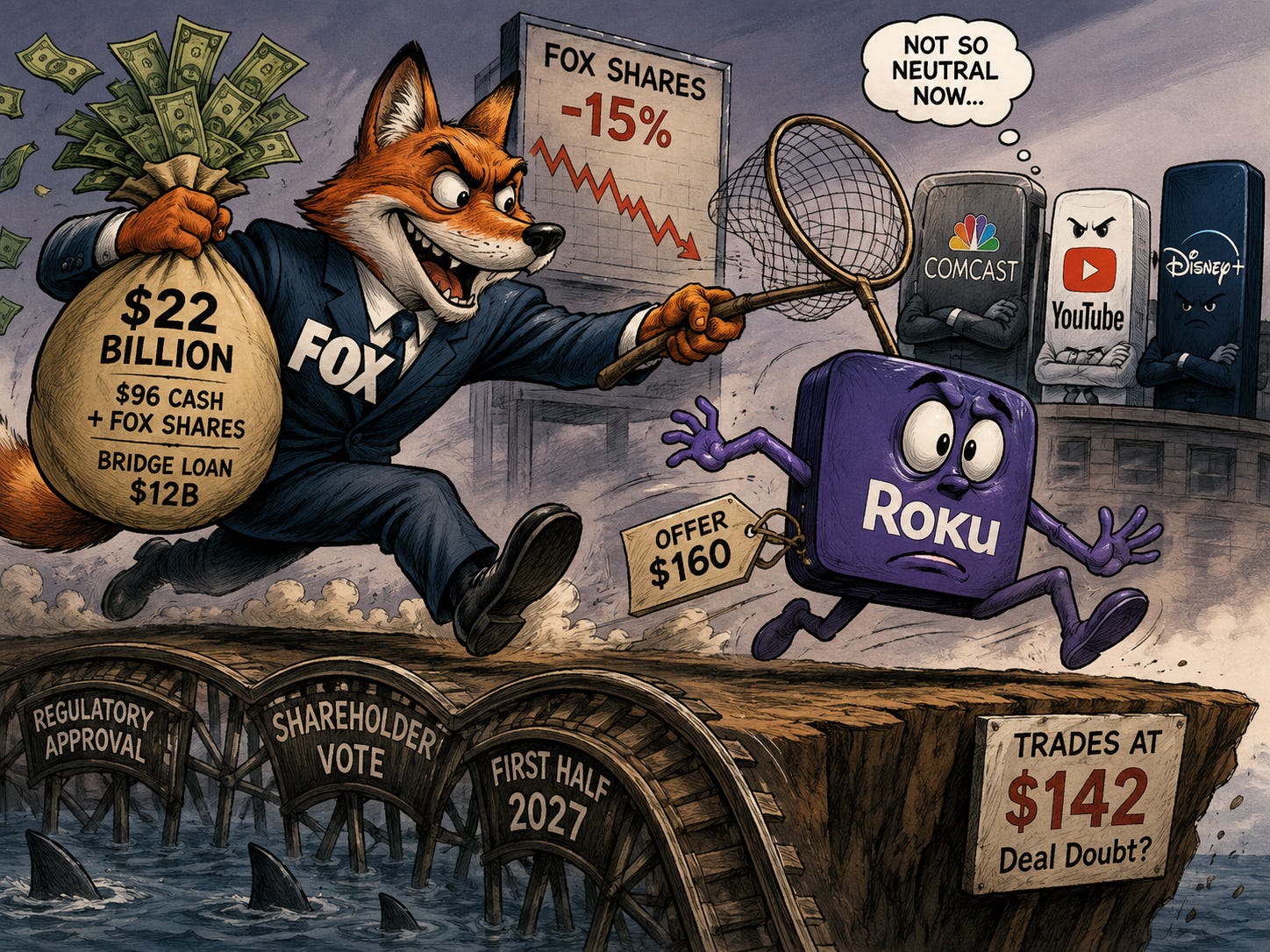
Fox (Nasdaq: FOXA) agreed to buy streaming platform Roku (Nasdaq: ROKU) for $160 a share, about $22 billion, its largest acquisition ever. Roku holders get $96 in cash plus 0.9693 Fox Class A shares, and Fox is funding the cash with a $12 billion bridge loan from Morgan Stanley. The deal pairs Fox’s live sports and news with Roku’s connected-television platform, which reaches more than 100 million streaming households, and would make Fox the third-largest US television player by viewing time. Investors balked: Fox shares fell about 15%, roughly the size of the whole deal in lost market value, while Roku slipped nearly 2%. (CNBC)
The drop is a textbook acquirer reaction. Fox is taking on heavy debt and issuing new stock to pay a premium, and the math gets harder because Roku’s value rests on staying a neutral platform that carries every streamer. Once a content owner like Fox controls it, rivals such as Comcast and YouTube may start treating Roku as a competitor. The deal needs regulatory and shareholder approval and is not expected to close until the first half of 2027, so Roku trades near $142, well under the $160 offer, a sign traders doubt it closes cleanly. Friday’s antitrust clearance of Paramount and Warner Bros. Discovery set the permissive tone. (The Motley Fool)
Sensei’s Insight: Fox sold its own Roku stake at $58 in 2020 to fund Tubi. Now it’s paying $160 to buy the whole thing. With Roku stuck near $142, well below the offer, traders clearly aren’t convinced this deal closes on the first try.
🏛️ Warsh’s First Fed Meeting May End Cut Hopes
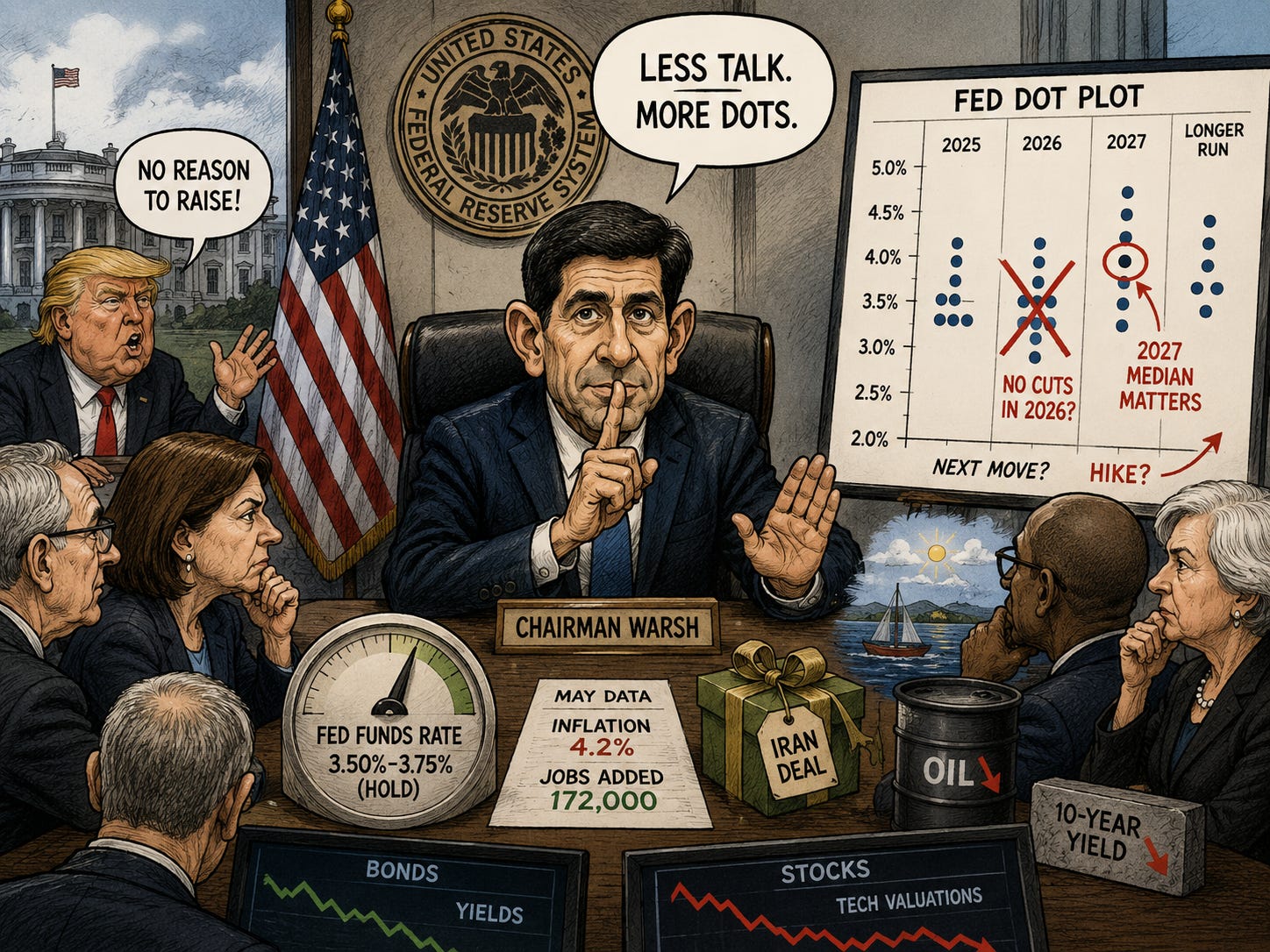
Kevin Warsh chairs his first Federal Reserve policy meeting today and tomorrow, and almost no one expects a rate change. The Federal Open Market Committee, the panel that sets US interest rates, is seen holding the federal funds rate, its main tool for steering borrowing costs, at 3.50% to 3.75%, where it has sat since December. The market-moving part comes tomorrow at 2:30 p.m. Eastern with the updated “dot plot,” the chart showing where each official expects rates to go, plus Warsh’s first press conference. In March, the dots still pointed to cuts this year. After May inflation hit a three-year high, they may show none. (FXStreet)
A dot plot that erases 2026 cuts, or hints at a hike, would lift bond yields and pressure stock valuations, especially expensive tech. It would also confirm the Fed has shifted from leaning toward easing to neutral or tougher. The politics are live: Trump picked Warsh expecting lower rates and said this week there’s “no reason” to raise, but inflation at 4.2% and 172,000 jobs added in May argue the other way. The Iran deal hands Warsh a small gift by pulling oil and the 10-year Treasury yield to one-month lows just before the decision. (Morningstar)
Sensei’s Insight: Warsh has said he wants the Fed to talk less, so the dots may carry more weight than anything he says tomorrow. With 2026 cuts all but gone, the number that matters is the 2027 median. Markets already price real odds of a hike.
Stories You Might Have Missed
⚖️ US Clears $110 Billion Paramount and Warner Bros. Merger
The US Justice Department cleared Paramount Skydance’s roughly $110 billion takeover of Warner Bros. Discovery on Friday with no conditions, ending an eight-month review and removing the main federal hurdle to one of the largest media deals ever. Combining HBO Max and Paramount+ would create a streaming service with about 200 million subscribers. The clean approval signaled an unusually permissive antitrust stance and helped set the stage for Fox’s Roku deal days later. It is politically charged: Senator Elizabeth Warren called it “terrible news,” and several state attorneys general are still investigating and could sue to block it. Paramount Skydance (PSKY) rose 3.8% on the news. (CBS News)
🤖 OpenAI and Anthropic Line Up for Wall Street
The two biggest names in artificial intelligence are moving toward the stock market. OpenAI, the maker of ChatGPT, filed confidential paperwork with the Securities and Exchange Commission on June 8, about a week after rival Anthropic filed on June 1. OpenAI was last valued near $852 billion and Anthropic near $965 billion, and both are weighing listings as soon as the autumn, with Goldman Sachs and Morgan Stanley leading the work. Stacked alongside SpaceX, the three form an AI listing pipeline worth trillions. The cooler note: neither is profitable, with OpenAI reportedly projecting a $14 billion loss this year, so both will have to justify the price once the financials go public. (CNBC)
💳 Amex and Nuvei Strike Fresh Fintech Deals
Dealmaking in payments kept rolling yesterday. American Express agreed to buy restaurant-booking platform TheFork from Tripadvisor for $700 million in cash, deepening its push into dining perks for cardholders. Separately, payments firm Nuvei agreed to acquire cross-border specialist Payoneer for $7.40 a share, about $2.75 billion. The pair show how fast the payments and fintech space is consolidating as larger players buy growth and data rather than build it. Tripadvisor (TRIP) climbed on the sale, and Payoneer (PAYO) rose about 4% to $7.03, just under the offer price. The moves landed the same day as the SpaceX surge and the Fox and Roku deal, a busy session for traders. (Yahoo Finance)
🥇 Gold Sits 25% Below Its Record Despite the Bounce
Gold rose for a third straight session yesterday to about $4,343 an ounce as the Iran deal pulled oil and yields lower. Even so, the metal sits roughly 25% below its January 28 record near $5,589 and recently fell below its 200-day average price for the first time since October 2023. The lesson for anyone holding gold as an inflation hedge is that rising real yields can sink it even while inflation runs hot, since gold pays no interest and competes with bonds. The longer-term case looks intact, with central banks buying a net 244 tonnes in the first quarter and major banks still targeting $5,200 and above. (Fortune)
🔗 Connect with Us
Stay plugged in across platforms:
Sensei on X: sensei_live_
Martyn Lucas on X: MartynInvestor
Vaz on X: eVTOLHUB
📺 YouTube Channel (Live & Replays): Martyn Lucas Investor